Submitted by Justine.Pource… on
Télésurveillance
published on 30/09/2026

Business Security Monitoring: The Complete Guide to Securing Your Premises

Installing a business security monitoring system is a strategic step to deter intrusions, monitor your property remotely and collect evidence in the event of an incident.

A burglary costs more than just the value of the stolen equipment. There may also be damaged storefronts, lost inventory, halted production and customers to reassure.

Today, security is no longer simply an expense. It is part of business continuity. Insurance companies pay close attention to it, and your customers rely on it.

Yet the project can seem complex. Which cameras should you choose? Where should footage be stored? What does the law say about monitoring employees? Between technical choices and legal requirements, a mistake can quickly become costly.

This guide takes you through the process step by step. You will find the benefits of a professional security monitoring system, the 6-step method for installing it, the rules to follow and budget guidelines.

Why install a security monitoring system in your business?

A well-designed system addresses four key needs.

Video

Deterrence

Highly visible cameras are the first line of defense against malicious activity. Many attempted thefts or acts of vandalism can be deterred before they even begin.

Headset

Remote alarm verification

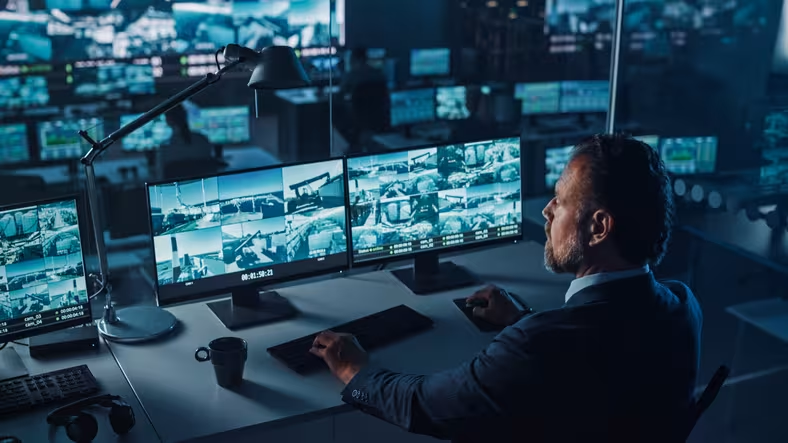
When an alarm is triggered, an operator verifies in real time what is happening on the premises, day or night. This is the role of video alarm verification: distinguishing a genuine intrusion from a false alarm before dispatching a response. You gain speed and avoid unnecessary interventions.

Fingerprint

Evidence collection

In the event of theft, property damage or an assault, recorded footage can be used by law enforcement, your insurance company or the courts.

Shield-Check

Employee safety

Security monitoring also protects your teams, particularly those working night shifts, outside regular business hours or at remote locations. Knowing that a monitoring center is watching 24/7 can make a real difference to their day-to-day safety.

Centre de télésurveillance Scutum

The 6 key steps for a successful installation

A reliable installation follows a method. Here are the six steps, in order:

1 Conduct a security assessment and define your needs
2 Choose the right equipment and technology
3 Understand and comply with legal requirements
4 Physically install the equipment
5 Configure the system
6 Train users

1. Conduct a security assessment and define your needs

You should not choose a camera before determining what it needs to protect. That is the purpose of the security assessment.

  • Identify critical areas: entrances and exits, storage areas, cash registers, parking lots, server rooms.
  • Define the purpose of each camera: simple monitoring of an area, identification of individuals or license plate recognition. The more specific the objective, the more capable the camera needs to be.
  • Assess the constraints: daytime and nighttime lighting, exposure to weather conditions and the distance to be covered.
Audit de sécurité.png
tick icon

Security assessment checklist

Which areas have already experienced an incident (theft, intrusion, property damage)? Which assets, inventory or data are the most sensitive? Do employees work alone, at night or on weekends? Do I need a simple alert, or human intervention when an alarm is triggered? Is my site open to the public? What budget can I allocate to the installation and then to the monthly subscription?

2. Choose the right equipment and technology

Cameras: Each type of business security camera is suited to a specific use:

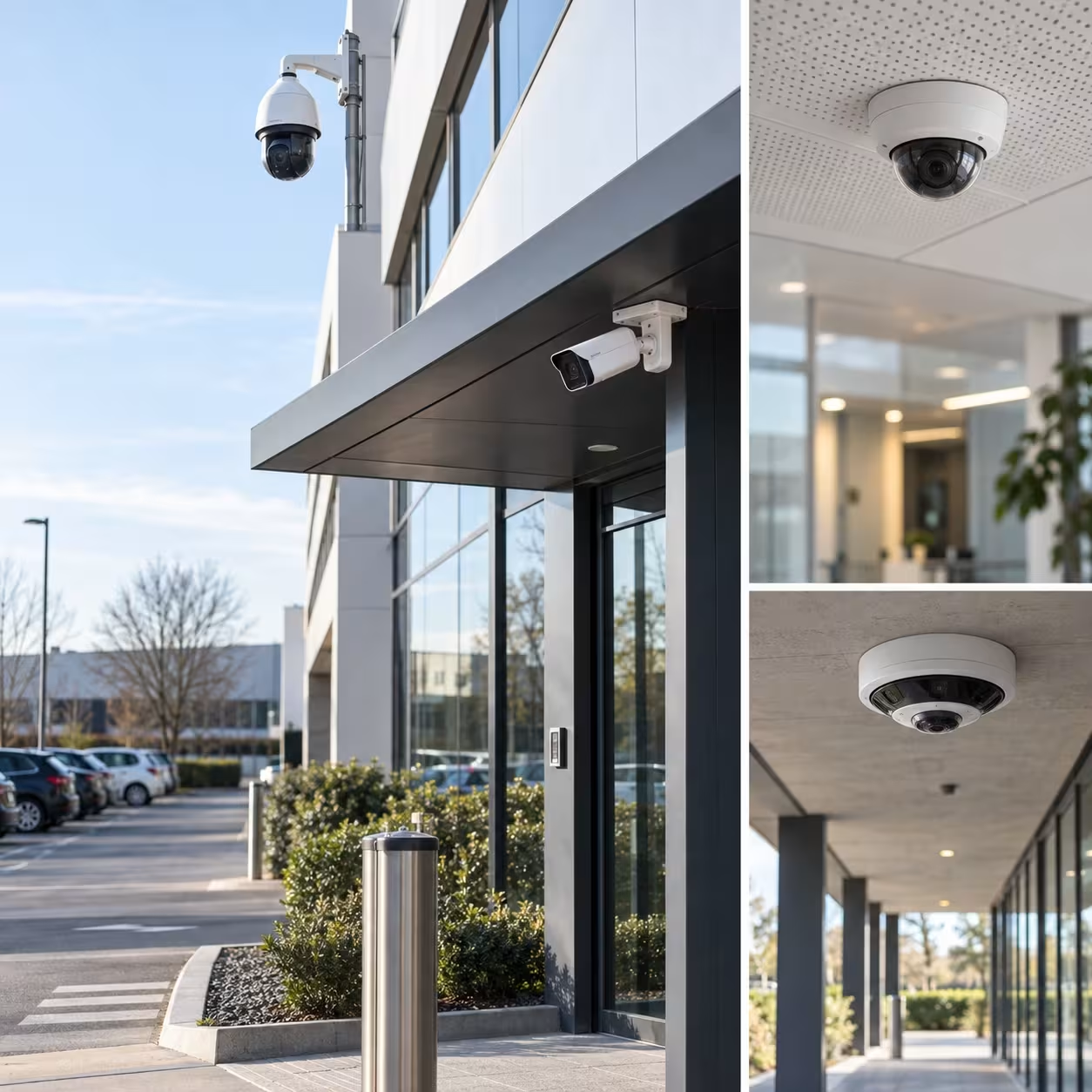
  • Dome: discreet and ideal for indoor areas (reception areas, offices, warehouses).
  • Bullet: more visible and therefore more deterrent, suitable for outdoor areas (facades, entrances).
  • PTZ (pan-tilt-zoom): rotates and zooms remotely to cover large areas such as parking lots.
Caméras dômes, bullets, PTZ et panoramiques

Image quality: Full HD is sufficient for monitoring an area. 4K is preferable when you need to identify a face or license plate from a distance. Infrared night vision is essential for effective 24/7 surveillance.

Caméras 4K

Image storage:

Local recorder (DVR/NVR) Cloud
Security Footage may be exposed if the equipment is stolen or destroyed Footage is stored off-site
Accessibility Quick access on site Remote access from anywhere
Cost Initial investment, no subscription Monthly subscription, less hardware

Many businesses combine both solutions to reduce the risk of losing footage.

Connectivity: Wired (IP/PoE) connectivity carries both data and power through a single cable. Wireless (Wi-Fi) is easier to install but more susceptible to interference and signal disruption. For businesses, we recommend wired connectivity: it provides a stable connection without interruptions.

Video surveillance or security monitoring? This is the most important structural decision in your project.

  • With video surveillance, you monitor the footage yourself, either live or after an event.
  • With security monitoring, a monitoring center is automatically alerted and takes action 24/7.

At Scutum, each alert is assessed by an operator, supported by video analytics, before any response is dispatched. The system does not simply record: it responds consistently to every alert. To learn more, read our article Video Surveillance vs. Security Monitoring: What Is the Difference for Your Business?

3. Understand and comply with legal requirements

Business security monitoring regulations vary across the United States. Requirements may depend on federal law, state and local laws, the type of property being monitored and whether employees or members of the public are being recorded. Here are the key principles to consider.


The principle of proportionality: You should only monitor areas that are reasonably necessary for a specific security purpose. Excessive or intrusive surveillance may create privacy and legal issues.


Informing people: Depending on the jurisdiction and the circumstances, businesses may be required to provide notice that video surveillance is in use. Clear signage can help inform employees, customers and visitors that cameras are present and explain the purpose of the system.

Sample video surveillance notice

“Video surveillance in use.
Responsible party: [Company name].
Purpose: security of people and property.
Footage retention period: [30] days.
For questions or requests regarding your personal information, contact: [department / email address].”


Employees: Employee privacy requirements vary by state and local jurisdiction. Businesses should:

  • Inform employees when workplace surveillance is implemented, where required by applicable law or company policy.
  • Clearly define the purpose of the surveillance and limit monitoring to legitimate business and security purposes.
  • Avoid continuously monitoring employees in areas where they have a reasonable expectation of privacy.
  • Never install cameras in restrooms, changing rooms or other private areas.


Customers and visitors: Clear signage at entrances and other relevant areas can inform customers and visitors that video surveillance is in use.


Data privacy and security: Businesses should also:

  • comply with applicable federal, state and local privacy laws;
  • maintain appropriate documentation regarding the purpose and use of the surveillance system;
  • establish an appropriate footage retention period based on the business's security needs, applicable laws and company policies;
  • secure access to video footage, limiting it to authorized personnel.


These requirements can sometimes be seen as a constraint. When privacy and security considerations are incorporated into the system from the design stage, they can instead help protect the business in the event of an investigation, complaint or legal dispute.
4. Physically install the equipment

This is where quality of execution makes the difference.

  • Locations and viewing angles: cover every area identified during the security assessment, without blind spots and while avoiding backlighting.
  • Cable routing: follow industry best practices (conduits, suspended ceilings) for a discreet, durable installation that is difficult to tamper with.
  • Power supply: provide a stable power supply and an uninterruptible power supply (UPS) so that the system can continue operating in the event of a power outage.

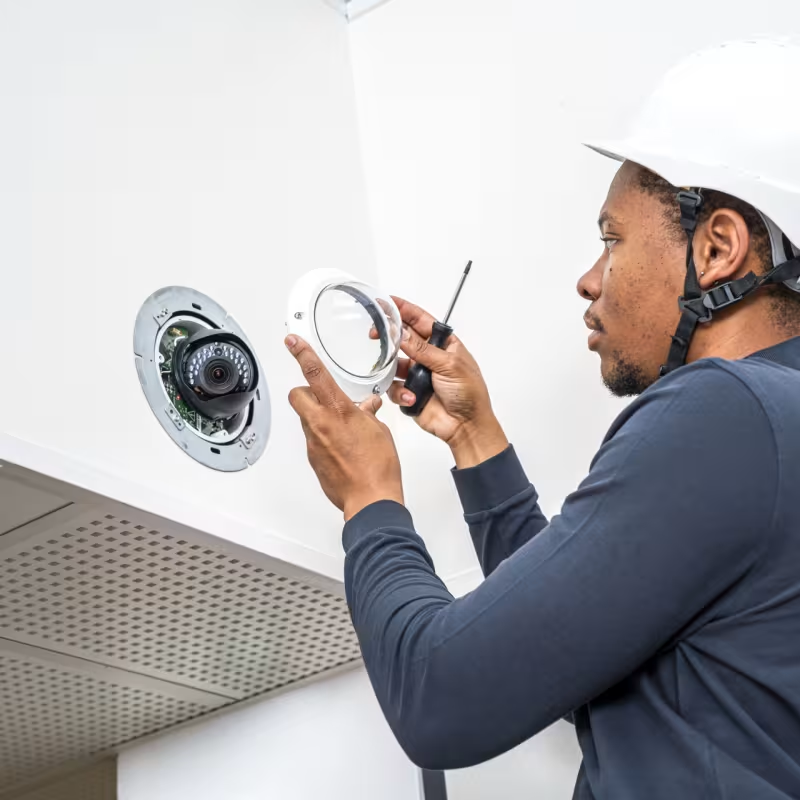
Working with a certified installer such as Scutum helps ensure a reliable installation that meets applicable standards and can support insurance requirements.

Scutum surveillance camera - tech 2

5. Configure the system

Even the best equipment will not provide effective protection if it is poorly configured. Configuration includes:

  • configuring the recorder and cameras (resolution, recording duration, timestamp settings);
  • motion detection, configured zone by zone to reduce false alarms;
  • creating secure, individual user accounts, limited to authorized personnel;
  • connecting to the monitoring center if you have selected this option.

6. Train users

The final step is often overlooked. People authorized to access video footage should know how to:

  • use the system, both live and during playback;
  • apply confidentiality rules;
  • respect the rights and privacy of people recorded by the system, including applicable access and data-handling requirements.

A system that complies with applicable requirements on the day it is installed must remain compliant in everyday use.

Femme qui sourit avec ses collègues pendant la formation DATI Connect

Conclusion: Turn theory into practice with an expert

A successful installation relies on three pillars:

  • a precise assessment of your actual needs;
  • equipment suited to your site and business activity;
  • strict compliance with applicable laws and regulations, including privacy and employment requirements.

Entrusting your project to Scutum means having a single point of contact for these three areas, from the initial assessment to 24/7 monitoring. Our expertise is backed by more than 35 years of experience and more than 425,000 protected sites. One ambition: to provide operational confidence so that your success can last over time.

Contact our experts today for a security assessment and a customized proposal.

FAQ: Your questions about installing security monitoring

Can dummy cameras be installed?

Yes, dummy cameras are generally permitted in many situations, but requirements can vary depending on state and local law and the circumstances. They can have a deterrent effect against attempted intrusion or vandalism. However, they cannot detect an incident or record evidence. They cannot be integrated into a security monitoring or video alarm verification system. For effective protection, they are therefore not recommended as the sole security measure.

How long can video footage legally be retained?

There is no single nationwide retention period that applies to all business video surveillance footage. The appropriate retention period depends on the purpose of the system, applicable federal, state and local requirements, insurance considerations and the business's legitimate security needs.

In practice, businesses may retain footage for periods ranging from several days to around a month or longer, depending on the circumstances. Footage may need to be preserved for longer when it is relevant to an investigation, insurance claim or legal proceeding. Businesses should be able to justify their retention policy based on their security needs and applicable privacy requirements.

Can I record public areas from my business?

Generally, cameras should primarily be directed toward areas that the business has a legitimate reason to monitor, such as its own property and entrances. Depending on the location and jurisdiction, limited capture of public areas may be unavoidable. The system should not be used to unnecessarily monitor people or vehicles in public spaces.

Privacy masking can be configured to obscure areas that do not need to be monitored. The installation should comply with applicable privacy and surveillance laws.

Is a maintenance contract mandatory?

No, it is not always mandatory. However, it is strongly recommended to ensure that the system continues to operate properly over time. A maintenance contract generally includes periodic inspections, software updates and service calls in the event of a malfunction. It reduces the risk of a failure occurring precisely when the system is needed. Some security monitoring contracts already include maintenance.

How much does a security monitoring system cost for a small business?

The cost of installing a security monitoring system depends on the size of the premises, the number of cameras, the access points that need to be secured and the desired features. You should distinguish between the cost of installing the equipment and the cost of the security monitoring subscription.

A small business may invest several thousand dollars in equipment and installation, in addition to a monthly subscription depending on the level of service. Options such as video alarm verification, access control or fire detection can affect the overall price. A security assessment helps determine the solution best suited to your actual needs and obtain a customized quote.


Scutum, Shielding your future.