Submitted by Justine.Pource… on
Scutum shooting photo
published on 17/06/2026

What Is the Difference Between Safety and Security ?

Written by Stéphane Couturier

Safety and security are two terms that are often used interchangeably, both in the media and in professional discussions. However, they refer to two very different realities. Confusing the two can create blind spots in the protection of a business or a home: you may invest in anti-theft measures while overlooking fire risks, or deploy multiple technical detection systems while neglecting access control.

Understanding the difference between safety and security is therefore the first step toward implementing truly effective protection.
This article defines each concept with practical examples, explains why the distinction is critical, and shows how the two work together to provide 360-degree protection.

File

Definition of Safety

Safety encompasses all measures, standards, and procedures designed to prevent unintentional harm resulting from technical failures, human error, or natural events.

Safety: Protection Against Accidental Risks

Safety does not ask, “Who might harm me?” but rather, “What could go wrong?” It relies on regulatory compliance, preventive maintenance, equipment redundancy, and user training.

Examples of safety measures include :
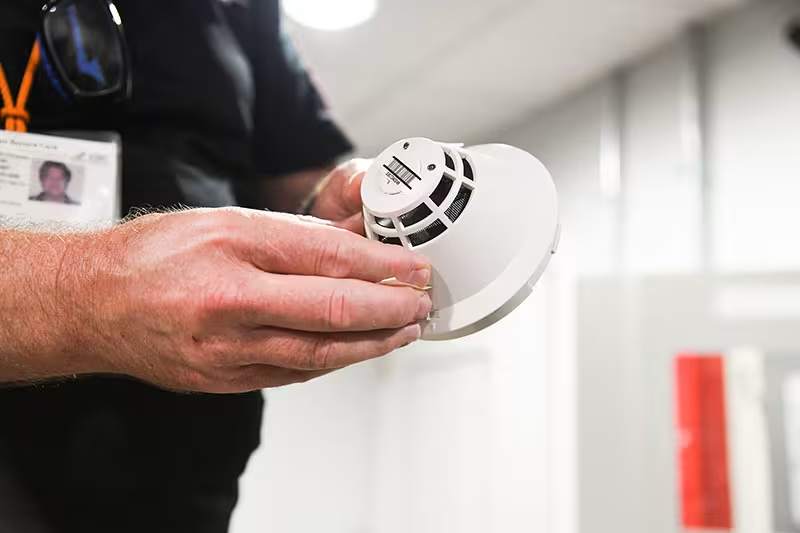
Scutum fire alarm inspection 1
  • Smoke detectors and smoke control systems (fire safety).
  • Ground-fault circuit interrupters (GFCIs) to prevent electric shock.
  • Earthquake-resistant or flood-resistant building standards.
  • Food safety and hygiene procedures (HACCP) in the food service industry.
  • Preventive maintenance of boilers, elevators, or industrial machinery.

Within an organization, safety is typically managed by facilities teams, EHS (Environment, Health, and Safety) managers, and engineering departments. Its goal is to ensure that operations run without accidents, failures, or disruptions.

File

Definition of Security

Security encompasses all human, organizational, and technological measures designed to protect people and assets against intentional acts.

Security : Protection Against Malicious Threats

Security asks the question: “Who might want to harm me, and how can I prevent it?”

Security strategies are built around three complementary principles: Deter (make malicious acts less attractive or more difficult to carry out), detect (identify incidents in real time), respond (verify threats, intervene, and alert the appropriate parties)

Examples of security measures include :

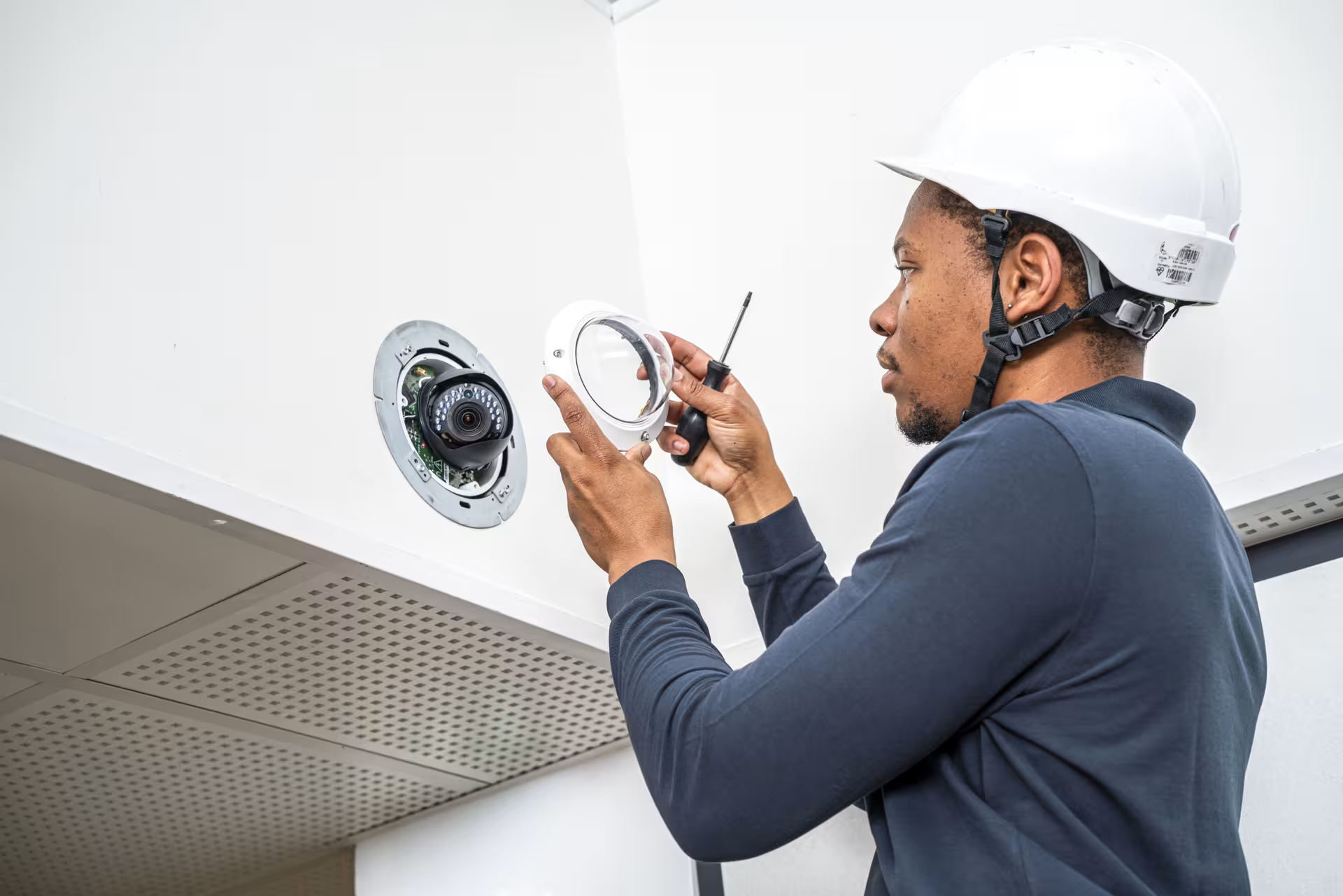
Scutum surveillance camera - tech 2
  • Intrusion alarm systems connected to a 24/7 monitoring center.
  • Video surveillance systems with video analytics and remote verification capabilities.
  • Access control using badges, biometric readers, or QR codes.
  • On-site security personnel, patrols, and controlled visitor management.
  • Cybersecurity solutions designed to prevent unauthorized access, ransomware attacks, and data theft.

Security therefore covers both physical assets (buildings, parking lots, inventory, equipment) and digital assets (customer data, intellectual property, and online identity). It is a constantly evolving field that adapts to emerging threats.

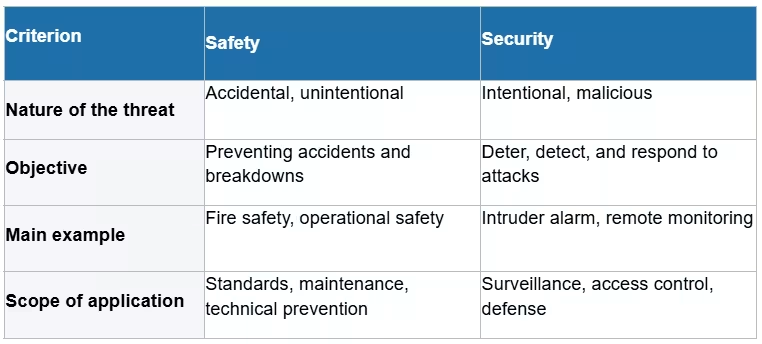
Safety vs. Security at a Glance

To simplify the distinction, here is a summary of the main differences between the two concepts.


Safety vs Security US.png

Why Is This Distinction Important for Your Business (or Home) ?

Understanding the difference between safety and security helps organizations build a truly comprehensive risk management strategy. Three key benefits stand out.

1 A Complete Risk Assessment

Effective protection starts with identifying all potential threats. Focusing on theft while ignoring fire risks, or vice versa, leaves significant vulnerabilities unaddressed. A strong risk assessment considers both accidental and intentional threats simultaneously.

2 Optimized Resource Allocation

Safety and security require different types of investments. Allocating the right resources to the right solutions helps avoid unnecessary duplication while ensuring that no critical area remains unprotected. A safety budget should not come at the expense of security systems, and vice versa.

3 Regulatory Compliance

Many legal obligations relate to safety, including fire codes, workplace safety regulations, equipment inspections, and building standards. Others relate to security, including privacy regulations, video surveillance requirements, cybersecurity obligations, and incident reporting procedures. Understanding the distinction helps organizations remain compliant across both areas.

The Power of Integration : Achieving 360-Degree Protection

Safety and security reinforce one another. Today, the most effective protection strategies are based on the convergence of both disciplines, whether for businesses, residential communities, or private homes.

ampoule icone

Example of a Synergistic Approach

An access control system (security) can be integrated with a fire detection system (safety).

In the event of a fire alarm: 
 

Emergency exits automatically unlock.

Elevators are taken out of service.

Intrusion alarms may be temporarily suspended to facilitate evacuation. 
 

Technology works together to protect people more effectively.

This 360-degree approach is increasingly reflected in modern management platforms that consolidate data from safety systems (technical sensors, fire detection, energy monitoring) and security systems (intrusion alarms, video surveillance, access control, and cybersecurity) into a single interface.

One dashboard. One response team. Coordinated procedures.

GettyImages-1355657113.jpg

This is precisely SCUTUM’s approach: assessing all risks, both intentional and accidental, before designing a unified solution that may include fire detection, intrusion protection, video surveillance, access control, and remote monitoring services. Protection becomes measurable, understandable, and adaptable as risks evolve.

Icon person.png

Stéphane Couturier, Sales Director, SCUTUM

"A truly effective safety and security strategy always begins with a comprehensive assessment: technical risks on one side, human and digital risks on the other. This holistic vision enables organizations to build protection systems that are resilient, compliant, and easy for teams to understand and operate."

FAQ : Common Questions About Safety and Security

How Can I Assess My Safety and Security Needs ?

  • Conduct a comprehensive assessment covering both accidental and intentional risks.
  • Identify sensitive areas and activities within the facility or property, such as inventory storage, customer data, public reception areas, and technical rooms.
  • Prioritize risks according to their likelihood and potential impact.
  • Compare identified risks with existing measures to determine any protection gaps.

Who Is Responsible for Safety and Security Within an Organization ?

  • Company leadership remains legally responsible for the overall protection of people and assets.
  • Internal stakeholders such as EHS managers, facilities teams, and IT departments may oversee specific aspects.
  • Certain responsibilities may be outsourced to specialized providers for audits, remote monitoring, security services, or maintenance.
  • Roles and responsibilities should ideally be documented within a shared prevention and business continuity plan.

Are Safety and Security Subject to the Same Legal Requirements ?

No. They are governed by different but complementary regulatory frameworks.

  • Safety primarily focuses on technical standards and accident prevention.
  • Security focuses on protection against malicious acts, including physical security, cybersecurity, privacy compliance, and surveillance regulations.

Organizations should consider both whenever changes are made to facilities, systems, or operations.

Are There Specific Audits for Safety and Security ?

Yes. Separate audits are often conducted depending on the risks being evaluated.

  • Safety audit : technical compliance, fire safety, maintenance procedures, workplace safety, equipment inspections.
  • Security audit : intrusion risks, access control, video surveillance, cybersecurity, emergency response and incident management.

Many organizations now choose integrated audits, which provide a more effective foundation for developing a coherent protection strategy.

Safety protects against accidental events. Security protects against intentional threats.

True protection of people and assets requires addressing both together through clear governance, coordinated procedures, and integrated technologies.

This is the philosophy championed by SCUTUM : a single partner delivering a continuous protection strategy, from fire detection systems to certified 24/7 monitoring centers.