Submitted by editor on
Fin des lignes RTC
published on 09/01/2026

End of PSTN lines: Where do we stand?

Written by editor

End of PSTN: PSTN lines have been in use throughout France since the 1970s. With technological advances and the high cost of maintenance, they are due to disappear by 2025.

However, the end of PSTN lines does not mean the end of fixed telephony.

How is the end of PSTN lines progressing?

Since 2018, Orange, France Telecom's line manager, has stopped offering new PSTN lines. The incumbent plans to close them from 2023 until 2030, proceeding by geographical zones.

In 2019, Orange closed digital lines, including digital voice (T0 or T2), leading to the gradual abandonment of digital technologies.

Between 2023 and 2026, the gradual shutdown of PSTN lines forces many businesses to migrate to modern technologies, for example VoIP and other Internet solutions.

In 2030, the transition will be completed with the definitive closure of PSTN lines. This will favor communications via IP and Internet networks. This transition will enable telecoms infrastructures to be modernized, marking the end of traditional PSTN lines.

November 15, 2018 = Closure of analog lines
November 15, 2019 = Commercial closure of digitized lines (digital voice also known as T0 or T2)
... 2023 = Gradual shutdown of PSTN lines
2023 ... 2030 = Definitive and gradual end via plates (transition from PSTN to IP)

*Orange
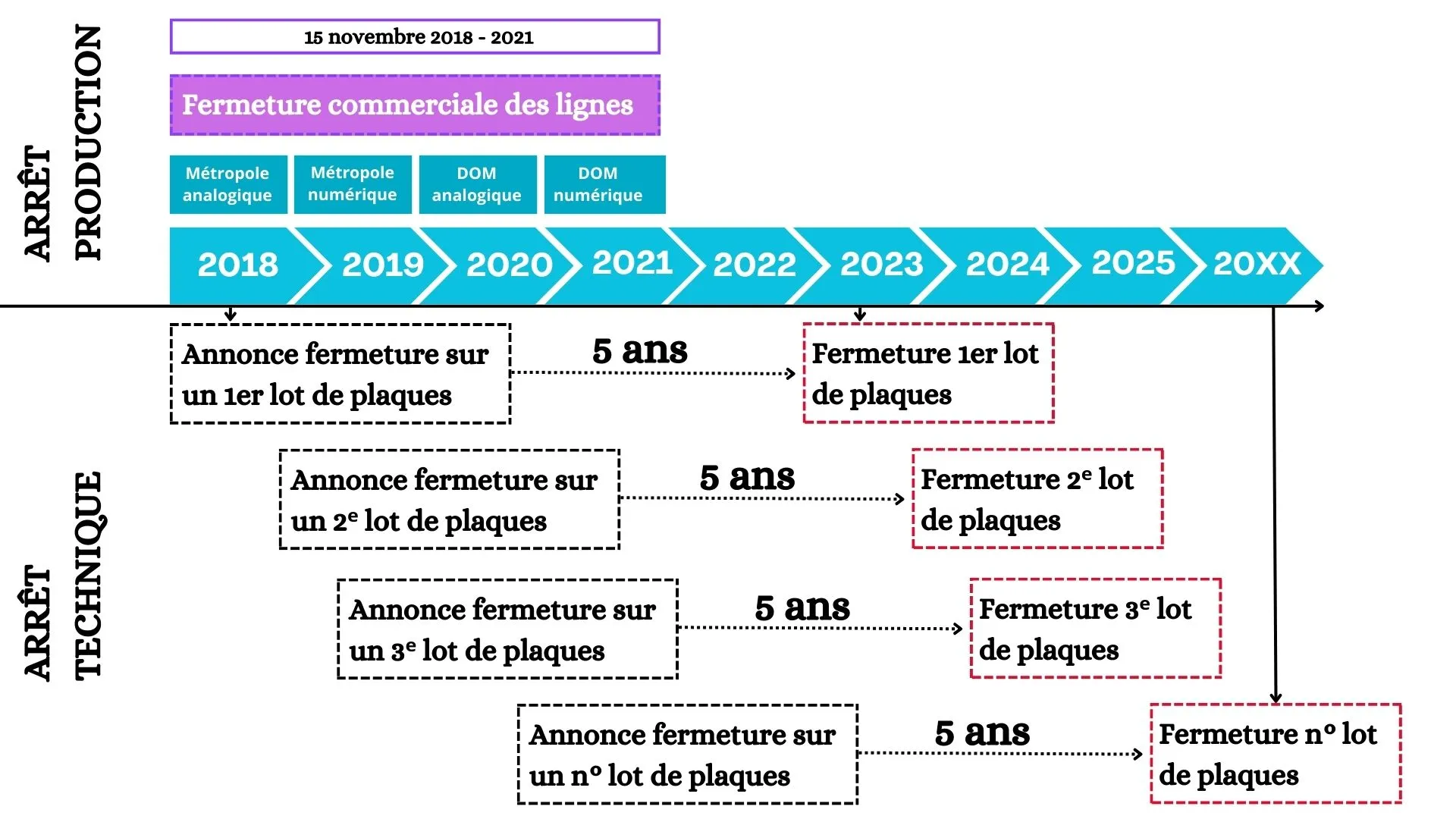
Image removed.

The end of PSTN lines marks an evolution in communication technologies.

It has to be said that switching from old telephone lines means changing the code and structures. This makes it possible to follow the new rules of communication with the Internet and IP networks.
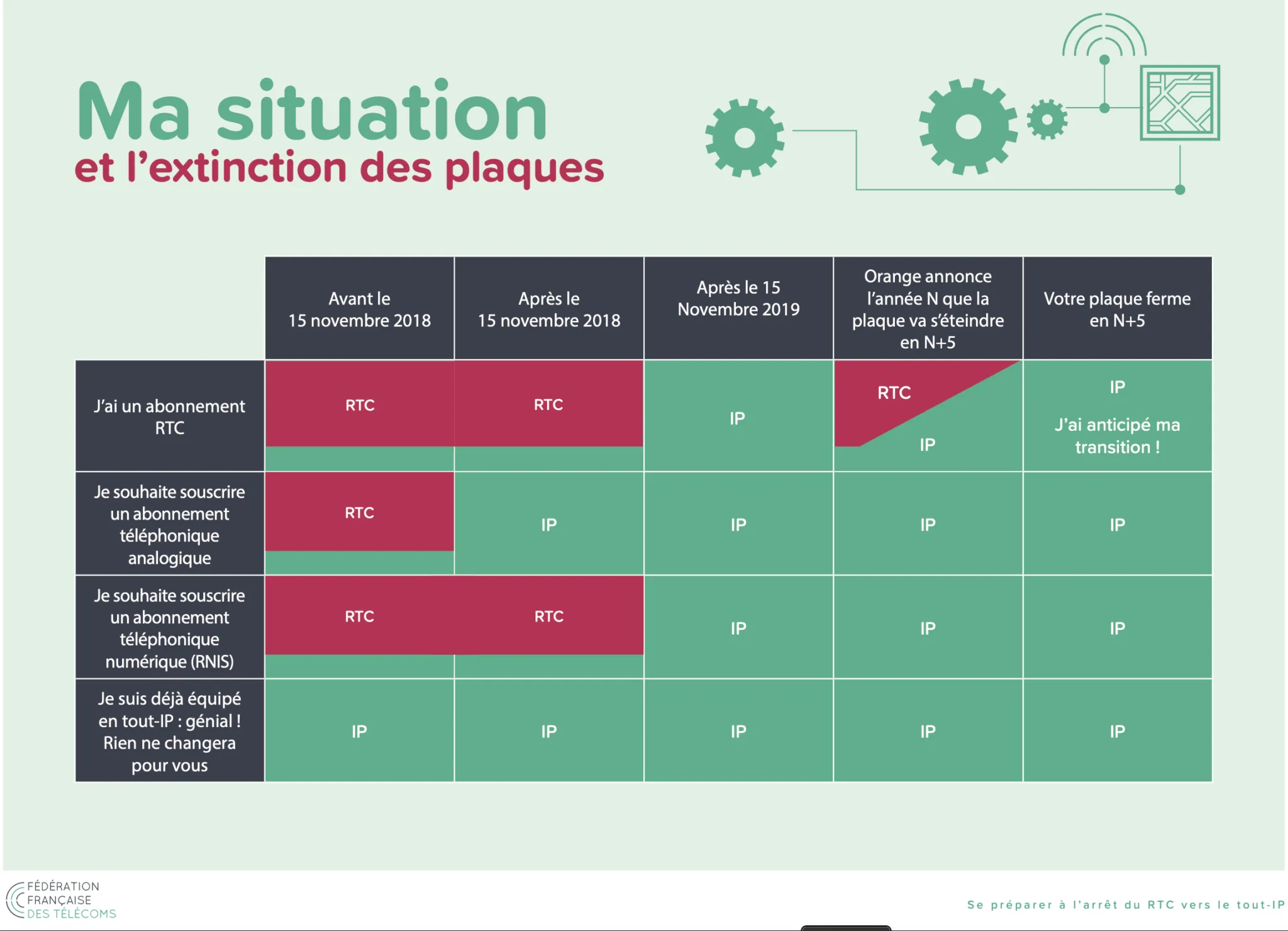
Extinction des plaques pour la fin des lignes du RTC

Source* : Fédération Française des Télécoms
PSTN switch-off: Why the change?

The Switched Telephone Network (PSTN) is coming to an end for several reasons:

  • The PSTN has become obsolete : Modern communications are generally based on packet switching, such as Voice over IP (VoIP). 5G, offering clear advantages in terms of flexibility, quality and speed. Old PSTN lines were limited in terms of data transfer speed.
     
  • The use of the copper network: Many factors are converging to gradually reduce the use of the copper network over the coming decades, particularly new technologies. These new technologies, such as fiber optics, digital networks and communication solutions are based on IP (Internet Protocol) means of communication.

    In addition, the increase in the number of antennas for wireless communications will be decisive. The deployment of fiber optics has accelerated the obsolescence of PSTN lines, encouraging the transition to more modern communications technologies. What's more, the growth of devices using M2M chips is contributing to a reduction in copper network usage. These devices are adapted to modern communication technologies.
     

  • The cost : Maintaining the PSTN is becoming increasingly expensive for telecom operators. What's more, as PSTN is no longer marketed or manufactured anywhere in the world, repair is becoming virtually impossible.
     
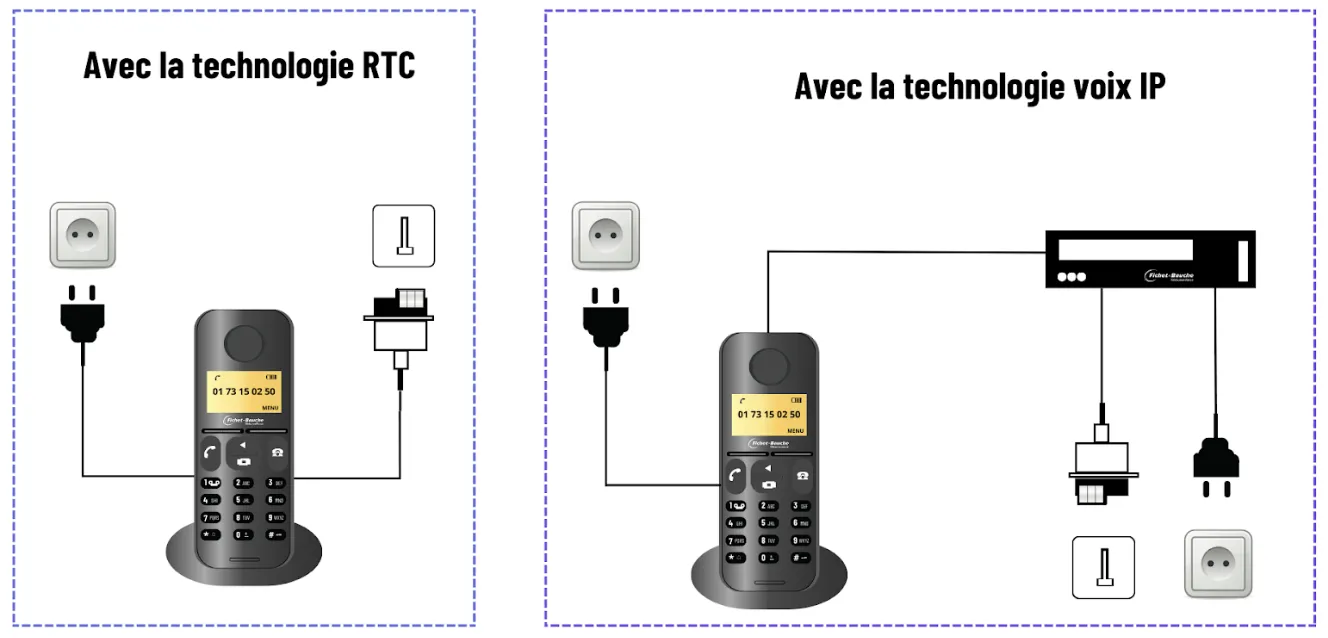
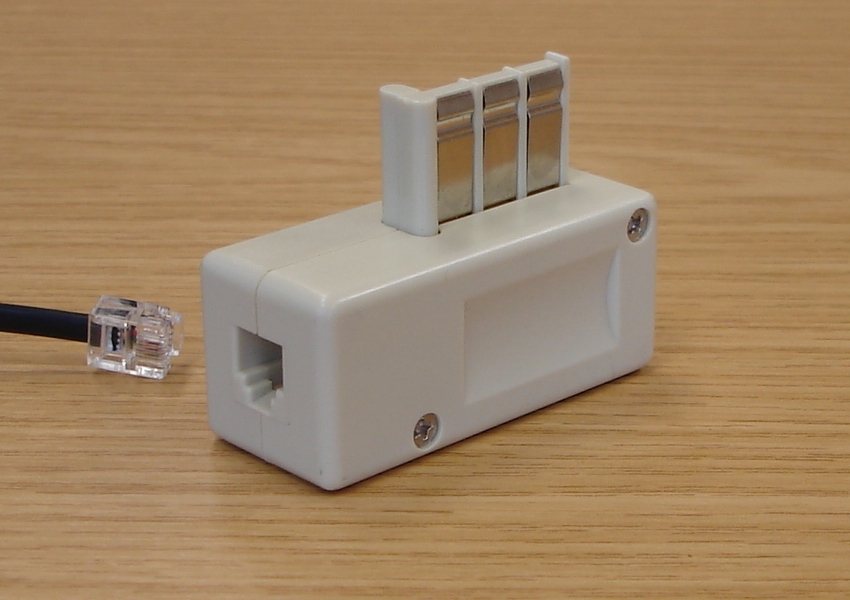
  • The incompatibility of the T plug : Although PSTN is coming to an end, copper wire and the T plug will not disappear. However, it will no longer be possible to plug in a telephone directly. The phone will have to be connected to an internet box plugged into a wall socket.
     
  • Services: Consumers and businesses are demanding more versatile services. Such as text messaging, video conferencing and social network communication. PSTN simply can't meet these needs.
     
  • The recommendations:Governments and the'ARCEP, (Aauthorité de Régulation des Communications Électroniques et des Postes), are encouraging the transition to digital networks to improve efficiency and security. As the old PSTN networks were obsolete, this decision was taken to meet current needs.

What's the latest on the end of PSTN in the rest of the world?

France is not the only country affected by the end of PSTN lines. The end is already in effect in Switzerland. In the UK, since 2020, it has no longer been possible to obtain new lines. In the United States, despite more complex network management, decentralized at state level, the shutdown began in 2020.

Technically, what is PSTN?

PSTN stands for the Réseau Téléphonique Commuté.

PSTN is the historic analog technology that enabled voice communications between two distant users.

Once a must for fixed telephone calls, the Réseau Téléphonique Commuté (PSTN), is today a relic of the past. As communications technologies advance, the obsolescence of PSTN lines is becoming increasingly irreversible.

Priste T RTC

In fact, almost all French households used the famous "T" socket to connect telephones, ADSL filters, modems, faxes, etc.

The technological upgrade to IP is essential for telephony services. The transition to IP technology improves telephony services over long distances, supporting the France Très Haut Débit plan.

To wit, updating public service websites is part of the France Très Haut Débit plan.

The authorities are encouraging the migration of PSTN lines, to IP technology, These ensure the continuity of online public services with reliable connectivity throughout the territory.

How do PSTN lines work?

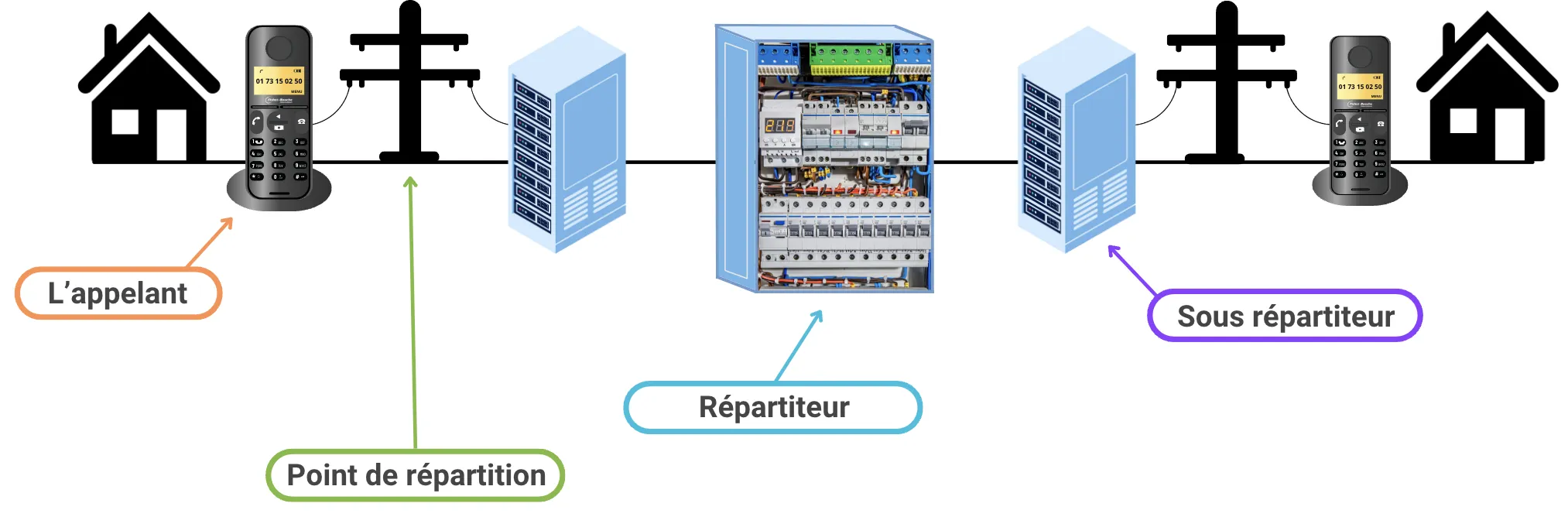
Analog network line technology consists of a pair of wires that form a loop.

To explain very simply, it works in 3 stages:


  1. Answering a call: as soon as you pick up your phone, the loop closes
  2. During the call: The handset membrane vibrates causing a coil to vibrate. This creates an electrical current.
  3. Electrical signal: The voice is transformed into an electrical signal. This is where telephone switches (equipment) come in. This equipment transfers the voice over the PSTN network.


Explanatory diagram of the end of PSTN lines

Today, PSTN lines work differently.

With Internet-based digital technologies, these new lines use packet data transmission. Put more simply, information is chopped up into small pieces (packets) and sent over the network in a more flexible way.

In this way, it enables bandwidth to be shared securely between several users. This makes communication faster, more reliable and better adapted. As these technologies are more versatile, they also enable voice, data and video services on a single line.

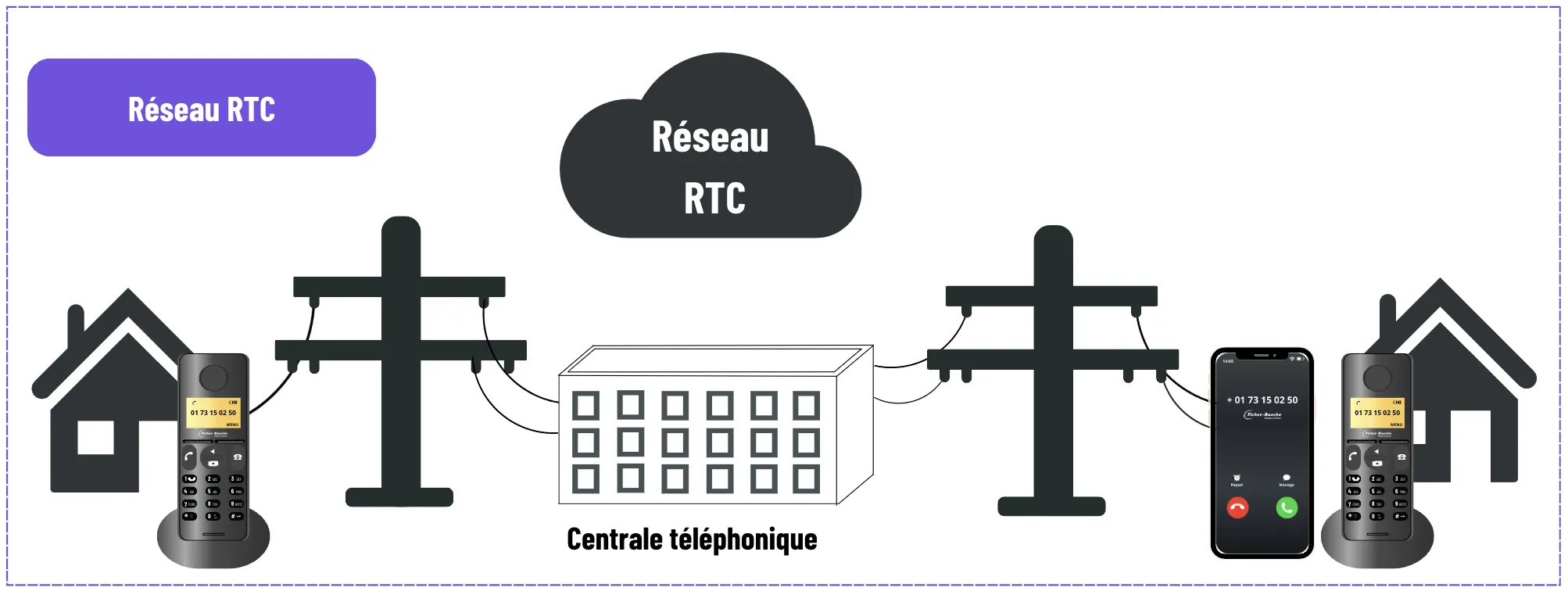
BEFORE

Here's the architecture of the PSTN network

Old PSTN network architecture


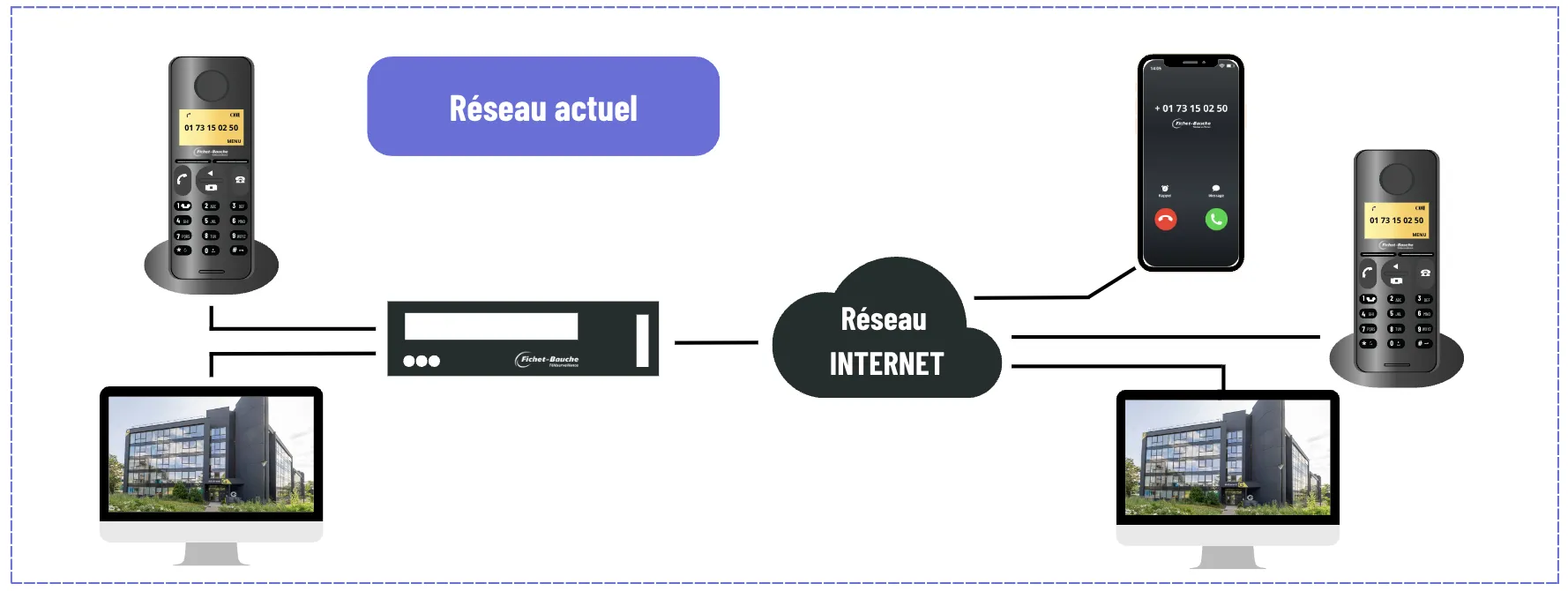
APRÈS

Here's the current network architecture.

Current network architecture

Conclusion: Things to remember

The PSTN was long the traditional circuit-switched network on which fixed lines were based. However, the rapid evolution of technologies has made this network obsolete. It has led to the need for new, more efficient communications networks adapted to today's needs.

Image removed.


Modern communications networks are primarily based on communication through the transmission of data packets. Today's computer networks use packet switching. Unlike circuit switching, which required a dedicated connection throughout the communication.

Artificial intelligence has played a key role in the implementation of these new networks. It enables more sophisticated traffic and resource management, guaranteeing better quality of service for communications. The gradual abandonment of PSTN lines in favor of these new-generation networks marks an undeniable turning point in the telecommunications sector. This, offering consumers faster, more reliable communications services.

In summary, the end of PSTN lines, is the result of the evolution of communications technologies towards communications networks. These communications networks are based on the transmission of data packets, exploiting artificial intelligence for better traffic management. This transition enables us to offer users more efficient communication services.

For more information on the end of PSTN lines: visit the arcep website.