Submitted by Justine.Pource… on
Fire Doors
published on 27/08/2026

Fire Doors: What You Need to Know

A complete guide to fire door ratings, regulations, maintenance requirements and compliance obligations for businesses in the United States.

Fire doors play a vital role not only in a building's evacuation procedures but also in its passive fire protection. By preventing flames and smoke from spreading from one area to another, they provide occupants with critical extra time to evacuate safely and give emergency responders the time needed to act effectively.

Whether you manage a hospital, office, school, hotel or industrial facility, understanding your fire door obligations is essential. This guide covers everything you need to know: what fire doors are, how they are rated, which regulations apply, and how to keep them compliant.

What Is a Fire Door?

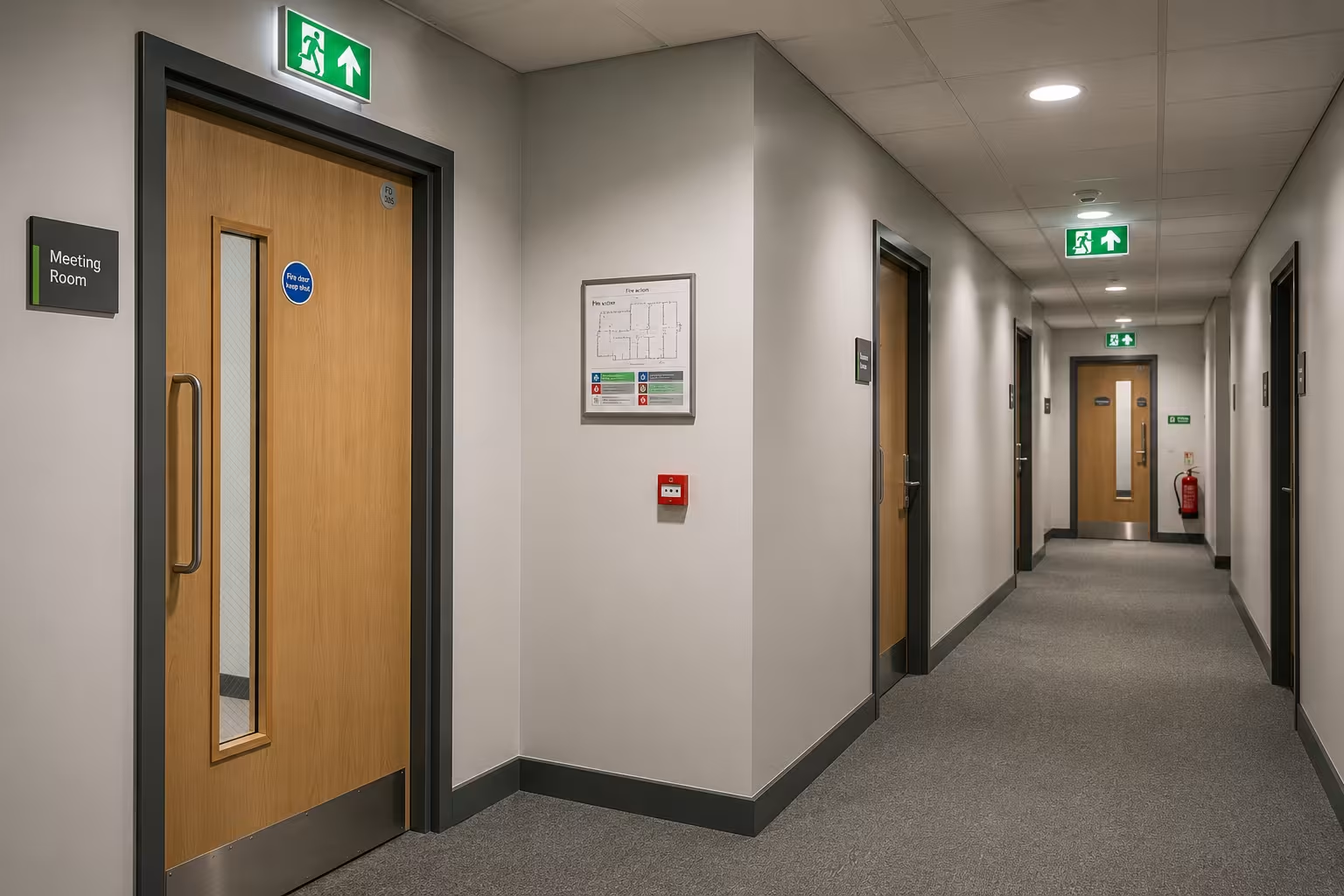
A fire door is a specially designed door assembly that helps prevent the spread of fire and smoke between different areas of a building for a specified period of time.

Unlike a standard door, a fire door is tested and listed as a complete assembly. This means the door leaf, frame, glazing where fitted, intumescent and smoke seals, hinges, locks and self-closing device are all designed and tested to work together to provide the required level of fire resistance.

Porte coupe feu.png

Fire doors serve a dual purpose. They act as a passive barrier, containing a fire within a compartment to limit structural damage, while simultaneously forming part of the means of egress, allowing occupants to evacuate safely.

Pictogramme d'ampoule noir

Key Distinction

A fire door is not simply a fire-resistant door leaf. The entire assembly, including all hardware and seals, must meet the required standard and performance criteria to be effective.

Fire Door Ratings: 20, 45, 60 Minutes and Beyond

Fire doors are classified according to how long they can resist the spread of fire under standard test conditions. In the United States, fire door assemblies are commonly assigned ratings such as:

  • 20-minute – 20 minutes of fire protection. Commonly used in certain wall and corridor applications where this rating is permitted by the applicable building and fire codes.
  • 45-minute – 45 minutes of fire protection. Used in specific fire-rated wall assemblies where required by the applicable code.
  • 60-minute – 60 minutes of fire protection. Required in higher-risk environments or in fire-rated assemblies where a higher level of protection is required.
  • 90-minute / 180-minute – 90 to 180 minutes of fire protection. Used in specific high-risk or critical infrastructure applications, depending on the fire-resistance rating of the surrounding wall assembly and the applicable code requirements.

The required rating for your building depends on the occupancy classification, construction type, location of the opening, fire-resistance rating of the surrounding wall or barrier, and the applicable fire risk assessment and building codes. Higher ratings may be required in areas with greater risk or where a higher level of compartmentation is necessary.

U.S. Fire Door Regulations: Legal Requirements

Fire doors in the United States are governed by a combination of national model codes, standards and local regulations. The requirements applicable to a specific building depend on the jurisdiction and the edition of the codes adopted locally. The main codes and standards include:

1 International Building Code (IBC)

The International Building Code (IBC) establishes requirements for fire-resistance-rated assemblies, including fire door assemblies, in commercial and other buildings. It addresses where fire doors are required, their required fire protection ratings, and how they must perform as part of fire-rated walls and barriers.

2 International Fire Code (IFC) and NFPA 1

The International Fire Code (IFC) and NFPA 1, Fire Code, provide requirements for fire safety in occupied buildings and existing facilities. They include provisions relating to the inspection, testing, maintenance and operation of fire doors and other fire protection systems.

3 NFPA 80 – Standard for Fire Doors and Other Opening Protectives

NFPA 80 is one of the principal standards governing fire doors and other opening protectives in the United States. It covers installation, inspection, testing, maintenance and repair requirements to help ensure that fire door assemblies perform as intended.

4 NFPA 101 – Life Safety Code

NFPA 101, Life Safety Code, establishes requirements for life safety and means of egress in buildings. It includes provisions concerning fire-rated doors and doors located along designated means of egress.

Fire doors specialist.png
Icone panneau attention

Important

Failure to comply with fire door requirements can result in enforcement action, penalties or requirements to correct deficiencies, depending on the applicable jurisdiction and the severity of the violation. In the event of a fire, non-compliant or poorly maintained fire doors can also put lives at risk and may contribute to significant liability and insurance consequences.

Fire Door Requirements

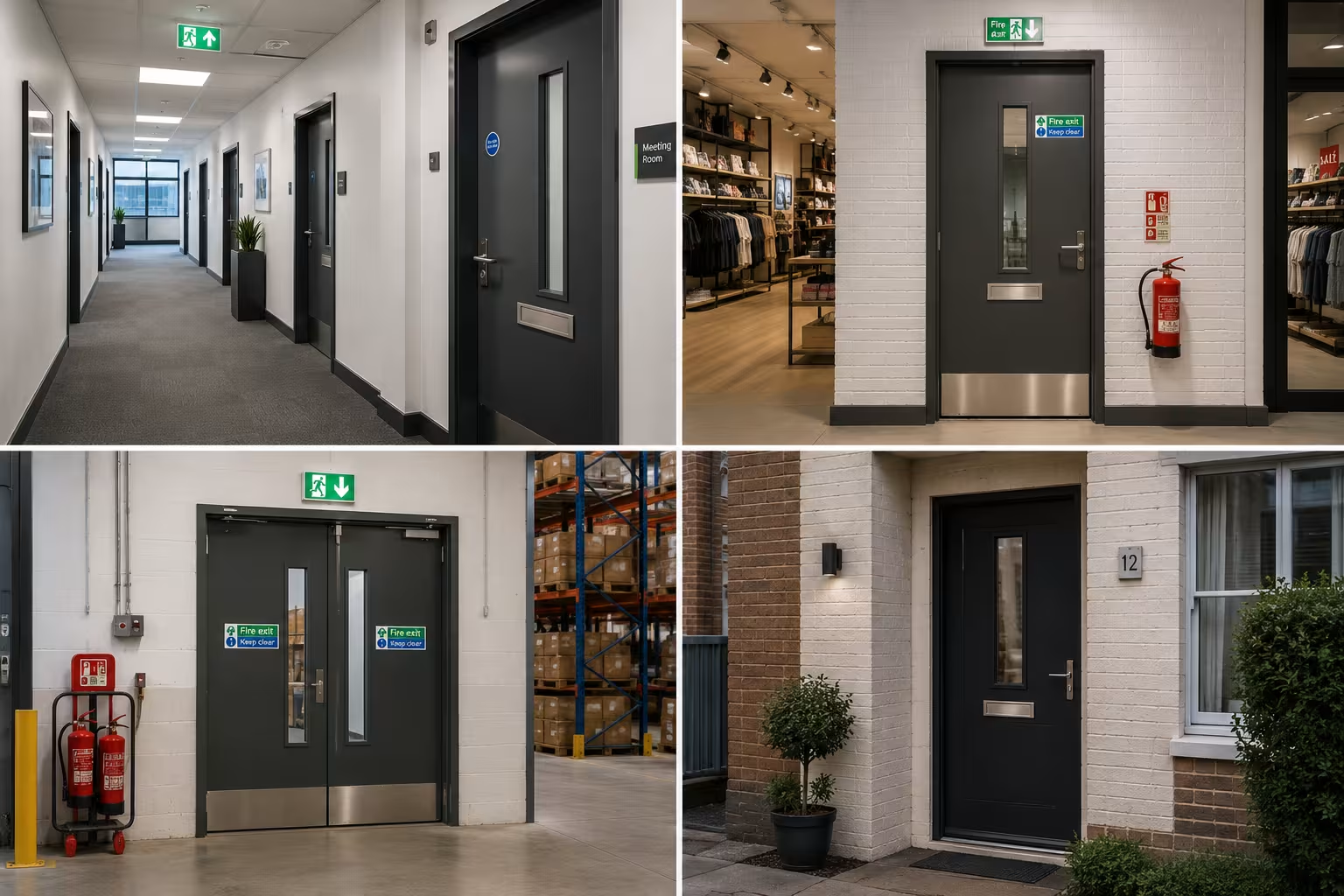
Fire doors are typically installed in key locations throughout a building. Their placement is determined by the building code, occupancy classification, fire-resistance-rated assemblies and means of egress strategy. Common locations include:

  • Along designated means of egress and corridors
  • Between stairwells and floor areas
  • Between areas with different levels of fire risk (e.g., a kitchen and dining area, mechanical room and office space)
  • In high-rise or multi-occupancy residential buildings, in designated common areas and at certain dwelling-unit entrances
  • In buildings with sleeping occupants, such as hotels, healthcare facilities and certain residential occupancies
  • In industrial and storage environments where fire risk is elevated

The specific locations where fire doors are required will be determined by the applicable building and fire codes, the building's design and its fire protection strategy. At Scutum, our experts carry out comprehensive assessments and advise on the appropriate placement of fire doors for your facility.

Exemples fire doors.png

Fire Door Maintenance: A Critical Requirement

Installing the right fire doors is only the first step. Regular inspections and fire door maintenance are essential to ensure that assemblies remain operational and continue to meet applicable fire safety requirements.

Fire doors are subject to daily wear and tear. Hinges can loosen, seals can deteriorate, self-closing devices can weaken, and door frames can become damaged or distorted over time. A fire door that is not properly maintained may fail to perform when it matters most.

Fire Door Maintenance

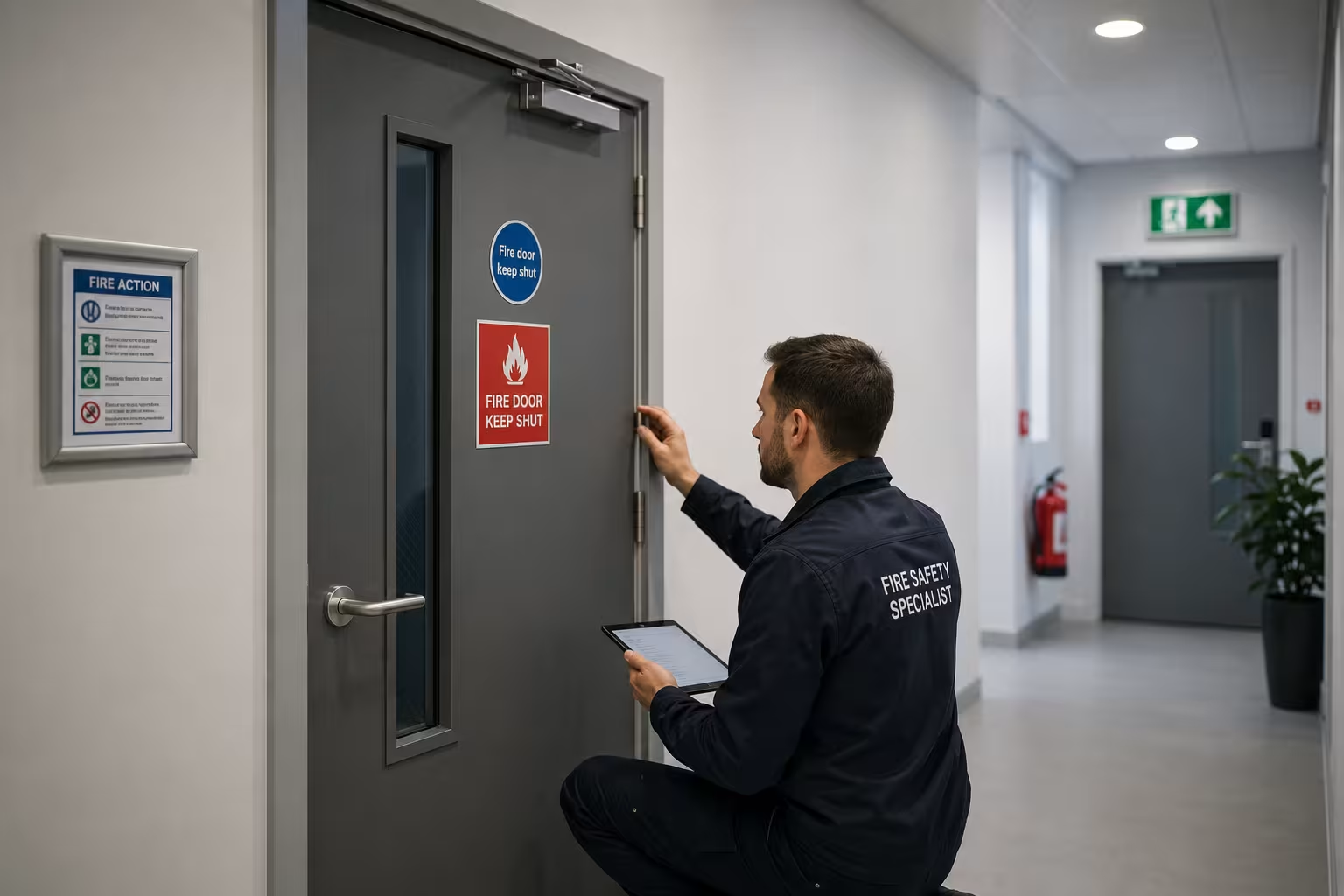
A professional fire door inspection and maintenance service checks all mechanical and passive components of the door assembly, including:

1 Hinges

checked for proper installation, alignment and secure attachment

2 Panic hardware and emergency exit hardware

tested for proper operation and compliance

3 Push pads and other door hardware

inspected for wear, damage or improper installation

4 Fire-rated mailboxes

verified to ensure that the fire-resistance integrity of the opening is maintained

5 Handles and locking mechanisms

assessed for ease of operation and compliance with means-of-egress requirements

6 Intumescent and smoke seals

inspected for excessive wear, damage or loss of integrity

7 Self-closing devices

tested to ensure the door closes fully and latches properly from any open position

8 Door frame and leaf

checked for warping, excessive gaps or structural damage that could compromise fire resistance

9 Glazing and fire-rated glass panels

inspected for cracks, missing glazing components or damaged intumescent seals

Both one-time inspections and regular maintenance programs are available. The required inspection frequency depends on the applicable code, the type of facility, the level of risk and how heavily the doors are used.

Competent Maintenance Checks

Fire doors should be installed and maintained by qualified professionals with the appropriate training, knowledge and experience to perform the work correctly. These activities should not be entrusted to non-specialist building maintenance personnel who do not have the required expertise.

At Scutum, our specialized fire safety technicians are qualified to inspect and maintain fire doors, whether or not they were originally supplied and installed by us. We operate across a wide range of sectors and facilities, from offices and commercial properties to schools, healthcare facilities and industrial sites.

Scutum technician with service van

Who Is Accountable?

In the United States, responsibility for fire door compliance and fire safety depends on the applicable state and local regulations, the type of building and the responsibilities assigned to the building owner, facility manager or other responsible parties. In many cases, responsibility may involve:

tick icon

The Building Owner or Property Manager

responsible for ensuring that required fire protection measures are maintained

tick icon

The Employer or Facility Manager

where the premises are a workplace and they have responsibility for building operations and occupant safety

tick icon

The Occupier or Tenant

where they have control over the premises and responsibilities relating to their operations and safety

The responsible parties must ensure that fire doors are properly installed, meet the required standards, are regularly inspected, and are properly maintained. They must also ensure that fire doors are not improperly propped open or otherwise compromised, as this can seriously reduce their effectiveness in the event of a fire.

Where buildings have multiple occupants, owners or tenants, responsibilities should be clearly defined and maintenance programs properly coordinated.

Common Compliance Failures

Fire inspectors and facility managers regularly identify the same recurring issues. Being aware of them helps avoid the most common pitfalls:

1 Doors that do not fully self-close

often due to worn or damaged closing mechanisms

2 Damaged or missing intumescent seals

which can prevent the door from properly sealing against fire and smoke

3 Doors propped open

undermining their purpose as part of the building's fire compartmentation

4 Incorrect or missing signage

fire doors must be appropriately identified where required by applicable codes and standards

5 Damaged glazing or missing intumescent components around fire-rated glass panels
6 Hardware that has been replaced with components that are not fire-rated or listed for the assembly

a common issue when maintenance teams replace door hardware without checking whether the replacement components are compatible with the fire door assembly

7 Gaps between the door leaf and frame that exceed permitted tolerances

Many of these issues can be easily prevented with a regular maintenance program. Identifying and correcting them before an inspection or before an incident occurs is far less costly than dealing with the potential consequences.

Fire Door FAQs

Is fire door maintenance a legal requirement?

Fire door inspection and maintenance requirements depend on the applicable state and local building and fire codes, as well as the standards adopted by the jurisdiction. NFPA 80 provides requirements for the inspection, testing and maintenance of fire door assemblies, while the frequency and scope of inspections may vary depending on the applicable code and building type.

How often should fire doors be inspected?

The required inspection frequency depends on the applicable codes and standards, the building type, occupancy, level of risk and frequency of use. In higher-risk environments or where doors are subject to heavy use, more frequent inspections may be appropriate.

What types of maintenance do fire doors need?

A full fire door inspection covers all mechanical and passive components: hinges, panic hardware, push pads, handles, mailboxes, self-closing devices, intumescent and smoke seals, door frames and glazing. The aim is to confirm that the complete door assembly will perform as intended in the event of a fire.

Can I carry out fire door maintenance myself?

Fire door inspection, testing, maintenance and repair should be carried out by qualified professionals with the appropriate training and experience. Using unqualified personnel to inspect or repair fire doors can result in non-compliance and may compromise the door's performance in an emergency.

What happens if my fire doors are not compliant?

Non-compliant fire doors can result in enforcement action or requirements to correct deficiencies, depending on the applicable jurisdiction and the nature of the violation. Beyond regulatory consequences, fire doors that do not meet applicable requirements put lives at risk and can have serious consequences in the event of a fire.

Does Scutum carry out fire door maintenance on doors it has not installed?

Yes. Scutum's qualified technicians can inspect and maintain fire doors regardless of which manufacturer or contractor originally supplied or installed them. We work across a wide range of facility types and can support both one-time inspections and ongoing maintenance programs.

How Scutum Can Help

At Scutum, we provide a comprehensive fire door service covering installation, inspection and maintenance, helping businesses across the United States maintain compliance with applicable fire safety requirements while protecting their people, property and operations.

Our qualified technicians carry out thorough assessments of all door components, identifying any issues and recommending the appropriate corrective action. We offer both one-time inspections and ongoing maintenance contracts, tailored to your facility type and risk profile.

We work across all sectors, including commercial offices, retail, healthcare, education, hospitality, industrial and public sector facilities. Our service is supported by Scutum's fire safety certifications and qualifications, reflecting our commitment to the highest standards of fire safety.

To arrange a fire door inspection or find out more about our maintenance services, contact the Scutum team today.