Is it possible to protect a factory against fire without shutting everything down? The answer is yes. Very early detection and non-destructive fire suppression technologies now make it possible to combine maximum safety with business continuity. This is what we will explore in this article.
Publications
Fire Protection Industrial Environments Ensuring Safety Without Stopping
published on 26/08/2026
Fire Protection in Industrial Environments: Ensuring Safety Without Stopping Production
published on 26/08/2026
Written by Guillaume Brizot
Written by Guillaume Brizot
An unplanned production interruption can cost, depending on the industry and size of the facility, tens of thousands of dollars or euros per hour. This figure alone explains why fire safety is no longer simply a technical issue: it has become a strategic priority discussed at the highest levels of an organization.
For many years, protecting an industrial facility against fire meant accepting a difficult trade-off. Systems designed to extinguish fires at all costs could often cause damage almost as severe as the fire itself. Water, corrosion, extinguishing powder: the solution could become part of the problem.
The Double Threat: Fire Risk and the Risk of Production Downtime
An industrial facility faces two distinct but closely connected threats. The first is the most visible: the fire itself. An industrial fire can put employees' lives at risk, destroy costly production equipment and, in some cases, make a facility completely unusable for several months. The human and material consequences are, understandably, the first risks to be considered.
The second threat is more insidious: production downtime. Even without major damage, an interruption lasting just a few hours can generate direct financial losses, contractual penalties for late deliveries and, in some cases, the permanent loss of certain contracts. There is also a less quantifiable but equally real risk: damage to the company's reputation and to the reliability perceived by its partners and customers.
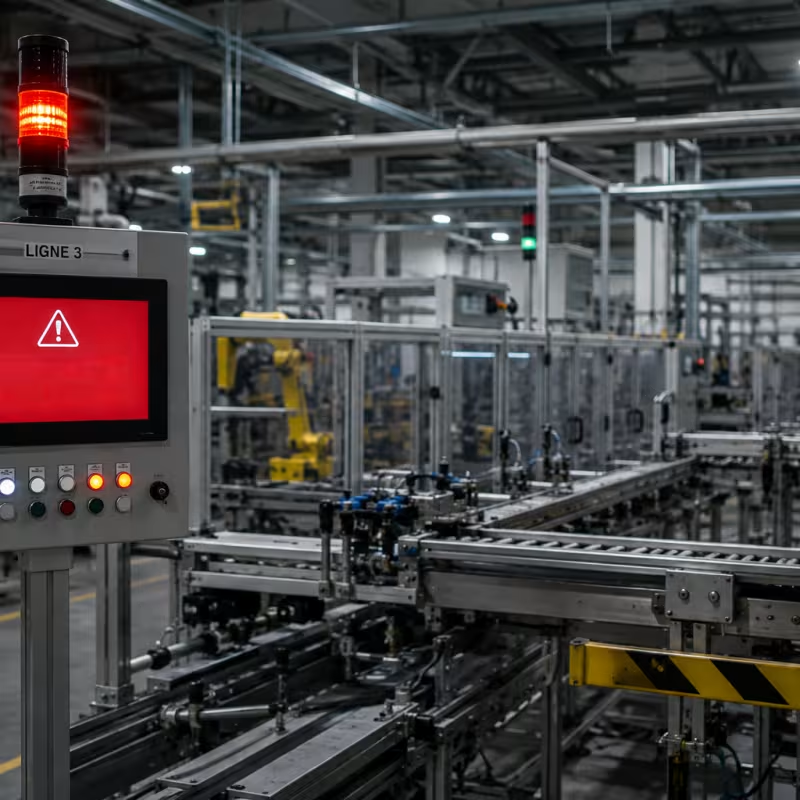
The problem is that traditional fire protection systems can increase this second threat while attempting to address the first. A system activated to extinguish a small fire can shut down production just as effectively, and sometimes for even longer, than an uncontrolled fire. This is precisely the dilemma that modern technologies can now overcome.

Guillaume, Fire Safety Sales Director at Scutum
“An unplanned production line shutdown is never just about the cost of restarting the line. We regularly see industrial customers dealing with orders that cannot be delivered within contractual deadlines, with penalties that can amount to tens of thousands of dollars or euros after just a few days of delay. It is this commercial impact, much more than the fire itself, that justifies investing in fire protection that does not disrupt production.”
The Traditional Approach and Its Limitations: Why Sprinklers Are Not Always the Best Solution
The sprinkler system remains the standard solution in a large number of industrial buildings. Its principle is simple: a heat detector triggers water discharge in the affected area once a set temperature threshold is reached. Robust and proven for more than a century, it continues to provide effective protection in many situations.
But in an industrial environment where every minute of production counts, its limitations can become problematic:
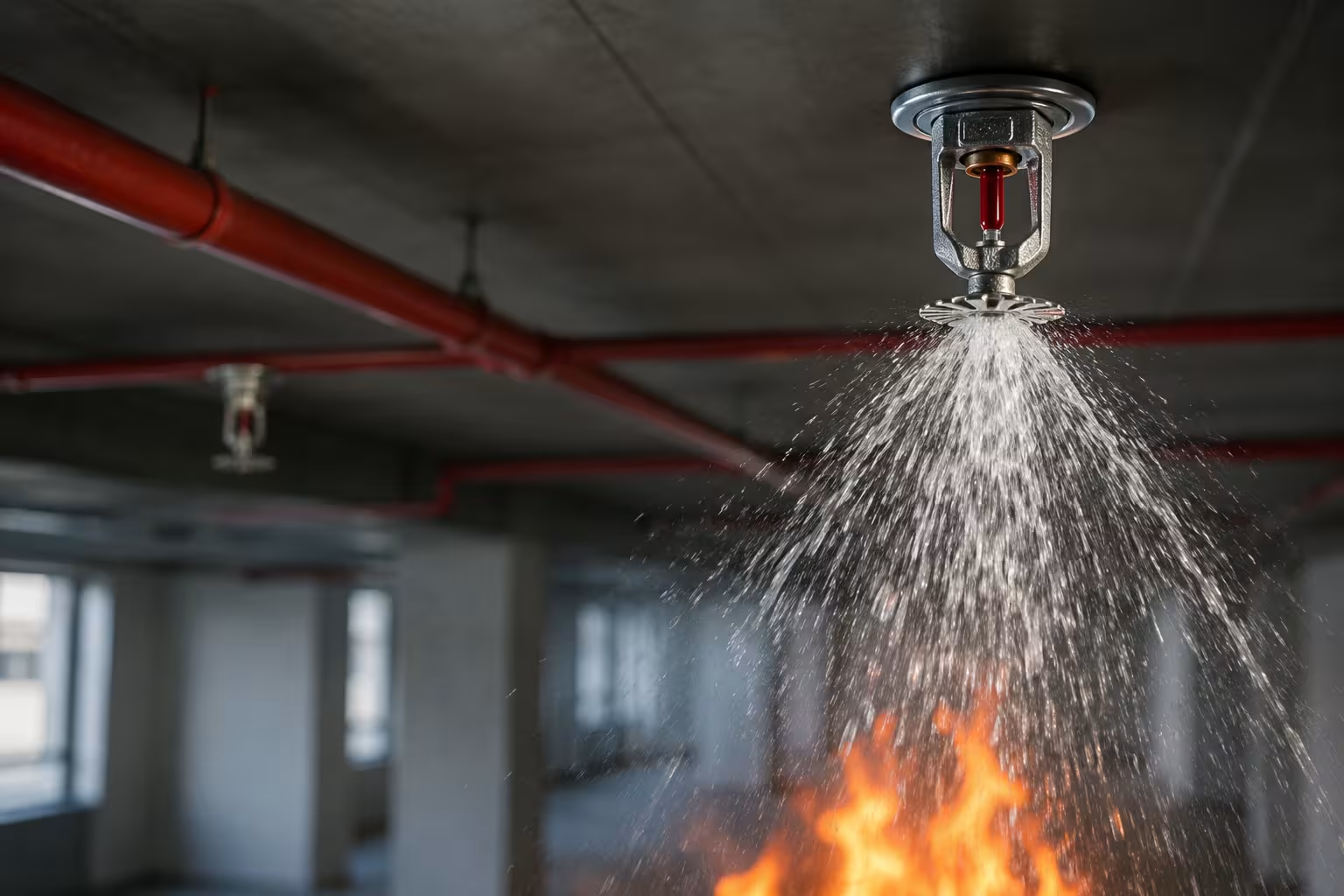
- Extensive water damage to machinery, inventory and, in some cases, IT servers.
- Mandatory and prolonged downtime while affected equipment is cleaned, dried and restored.
- The risk of accidental activation, which can cost almost as much as an actual fire.
These disadvantages do not undermine the usefulness of sprinkler systems in general, particularly in conventional storage areas. However, for high-value spaces, server rooms, automated production lines and areas storing sensitive raw materials, they are often no longer the most suitable solution.
Modern Solutions for Protection Without Interruption
Combining safety and business continuity relies on two complementary pillars: detecting the danger as early as possible and extinguishing the fire without damaging what needs to be protected. Each of these pillars addresses a different stage of the fire risk.
Pillar 1: Early Detection Using Aspirating Smoke Detection, to Act Before a Crisis
Aspirating smoke detection, often referred to by the acronym VESDA (Very Early Smoke Detection Apparatus), works differently from a conventional smoke detector. Rather than waiting for visible smoke to reach a sensor, the system continuously draws in air samples and analyzes them to detect combustion particles, well before a fire actually develops.
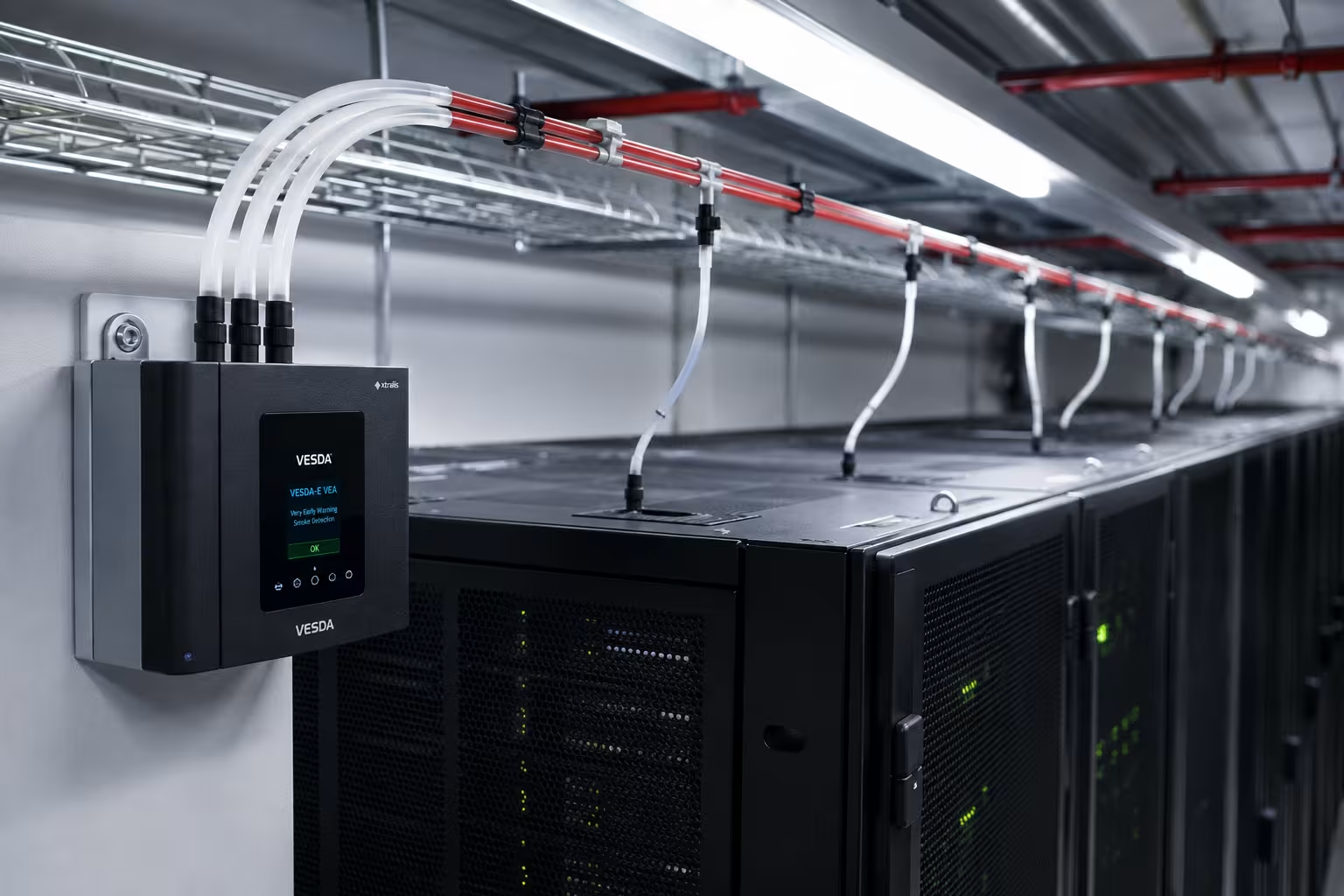
This technology offers a decisive advantage: time. By detecting an early sign of malfunction hours, and sometimes days, before a fire starts, it enables targeted human intervention or the localized shutdown of the affected equipment, without the need to activate a fire suppression system. It is often the best way to prevent an incident rather than having to deal with its consequences.
Kamel, Technical Manager at Scutum Fire Safety
“On a production line equipped with linear heat detectors, we detected abnormal overheating in a motor before any smoke was produced. The maintenance team intervened within thirty minutes, without stopping the line for more than a few minutes, whereas an undetected fire could have shut down the production area for several days.”
Pillar 2: Clean Automatic Fire Suppression, the Key to Continuity
When suppression becomes necessary, two technologies can provide effective protection without causing collateral damage: inert gas and high-pressure water mist. The choice between the two depends on the nature of the area being protected.
Inert gas fire suppression: extinguishing the fire without leaving a trace
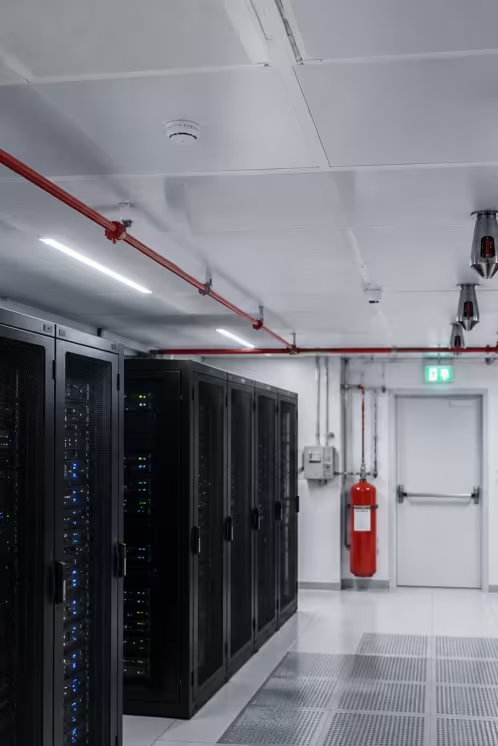
The principle is simple: reduce the concentration of oxygen in the protected area to deprive the fire of what it needs to burn, without putting people at risk. Gases such as Inergen or Argonite, made from mixtures of nitrogen, argon and, in some cases, carbon dioxide, are discharged within just a few seconds.
The main advantage of this approach: no residue, no risk of damage to electronic or mechanical equipment, and an almost immediate return to normal once the room has been ventilated. It is the preferred solution for server rooms, electrical cabinets and areas with a high concentration of sensitive equipment.
The alternative of high-pressure water mist
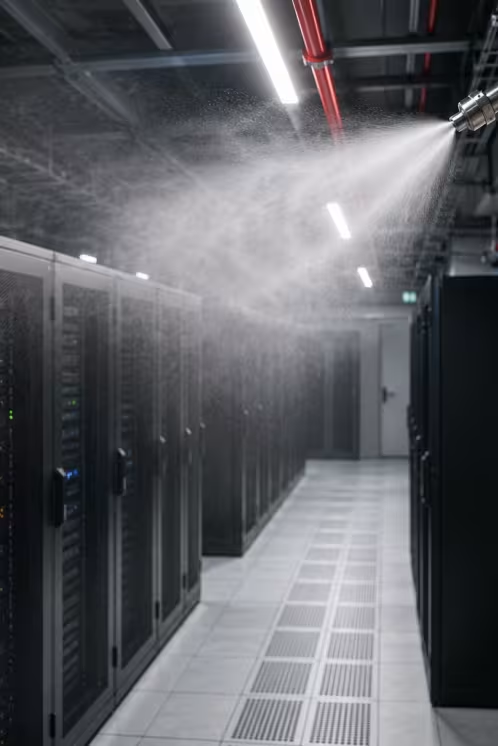
High-pressure water mist works according to a different principle: water is discharged in the form of microdroplets, which absorb heat and suppress the fire by limiting the supply of oxygen, while using a minimal amount of water compared with a conventional sprinkler system.
Damage is virtually eliminated, and the system offers the additional advantage of effectively cooling hot equipment. It is particularly well suited to machinery rooms, turbines and transformers, where residual heat can itself represent a risk.
Implementing an Effective Strategy: From Assessment to Maintenance
Choosing the right technology is not enough. The success of an industrial fire protection project depends above all on a rigorous approach, planned in advance with the facility's teams.
Step 1: Safety Assessment and Risk Analysis
Before any installation, it is essential to accurately map the facility: which areas are critical, what types of risks are associated with them, and how production flows are organized. This analysis makes it possible to size the protection system as accurately as possible, without overinvestment or unprotected areas.

Step 2: Seamless Installation and Integration
The installation itself must be planned to minimize its impact on operations. This requires careful project planning, in close coordination with the customer's maintenance teams.
The 3 keys to a successful installation without interruption:
1
Work outside production hours
at night or during weekends, so that active production periods are never disrupted.
2
Phase the project area by area
so that only one part of the facility is affected at any given time.
3
Maintain continuous coordination with the customer's technical teams
to anticipate unexpected issues and adjust the schedule in real time.
Bertrand, Project Manager at Scutum Fire Safety
“At a facility operating around the clock in three shifts, we phased the installation by area and systematically worked on production lines that were stopped during shift changes, never on lines that were in operation. The project took slightly longer than a conventional installation, but the customer did not lose a single hour of production, which was a non-negotiable requirement from the outset.”
Step 3: Preventive Maintenance and Training, the Foundations of Reliability
Advanced technology is of little value if it is not properly maintained. A preventive maintenance contract makes it possible to regularly check that the system is operating correctly, anticipate component wear and ensure that it will be fully operational when it is needed.
The human factor remains equally important. Training teams to adopt the right response, recognize an alarm signal, understand evacuation procedures and know how to react during the first few minutes complements the technical system and significantly reduces risks.
Conclusion
Protecting an industrial facility against fire without interrupting production is no longer an unrealistic ambition. It is a mature, proven and cost-effective strategy, provided that the true cost of production downtime or a poorly controlled fire is taken into account.
Very early detection, non-destructive fire suppression, rigorous installation methods and ongoing maintenance: each of these elements matters, but it is their combination that makes the difference. Scutum manages this approach from start to finish, from the initial assessment through to long-term maintenance.
Your production is too valuable to be interrupted. Contact our experts for a business continuity assessment and discover how to effectively protect your facility.

FAQ: Frequently Asked Questions About Fire Safety in Industrial Environments
Is a protection system designed to avoid interruptions much more expensive?
The initial investment may indeed be higher than that of a traditional system. However, the return on investment quickly becomes favorable once the cost of just one day of production downtime is taken into account, without even considering the replacement of water-damaged machinery.
How is the installation carried out without disrupting production?
The installation is planned in phases. A large part of the work, such as cable installation and pipework, can be carried out outside critical areas or during periods of low activity and scheduled maintenance.
What is aspirating smoke detection (VESDA)?
It is a very early detection system. It continuously analyzes air samples to detect combustion particles that are invisible to the naked eye, well before a fire actually develops. It is the first line of defense for an industrial facility.
How long does it take to bring the system back into service after activation?
For an inert gas system, the room simply needs to be ventilated and the used cylinders replaced: operations can resume very quickly, often within a few hours. With a traditional sprinkler system, it is more realistic to allow several days, and sometimes several weeks, for water removal, drying and repairs to affected equipment.
How important is preventive maintenance?
It is absolutely critical. It ensures that the system will operate correctly when it is needed. It also makes it possible to identify potential failures in advance, ensuring system reliability while reducing the risk of false alarms.
Is specific training required for staff?
Yes, and it may also be a regulatory requirement depending on the applicable local regulations. Staff should know the alarm signals, evacuation procedures and basic safety measures. Proper training reduces panic in the event of an incident and ensures an appropriate response, complementing the automatic system.