Submitted by Justine.Pource… on
Extinguisher
published on 24/08/2026

How to Detect and Extinguish Class A and Class D Fires

Not all fires are the same. The class of a fire determines what materials are burning, how the fire behaves, and, most importantly, how it should be extinguished. Using the wrong approach can make a fire worse rather than bring it under control.

This guide covers two distinct fire classes: Class A fires, the most common type of fire found in everyday environments, and Class D fires, a less common but highly hazardous category involving combustible metals.

Understanding both fire classes is essential for effective fire safety planning in commercial buildings and residential settings.

Class A Fires

What Is a Class A Fire?

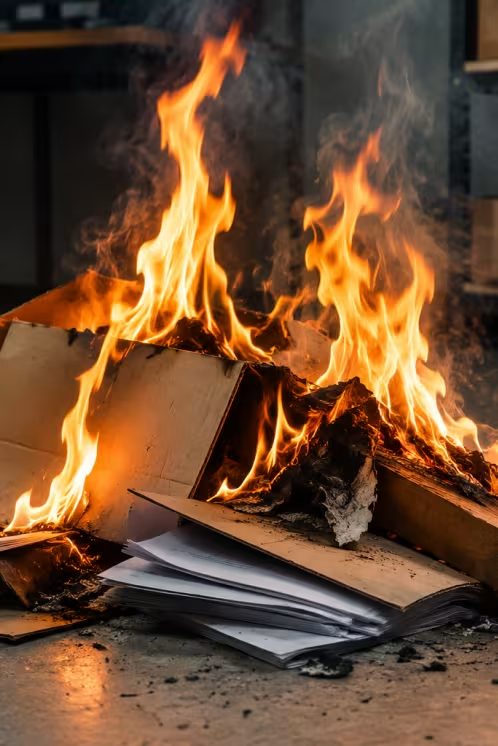
A Class A fire involves ordinary combustible materials such as wood, paper, cloth, rubber and many plastics. These fires commonly occur in environments such as offices, schools, retail stores and homes, where these materials are widely present.

They are typically easy to recognize due to visible flames, smoke and the presence of ash as materials burn. Common ignition sources include open flames, electrical heat sources, cigarettes, candles and heating equipment. While controlled use of some of these heat sources, such as in fireplaces or campfires, can be safe, an accidental ignition can cause a fire to spread rapidly.

Fire Class A.png

How to Detect a Class A Fire

Class A fires are among the most common types of fires. They typically involve everyday combustible materials such as paper, wood and textiles. Although these materials are generally harmless when used in controlled conditions, they can quickly become dangerous if they accidentally catch fire. Key indicators include visible flames, the smell of burning organic material, smoke and the presence of ash.

1 Visible flames
2 The smell of burning organic material
3 Smoke
4 The presence of ash

In commercial buildings, smoke detectors and fire alarm systems are essential for detecting a fire at an early stage, before it has a chance to spread.

tick icon

How to Extinguish a Class A Fire

Class A fires can be extinguished using water, foam or dry chemical extinguishers, depending on the circumstances and the equipment available. Water extinguishers are commonly used because they cool the burning material and remove the heat needed to sustain combustion. Foam extinguishers work by covering the burning material and helping to prevent re-ignition.

A CO₂ fire extinguisher should not be relied upon as the primary extinguisher for a Class A fire, as carbon dioxide is not generally effective at cooling ordinary combustible materials and may not prevent re-ignition.

How to Prevent Class A Fires

Preventing Class A fires starts with good housekeeping and fire risk awareness. Combustible materials such as paper, textiles and waste should be stored safely and kept away from potential ignition sources. Regular cleaning, safe storage practices and proper waste management all help reduce the risk of fire.

It is also important to ensure that heat sources, electrical equipment and open flames are used, managed and maintained properly. By identifying potential hazards and implementing preventive measures, businesses and homeowners can significantly reduce the likelihood of a Class A fire and improve overall fire safety.

Class D Fires (Combustible Metals)

What Is a Class D Fire?

A Class D fire involves combustible metals. Only certain metals are capable of burning. Examples include:

1 Sodium
2 Potassium
3 Uranium
4 Lithium
5 Plutonium
6 Calcium
7 The most common Class D fire hazards, however, involve metals such as magnesium and titanium

Although very high temperatures are generally required to ignite a metal, once combustion begins, a metal fire can spread rapidly and develop into an extremely dangerous and destructive fire. Sodium, for example, is a highly reactive element that can react violently with water and ignite in contact with air. This can result in explosions and makes sodium particularly hazardous.

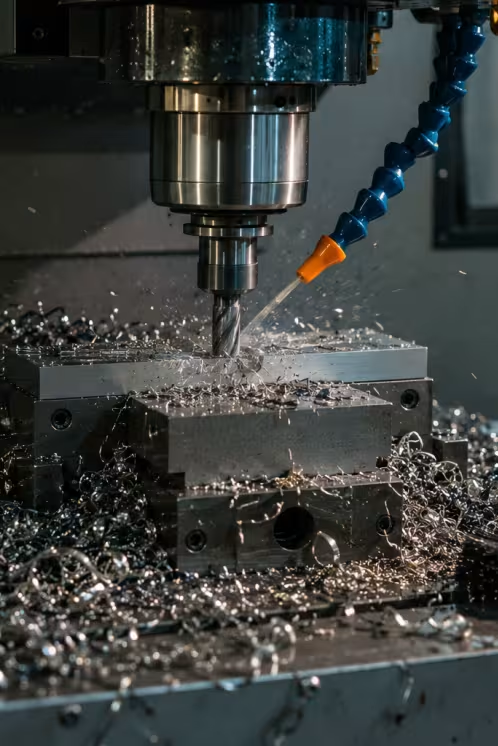
Because most metals in solid form are relatively difficult to ignite, Class D fires most commonly occur in environments where fine metal particles, metal dust or metal shavings are present. This includes laboratories, warehouses, factories and manufacturing facilities where metals are cut, drilled or machined. Facilities that process materials such as aluminum, for example, may face a greater risk of Class D fires when significant quantities of aluminum dust are generated or allowed to accumulate.

Fire Class D.png
tick icon

How to Extinguish a Class D Fire

The appropriate method for extinguishing a Class D fire depends on the type of combustible metal involved. Class D fire extinguishers use specialized extinguishing agents designed for combustible metal fires, and the correct agent should be selected according to the specific metal and the manufacturer's recommendations.

These specialized agents work by controlling the fire and isolating the burning metal from the surrounding environment. They can also help prevent burning metal particles from spreading and reduce the overall damage caused by the fire. This is particularly important in environments where metal dust, shavings or other finely divided metal materials are present.

Metal fires are among the most hazardous types of fires because people may not know how to respond safely and effectively. It is extremely dangerous to use water on a Class D fire, as certain metals can react violently with water. Depending on the metal involved, applying water or another unsuitable extinguishing agent can intensify the fire and create additional hazards. The appropriate extinguishing agent and technique should therefore always be determined for the specific metal involved.

How to Prevent Class D Fires

Storing combustible metals in safe and appropriate containers is an effective way to reduce the risk of Class D fires. However, because many metal fires occur during manufacturing processes that generate fine metal particles, prevention in commercial and industrial environments requires a more comprehensive approach, particularly when processing, drilling, cutting or machining combustible metals.

This means conducting regular and comprehensive fire risk assessments and implementing any necessary corrective measures to eliminate or reduce identified hazards. It is also essential to ensure that appropriate fire protection systems are in place, including fire alarm systems, regular fire drills and emergency lighting. In areas where Class D hazards exist, Class D fire extinguishers with extinguishing agents appropriate for the specific combustible metal should be installed in suitable locations and regularly inspected and maintained.

Protect Your Property from Every Class of Fire

Don't wait for an inspection or an incident to take action. Contact Scutum today to arrange your fire risk assessment, fire extinguisher installation or fire safety review, and make sure your property is protected against every class of fire, from the most common to the most hazardous.