Why is video surveillance a strategic asset for your business?
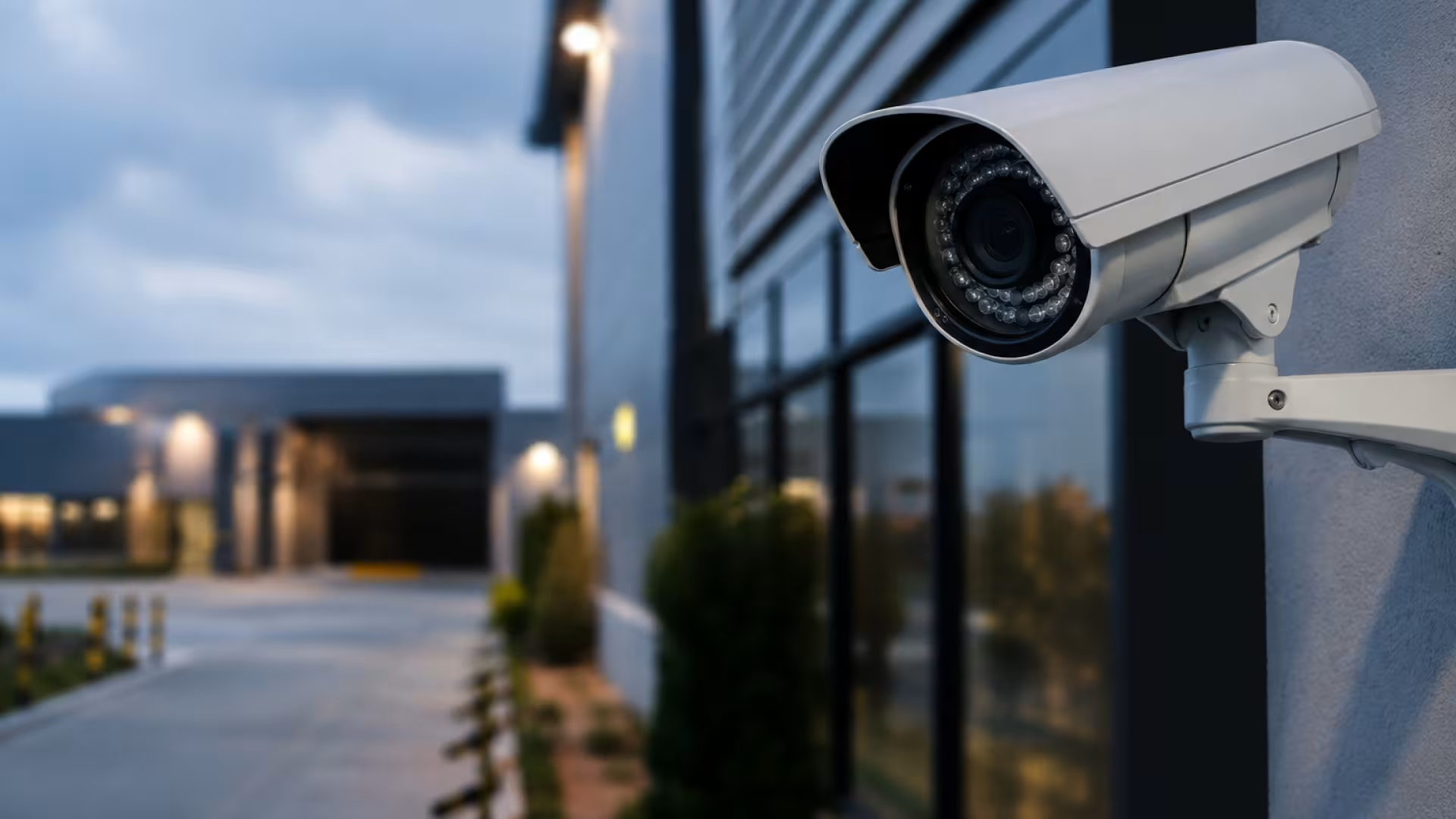
Today, video surveillance goes far beyond the simple function of a “camera that records”. When properly designed, it becomes a genuine security management tool.
published on 07/08/2026
Written by Alexandre Blaise
Written by Alexandre Blaise
The security of people and assets is essential to the continuity of any organisation. In this context, business video surveillance has become a strategic solution combining deterrence, incident verification, evidence collection and operational monitoring.
However, installing cameras cannot be improvised. Between a strict regulatory framework (GDPR, data protection regulations, employment law), technical choices that will shape the system for many years, and installation rules that determine whether a system is effective or not, there are many potential pitfalls. Many businesses only realise this too late: after an incident, when footage exists… but cannot be used.
This guide takes you step by step through the implementation of a professional video surveillance system that is fully operational and compliant with current regulations.
Today, video surveillance goes far beyond the simple function of a “camera that records”. When properly designed, it becomes a genuine security management tool.

A visible camera, combined with clear and appropriate signage, significantly reduces attempts at theft, intrusion and vandalism. Most opportunistic offenders turn towards targets that are less well protected.

Car parks, reception areas, entrance zones, loading docks and isolated areas: all of these locations can benefit from image recording to help prevent assaults and incidents, and to enable a rapid response when required.

For footage to be used to identify an offender, support a police complaint or assist with an insurance claim, it must first be clear, dated, time-stamped and stored in accordance with regulations. This is precisely where many systems fail to deliver.

Flow monitoring, quality control and incident management in high-risk areas: cameras are now increasingly integrated into operational tools. However, there is one strict limitation: a video surveillance system must never be used as a tool for permanently monitoring employees.

"The most common mistake we identify during audits is not a lack of equipment, but incorrect positioning. One company contacted us following a series of thefts at a loading dock: twelve cameras had been installed, but several had not been positioned at a height that allowed useful identification. The result was footage showing silhouettes wearing caps, which was completely unusable for investigators."
Before choosing any equipment, the project must first be legally defined. This is the stage that many business leaders overlook when under time pressure, yet it is also the one that can expose organisations to the most significant penalties.
Every compliant installation is based on three fundamental principles.
The system must serve a clearly identified objective: protecting assets and people, preventing intrusions or securing premises. It must not be used to measure employee productivity or monitor breaks.
The system must be appropriate to the level of risk without creating excessive surveillance. A sensitive warehouse containing valuable goods does not require the same number of cameras as a standard office environment. The rule is simple: only install the cameras necessary to achieve the intended purpose.
Anyone who may be recorded must be clearly informed before monitoring begins. Hidden cameras or devices installed without the knowledge of those concerned are generally not permitted.
An important distinction must be made: regulations differentiate between video surveillance in private or non-public areas, which mainly falls under GDPR and data protection regulations, and surveillance in certain publicly accessible locations, where additional legal requirements may apply. Confusing these situations can result in legal penalties.
Providing information is not just an administrative formality: it is an essential condition for ensuring that personal data processing is lawful.
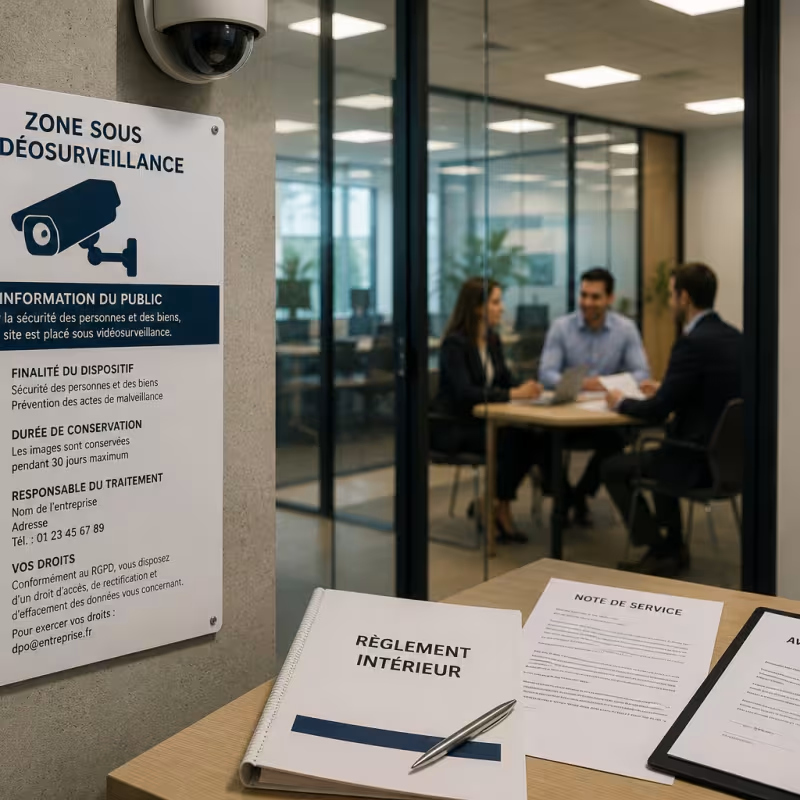
Important point: We regularly see systems challenged not because of the equipment installed, but because information requirements have not been met: missing signs, unreadable notices or signs positioned after people have already entered monitored areas. An A5 notice placed 2.30 metres high behind a plant does not constitute compliant information.
Administrative obligations depend directly on the type of location being monitored.

(offices, warehouses, production areas or storage facilities): no prior notification is required, but the processing activity must be recorded in the company’s Record of Processing Activities. If the processing presents a high risk to individuals’ rights and freedoms, a Data Protection Impact Assessment (DPIA) may also be required.

(shops, customer service locations, reception areas): installations must comply with applicable video surveillance regulations and meet all requirements relating to transparency, proportionality and data protection.

"For a mixed-use site — for example, a headquarters with a public reception area and internal offices — two different legal approaches must be considered. We see too many projects where the same rules are applied to the entire building. From a legal perspective, this is incorrect and it is one of the first issues identified during inspections. Map your different areas before deciding where cameras should be installed."
Once the legal framework has been established, implementation can begin. A well-managed project is structured around six key steps.
This is the most strategic phase of the project and, paradoxically, the one that is often rushed. Before selecting any equipment, take the time to answer three essential questions.
A thorough risk assessment helps avoid unnecessary costs: first investing in an under-sized system, then paying again to expand or replace it.
Two types of technology still coexist on the market, but the choice for new projects is now much clearer.
The higher initial investment of an IP system is largely offset by its longer lifespan, the quality of usable footage and the ability to integrate additional value-added services such as video verification.
A professional video surveillance system is built around three main components.

This stage is what separates a system that simply “works” from a system that is genuinely effective.
Once the equipment has been installed, the system must be properly configured.
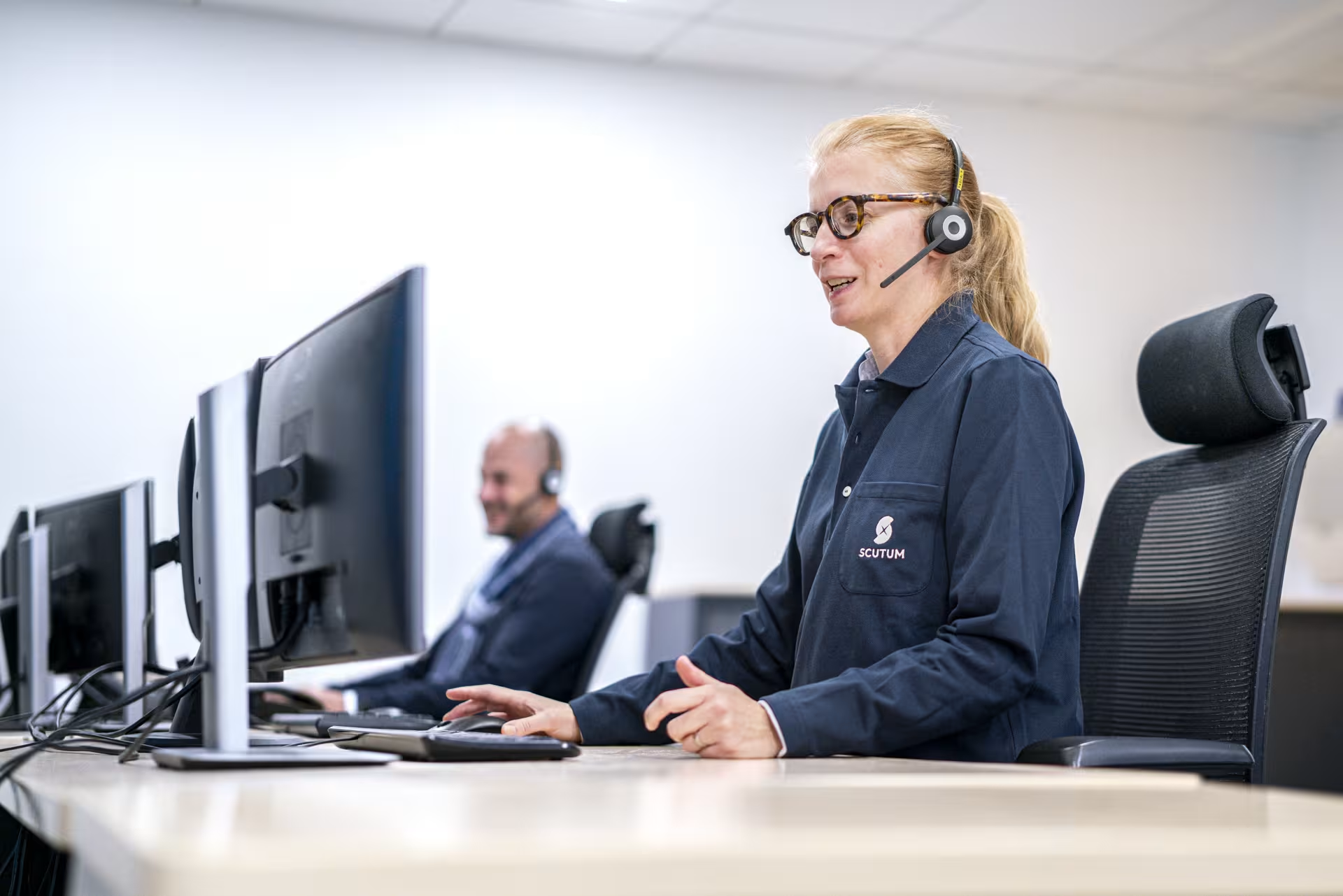
A video surveillance system requires continuous management.
"Eighty percent of the systems we take over for maintenance have never been updated since they were installed. Today, this is no longer just a risk of poor image quality, but a direct cyber risk for the company network. A maintenance contract including firmware updates is no longer an option: it has become an insurance requirement."
Important point: Comprehensive maintenance is not limited to an annual visit. It also includes remote monitoring of key indicators (disconnected cameras, available storage space, missing alarms), a gradual replacement plan for end-of-life equipment and an emergency support channel for urgent interventions. This is what makes the difference between an installer and a true security partner.
Video surveillance is a strategic project that combines technology, organisation and regulatory compliance. When properly designed and implemented, it provides long-term protection for your assets, your employees and your business continuity. However, a poorly designed installation can lead to GDPR penalties, employment disputes and a system that fails to deliver when it is needed most.
The balance between security and respect for privacy is not a barrier: it is the key to creating a sustainable and accepted installation. The true value of a video surveillance system is not measured by the number of cameras installed, but by the quality of how they are operated, 24 hours a day, 7 days a week.
To guarantee an efficient, tailored system that fully complies with current regulations, support from a specialist is essential. Contact Scutum security experts to carry out a complete security audit of your business and benefit from the experience of one of Europe’s leading electronic security providers, operating five APSAD P5-certified monitoring centres.

This is strongly discouraged. There are four main reasons.
No, this is prohibited. Camera positioning must not result in continuous and permanent monitoring of employees.
There is no strict legal obligation, but it is strongly recommended for four main reasons.