Finally, a modern industrial site is a connected system, creating its own category of risks:
- Cybersecurity risks: a surveillance system connected to the company's network can provide a potential entry point for attackers if its architecture is not properly secured.
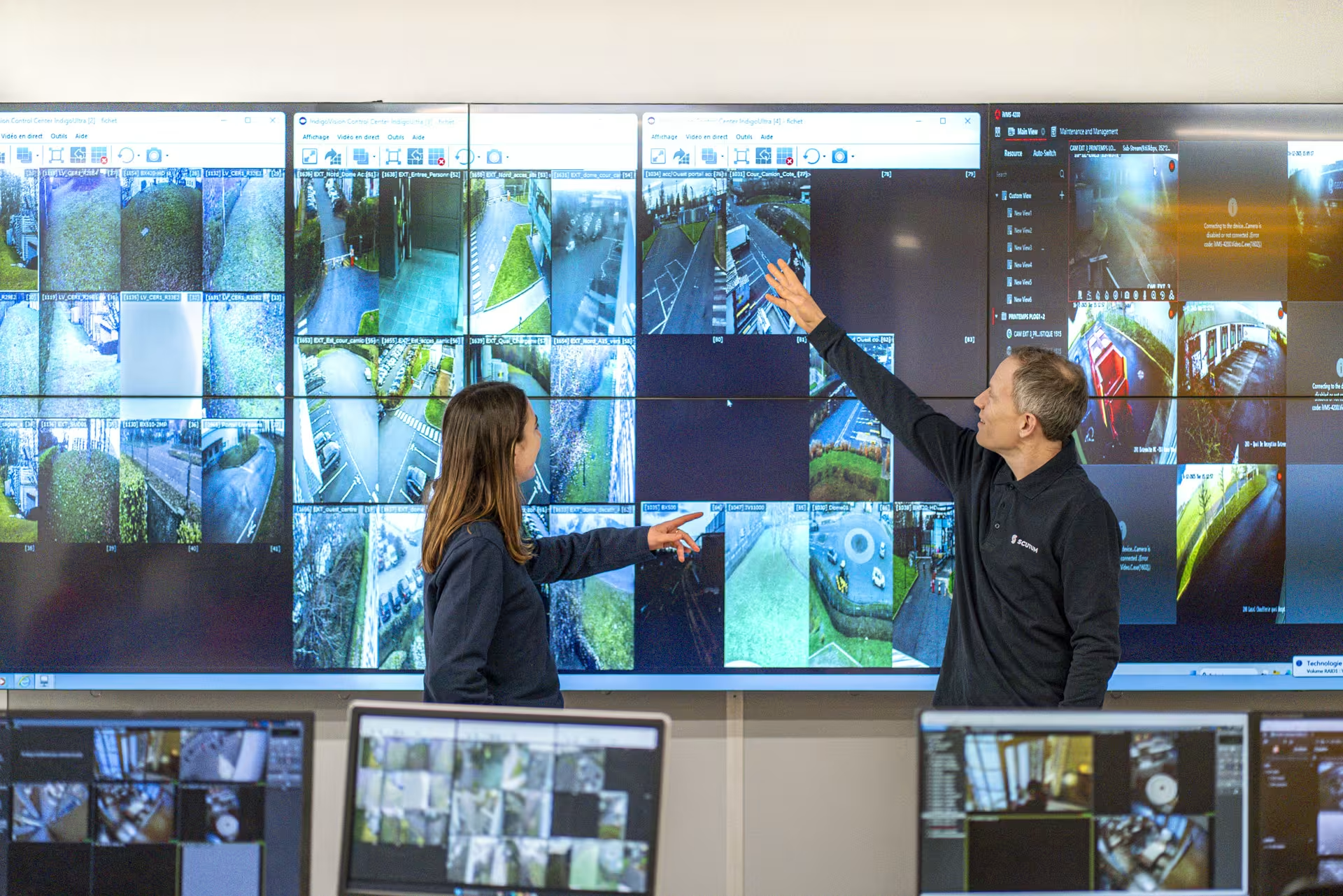
- Integration: video surveillance must communicate with other security systems, intrusion alarms, access control and fire detection, so that they operate as a coherent system rather than as a collection of isolated tools.
- Strict and cumulative regulations: U.S. data privacy and security requirements, including applicable federal and state laws, workplace safety requirements, and specific requirements for high-risk facilities, including the EPA's Risk Management Program (RMP) for facilities subject to its requirements. Certain critical infrastructure organisations may also be subject to sector-specific cybersecurity and security requirements.
- Infrastructure reliability: redundant power supplies and network connections are essential to prevent service interruptions, particularly on sites where a loss of surveillance could coincide with a production shutdown.
Compliance with U.S. privacy and data security requirements in industrial remote monitoring therefore requires clearly defining the areas being monitored, informing employees where required, limiting data collection to legitimate purposes and establishing an appropriate footage retention policy. This requires legal as well as technical expertise.
These three challenges have one thing in common: taken individually, each can be addressed through a specific solution. But an industrial site needs these solutions to work together seamlessly over time. This is exactly what a generalist operator, relying on multiple providers and interfaces, cannot guarantee.