Submitted by Justine.Pource… on
Télésurveillance site sensible ou infrastructure critique
published on 01/10/2026

Remote Monitoring for Sensitive Sites and Critical Infrastructure

Written by Magali Belot

Our societies rely on a foundation of vital infrastructure: energy production, water distribution, communications networks, and strategic industrial sites. Their proper operation is essential to the daily lives of millions of people. Protecting these sites is never a secondary consideration. It is a matter of national resilience.


The threats facing this infrastructure have changed in nature. Terrorism, sabotage, industrial espionage, and cyberattacks: the scenarios are multiplying and increasingly overlapping. In response to this reality, physical security alone, such as security guards or fencing, is no longer sufficient.


This is where modern remote monitoring comes in. Far more than a camera connected to a screen, it now forms a true technological shield, capable of detecting, verifying, responding, and deterring. This article details the components of this system to explain how to build protection that matches the challenges facing your site.

The Unique Security Challenges of Sensitive Sites

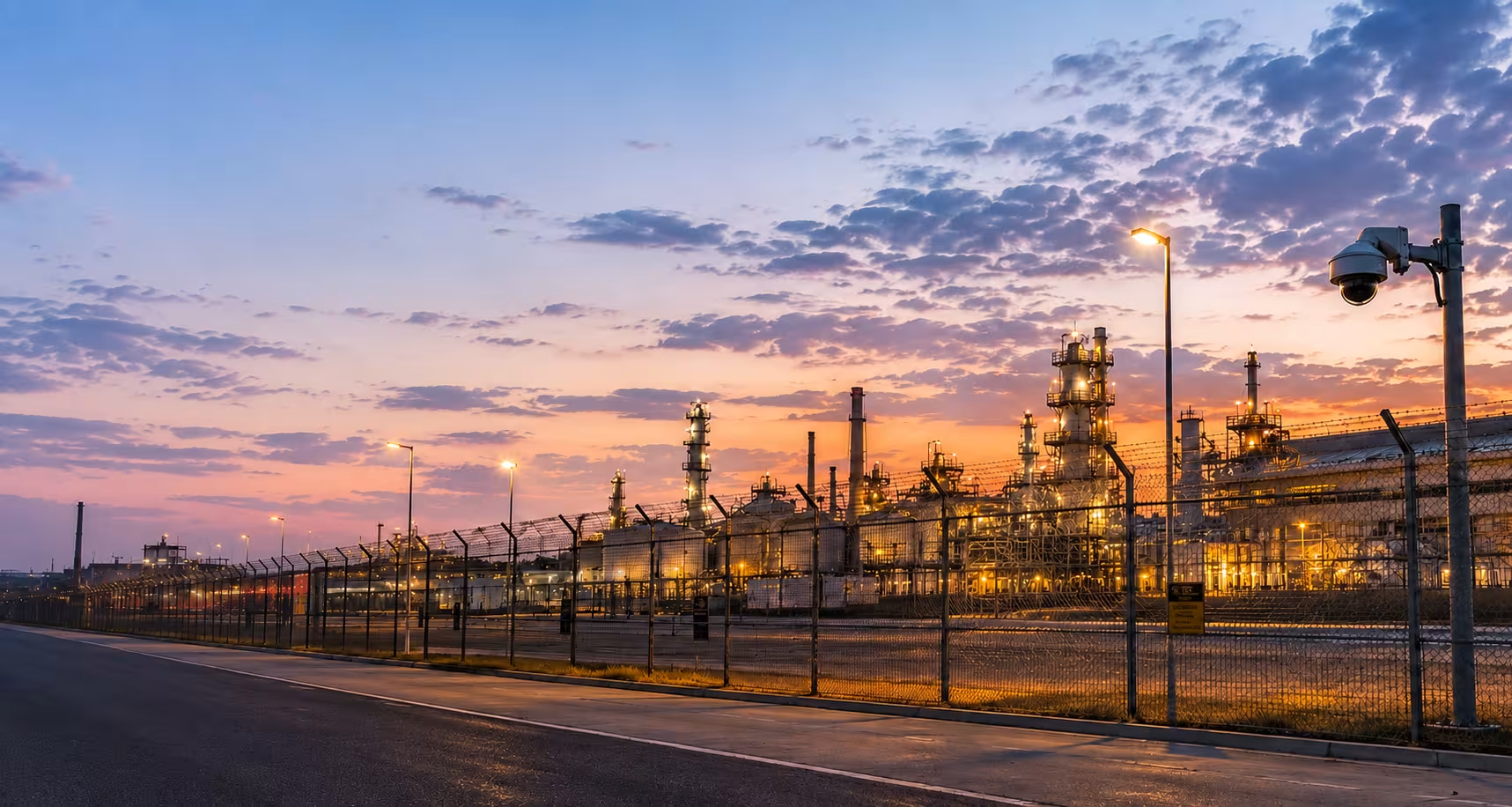
A sensitive site or critical infrastructure facility refers to an installation whose disruption, whether accidental or malicious, could have serious consequences for public safety, the economy, or national security. In the United States, critical infrastructure encompasses essential systems, assets, facilities, and networks across sectors such as energy, water, communications, transportation, healthcare, information technology, and critical manufacturing.

Site industriel 2.png

These facilities face specific risks. A malicious intrusion, whether intended to steal equipment, strategic data, or sabotage a system, can have consequences far beyond the site itself. There are also industrial risks specific to the activity, such as hazardous-material releases, fires, or technical failures. Industrial espionage is another discreet but very real threat to companies holding strategically important know-how.

Faced with this diversity of threats, human surveillance alone quickly shows its limitations. A security officer can only cover a limited field of view, vigilance decreases with fatigue, and the cost of maintaining coverage around the clock can quickly become disproportionate across a large perimeter. Highly sensitive sites may also be subject to strict security, safety, and industry-specific requirements that must be followed precisely.

Pictogramme utilisateur

Magali BELOT, Remote Monitoring Operations Director, Scutum France

“In just a few years, we have moved from isolated threats to combined attacks, where a physical intrusion can pave the way for a cyberattack, or vice versa. Protecting a critical site now means thinking about both together.”

The 4 Pillars of an Effective Modern Remote Monitoring System

An effective system never relies on a single technology. It combines four complementary functions that transform a simple alarm into a controlled response: detect, verify, respond, and deter.

1. Detection: Intelligent Sensors to Leave Nothing Unnoticed

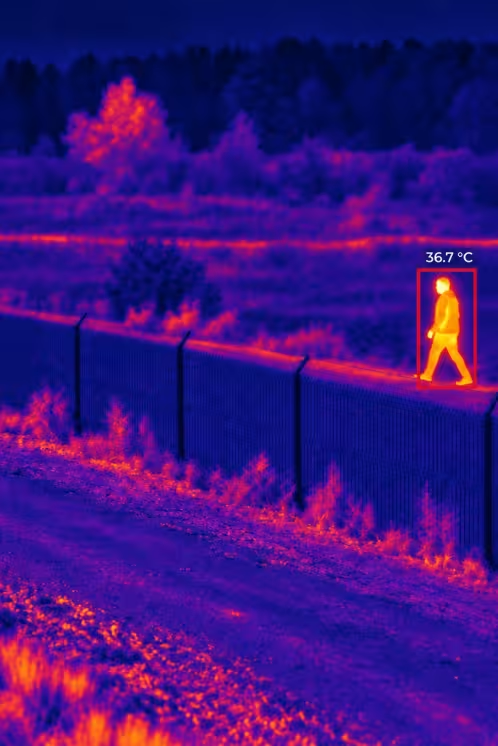
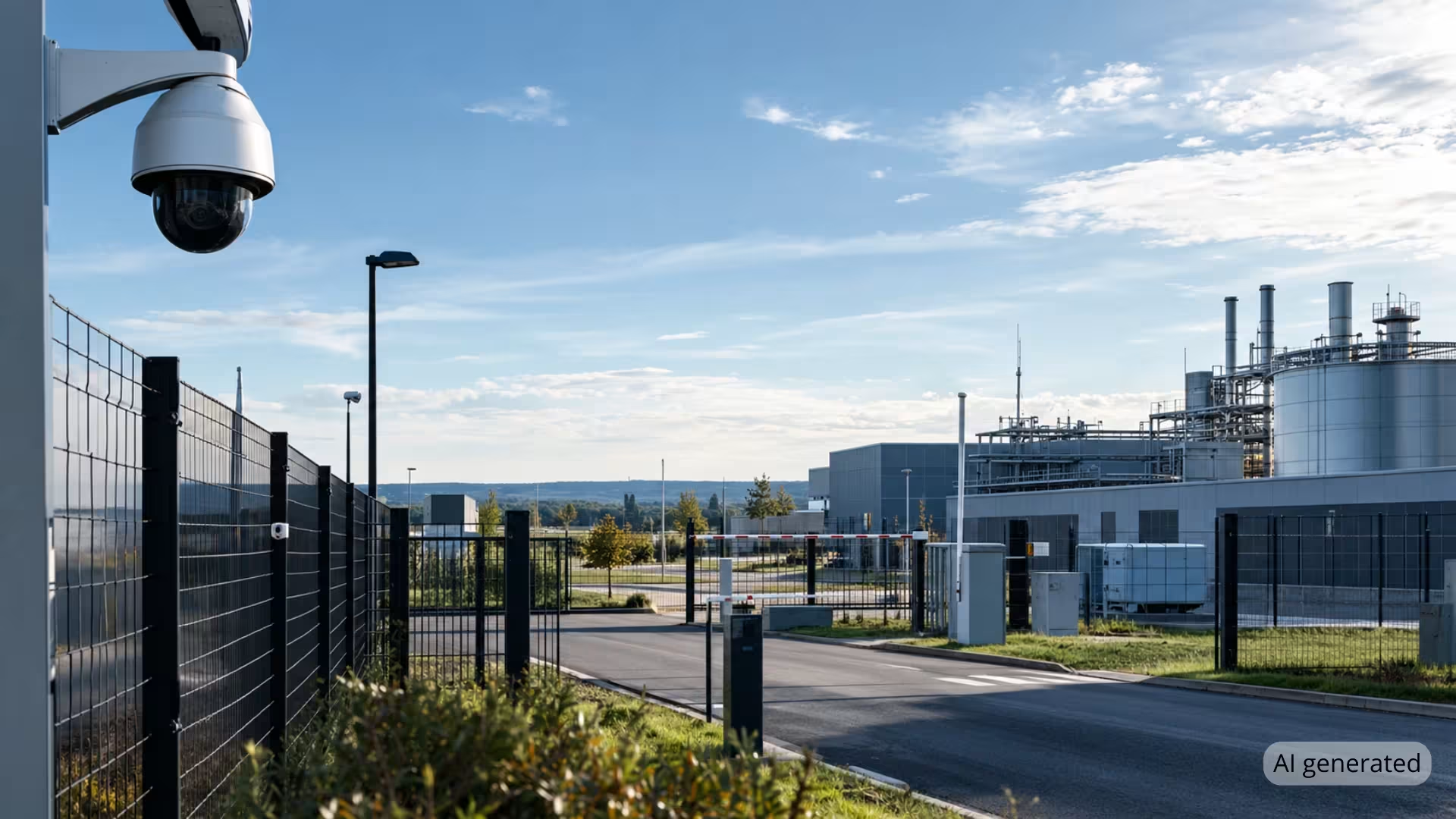
The first line of defense relies on sensors capable of detecting an anomaly wherever it occurs. Thermal and radiometric cameras detect human presence and abnormal heat sources, even in complete darkness or across a long, unlit perimeter. 4K cameras combined with artificial intelligence go further: they can identify suspicious behavior, line crossings, prolonged loitering around a sensitive area, and trigger an alert without waiting for human intervention.

These technologies are complemented by perimeter protection systems, including surveillance radar, infrared barriers, and fence-mounted shock detection cables. Each addresses a specific site constraint, whether protecting a large outdoor perimeter or securing a fence line.

Caméras thermiques

2. Verification: The Monitoring Center as the Brain of the Operation

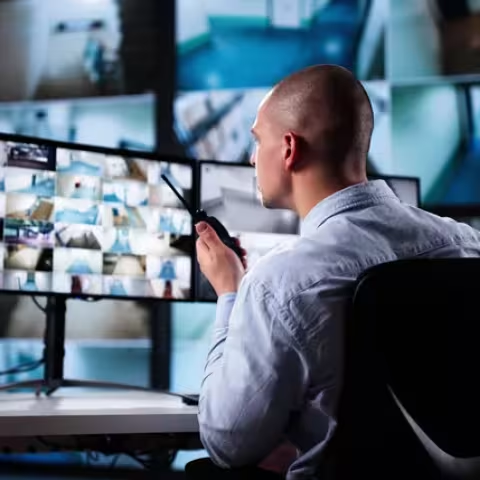
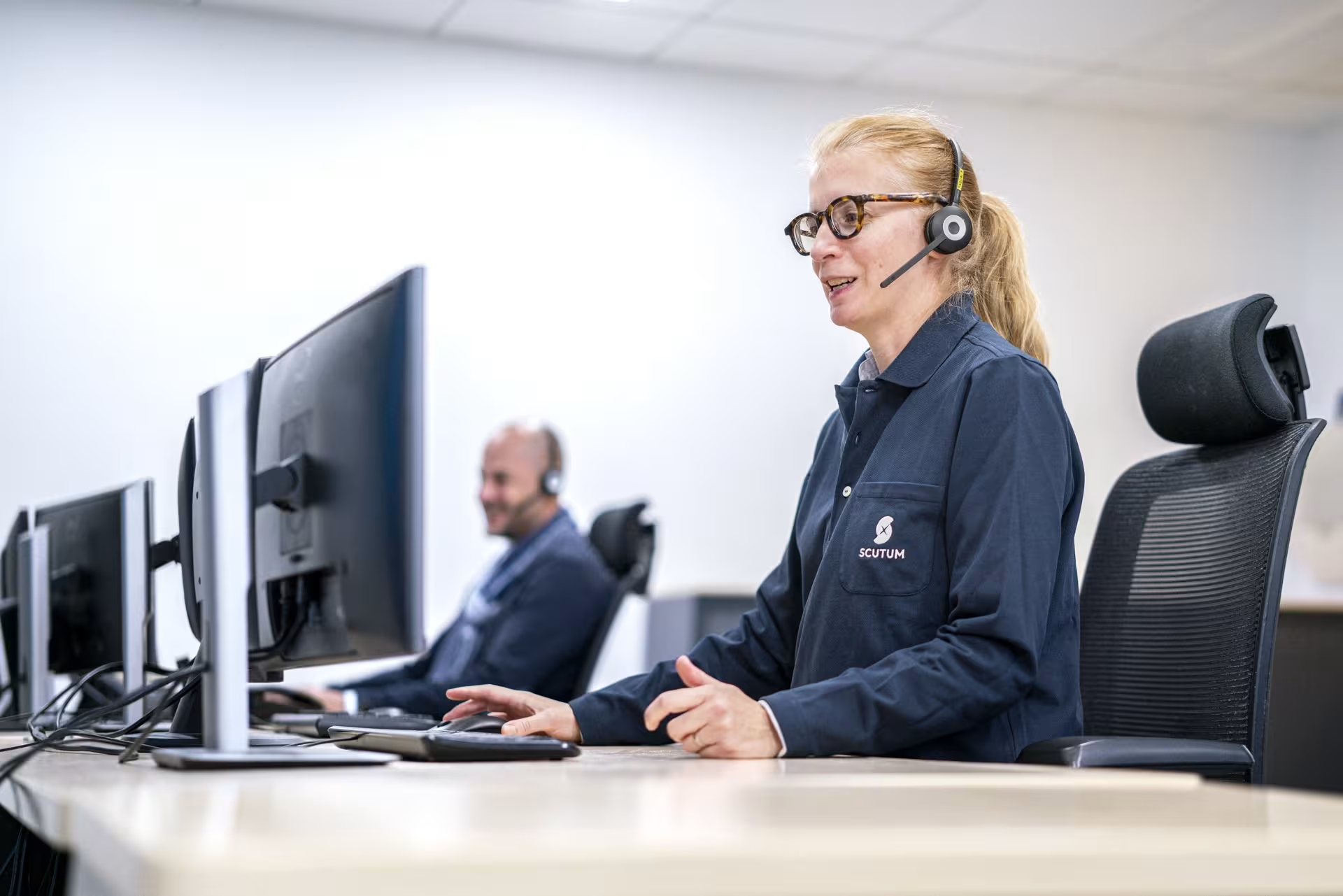
An alarm alone does not indicate the reality of a threat. This is the role of the remote monitoring center: to distinguish between a genuine incident and a false alarm within seconds. This video verification process is carried out by trained operators who view live footage and accurately assess the situation before initiating a response.

Centre de télésurveillance

In the United States, monitoring centers may operate under industry standards such as UL 827, the Standard for Central-Station Alarm Services. UL Solutions describes monitoring stations as facilities that monitor security, fire, managed video, and other alarm signals or live feeds, with trained operators responsible for recording signals and initiating the appropriate response.

The quality of this link can be seen as the control tower of the system: it transforms a raw alert into a qualified, rapid, and proportionate response.

Pictogramme utilisateur

Magali BELOT, Remote Monitoring Operations Director, Scutum France

“When an alarm comes in, our operators have the images in front of them within seconds. That is the key: quickly and accurately assessing the situation so that the right response is triggered, neither too early nor too late.”

3. Response: A Rapid and Graduated Response

Once the threat has been confirmed, the response must be immediate and appropriate. The remote monitoring center can remotely activate several systems: sirens, loudspeakers for a deterrent voice intervention, or fog generators that can make an area unusable within seconds.

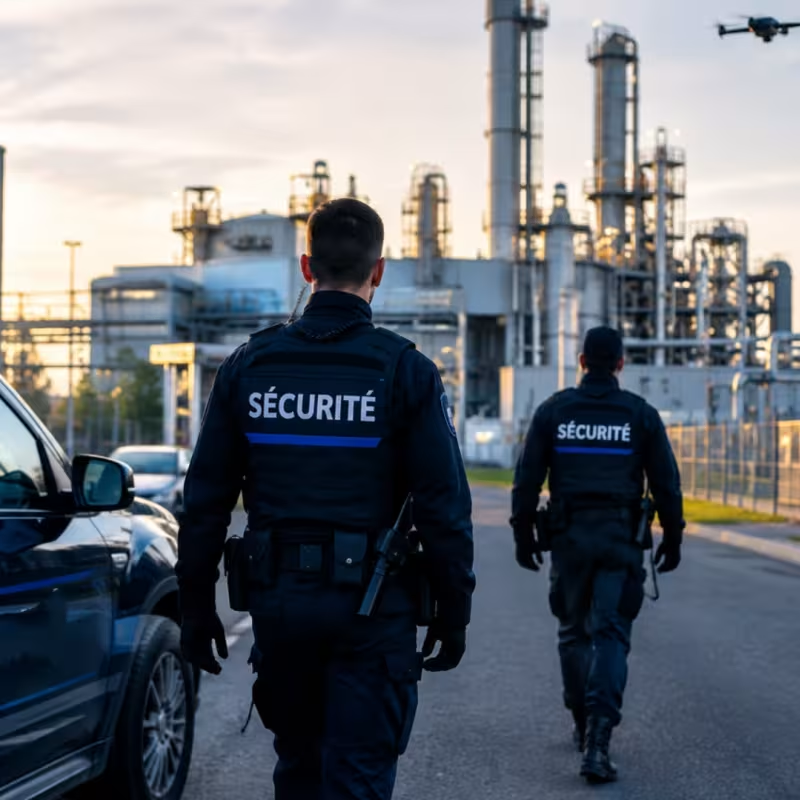
This remote response is coordinated with teams on the ground, including mobile or on-site security officers, who intervene according to procedures established with the client. Surveillance drones provide an additional capability: they allow large areas to be assessed quickly and safely without unnecessarily exposing a security officer to risk.

Télésurveillance intervention

4. Deterrence: Preventing an Incident Before It Occurs

The most effective system is often the one that never needs to intervene. A visible remote monitoring system known for its responsiveness creates a strong deterrent effect, discouraging an individual from taking action before an attempt even begins.

Predictive analytics takes this approach further. By identifying unusual behavioral patterns, artificial intelligence can flag a potentially risky situation before a conventional alarm is triggered. Continuous innovation now makes it possible to anticipate threats rather than simply react to them.

Integration and Cybersecurity: Keys to System Resilience

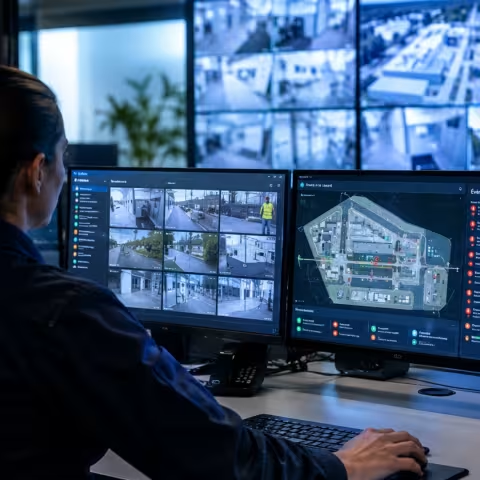
An effective remote monitoring system never operates in isolation. An integrated security system brings together access control, intrusion detection, video surveillance, and fire detection on a single hypervision platform. This integrated security approach provides a comprehensive and consistent view of the site, where every alert, regardless of its origin, is handled with the same level of rigor.

Télésurveillance

But a connected system is also a target. Cybersecurity for security equipment has become a critical issue in its own right. Encrypting video streams, securing networks, and protecting against ransomware are no longer optional: they are essential conditions for ensuring that a security system does not itself become a vulnerability.

Service continuity also relies on redundant communications links. Fiber, 4G/5G, and satellite: using multiple transmission channels helps ensure that the system remains operational even if one connection is interrupted or fails.

It is this trusted orchestration between technologies, procedures, and applicable security standards that makes the difference between a system that performs well on paper and one that remains genuinely reliable over time.

Pictogramme utilisateur

Magali BELOT, Remote Monitoring Operations Director, Scutum France

“An unsecured camera is an open door into our network. A security system must be protected with the same level of rigor as the assets it monitors.”

Implementing a Remote Monitoring Project: Methodology

Every site is different. Designing a remote monitoring system therefore follows a rigorous four-step methodology.

1 Risk Assessment and Analysis

Everything starts with a risk assessment and analysis. This step focuses on the site's actual vulnerabilities rather than applying a standard solution by default.

2 Customized Design

The next step is the customized design of the system: selecting the technologies best suited to each location, based on the identified risks and site-specific constraints.

3 Deployment and Training

The third step is deployment and training. The client's teams are involved from this stage onward, which is essential to ensure that the system is used effectively on a daily basis.

4 Maintenance and Evolution

Finally, maintenance and system upgrades ensure that the solution remains relevant over time. A security system must evolve, adapt to new threats, and keep pace with changes in the site's operations.

This methodology enables our clients to have a single point of contact from the initial assessment through ongoing monitoring and support, rather than having to manage multiple providers.

Conclusion

Modern remote monitoring is no longer an optional solution for sensitive sites and critical infrastructure: it has become an essential technological and human ecosystem. Detection, verification, response, and deterrence work together to provide protection that matches the challenges involved, while operating within a strict regulatory and industry-specific framework.

The future of the industry is already taking shape: predictive artificial intelligence, increasing automation, and ever-greater integration between systems. Anticipating these developments today means remaining prepared for tomorrow's threats.

Opératrice et opérateur dans un centre de télésurveillance APSAD P5

Your infrastructure is unique, and its security should be too. Contact our SCUTUM experts to conduct a comprehensive security assessment and design a remote monitoring solution tailored to your needs.

FAQ: Frequently Asked Questions About Remote Monitoring for Critical Sites

What is the difference between remote monitoring for sensitive sites and conventional video surveillance?

Video surveillance is primarily focused on recording and viewing footage. Remote monitoring goes further: it provides active monitoring through a supervision center that processes alerts in real time with qualified operators.

Video verification makes it possible to quickly confirm an intrusion or incident before initiating a response. On a sensitive site, these systems generally incorporate advanced technologies such as perimeter detection, intelligent video analytics, access control, and additional sensors. Response procedures are adapted to the specific requirements of each critical site.

→ Video Surveillance vs. Remote Monitoring: What Is the Difference? | Scutum

What regulations apply?

The installation and use of video surveillance systems must comply with applicable privacy and data protection requirements. Depending on the circumstances and jurisdiction, businesses may need to consider federal, state, and local requirements concerning the collection, use, storage, and access to recorded images.

Certain sensitive sites and regulated industries may also be subject to specific security requirements. Image retention periods should be limited to what is appropriate and necessary for the stated security purpose and applicable requirements.

How is the confidentiality of video footage ensured?

Video streams are encrypted during transmission and storage. Only authorized individuals can access them, and each access is authenticated and logged to ensure traceability.

Footage is only accessed in accordance with established procedures, such as when an alarm is triggered, an incident occurs, or an investigation is underway. Additional cybersecurity measures also help limit the risk of unauthorized access.