Submitted by Justine.Pource… on
Opératrice et opérateur dans un centre de télésurveillance APSAD P5
published on 16/07/2026

What Is a Security Company and What Is Its Role?

Theft, break-ins, vandalism, cyber threats, and large-scale events have made security a daily concern for businesses, public organizations, and homeowners alike. As security risks continue to evolve, partnering with a professional security company has become a strategic decision that helps protect people, property, and business operations. A private security company serves as a trusted partner, designing customized security solutions that meet the unique needs of every facility and budget.

What Is a Private Security Company?

A private security company is a professional service provider that protects people, property, and assets on behalf of businesses, government organizations, and private clients. Security companies operate in a wide variety of environments, including office buildings, warehouses, retail stores, residential communities, construction sites, and special events, using trained security professionals, proven procedures, and advanced security technologies.


Pictogramme d'ampoule noir

In the United States, the private security industry is regulated primarily at the state level. Most states require security companies and security officers to obtain licenses, complete professional training, and comply with applicable laws and industry regulations before providing security services.

It is important to distinguish private security professionals from law enforcement officers. Private security personnel focus on prevention, deterrence, and on-site response. They do not conduct criminal investigations or exercise police authority beyond what is permitted under applicable law. Instead, they work alongside local law enforcement agencies to help prevent incidents and improve public safety.

The Three Core Responsibilities of a Security Company

A professional security company fulfills three essential and complementary missions: protecting property, safeguarding people, and proactively preventing security risks.

Chantiers isolés.png
Building

Protecting Property

Protecting property means preventing theft, vandalism, trespassing, and property damage across a wide range of facilities, including office buildings, distribution centers, construction sites, retail stores, and industrial properties.

Security companies achieve this through visible deterrence, including on-site security officers, scheduled patrols, random inspections, and carefully managed access control systems that monitor and restrict entry and exit.


Example: On a construction site covering approximately 54,000 square feet, combining remote video monitoring with two nightly security patrols can significantly reduce break-ins within the first month while minimizing losses related to stolen equipment and building materials.

User-Check

Protecting People

Security is about more than protecting buildings, it is about protecting the people who work, live, or visit them.

Security companies help safeguard employees, customers, visitors, contractors, and event attendees. Their officers are trained to manage conflicts, de-escalate tense situations, assist visitors, and respond quickly during emergencies.

They are also trained in first aid and emergency response procedures, allowing them to make informed decisions when every second counts.

File

Preventing and Managing Risks

Professional security companies take a proactive approach to risk management by identifying vulnerabilities through comprehensive security assessments and site evaluations.


Preventive measures include the visible presence of security officers and surveillance systems that discourage criminal activity.

When incidents occur, clearly established procedures guide responses to fire alarms, break-ins, medical emergencies, alarm verification, and evacuations.

This proactive approach is what distinguishes a full-service security company from a basic guard service.

Customized Security Solutions

Every property has unique security requirements. Rather than offering one standard solution, a professional security company develops customized security programs by combining personnel, technology, and expert consulting.

Manned Guarding Services

Manned guarding remains one of the most effective forms of physical security.

Depending on the facility, different types of security professionals may be deployed, including:

  • Security Officers: reception, access control, patrols, key management, and visitor assistance.
  • K-9 Security Officers: enhanced protection for remote, high-risk, or sensitive locations.
  • Fire Safety Personnel: assisting with fire prevention, emergency response, and building safety procedures where required.

Typical responsibilities include monitoring entrances and exits, conducting patrols, managing keys and access credentials, documenting incidents, and assisting occupants when necessary.

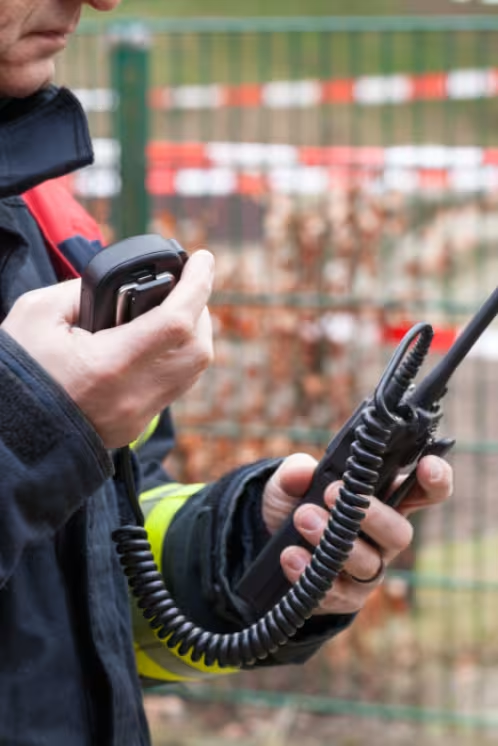
ERRCS system with emergency responder holding radio

Remote Monitoring and Security Technology

Remote monitoring combines advanced security technologies, including intrusion alarms, CCTV cameras, motion detectors, and environmental sensors, with a professional monitoring center operating 24 hours a day, 7 days a week.

Whenever an alarm is triggered, trained monitoring specialists verify the situation using video, audio, or two-way communication before determining the most appropriate response.

Depending on the circumstances, they may dispatch a mobile security officer, notify designated contacts, or contact local law enforcement or emergency responders.

Technology provides rapid detection, while experienced security professionals ensure the appropriate response.

GettyImages-1355657113.jpg

Event Security

Special events create unique security challenges due to large crowds, fluctuating attendance, and diverse audiences.

Event security services include crowd management, bag inspections, security screenings (where legally permitted), access control, and close coordination with event organizers, emergency responders, and law enforcement agencies.

Whether securing conventions, concerts, festivals, sporting events, or corporate gatherings, every event requires a carefully planned security strategy.

Outdoor concert event on a track

Security Assessments, Consulting, and Training

Effective security always begins with a thorough assessment. Security audits identify vulnerabilities, evaluate facility operations, and prioritize potential risks.

Based on these findings, security consultants recommend the most effective combination of personnel, technology, and operating procedures. Many security companies also provide employee training programs covering emergency response, alarm procedures, evacuation planning, visitor management, and recognizing suspicious behavior.

Audit de sécurité.png

Why Choose a Professional Security Company?

Outsourcing security provides expertise, flexibility, and peace of mind. Partnering with a professional security company allows organizations to:

  • Benefit from experienced security professionals and proven operational procedures.
  • Focus on their core business while security is managed by dedicated experts.
  • Ensure compliance with applicable federal, state, and local regulations.
  • Implement scalable security solutions that can adapt to business growth, temporary projects, or special events.
  • Gain access to shared resources, including monitoring centers, mobile response teams, and technical support.

This is exactly what SCUTUM delivers, combining more than 35 years of experience with certified monitoring centers, highly trained security professionals, and nationwide technical expertise.

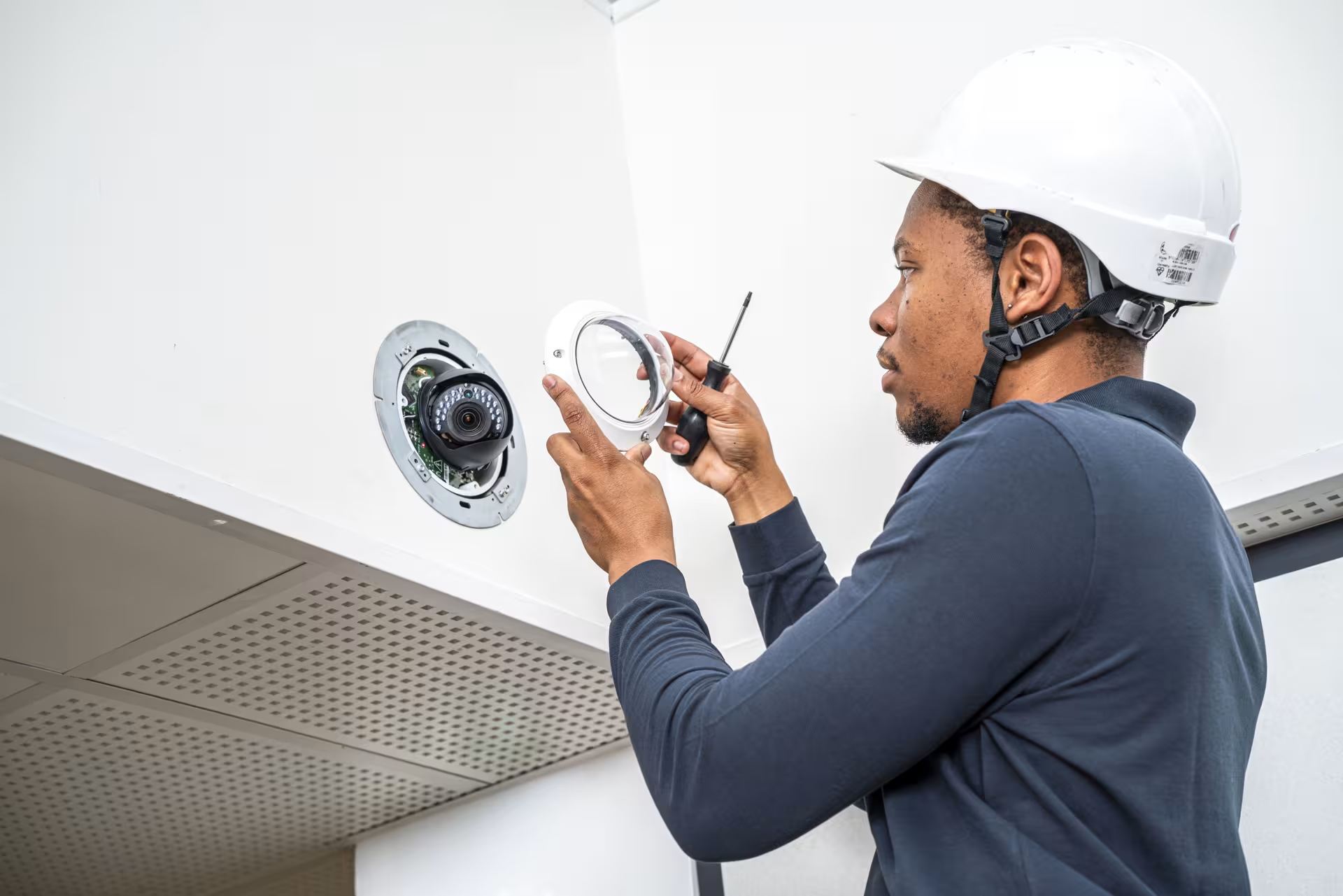
Scutum surveillance camera - tech 2
Pictogramme utilisateur

Cédric DONOTE, Head of Electrical & Low-Voltage Engineering, SCUTUM

"A thorough fire safety assessment goes beyond creating code-compliant plans. It anticipates the client's real operational needs to help protect both people and property. This commitment to excellence is what sets us apart and allows us to consistently exceed our customers' expectations."

Conclusion

A professional security company is more than a service provider, it is a long-term partner dedicated to protecting people, property, and business continuity.

Because the private security industry is subject to licensing requirements and professional standards, choosing an experienced, reputable, and qualified security company is a strategic investment. The difference between simply reacting to incidents and implementing a comprehensive security strategy often comes down to selecting the right security partner.

Frequently Asked Questions About Security Companies

How much does it cost to hire a private security company?

  • The cost of hiring a private security company depends primarily on the type of service required, such as security guarding, mobile patrols, event security, or remote monitoring.
  • Specialized services, such as protecting high-risk facilities, executive protection, or armed security (where permitted by law), typically cost more.
  • Pricing also depends on the duration of the assignment, whether it's a one-time event or an ongoing contract, as well as the frequency of service.
  • The level of risk associated with the property also has a direct impact on the overall cost.
  • Additional charges may apply for travel, installed equipment, overnight shifts, weekends, or holiday coverage.
  • The best way to obtain accurate pricing is to request a customized quote based on your specific security needs.

What is the difference between a security company and law enforcement?

  • A private security company provides preventive and deterrent security services.
  • Security officers protect private property, including businesses, retail stores, residential communities, construction sites, and special events.
  • Law enforcement agencies are responsible for criminal investigations, enforcing the law, and maintaining public safety.
  • Private security officers do not have the same legal authority as police officers. They cannot conduct criminal investigations or exercise law enforcement powers beyond those permitted under applicable laws.
  • Instead, security professionals work alongside local law enforcement to help prevent incidents and respond quickly when emergencies occur.
  • If a serious incident arises, security personnel notify the appropriate emergency services or law enforcement agency.
  • Private security companies must comply with applicable federal, state, and local regulations, and licensing requirements vary by state.

How is the private security industry regulated in the United States?

  • Unlike some countries with a single national regulator, the U.S. private security industry is regulated primarily at the state level.
  • Most states require security companies and security officers to obtain licenses or certifications before providing security services.
  • Licensing requirements often include background checks, professional training, and continuing education.
  • State agencies oversee compliance with applicable laws and may suspend or revoke licenses if regulations are violated.
  • These requirements help ensure that clients receive professional, reliable, and legally compliant security services.

Who can benefit from hiring a security company?

Security services are valuable for many types of organizations and individuals, including:

  • Small businesses and large corporations
  • Industrial facilities, warehouses, and manufacturing plants
  • Retail stores and shopping centers
  • Property management companies and residential communities
  • Event organizers, including conferences, concerts, festivals, and sporting events
  • Government agencies and public institutions
  • Homeowners seeking temporary or specialized security services
  • Construction sites that are vulnerable to theft and vandalism

Does a small business need a security company?

  • Absolutely. Small businesses are just as vulnerable to burglary, theft, vandalism, and workplace security risks as larger organizations.
  • A professional security company helps protect facilities, equipment, inventory, and sensitive business information while improving the safety of employees and visitors.
  • Visible security measures also serve as an effective deterrent against criminal activity.
  • Security solutions can be customized to fit the operational needs and budgets of small and mid-sized businesses.
  • Outsourcing security allows business owners to stay focused on growing their business while experienced professionals manage security operations.
  • Flexible options include scheduled patrols, remote monitoring, alarm response, and on-site security officers.

Need a customized security assessment? SCUTUM's security experts work with businesses, residential communities, construction sites, and event organizers to design tailored, scalable security solutions that meet today's evolving security challenges.

Contact us today to schedule a no-obligation security assessment and discover the right solution for your organization.