Submitted by Justine.Pource… on
Extinguishers
published on 20/08/2026

Types of Fire Extinguishers and Their Extinguishing Agents

Types of Fire Extinguishers and Their Extinguishing Agents

Different types of fire extinguishers are designed to tackle different types of fires, from everyday materials such as paper and wood to electrical equipment, flammable liquids, cooking oils and combustible metals.

In the United States, fires are classified into five main classes: A, B, C, D and K. Electrical fires are classified as Class C fires because they involve energized electrical equipment. Once the electrical equipment has been de-energized, the fire can be treated according to the class of material that is burning.

Because different fuels and fire conditions require different extinguishing methods, the type of extinguishing agent needed also varies. Using the wrong fire extinguisher can be ineffective and may make the fire worse or put lives at risk.

The main fire classes are:
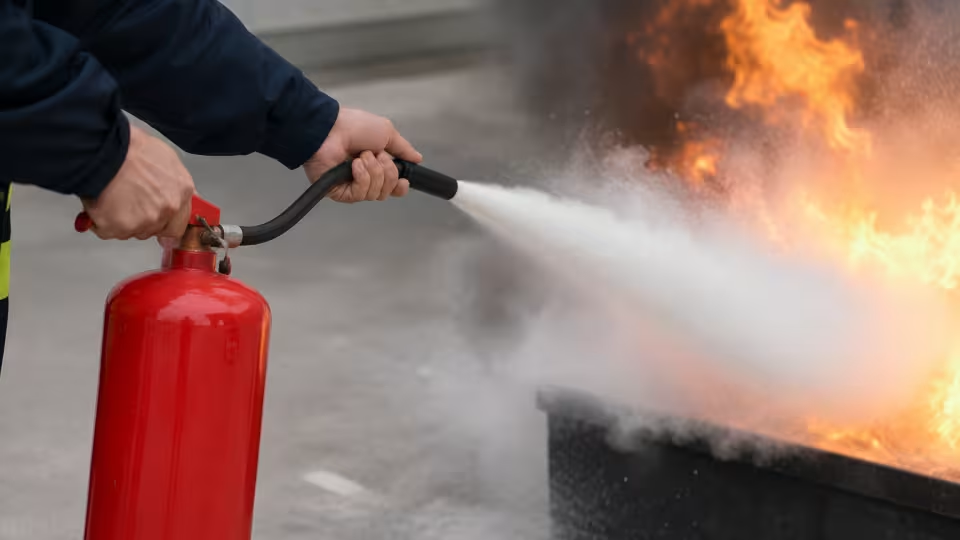
1 Class A

Fires involving ordinary combustible materials such as wood, paper, cardboard, cloth and many types of plastic.

2 Class B

Fires involving flammable and combustible liquids, such as gasoline, oil, paint, solvents and grease.

3 Class C

Fires involving energized electrical equipment, such as electrical panels, computers, appliances and wiring.

4 Class D

Fires involving combustible metals, such as magnesium, titanium, sodium, potassium and certain aluminum or metal powders.

5 Class K

Fires involving cooking oils and fats, typically in commercial kitchens and deep fryers.

6 Electrical fires

In the United States, fires involving energized electrical equipment are classified as Class C. A fire extinguisher specifically rated for Class C fires should be used while the equipment remains energized. Whenever it is safe and possible to do so, the electrical power should be shut off before attempting to extinguish the fire.

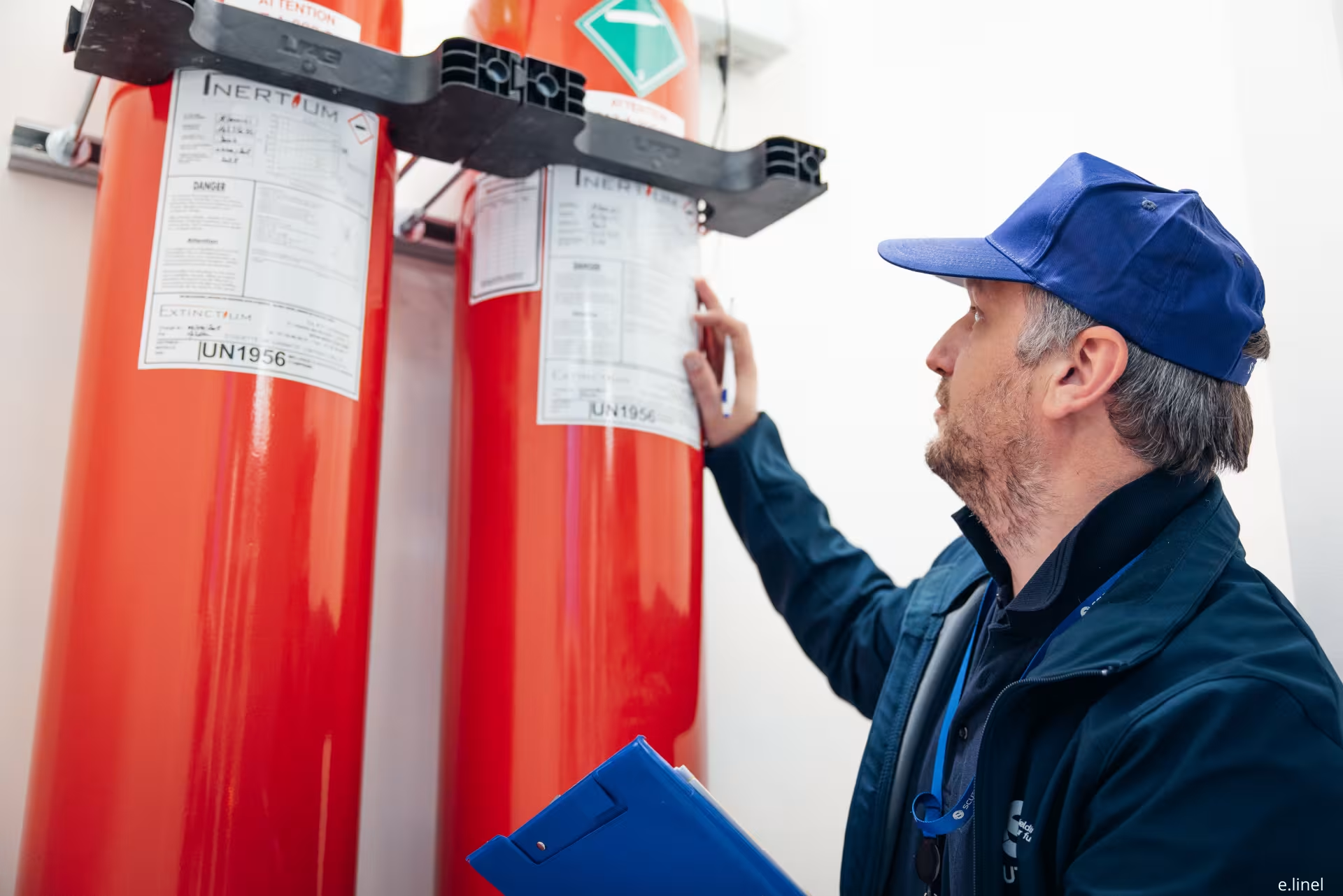
Fire extinguishers in the United States should be selected, installed, inspected and maintained in accordance with applicable fire codes and standards, including NFPA 10, Standard for Portable Fire Extinguishers.

The number, type and placement of fire extinguishers should be determined according to the hazards present, the type of occupancy and the applicable requirements of the National Fire Protection Association (NFPA) and local authorities having jurisdiction (AHJ).

Scutum can help businesses assess their fire risks, select appropriate extinguishers and organize their installation and maintenance to support compliance with applicable fire safety requirements.

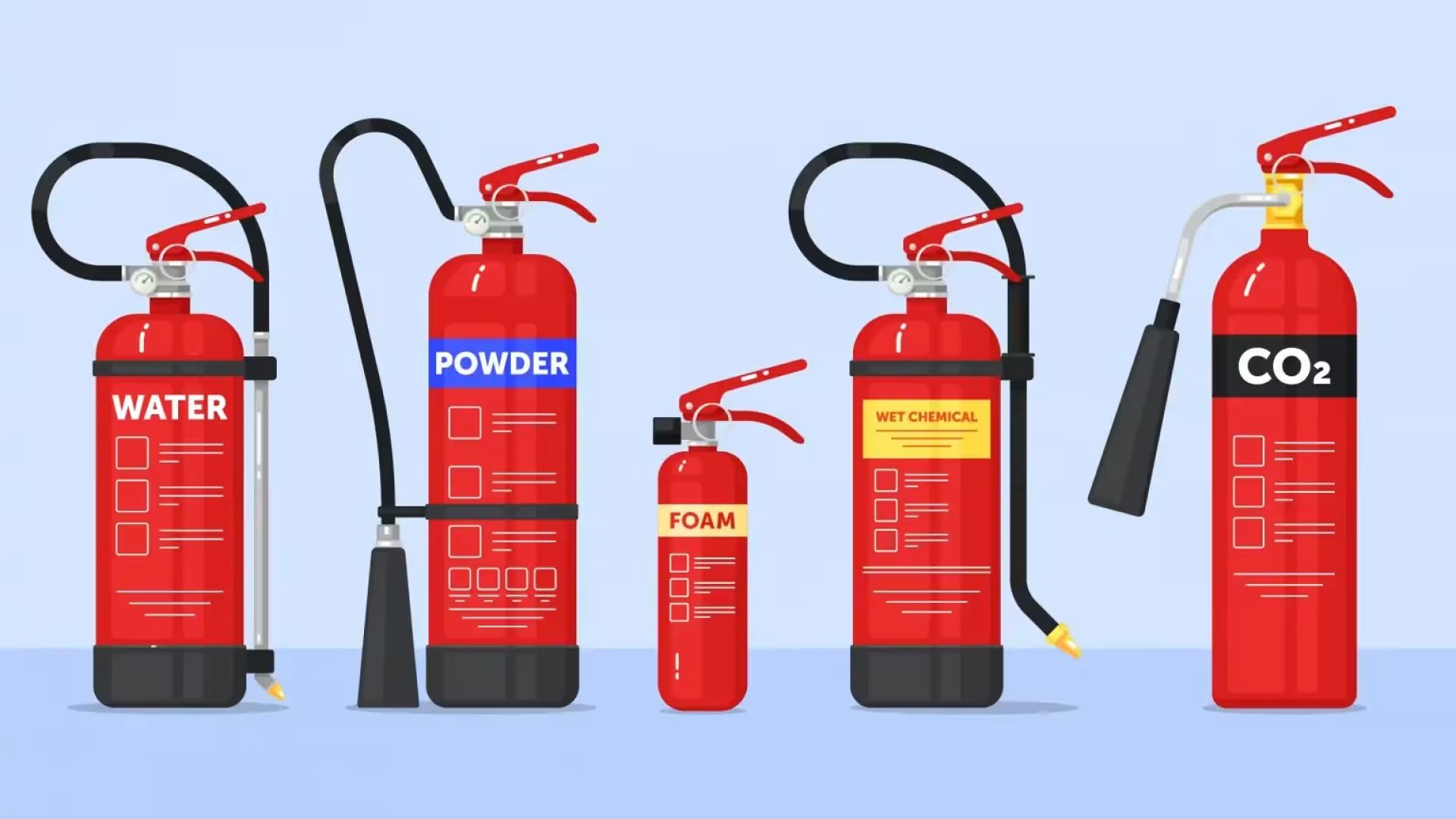
The Different Types of Fire Extinguishers

Water Fire Extinguishers

Water fire extinguishers fight fires by delivering a powerful stream of water. The water cools burning materials by absorbing the heat produced during combustion. As the temperature decreases, combustion slows until the fire is extinguished.

Fire Extinguishers

The extinguishing agent is simple: H₂O, or water. It cools the fire by absorbing heat from the burning material.

Water extinguishers are primarily designed for Class A fires, involving ordinary combustible materials such as wood, paper, cardboard and cloth.

Offices can be particularly exposed to Class A fires because of the presence of paper, furniture and other combustible materials.

A water extinguisher should always be operated according to the instructions provided on the unit. Depending on the model, remove the safety pin, aim the nozzle or hose at the base of the flames and squeeze the handle.

Icon attention.png

Important

Although water is highly effective against Class A fires, it can be extremely dangerous when used on energized electrical equipment or fires involving cooking oils and grease.

Water is also unsuitable for fires involving flammable liquids or combustible metals and, in certain circumstances, can cause the fire to spread.

Foam Fire Extinguishers

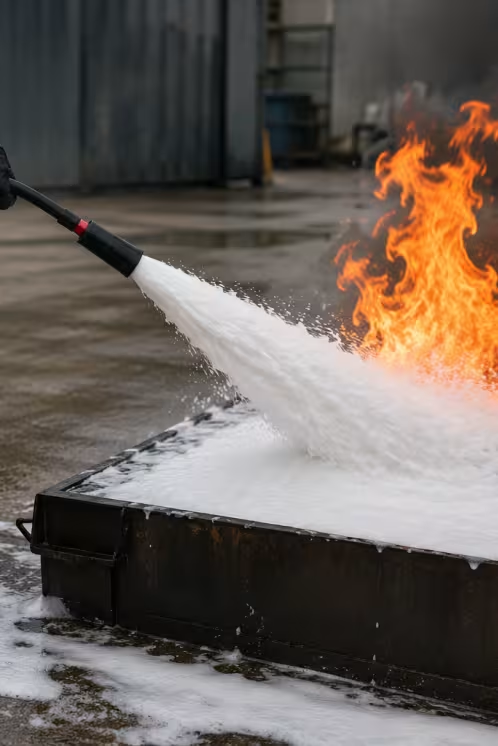
Foam fire extinguishers fight fires by separating the fuel from the flames through the formation of a layer of foam over the burning surface. This layer helps limit contact between the fuel and oxygen and can reduce the risk of re-ignition.

Some firefighting foams historically contained substances belonging to the PFAS (per- and polyfluoroalkyl substances) group. Because of their persistence in the environment and potential health and environmental concerns, PFAS are subject to increasing regulatory restrictions in the United States and internationally.

Foam extinguishers.png

When selecting a foam extinguisher, it is therefore important to consider the composition of the extinguishing agent and the applicable federal, state and local requirements.

Depending on the formulation and rating, foam extinguishers may be suitable for Class A and Class B fires, including fires involving ordinary combustibles and certain flammable liquids.

For a fire involving ordinary combustibles, aim the extinguisher at the base of the flames. When dealing with a flammable liquid fire, the foam should be applied carefully to avoid spreading the burning liquid.

Dry Chemical Fire Extinguishers

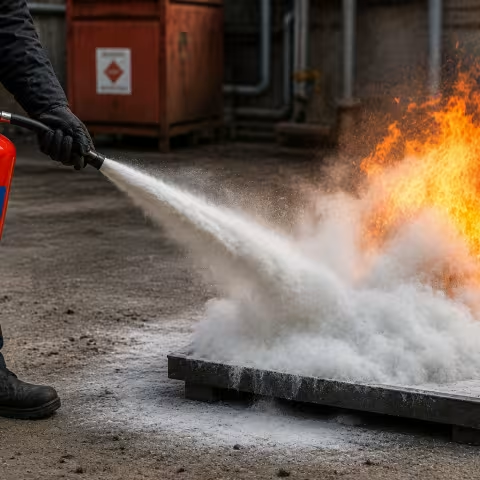
Dry chemical fire extinguishers fight fires by interrupting the chemical chain reaction that sustains combustion and separating the flames from the fuel.

Depending on the type of dry chemical used, extinguishers can be rated for different classes of fire. Modern ABC dry chemical extinguishers commonly contain monoammonium phosphate, which interferes with the chemical reaction of combustion and helps extinguish the flames.

Dry powder extinguishers.png

ABC dry chemical extinguishers are designed for Class A, Class B and Class C fires.

Other dry chemical agents are available for specific hazards. For example, specialized dry powder extinguishers are used for Class D combustible metal fires.

Dry chemical extinguishers are highly versatile and are therefore commonly used in environments where several different types of fire hazards may be present.

However, dry chemical powder also has disadvantages. It can be irritating or harmful if inhaled in large quantities and can contaminate or damage sensitive electronic equipment. For this reason, its use should be carefully considered in areas containing delicate electronics.

CO₂ Fire Extinguishers

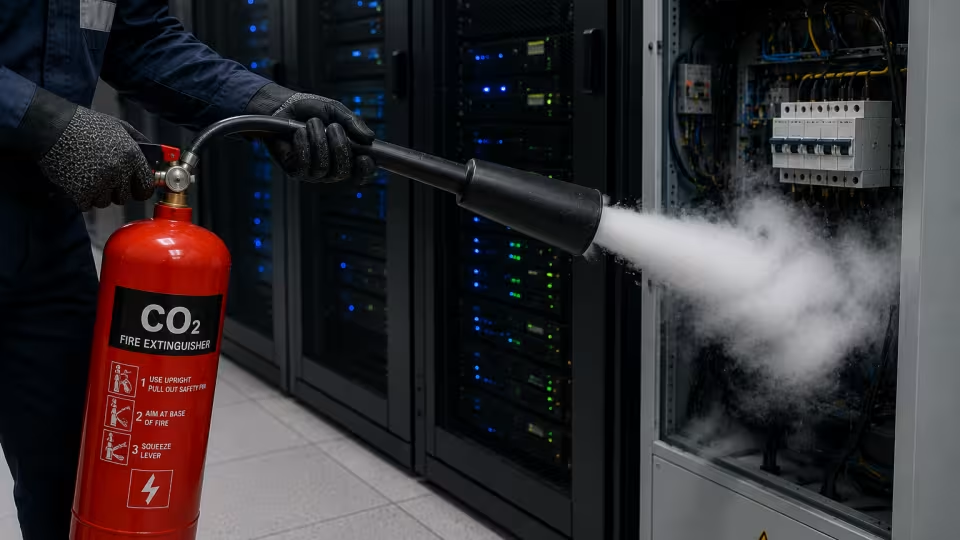
CO₂ fire extinguishers (carbon dioxide extinguishers) use carbon dioxide as the extinguishing agent. CO₂ reduces the concentration of oxygen available to sustain combustion and also provides a cooling effect when discharged.

CO2 extinguisher.png

CO₂ extinguishers are particularly useful for certain Class C fires involving energized electrical equipment, provided the extinguisher is properly rated for that application.

For this reason, they are commonly used in areas containing computers, electrical panels, control equipment and other sensitive electrical or electronic equipment.

One of their main advantages is that CO₂ does not leave a residue, which can help reduce the risk of damage to sensitive equipment caused by extinguishing-agent residue.

CO₂ extinguishers are commonly identified by a black label or band.

Before using a CO₂ extinguisher on electrical equipment, disconnect the power if this can be done safely. Then aim the discharge horn toward the base of the fire and operate the extinguisher according to the manufacturer's instructions.

Icon attention.png

Important

CO₂ extinguishers should be used with particular caution in small, enclosed or poorly ventilated spaces.

Carbon dioxide can displace oxygen and create an asphyxiation hazard for people in the area.

After using a CO₂ extinguisher in an enclosed space, adequate ventilation should therefore be provided before people re-enter or remain in the area.

Wet Chemical Fire Extinguishers

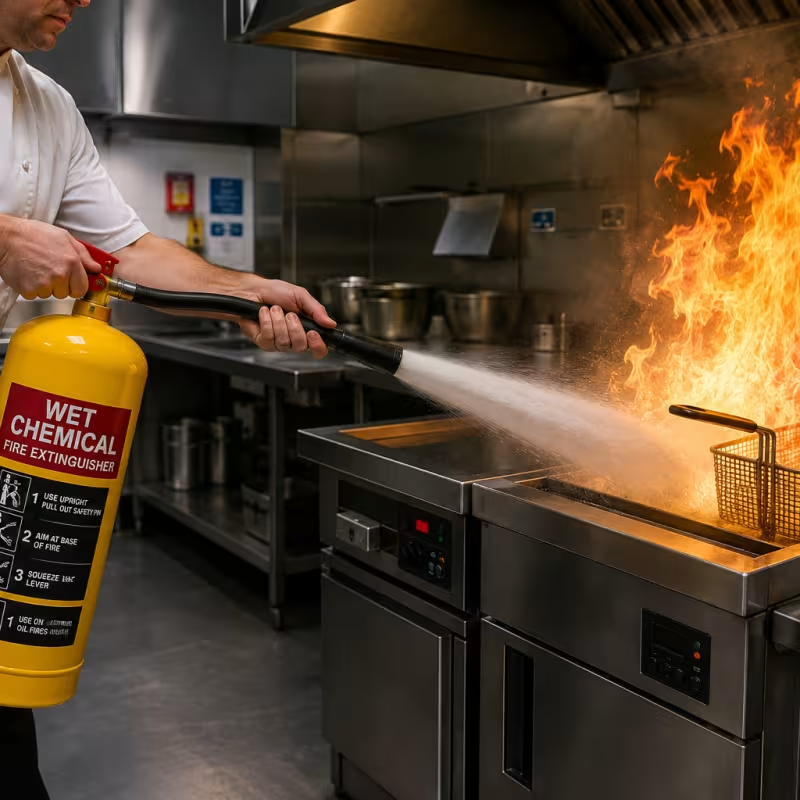
Wet chemical fire extinguishers use a solution, typically based on potassium acetate (CH₃CO₂K), that is discharged directly onto the fire. Some formulations may also contain potassium citrate or potassium bicarbonate.

The extinguishing agent works in two ways. First, it cools the flames and reduces the temperature of the burning material, slowing combustion. Second, it forms a protective layer over the fuel, creating a barrier between the flames and the cooking oil or grease and helping to prevent re-ignition.

Wet Chemical extinguisher.png

The agent is discharged as a fine spray to cool burning oil or grease without causing dangerous splashing.

Wet chemical extinguishers are specifically designed for Class K fires, which involve cooking oils and fats, particularly in commercial kitchens and deep fryers.

In these situations, using water is extremely dangerous. When water comes into contact with hot cooking oil, it can instantly turn into steam and violently propel burning oil, causing the fire to spread rapidly and potentially resulting in severe burns.

Wet chemical extinguishers cover the burning oil or grease, separate it from the flames and help stop the combustion process.

Automatic Fire Extinguishing Systems

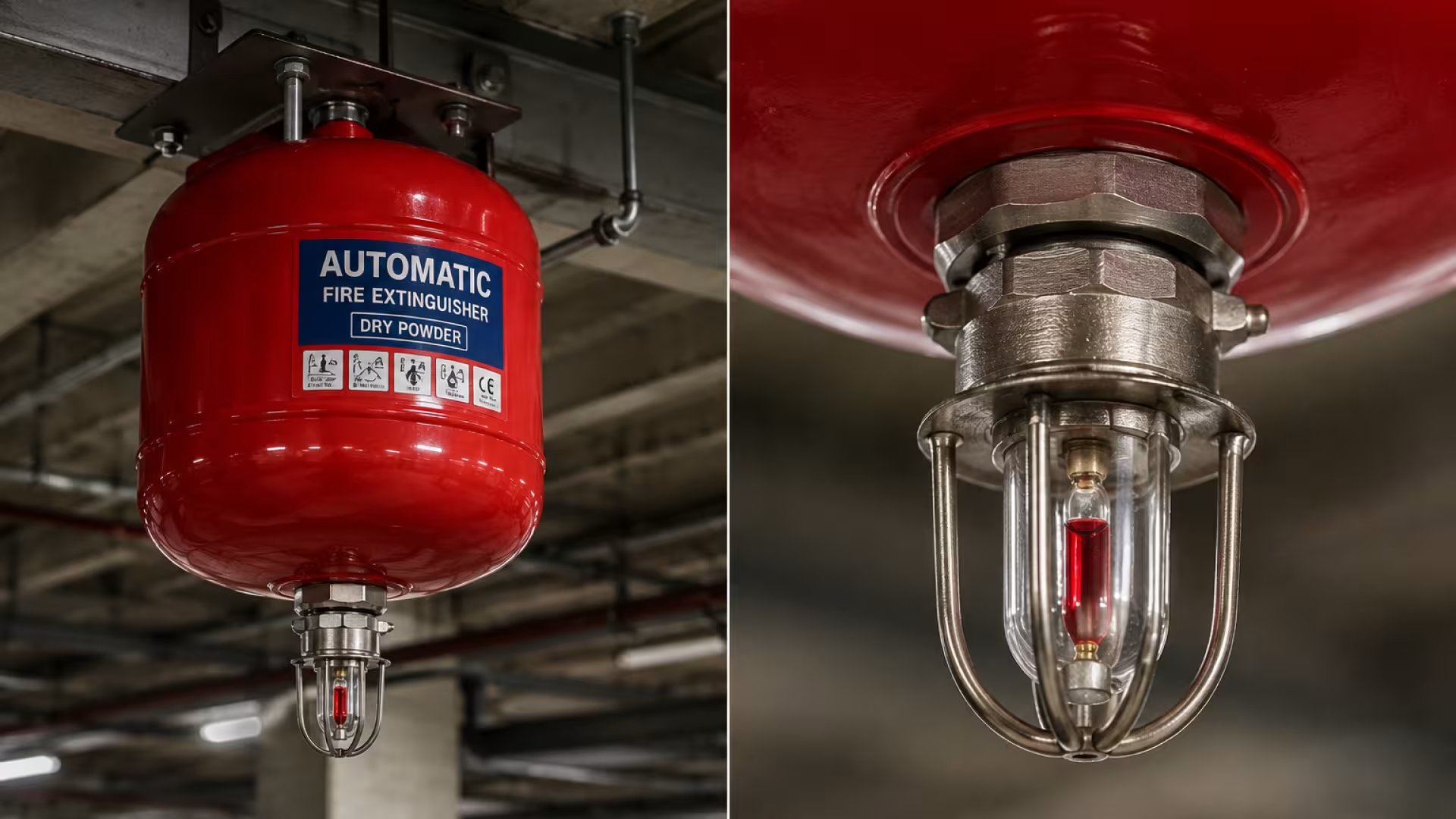
Automatic fire extinguishing systems differ from conventional handheld extinguishers primarily in how they operate.

While a manual fire extinguisher requires a person to activate it, automatic systems can detect a fire or a significant temperature increase and automatically release the extinguishing agent when a predetermined activation temperature is reached.

Automatic fire extinguisher.png

Many automatic systems use a glass bulb or another thermally activated device. When the temperature rises as a result of a fire, the activation element operates and releases the extinguishing agent.

Depending on the system and hazard, different extinguishing agents can be used, including dry chemical agents.

Automatic fire suppression systems can provide additional protection for unoccupied or rarely occupied areas. They may be used in certain equipment rooms, storage areas, commercial facilities and other locations where people are not continuously present.

The most appropriate solution depends on the type of fire hazard, the characteristics of the protected area and the applicable fire protection requirements.

Specialized Fire Extinguishers: Lithium-Ion Battery Fires

A growing fire risk in both commercial and residential environments is lithium-ion battery fires. These batteries are found in many everyday devices, including mobile phones, laptops, electric bicycles, e-bikes, e-scooters, power tools and other battery-powered equipment.

Fire extinguishers specifically designed for lithium-ion battery fires may use water-based extinguishing agents combined with vermiculite, discharged as a fine mist.

The water primarily cools the battery and helps limit temperature increases, while the vermiculite particles can form a protective layer around the battery.

This layer helps isolate the battery and reduce the risk of re-ignition.

One agent used for this type of fire protection is Aqueous Vermiculite Dispersion (AVD), a water-based vermiculite dispersion.

Vermiculite is a naturally occurring mineral that is also commonly used in horticulture and gardening.

Lithium-ion battery fires present a particular challenge because batteries can reignite after the fire appears to have been extinguished. This can occur as a result of a phenomenon known as thermal runaway.

For this reason, conventional fire extinguishers are not necessarily suitable for every lithium-ion battery fire. In areas where lithium-ion batteries are used, charged or stored, businesses should assess whether specialized extinguishing agents and additional fire protection measures are necessary.

How Fire Extinguishing Agents Work

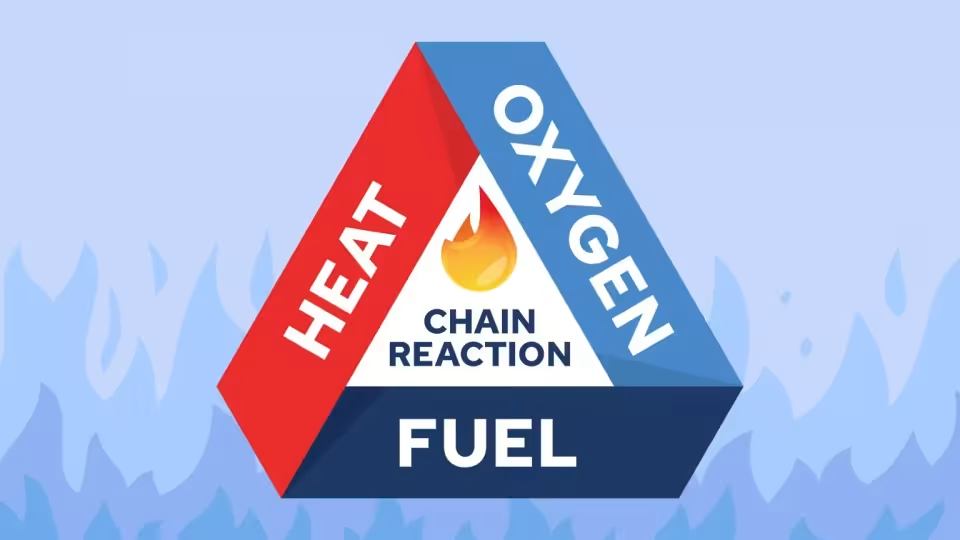
Each type of fire extinguisher works by targeting one or more elements of the fire triangle: heat, fuel and oxygen.

Understanding how different extinguishing agents work helps explain why selecting the correct extinguisher is so important and why using the wrong agent can be dangerous.

Fire Triangle
tick icon

Water (H₂O)

Removes heat by cooling the fire and the burning material. Primarily suitable for Class A fires.

tick icon

CO₂ (carbon dioxide)

Displaces oxygen and provides a cooling effect. Particularly suitable for certain Class C fires involving energized electrical equipment.

tick icon

Foam

Forms a layer over the surface of the fuel, limiting oxygen exposure and helping to prevent re-ignition. Depending on the extinguisher's rating, it may be suitable for Class A and Class B fires.

tick icon

Dry chemical (monoammonium phosphate, depending on formulation)

Interrupts the chemical chain reaction of combustion and suppresses the flames. ABC dry chemical extinguishers are designed for Class A, B and C fires. Specialized dry powders are available for Class D combustible metal fires.

tick icon

Wet chemical (potassium acetate)

Cools the fire and forms a protective layer over burning cooking oils and fats. Designed for Class K fires.

tick icon

Specialized lithium-ion battery agent (water + vermiculite)

Cools the battery and creates a protective barrier that helps reduce the risk of re-ignition.

Choosing the Right Fire Extinguisher

Choosing the right fire extinguisher is essential for protecting people, buildings and property.

Different fire hazards require different extinguishing methods and agents. Using an inappropriate extinguisher can increase the danger or cause the fire to spread.

In the United States, fire extinguisher selection, installation, inspection and maintenance should take into account the specific hazards present, the type of occupancy and applicable federal, state and local requirements.

NFPA 10, Standard for Portable Fire Extinguishers, provides requirements and guidance for the selection, installation, inspection, maintenance and testing of portable fire extinguishers.

Fire extinguishers should be readily accessible, clearly identified and maintained in working condition. Their placement and number should be appropriate for the hazards and the layout of the protected area.

Businesses must also consider applicable requirements from the Occupational Safety and Health Administration (OSHA), local fire codes and the authority having jurisdiction (AHJ).

Proper employee training, regular inspections and maintenance, and clear signage help ensure that fire extinguishers can be located quickly and used correctly in an emergency.

By understanding the different extinguishing agents and how they work, businesses can improve fire safety, protect their facilities and property, and be better prepared to respond quickly and safely in the event of a fire.

extincteurs scutum photo

Make Sure Your Property Is Properly Protected

Don't wait for a fire to take action. Contact Scutum to assess your property's fire protection needs, identify the appropriate fire extinguishers and arrange for their installation, inspection and maintenance.

This can help ensure that your facility has the appropriate fire extinguishing equipment for the different fire hazards it may face.