Submitted by Joe Semaan on
Levée de doute vidéo
published on 06/10/2026

Video verification: the complete guide to securing your business

Written by Fabien Adnet, Deputy Managing Director, Monitoring Services

Introduction: beyond the alarm itself, visual confirmation

A siren goes off in the middle of the night, a security team is alerted, sometimes a patrol is even sent to the site: all for nothing. In the United States, the vast majority of alarm activations are false alarms: an animal, a door left ajar, a technical fault. Every false alarm has a cost: disruption for your teams, a loss of credibility with law enforcement and, under many local alarm ordinances, the risk of a fee or fine for an unwarranted call.

Video verification is the modern answer to this problem. Video verification is a human, visual verification procedure that establishes the nature of a security alert before any response is dispatched. It turns a simple audible alarm into reliable, actionable information that you and law enforcement can act on with confidence.

At Scutum, this reliability has a name: we deliver operational certainty, so your success is built to last. That is exactly what video verification makes possible: replacing the uncertainty of a raw alarm with an informed decision, made within seconds by a trained operator.


What is video verification?

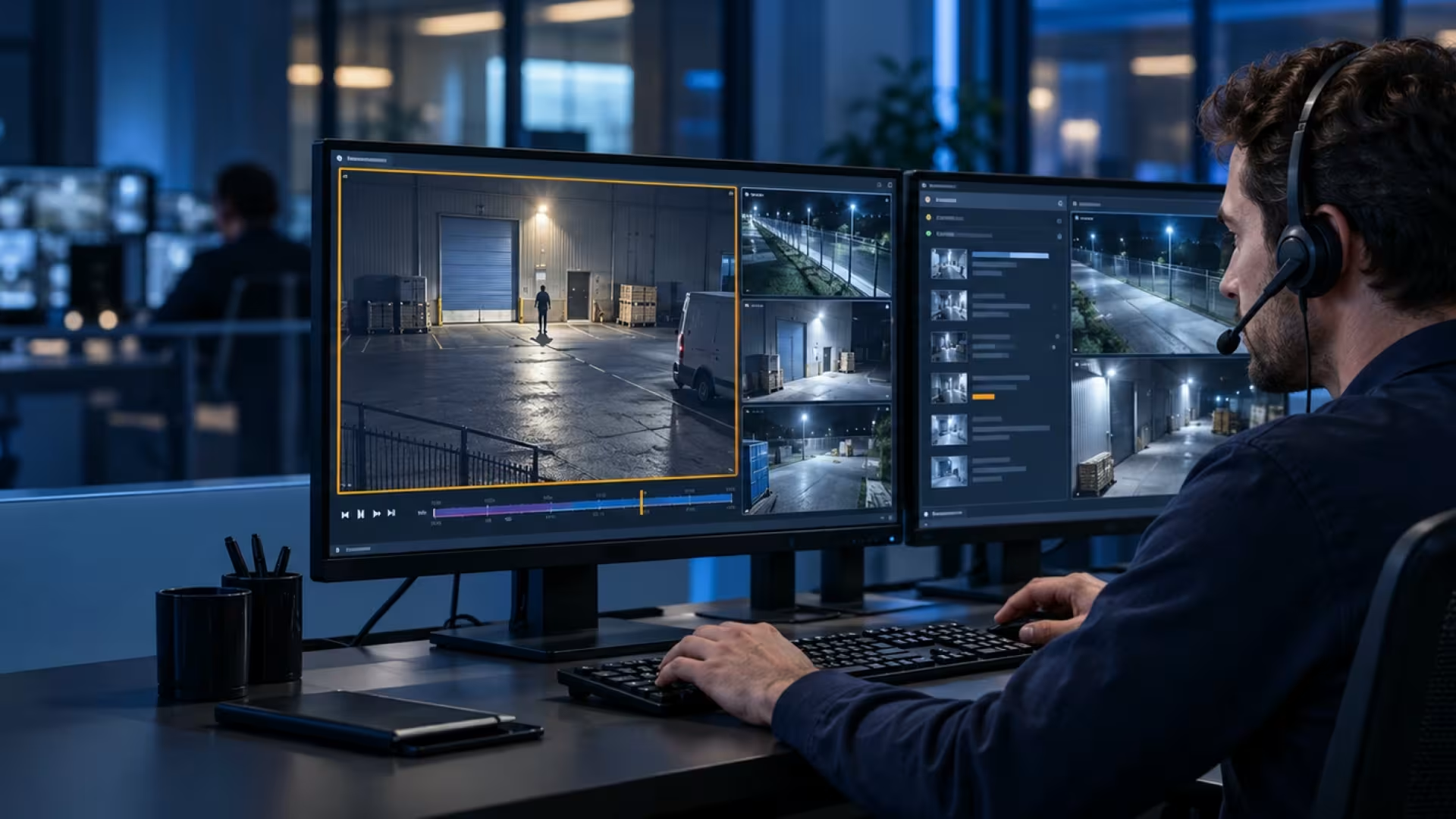
Video verification means that a monitoring center operator views the footage from a site's cameras at the moment an alarm is triggered, in order to determine its actual cause.


It differs from two set-ups it is often confused with:

bookmark

Passive video surveillance records continuously, but no one watches the footage in real time: it mainly serves as evidence after the fact, not as an alerting system.

device

Conventional alarm monitoring relies solely on the information sent by detectors (motion, door opening): it indicates that an event has occurred, but not what kind of event, and it cannot qualify that event either without a person checking on site.

Video verification adds the layer that was missing: visual confirmation. It is what makes it possible to tell, within seconds, a real intrusion from a false alarm. A qualified response depends on this confirmation, whether it comes from a security officer or from law enforcement.

How does the verification process work in 4 key steps?

The process is fast, standardized and rigorously logged, from the moment the alarm is triggered to the final decision.

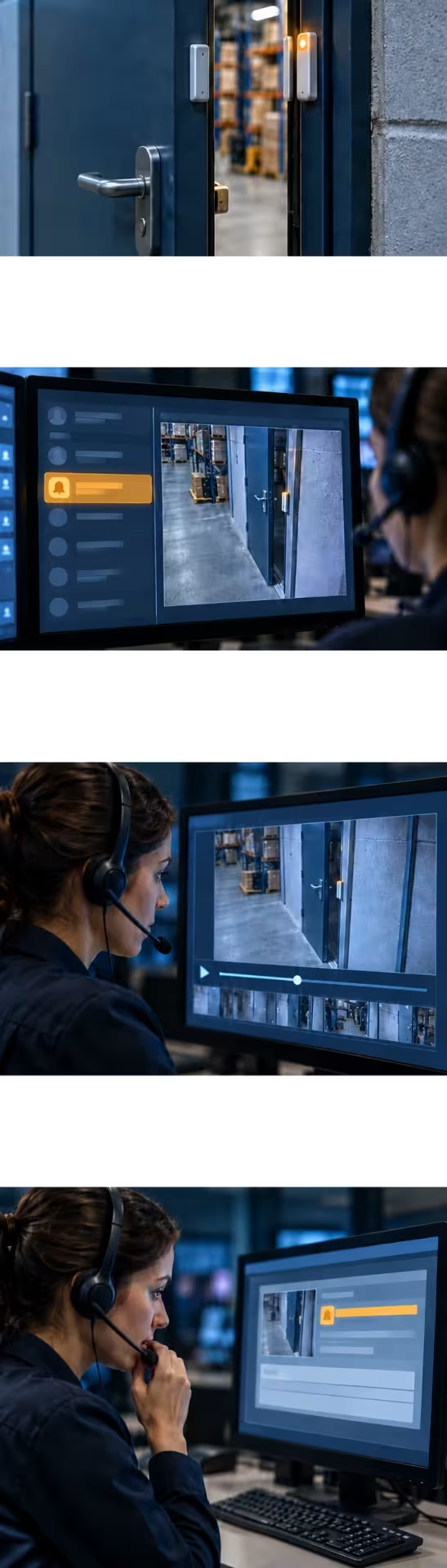
The alarm is triggered 

  • A detector (motion, door opening, glass break) sends a signal to the site's alarm control panel, which immediately transmits it to the monitoring center.

Receipt and analysis. 

  • The Scutum monitoring center receives the alert and instantly accesses the video feeds from the cameras located near the detector that was triggered. For example, if the alarm comes from a loading dock door in a warehouse, the operator first views the camera covering that area.

Verification by the operator. 

  • The operator analyzes the live footage, along with the few seconds before the alarm was triggered, to identify the exact cause of the alert: human intrusion, an animal, a dead leaf in front of a sensor, an employee error, a technical fault. This step is, strictly speaking, the "verification."

Decision and action.

  • Confirmed alarm: the operator contacts law enforcement, passing on the visual confirmation of the break-in, which can raise the priority of the call depending on the jurisdiction, as well as the customer or their designated contact.
  • False alarm: the process stops immediately, with no unnecessary disruption for your teams or for law enforcement.
Quatre étapes de la levée de doute vidéo - Espaces réguliers

The Scutum expert's view: the faster the verification, the more effective the response. That is why the quality of the cameras, their positioning and the robustness of the connection between the site and the monitoring center matter as much as the skill of the operator.

Pictogramme utilisateur

Fabien Adnet, Deputy Managing Director Monitoring Services


“Today, priority should go to any system that supports push video: as soon as an operator takes charge of the alarm, the corresponding video clip appears instantly on the operator's screen, at the exact moment the alarm was triggered. The operator can therefore analyze the right sequence straight away.


The disconnect between video and alarm is very often a problem for the effectiveness of alarm handling, and therefore of the system as a whole. Too often, by the time the operator has connected to the right camera, the suspects are no longer visible. By the time the footage has been replayed, operators have not been responsive enough, and very often it is too late.


Push video is now essential for optimal effectiveness. The quality of the monitoring, and therefore the efficiency of the system, depends entirely on the equipment installed, and therefore on the advice given upfront.”

The concrete benefits of video verification for your business

A drastic reduction in false alarms and their associated costs

An unverified false alarm has a real cost for your business:

1 Financial penalties

An unwarranted call to law enforcement, without valid verification, can lead to a fee or fine under the local alarm ordinance, charged to the alarm user or to the alarm company depending on the jurisdiction.

2 Time lost for your teams

Every unnecessary call-out ties up your security manager or your facilities team, who have to handle the incident, reassure staff and sometimes reopen the site in the middle of the night.

3 Credibility with law enforcement

A site with repeated false alarms sees its calls treated with more caution, including when the emergency is real.

Pictogramme utilisateur

Fabien Adnet, Deputy Managing Director Monitoring Services

“Beware of the downside of video: the noise created by nuisance activations.


Clearing out unfounded alarms is the first lever of performance in operating a security system. Day-to-day monitoring and analysis in the station across all transmitters, combined with a powerful video analytics tool: that is the added value of a monitoring provider like Scutum.


Fewer unfounded alarms also means less alarm fatigue for operators, and more responsiveness and availability for the events that are truly critical.” 

Priority, faster response from law enforcement

Verified calls can be given priority by law enforcement, because they are based on concrete visual evidence rather than a mere presumption, although the policy varies from one jurisdiction to another. Providing evidence from the outset (an image of an individual on site, a description of their behavior, their precise location in the building) speeds up the mobilization and operational decision-making of the responding teams.

Building irrefutable visual evidence

The images captured at the time of the incident are evidence that can be used directly:

  • For your insurance, in the event of a loss or theft, to speed up the settlement of the claim
  • For a police report, by giving investigators precise material evidence
  • For legal proceedings, if the identified perpetrators are prosecuted
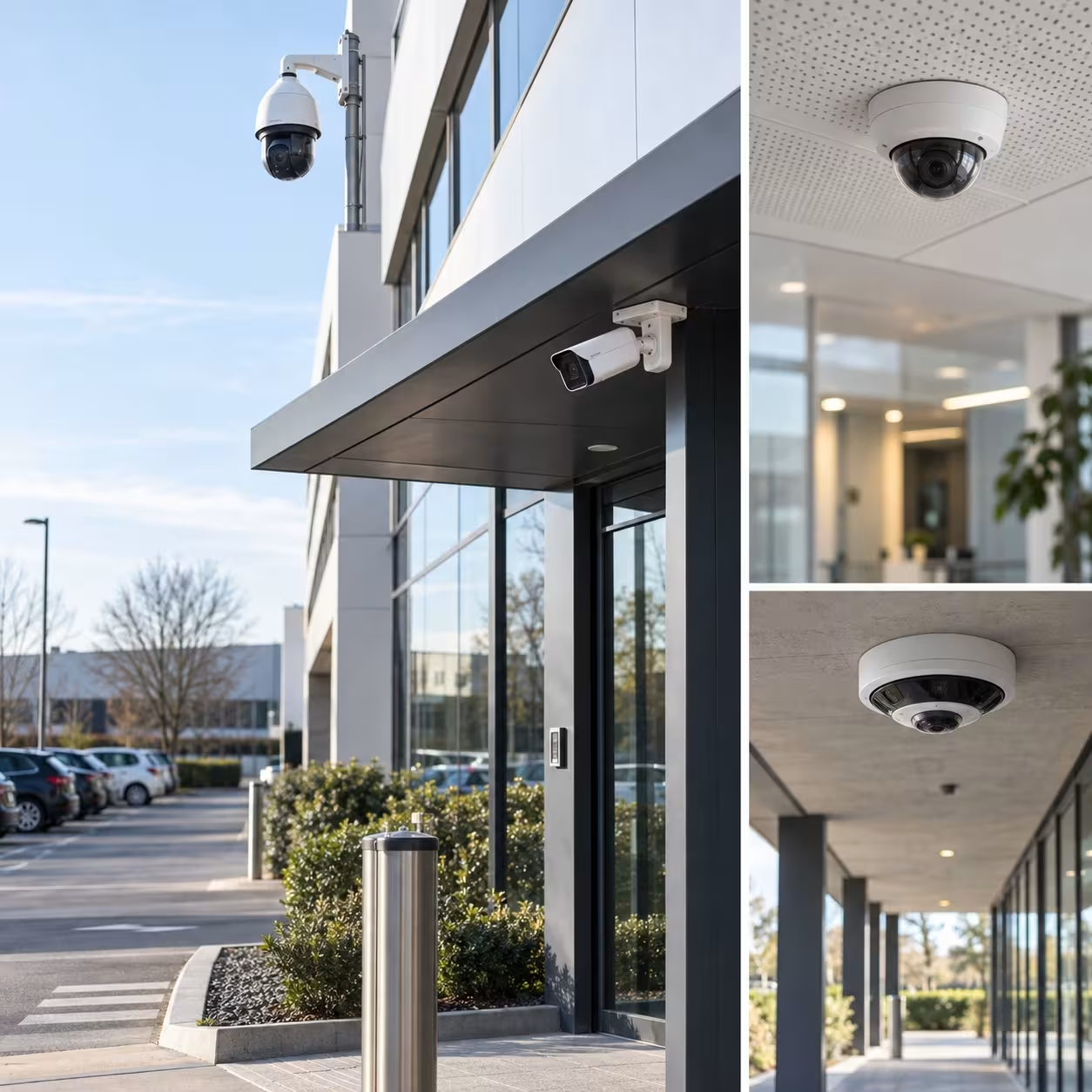
Caméras dômes, bullets, PTZ et panoramiques

A stronger deterrent effect

Simply knowing that an active surveillance system is in place, with real-time human verification, discourages a significant share of intrusion attempts. An intruder knows that an alarm paired with video verification drastically reduces the chances of leaving without being identified.

Legal framework and privacy: what you need to know

Is video verification legal?

Yes. In the United States, there is no single nationwide rule: alarm response is governed by state laws and local ordinances, and some of them make verification a condition of police dispatch. In Florida, for example, a monitoring company must try twice to confirm an intrusion alarm with the premises before notifying law enforcement, unless the system has visual or auditory sensors that allow the alarm to be verified. In Seattle, the police respond to alarm company calls only when there is supporting evidence such as audio, video, a panic alarm or an eyewitness. Many jurisdictions also charge a fee or fine for false alarms, in an amount set by the local alarm ordinance.

In practice, this means your monitoring provider should be able to show, for each dispatch request, how the alarm was verified: by video, by audio, by confirmation from the customer or by several alarm signals that corroborate each other.

contact voor beveiliging
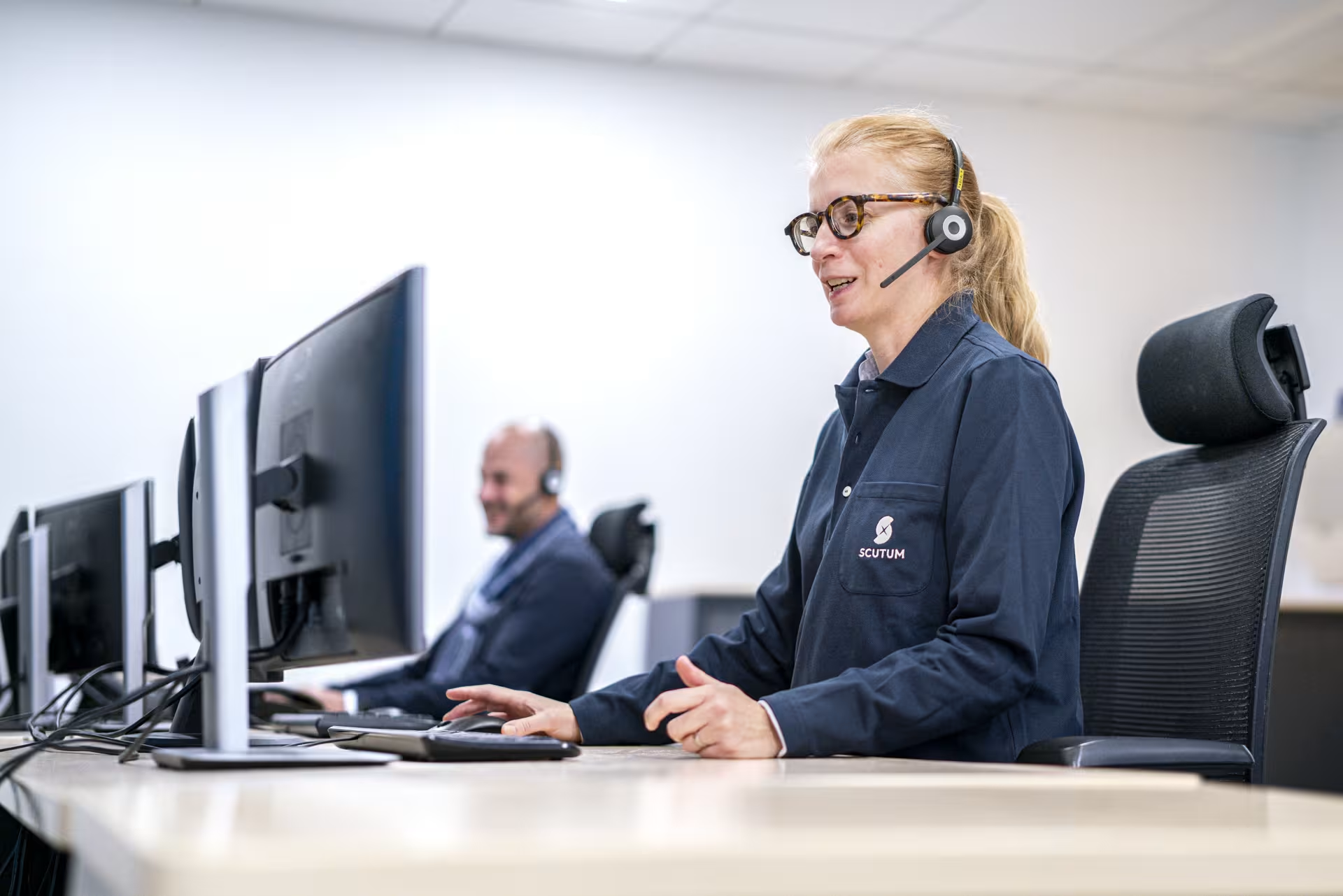
Live monitoring operator - 1

This framework comes with privacy obligations. The United States has no single federal equivalent of the GDPR: the rules on workplace video surveillance and personal data are set mainly at state level, and they vary from one state to another. A professional video verification service relies on the following safeguards:

  • Footage is viewed only when an alarm is triggered, never freely or continuously;
  • Only authorized, trained operators have access to the video feeds;
  • Access is secured and logged, to guarantee confidentiality and traceability;
  • Your employees are informed of the system when it films work areas, which is a legal requirement in some states (Connecticut, for example, requires prior written notice of electronic monitoring);
  • The retention period for footage is defined in the contract, in line with the state rules that apply to your sites.

This careful compliance with the legal framework and with privacy rules is directly linked to the professionalism of the monitoring center.

Conclusion: a strategic investment for complete peace of mind

Video verification turns an alarm, which is uncertain by nature, into a fast, reliable decision. For your business, it guarantees three things: fewer false alarms and associated costs, a faster and more effective response when a real incident occurs, and usable evidence in the event of a loss or legal proceedings.

It is not an additional security expense: it is an investment in the continuity of your business. This is how video verification fits fully within the promise Scutum makes to its customers: delivering operational certainty, so your success is built to last, whatever the size or complexity of your sites.

Protect your business effectively. Contact a Scutum expert today for a personalized security audit and discover our video verification solutions.

BOOK A MEETING WITH A SCUTUM EXPERT

FAQ: frequently asked questions about video verification

What is the difference from conventional alarm monitoring?

Conventional alarm monitoring relies mainly on the information sent by intrusion detectors (motion, door opening, etc.). Video verification lets an operator visually check what triggered the alarm. It makes it possible to tell a real intrusion from a false activation (an animal, an operating error, a technical incident and so on). Responses by law enforcement or by a security officer are therefore triggered on the basis of more reliable visual evidence.

Do I need specific cameras for this service?

In most cases, yes: the cameras must be compatible with the monitoring system and allow secure access to the images. Some existing installations can be reused if they meet the technical requirements. A preliminary survey makes it possible to check whether the equipment already installed is compatible.

What happens if my internet connection goes down?

Professional systems often have a backup connection over the cellular network (4G/5G). The alarm generally keeps working even if internet access is lost. However, the transmission of footage may be limited if no backup connection is available. A loss of communication can itself generate an alert at the monitoring center. It is advisable to plan for a dual transmission path to ensure continuity of service.

Who watches the footage, and how is my privacy and that of my employees protected?

Footage is viewed only when an alarm is triggered or in the situations provided for in the contract. Only authorized, trained operators have access to the video feeds. Access is secured and logged to guarantee confidentiality. Footage is handled in compliance with the applicable regulations, in particular the state privacy laws that apply to your sites. Employees should be informed of the system when it films work areas, which is a legal requirement in some states. Cameras are installed in line with the applicable rules to avoid any disproportionate intrusion on privacy.

Is a video verification service much more expensive than a standard alarm?

The cost is generally higher than for an alarm alone, because it includes video surveillance and the involvement of qualified operators. The price depends on several criteria: number of cameras, size of the site, level of monitoring required and options chosen. Video verification can reduce the costs associated with false alarms and unnecessary call-outs. For businesses, it is often a cost-effective investment thanks to more effective protection of property and operations.

Video verification can reduce the volume of mobile security officer call-outs by 15% to 20%.