Submitted by Justine.Pource… on
Télésurveillance de nuit
published on 06/10/2026

Industrial Remote Monitoring: The Complete Guide to Challenges and Solutions

Written by Magali Belot

Introduction: security as a prerequisite for industrial performance


Industry 4.0 is a reality: connected sites, automated flows, continuous production. But this same performance makes industrial sites (factories, warehouses, logistics platforms, COMAH sites) prime targets for theft, intrusion and malicious acts. Large, complex, often isolated and operating 24/7, these environments cannot be protected in the same way as a shop or office. Security becomes a prerequisite for performance.

Industrial remote monitoring combines advanced technologies, cameras, perimeter detection, access control and human expertise to protect complex environments 24 hours a day, 7 days a week. It is not limited to recording footage: every alert is assessed, verified and followed by the appropriate action, with the same level of reliability that an industrial site applies to its own production.


How can you guarantee flawless security for a production site or logistics warehouse without slowing down operations or exposing the company to compliance risks? This is precisely the question this guide addresses. We will examine the specific challenges of the industrial sector before presenting a range of practical solutions to address them effectively, with one objective: ensuring that your industrial success is built to last, whatever the complexity of your sites.

Télésurveillance site sensible ou infrastructure critique

The 3 major challenges of remote monitoring in industrial environments

An industrial site is neither an office nor a shop. It combines constraints that no generic security system can properly address. Three main categories of challenges stand out.

Challenge No. 1: environmental and structural constraints

Industrial sites are first characterised by their geography and physical environment:

  • Large areas to cover: site perimeter, car parks, outdoor storage areas and traffic routes between buildings.
  • Extreme conditions: dust, humidity, vibrations caused by machinery, very low temperatures (cold rooms, refrigerated warehouses) or very high temperatures (production areas, foundries).
  • Complex configurations: multiple buildings, blind spots created by metal structures, electromagnetic interference that can disrupt wireless transmissions.
  • Specific requirements for certain areas: explosive atmospheres (ATEX), clean rooms where even minor contamination is prohibited, or refrigerated warehouses requiring equipment suitable for continuous exposure to cold.

In response to these constraints, the solution lies in selecting hardened equipment specifically designed for demanding environments. This is an area where a generalist integrator without specialist industrial expertise can quickly reach its limits.

Pictogramme utilisateur

Magali BELOT, Director of Remote Monitoring Operations, Scutum France.

“An ordinary camera installed in a foundry or a cold room will not last six months. On an industrial site, equipment is selected zone by zone, according to what it will actually have to withstand.”

Challenge No. 2: operational and human constraints

Beyond the physical environment, an industrial site is a place of continuous activity and movement:

  • Continuous and significant flows: 24/7 movement of employees, cars and heavy goods vehicles, with peaks in activity during deliveries or shift changes.
  • Internal risks: negligence, employee theft and sabotage. These risks are often underestimated compared with external threats, but remain significant in industrial environments.
  • Coexistence with production: sensitive areas must be monitored without disrupting operations or infringing on employees' privacy, in strict compliance with UK data protection requirements.
  • Access management: controlling who enters where and when, smoothly, without creating bottlenecks at entry points, while never compromising security.
Télésurveillance
Pictogramme utilisateur

Magali BELOT, Director of Remote Monitoring Operations, Scutum France.

“On an industrial site, a false alarm uses up resources and can undermine the site's credibility with the authorities. Our job is to assess every alarm within seconds so that only justified responses are triggered.”

Challenge No. 3: technological and regulatory constraints

Finally, a modern industrial site is a connected system, creating its own category of risks:

  • Cybersecurity risks: a surveillance system connected to the company's network can provide a potential entry point for attackers if its architecture is not properly secured.
  • Integration: CCTV must communicate with other security systems, intrusion alarms, access control and fire detection, so that they operate as a coherent system rather than as a collection of isolated tools.
  • Strict and cumulative regulations: UK GDPR and the Data Protection Act 2018 (including requirements around informing individuals and retaining footage), health and safety legislation, and specific requirements for high-risk sites, including the Control of Major Accident Hazards (COMAH) Regulations and, for certain organisations, requirements under the UK's NIS framework.
  • Infrastructure reliability: redundant power supplies and network connections are essential to prevent service interruptions, particularly on sites where a loss of surveillance could coincide with a production shutdown.


Compliance with UK data protection requirements in industrial remote monitoring therefore requires clearly defining the areas being monitored, informing employees and putting in place a strictly controlled data retention policy. This requires legal as well as technical expertise.

These three challenges have one thing in common: taken individually, each can be addressed through a specific solution. But an industrial site needs these solutions to work together seamlessly over time. This is exactly what a generalist operator, relying on multiple providers and interfaces, cannot guarantee.

Live monitoring operators - 2
Pictogramme utilisateur

Magali BELOT, Director of Remote Monitoring Operations, Scutum France.

“In industry, we protect the automated systems, but cameras are often overlooked. Yet an inadequately secured security device can become an entry point into the production network.”

Modern remote monitoring solutions: a tailored response to every challenge

In response to these challenges, industrial security has evolved considerably. Today, it relies on three complementary families of solutions: detection technology, flow management and human expertise.

Technological solutions: see more, further and more intelligently

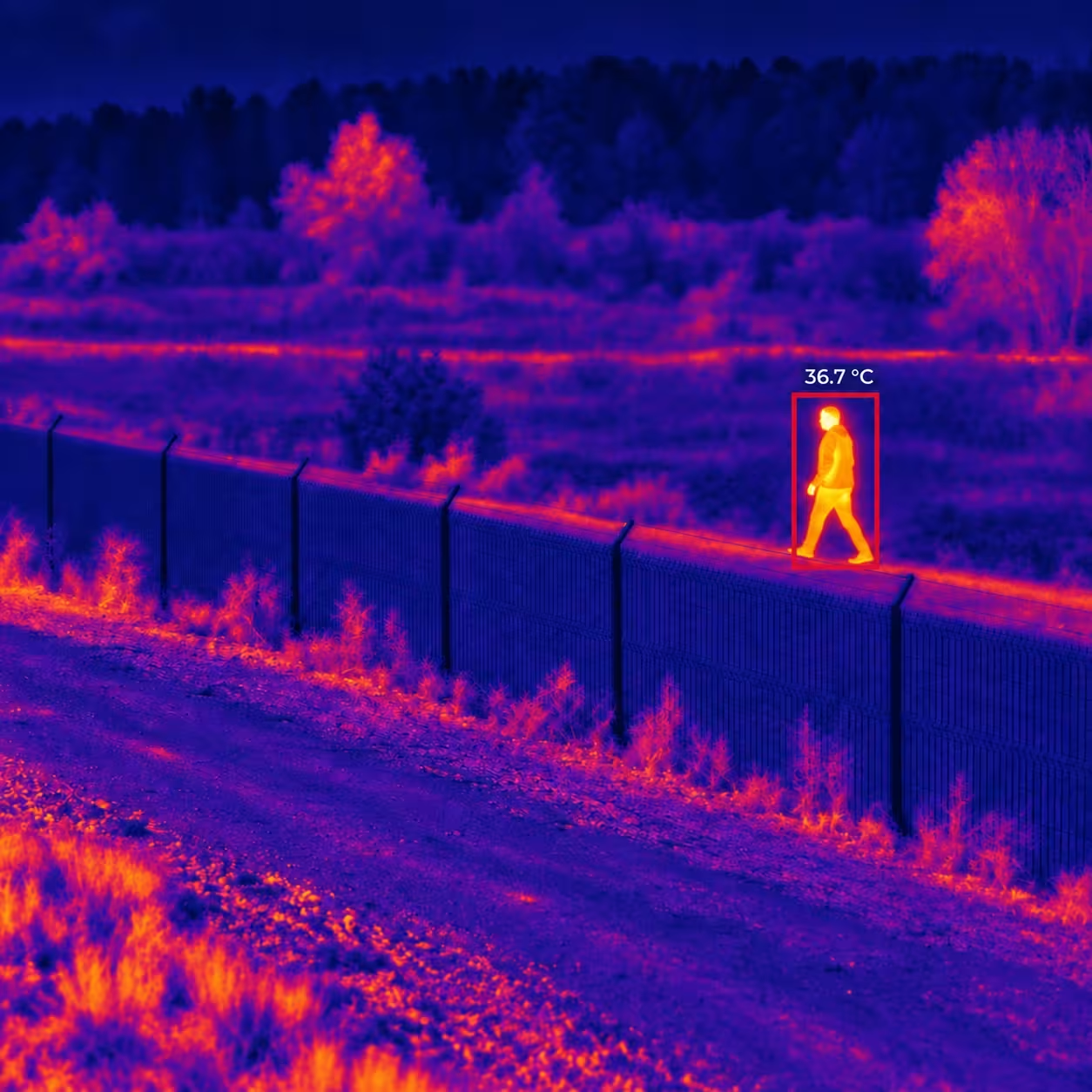
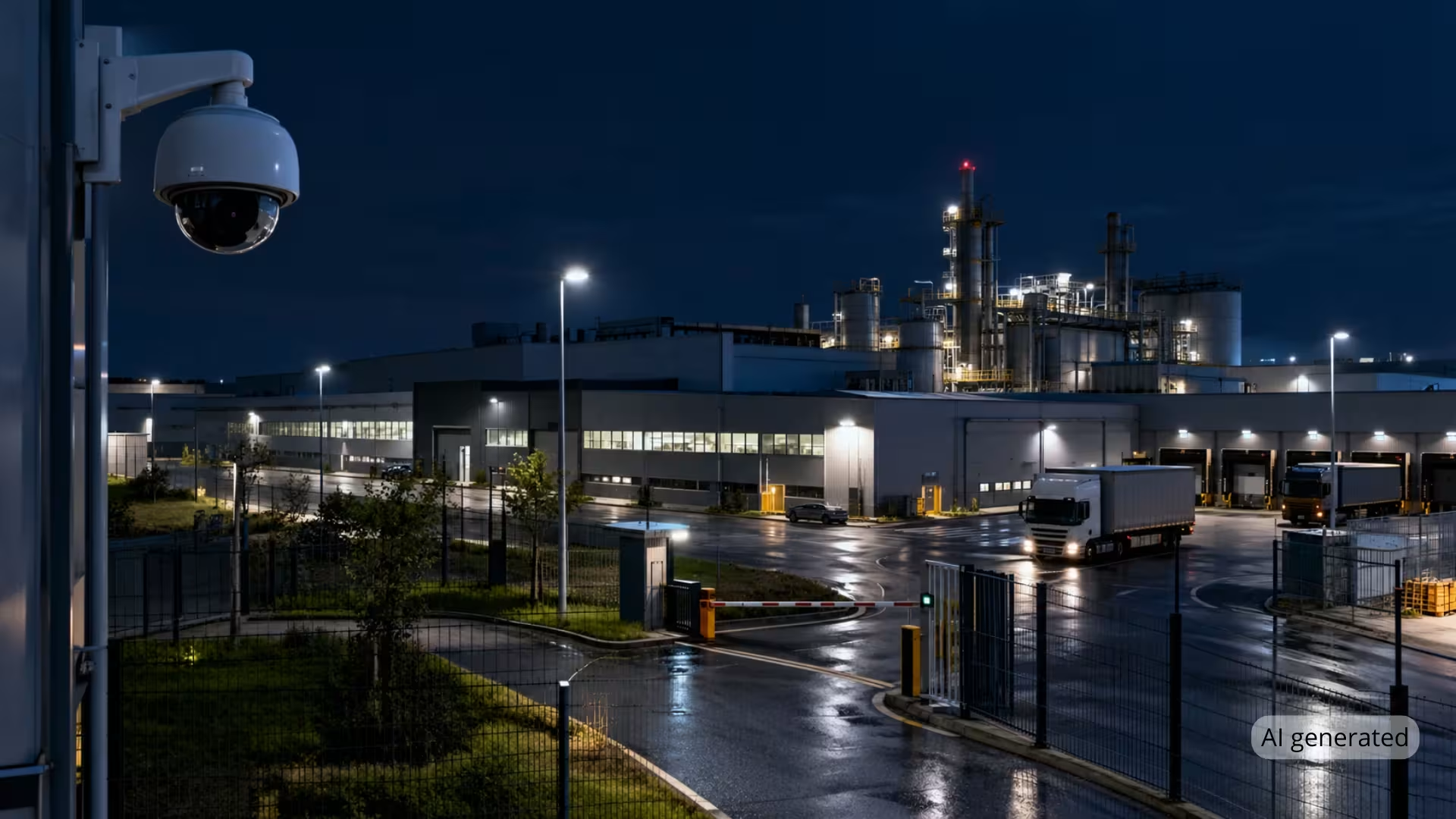
  • Thermal cameras: their main advantage for industrial applications is their ability to detect a person from several hundred metres away, whatever the visibility conditions — complete darkness, fog or smoke. Ideal for perimeter monitoring of large sites.
  • PTZ (Pan-Tilt-Zoom) cameras: motorised, they pan and zoom to cover large areas such as a car park or traffic route and track a moving target without requiring a large number of fixed cameras.
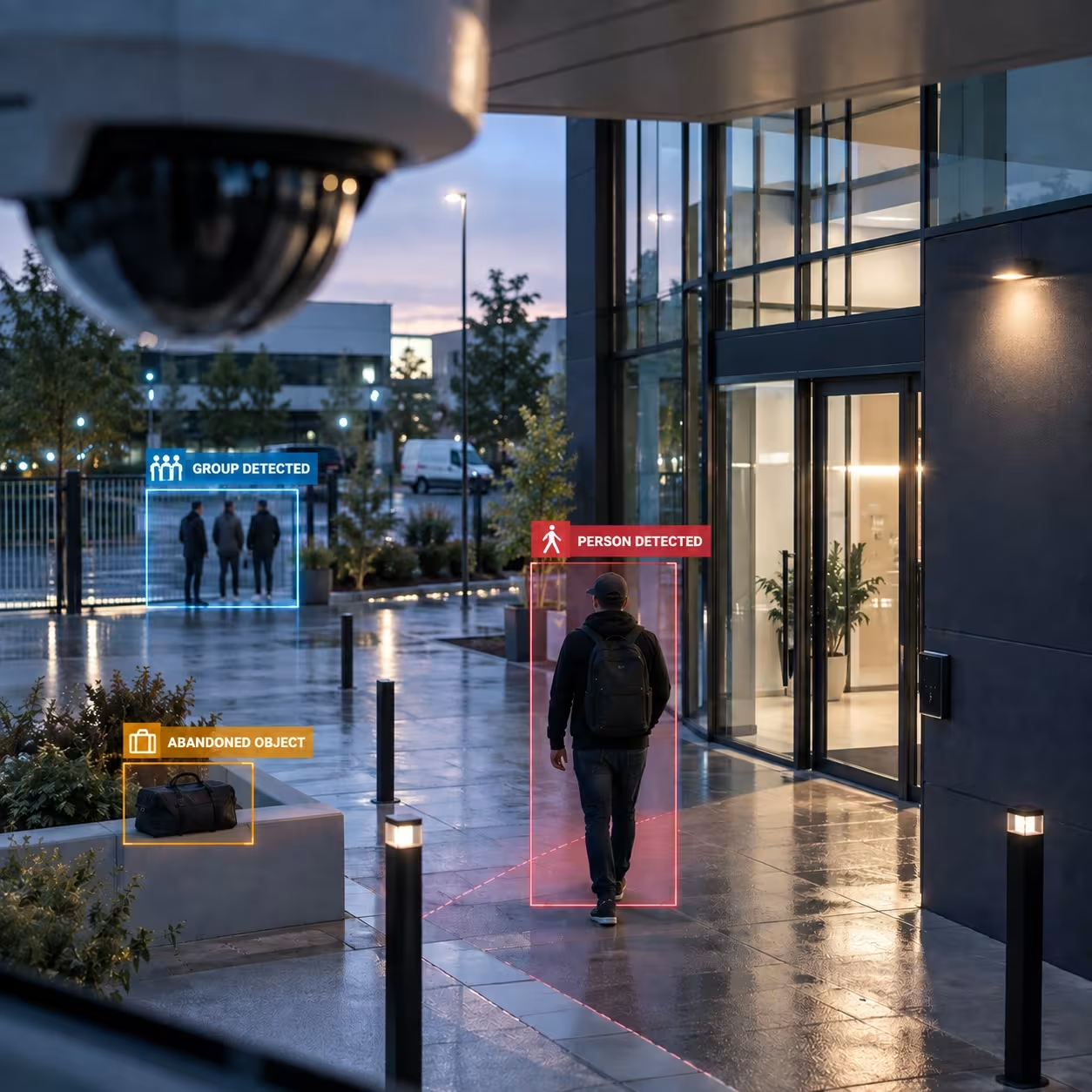
  • AI-powered image analysis: it enables genuinely intelligent intrusion detection: distinguishing a person from an animal, detecting the crossing of a virtual line, identifying an abandoned object or detecting unusual behaviour, dramatically reducing the number of false alarms that would otherwise unnecessarily mobilise your teams.
  • Security drones: useful for automated patrols across very large sites, or for rapid video verification at height, where a fixed camera is not sufficient to cover the entire perimeter.
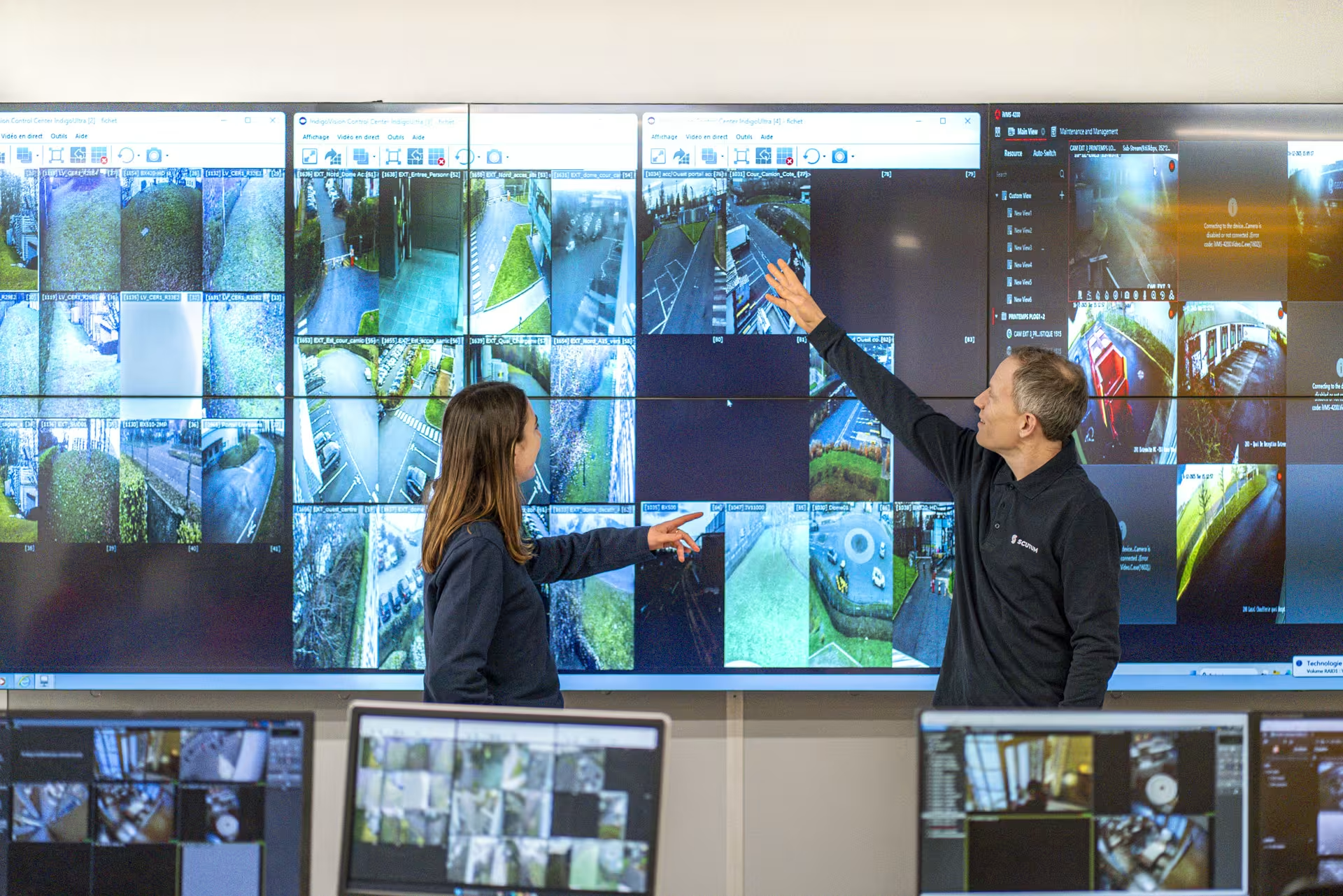
  • Hypervision platforms: they centralise and correlate all security information — video, access control, alarms and fire detection — through a single interface, giving your teams a unified view rather than several disconnected screens.
Caméras thermiques
IA  Analyse vidéo intelligente

Les solutions de gestion des flux : maîtriser qui entre et qui sort

  • Centralised access control: badges, biometrics and QR code readers allow access rights to be managed in real time and revoked instantly when required.
  • Automatic Number Plate Recognition (ANPR): it automates and records access by authorised vehicles, a major issue for logistics sites handling large numbers of heavy goods vehicles.
  • Integration with video: linking each access control event (a denied badge, for example) to video footage enables immediate verification without having to manually cross-reference several systems.

To streamline and secure access for delivery vehicles, the most effective solution is therefore ANPR combined with a booking management system, anticipating traffic flows rather than simply reacting to them.

guarding

Human and organisational solutions: technology is not enough

No technology, however advanced, can replace human expertise when assessing an alert. This is where the difference lies between a system that detects and a system that genuinely protects:

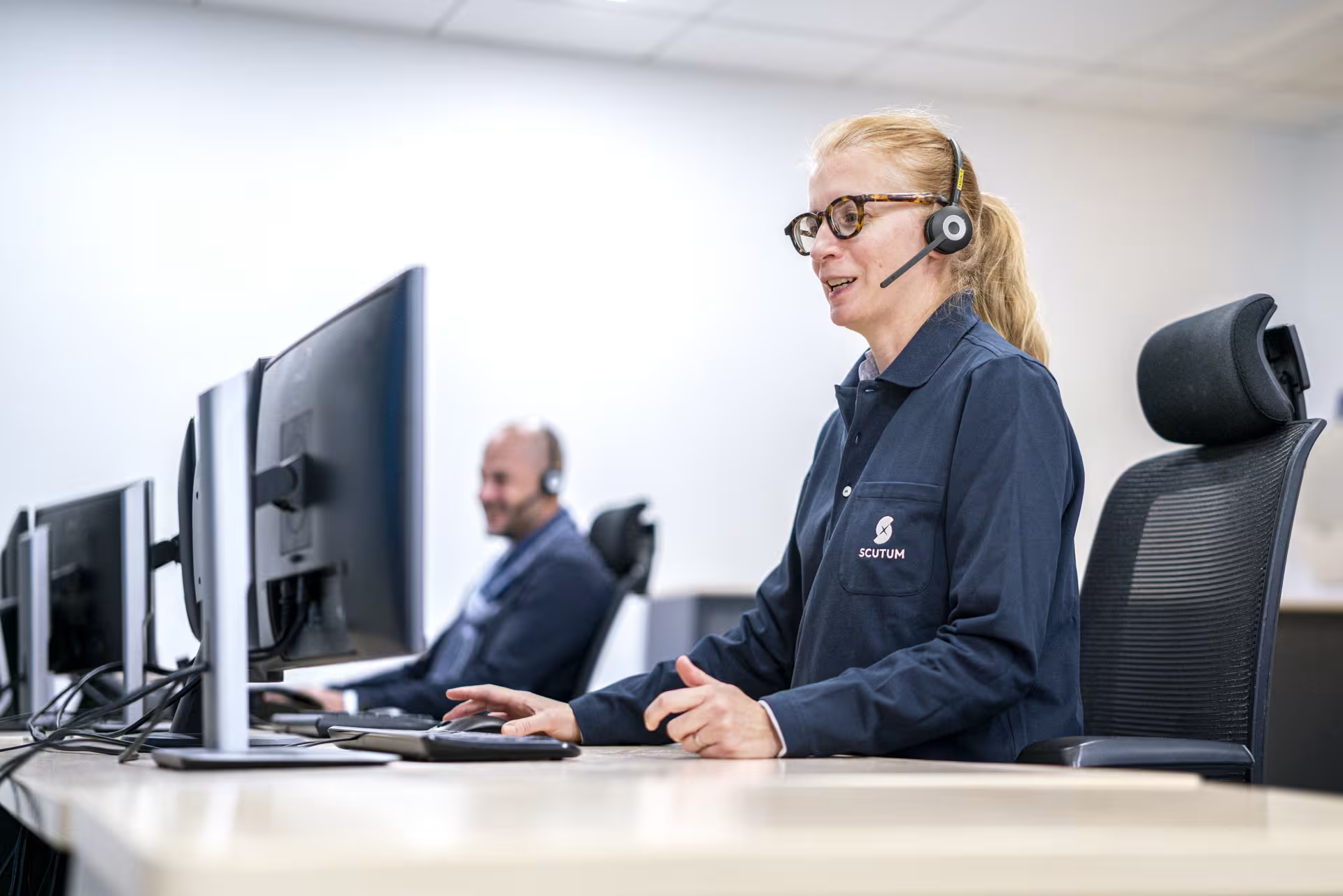
  • A certified remote monitoring centre: the importance of trained operators, available 24/7, following strict and regularly audited procedures, cannot be underestimated on an industrial site where every minute counts.
  • Video verification: this procedure enables an operator to verify whether an intrusion is genuine before requesting an appropriate response from the police or a security officer, helping to avoid false alarms that can be costly and undermine the site's credibility with the authorities.
  • Security patrols, remote and physical: the combination of remote monitoring and on-site intervention remains, for many industrial sites, an essential link in the security chain.


This is precisely the promise of a converged risk management approach: instead of multiplying providers, a single partner coordinates all these technological and human components through one platform, with a single point of responsibility in the event of an incident. For a site manager or facility manager, this means not having to manage three contracts, three contacts and three different service levels for the same objective: business continuity.

contact voor beveiliging
ERRCS system with emergency responder holding radio

Implementing your industrial remote monitoring project in 5 key steps

Successfully implementing an industrial remote monitoring project relies on a rigorous methodology, not on simply adding more equipment.

1 Complete security audit

Analyse the risks specific to your site, its vulnerabilities, people and vehicle flows, and the environmental constraints identified above. This stage determines the relevance of everything that follows.

2 Drafting the specification

Clearly define your needs and objectives: priority areas to cover, required level of detection, regulatory requirements specific to your site's status (COMAH site, critical infrastructure, organisation subject to NIS requirements), installation and operating budget.

3 Choosing the right partner

Select an expert, certified provider capable of offering a comprehensive solution (equipment, installation, maintenance and remote monitoring), rather than a partial response that will need to be supplemented elsewhere. This is the time to check the certifications of the proposed remote monitoring centre, the strength of its long-term presence and its ability to support multiple sites if your group operates several.

4 Deployment and training

Install the system while respecting production constraints, then train authorised teams in its day-to-day use. This factor is too often overlooked, even though it determines the system's actual long-term effectiveness.

5 Maintenance and evolution

Ensure the system remains effective over time: periodic checks, software updates, adaptation to changes on the site (new building, new production line) and regulatory developments.

The security of your industrial site is too important to be left to chance. Our experts support you at every stage, from auditing to maintenance. Contact Scutum today for a personalised security assessment.

Conclusion: operational certainty, tailored to your industrial site

Industrial remote monitoring is not simply a collection of cameras. It is a system in which the environment, human flows, technology and regulations must be considered together, with the same level of rigour applied to your production facilities. Addressing each of these challenges separately means taking the risk of leaving a vulnerability open; addressing them together, with a partner capable of coordinating equipment, integration and certified operators from a single platform, delivers operational certainty, helping ensure that your industrial success is built to last.

FAQ: frequently asked questions about industrial remote monitoring

How much does a remote monitoring system for a factory cost?

The cost depends on the size of the site, the number of buildings, the areas to be protected and the level of risk. The budget generally includes equipment, installation, configuration and the remote monitoring service subscription. The features selected — AI video analytics, video verification, access control, perimeter detection and 24/7 remote monitoring — also influence the price. Each project is subject to a security audit so that the solution can be sized as closely as possible to the actual requirements. A personalised quotation remains essential to accurately estimate the cost of an industrial installation.

Can remote monitoring be integrated with an existing alarm system?

Yes, in many cases, existing systems can be retained and connected to a remote monitoring solution. Compatibility depends on the brand, age and communication protocols of the equipment already in place. It is possible to add cameras, detectors or access control systems without replacing the entire existing installation. A preliminary technical assessment makes it possible to evaluate integration options and any upgrades that may be required. This approach can often modernise site security while keeping investment costs under control.

What specific requirements apply to a COMAH site or critical infrastructure?

COMAH sites and critical infrastructure are subject to enhanced security and safety requirements, in addition to the general framework of UK data protection and health and safety legislation. These requirements may include perimeter protection, intrusion detection and, for certain organisations, obligations relating to the security of information systems. The level of requirements depends on the site's specific status and sector. An audit carried out by a provider experienced in these environments can identify the applicable requirements and provide a documented approach to meeting them. This enhanced regulatory framework makes it particularly important to work with a partner with proven expertise in these types of sites.

Do employees or their representatives need to be consulted before installing CCTV on an industrial site?

Where CCTV monitors areas in which employees work, organisations should consider workers' rights and expectations and consult workers or their representatives, such as trade unions, as part of the planning process. Employees must also be clearly informed about the presence of the surveillance system, what it is used for and how their personal data is processed. Continuous monitoring of individual workers is only likely to be justified in limited circumstances, and surveillance should be targeted at areas where there is a genuine security or safety need. Areas where workers would reasonably expect privacy, such as toilets and changing rooms, should not be subject to CCTV monitoring. A Data Protection Impact Assessment (DPIA) should also be carried out where the planned surveillance is likely to result in a high risk to individuals. The ICO recommends involving workers at an early stage when introducing workplace monitoring.