Submitted by Justine.Pource… on
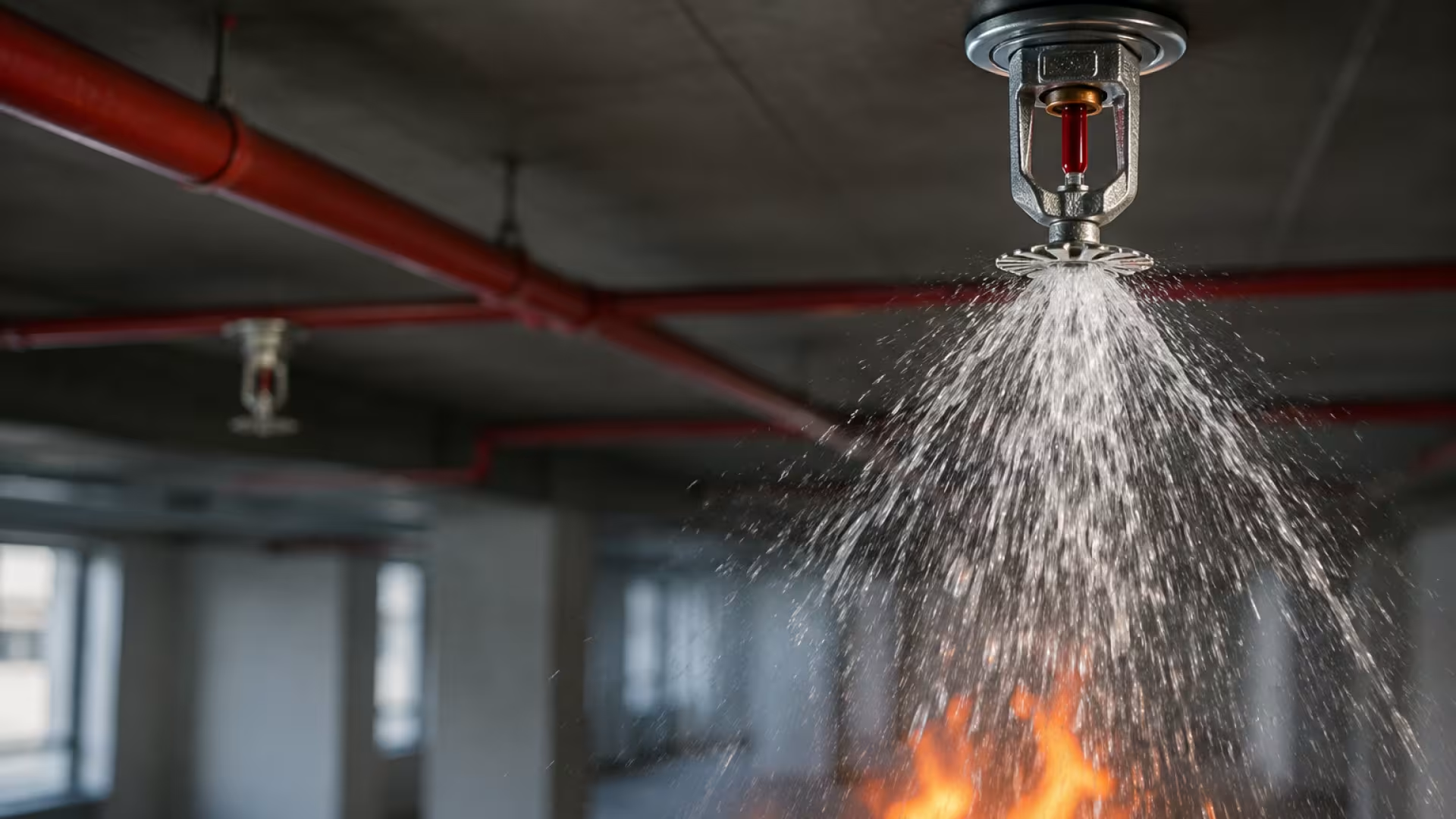
Système de Sprinklers.png
published on 28/08/2026

Automatic fire suppression: sprinkler, water mist or inert gas. A comparative guide

Written by Guillaume Brizot

A fire can bring business operations to a standstill within minutes. Damaged premises, interrupted production, lost data, a tarnished reputation with customers: the consequences of a fire go far beyond the visible material damage. Installing an effective automatic fire suppression system is therefore not simply a regulatory requirement. It is a genuine investment in business continuity.

But choosing the right technology is essential. Sprinklers, water mist, inert gas: each system meets different needs, with its own advantages, limitations and costs. Faced with such a wide range of solutions, how can you make sense of the options and make an informed choice that is suited to your business and premises?

Choosing the Right Fire Suppression System for Your Business

Selecting an appropriate automatic fire suppression system is an important part of protecting people, property and business operations.

Sprinkler, water mist and inert gas systems each use different methods to control or suppress fires, with distinct advantages, limitations and applications. The most suitable solution will depend on factors such as the nature of the fire risks, building layout, equipment being protected and operational requirements.

In this guide, we compare these three fire suppression technologies, explain how they work and explore the key considerations when selecting a system for your premises.

Sprinkler Systems

Automatic fire sprinkler systems are among the most established and widely used forms of active fire protection.

They typically consist of a network of pipework connected to sprinkler heads positioned throughout the protected areas of a building. Depending on the system design, the pipework may be permanently filled with water (a wet pipe system) or contain pressurised air or nitrogen until the system activates (a dry pipe system).

Sprinkler heads are designed to operate individually when exposed to sufficient heat, releasing water directly onto the affected area to help control or suppress the fire.

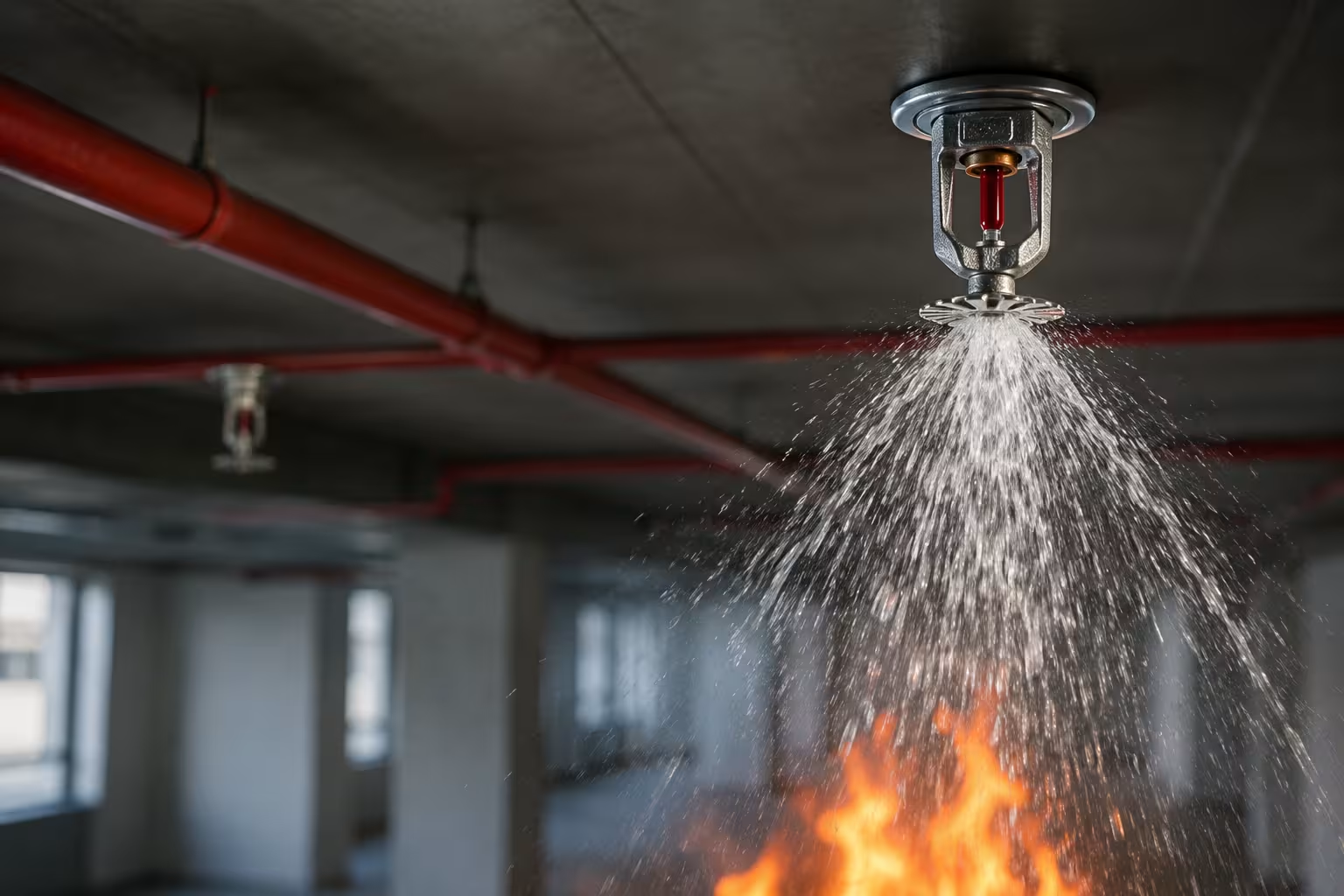
Système de Sprinklers.png

Most modern sprinkler heads contain a heat-sensitive glass bulb filled with a liquid that expands as the surrounding temperature rises. When the temperature reaches the sprinkler head's rated activation threshold, the bulb breaks, allowing water to discharge onto the affected area.

Sprinkler heads generally operate independently, meaning that only those exposed to sufficient heat activate, rather than the entire system discharging simultaneously.

This targeted response helps cool the fire, control its development and limit its spread, providing valuable protection while emergency response arrangements are initiated.

tick icon

Advantages

One of the main advantages of sprinkler systems is their long-established track record in fire protection. They are widely used across commercial and industrial premises and are recognised by insurers as an effective means of reducing fire-related risks.

Sprinkler systems are particularly effective in controlling fires involving ordinary combustible materials, such as wood, paper and textiles (Class A fires).

They can also offer a cost-effective solution for many applications, although installation and ongoing maintenance costs will depend on factors such as the size of the premises, available water supply and system requirements.

Icone panneau attention

Disadvantages

One of the main considerations with sprinkler systems is the potential for water damage. Although sprinkler heads typically activate only in areas exposed to sufficient heat, water discharge can affect equipment, stock and other assets, potentially causing additional disruption.

This is particularly relevant in environments containing moisture-sensitive materials, such as archives, electronic equipment or valuable stock, where alternative fire suppression technologies may be more appropriate.

Sprinkler systems also require a reliable water supply, and some installations may need dedicated storage tanks and pumps. Their suitability must therefore be assessed against the specific fire hazards, building infrastructure and potential consequences of water discharge.

Typical Applications

Sprinkler systems are widely used in commercial premises, office buildings, warehouses, shopping centres and certain car parks, where they can provide effective protection against fire development and spread.

They are particularly well suited to environments where water-based fire protection is appropriate and where the building's layout, occupancy and fire risks can be accommodated through a suitably designed sprinkler system.

Sprinkler Systems.png
Pictogramme utilisateur

Nicolas, Technical Manager, Scutum Incendie

“The most common mistake we correct is a sprinkler network designed around the original configuration of a building and never reviewed after a refurbishment or change of activity. A storage area is added, the fire load increases, but the network does not keep up. The system design should be reviewed whenever there is a significant change of use, not just at the time of the initial installation.”

Water Mist Systems

How it works

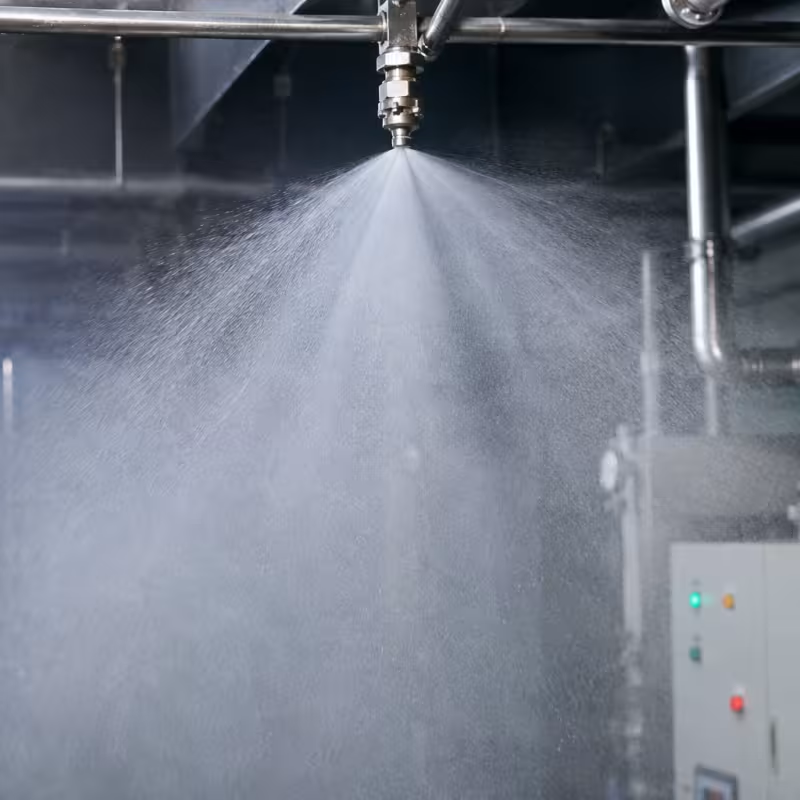
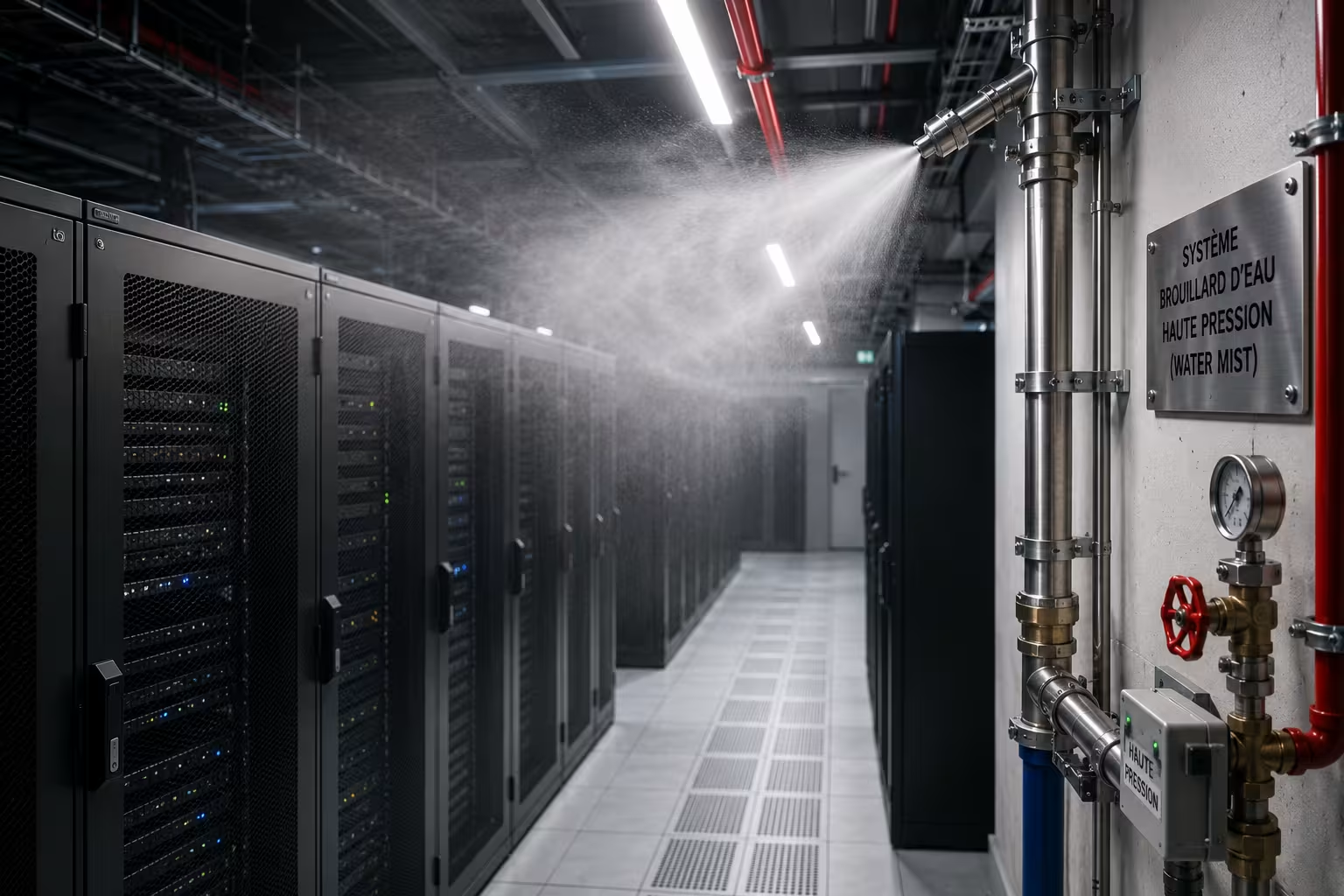
Water mist systems use finely dispersed water droplets to control, suppress or, in certain applications, extinguish fires. Unlike conventional sprinkler systems, which generally discharge larger water droplets, water mist systems are designed to produce a fine spray that interacts with the fire and surrounding environment.

Depending on the system design, water mist may be delivered at low, intermediate or high pressure.

Water mist primarily works by absorbing heat from the fire and surrounding gases. As the droplets evaporate, they can also reduce the local oxygen concentration through the production of water vapour, helping to limit combustion.

These combined effects can make water mist an effective fire protection solution in suitable environments, particularly where reducing water discharge is an important consideration. However, its effectiveness depends on the specific application and the system being appropriately designed and tested for the intended fire hazards.

Exctinction par brouillard d'eau.png
tick icon

Advantages

One of the main advantages of water mist systems is their potential to use significantly less water than conventional sprinkler systems. Depending on the application and system design, this can help reduce water demand and limit potential damage to equipment, stock and surrounding areas.

Water mist systems can provide effective fire protection against a range of hazards, including fires involving solid combustible materials (Class A) and certain flammable liquids (Class B). Specialist systems may also be suitable for commercial cooking environments involving oils and fats (Class F), provided they have been tested and approved for the intended application.

Another potential advantage is their suitability for certain environments containing sensitive electrical equipment. However, this depends on the system's design, relevant testing and the specific electrical hazards present.

Water mist can therefore offer a valuable alternative to conventional sprinklers where reduced water discharge is a priority, provided the system is suitable for the risks being protected.

Icone panneau attention

Disadvantages

Water mist systems can involve higher initial installation costs than conventional sprinkler systems, depending on the technology, building requirements and application. Specialist components, including pumps, nozzles and control equipment, may contribute to the overall cost.

Water quality is also an important consideration, as nozzles can be sensitive to contamination. Appropriate filtration or water treatment may be required, depending on the manufacturer's specifications.

Regular inspection, testing and maintenance by suitably competent personnel are essential to maintain system performance. Maintenance requirements can be particularly demanding for installations incorporating high-pressure pumps and specialist equipment.

Typical Applications

Water mist systems can be particularly suitable for environments where effective fire protection and reduced water discharge are important considerations.

Potential applications include hotels, healthcare facilities, heritage buildings, museums, art galleries, commercial kitchens and certain plant rooms.

Specialist water mist systems may also be appropriate for protecting sensitive electrical equipment and data centres, provided they have been specifically tested and designed for the associated risks.

The suitability of any installation should be established through a detailed assessment of the fire hazards, building characteristics and operational requirements.

Extinction par brouillard d'eau haute pression.png
Pictogramme utilisateur

Sébastien, Project Manager, Scutum Incendie

“We recently equipped a central catering kitchen with an automatic fire suppression system for the cooking areas, coupled with an automatic gas supply shut-off in the event of activation. The objective was not simply to extinguish a fryer fire, but to prevent it from spreading to the extraction hood and ducts – one of the most destructive scenarios in this type of environment.”

Inert Gas Fire Suppression Systems

How it works

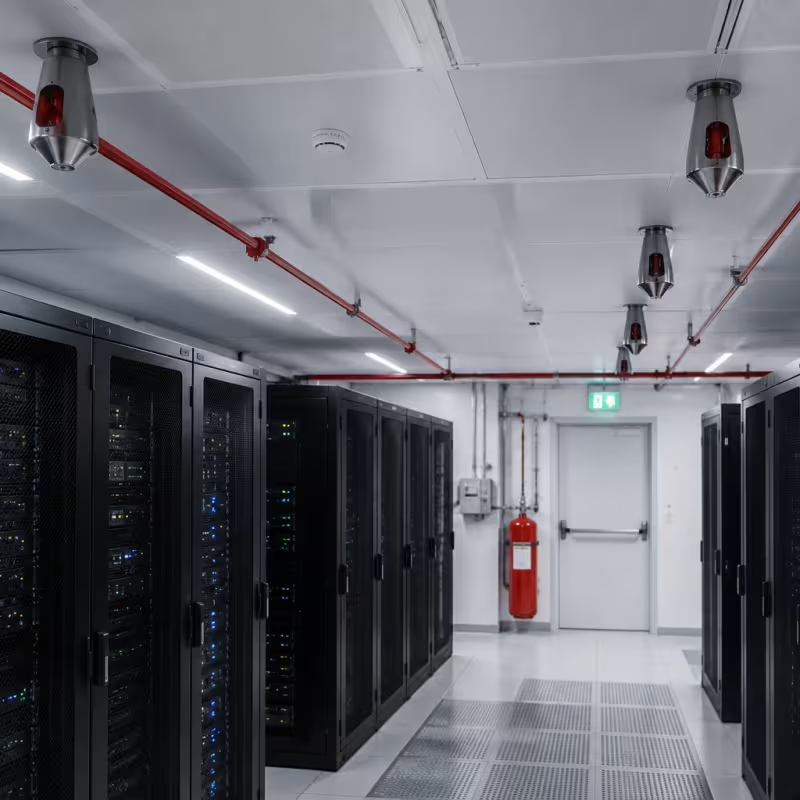
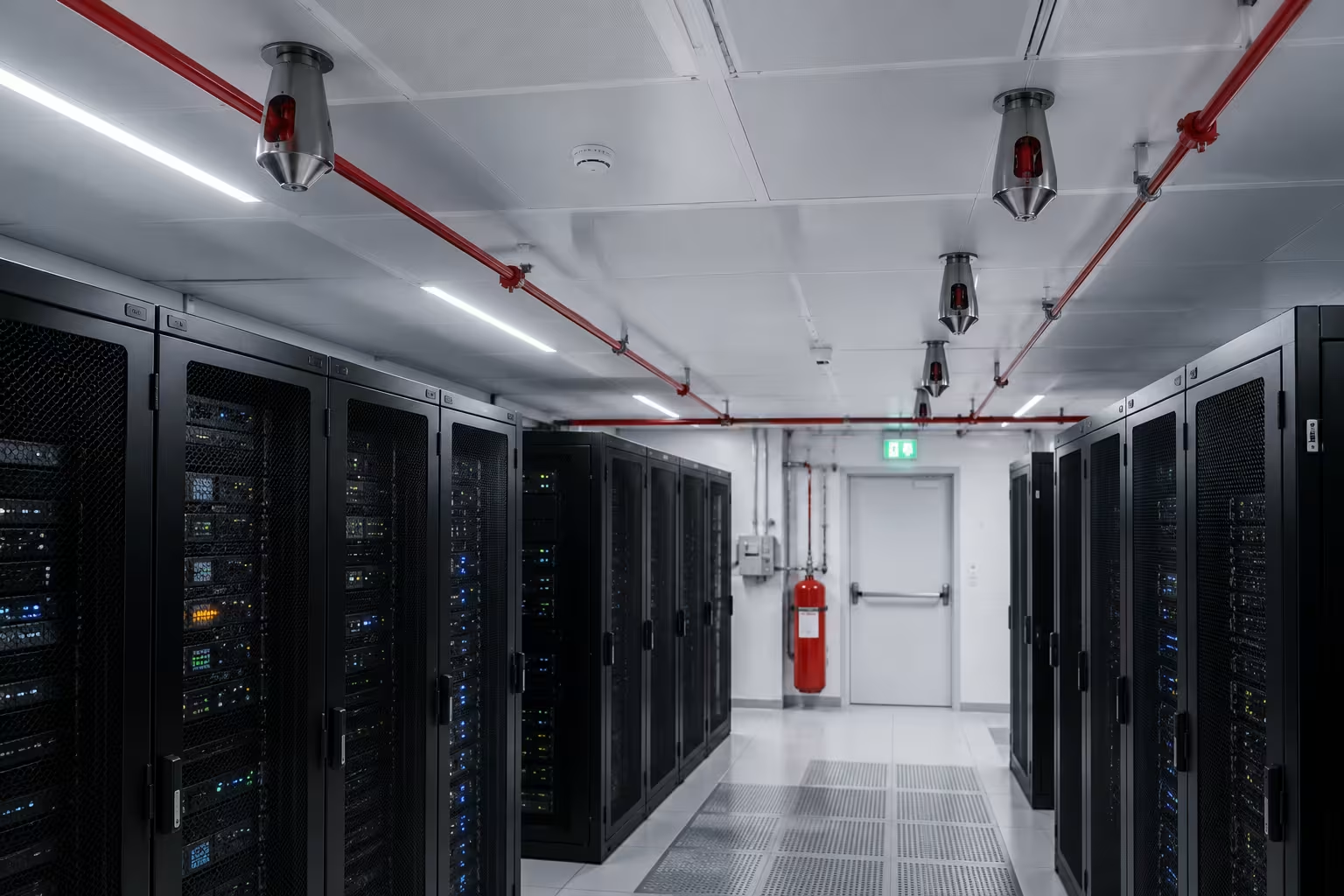
Inert gas fire suppression systems operate differently from sprinklers and water mist systems. Rather than using water to control or suppress a fire, they release a gaseous extinguishing agent into a protected enclosure to reduce the oxygen concentration and interrupt combustion.

These systems typically use naturally occurring gases, such as nitrogen, argon or specially formulated mixtures, delivered through a network of pipework and discharge nozzles.

In a total flooding system, the gas is released throughout the protected enclosure, reducing the oxygen concentration to a level at which the anticipated fire cannot be sustained. The required concentration depends on the extinguishing agent, the fire hazards and the system design.

Because inert gases leave no residue after discharge, they can be particularly suitable for environments containing sensitive equipment or valuable assets where water damage is a concern.

However, reducing oxygen levels introduces important life safety considerations. Systems must be appropriately designed, installed and maintained, with suitable warning arrangements and safeguards for anyone who may be present in the protected area.

Extinction par gaz inerte.png
tick icon

Advantages

One of the main advantages of inert gas fire suppression is its clean, residue-free discharge. Unlike water-based systems, inert gases do not leave moisture or extinguishing agent residues, making them particularly suitable for environments containing sensitive electrical equipment, electronic systems and valuable assets.

Inert gas systems are also electrically non-conductive and can provide effective fire protection throughout an enclosed space when appropriately designed and installed.

Another advantage is their environmental profile. Common inert gas extinguishing agents, such as nitrogen and argon, occur naturally in the atmosphere and have zero ozone depletion potential and negligible direct global warming potential.

These characteristics make inert gas an attractive option for applications where minimising damage from the extinguishing agent, protecting sensitive equipment and considering environmental impact are key priorities.

Icone panneau attention

Disadvantages

Inert gas systems require a suitably enclosed and sealed space to achieve and maintain the concentration needed for effective fire suppression. Openings, ventilation systems and air leakage can affect performance, so enclosure integrity testing and, where necessary, modifications may be required.

Occupant safety is another important consideration. Reducing oxygen concentrations can present risks to people within the protected area, making appropriate warning systems, evacuation procedures and safety controls essential.

Inert gas systems also require specialist design and maintenance, including consideration of the pressure generated during discharge. Suitable pressure relief arrangements may be necessary to protect the building and equipment.

Following a discharge, cylinders must be recharged or replaced and the system restored to operational readiness by competent personnel.

Typical Applications

Inert gas fire suppression systems are particularly suitable for enclosed environments where sensitive equipment, critical infrastructure or valuable assets require protection without the use of water or residue-producing extinguishing agents.

Typical applications include data centres, server rooms, telecommunications facilities, electrical control rooms, archives, museums and specialist storage areas.

These systems can also be appropriate for facilities where maintaining operational continuity and minimising damage to essential equipment are important considerations.

Suitability depends on the specific fire hazards, enclosure characteristics and occupancy requirements, with each installation requiring careful assessment and specialist design.

Extinction par gaz inerte.png

Comparing Fire Suppression Systems: Key Considerations

Choosing the right fire suppression system involves more than understanding how each technology works. Factors such as the fire hazards present, potential impact on equipment and assets, occupant safety, installation requirements and ongoing costs all play an important role.

The table below compares sprinkler, water mist and inert gas systems across these key considerations, helping businesses understand the differences and identify which options may be most appropriate for their premises.

Criterion Sprinkler system Water mist system Inert gas system
Operating principle Localised water discharge to cool the fire. Fine water droplets to cool and suppress the fire. Flooding with inert gas to suppress the fire (reduction of O₂ levels).
Impact on property High (significant water damage, even outside the fire area). Very low (small amount of water, rapid evaporation, little residue). None (no residue, no damage, no electrical conductivity).
Personnel safety High (safe for people present). High (breathable air, reduced visibility). Low if not evacuated (air becomes unbreathable; evacuation is mandatory before activation).
Effectiveness by fire type Highly effective on Class A fires (solids). Not recommended for other classes. Highly effective on Class A, B (liquids) and F (cooking oils and fats) fires. Can be used on electrical fires. Highly effective on Class A and B fires and fires of electrical origin.
Installation requirements High-flow water supply. Piped network. Clean water supply. High-pressure pumping unit. Fully sealed room. Storage space for gas cylinders.
Installation cost Low to moderate Moderate to high High
Maintenance cost Low (simple and proven technology). Moderate (pump and water quality checks). Moderate, but cylinder refilling is costly.
Environmental impact Medium (high water consumption, potential discharge). Low (water consumption reduced by 80–90%). None (gases naturally present in the atmosphere).
Ideal applications Offices, storage warehouses, car parks, shopping centres. Hotels, industrial kitchens, art galleries, machine rooms. Data centres, server rooms, archives, museums, high-value assets.

Key Considerations

Selecting the most appropriate fire suppression system involves more than comparing technologies. The right solution depends on the specific fire risks, building characteristics, operational requirements and assets that need protecting.

Four key considerations can help guide the decision-making process and ensure the chosen system is appropriate for the premises and the risks involved.

1 The Nature of Your Premises & Fire Risks

Different environments present different fire hazards. A warehouse, office building and chemical processing facility, for example, each have distinct fire protection requirements. Factors such as the activities carried out, the types of combustible or flammable materials present, potential ignition sources and the building's layout all influence which fire suppression technologies may be suitable. Understanding these risks is essential to selecting a system that provides appropriate protection for the premises and its occupants.

2 The Value & Sensitivity of the Assets Being Protected

The Value and Sensitivity of the Assets Being Protected Sensitive electronic equipment, valuable documents, specialist machinery and irreplaceable assets may require additional protection against damage caused by the extinguishing agent itself. The potential consequences of fire and system activation, including equipment damage, data loss and operational disruption, should be considered when selecting the most appropriate fire suppression technology.

3 Regulatory & Insurance Requirements

Fire suppression systems must be selected and designed with regard to applicable fire safety legislation, relevant technical standards and the specific risks associated with the premises. Insurers may also specify particular fire protection measures or system requirements depending on the nature of the business, its activities and the assets being protected. These requirements should be established early in the planning process to ensure the proposed solution is appropriate and meets any relevant regulatory and insurance obligations.

4 Installation & Long-Term Costs

The initial installation cost is only one factor when evaluating fire suppression systems. Ongoing inspection, testing, maintenance and servicing requirements should also be considered. Depending on the technology, additional costs may include water storage and pumping equipment, specialist maintenance, or cylinder recharging following a discharge. Assessing the total cost of ownership alongside the level of protection provided will help businesses make an informed, sustainable investment decision.

Inspection sécurité incendie.png
Pictogramme utilisateur

Guillaume, Commercial Director, Scutum Incendie

“What really differentiates an offering is not just the technology proposed, but the audit methodology that comes before it. At Scutum, every project starts with a site visit and precise mapping of the risk areas, before we even discuss sprinklers, gas or water mist. This preparatory work is what ensures that the right solution is installed, rather than simply the one we know how to sell.”

Conclusion: Choosing the Right System


There is no single fire suppression system that is suitable for every environment. The most appropriate solution depends on the fire hazards, building characteristics, assets being protected and operational requirements.

Sprinkler systems provide established and reliable fire protection across a wide range of commercial and industrial premises.

Water mist systems offer an alternative approach, using fine water droplets to control or extinguish fires while potentially reducing water consumption and associated damage in suitable applications.

Inert gas systems provide residue-free fire suppression, making them particularly suitable for certain enclosed environments containing sensitive equipment, critical infrastructure or valuable assets.

Ultimately, selecting the right system requires a thorough understanding of the risks and careful consideration of the available technologies. Specialist advice and appropriate system design are essential to ensuring the chosen solution provides effective protection.

Every business is unique, with its own risks and constraints. For an accurate assessment of your risks and a tailored quotation, contact the Scutum experts.

Scutum technician with service van

FAQs

What is the lifespan of a sprinkler system?

A properly designed, installed and maintained sprinkler system can remain operational for several decades, although its lifespan depends on factors such as system type, environmental conditions, water quality and maintenance history.

Regular inspection, testing and servicing are essential to maintaining reliable performance. In the UK, maintenance should follow the applicable standards, such as BS EN 12845, alongside the manufacturer's recommendations.

Individual components, including sprinkler heads, valves and pumps, may require inspection, testing or replacement at different intervals throughout the system's service life.

Can water mist damage electronic equipment?

Water mist systems typically use less water than conventional sprinkler systems, which can help reduce the potential for water damage in suitable applications.

However, water mist can still affect sensitive electronic equipment, particularly if moisture comes into direct contact with electrical components.

Specialist water mist systems may be suitable for certain electrical and electronic environments, provided they have been specifically tested and designed for the associated risks.

The suitability of water mist protection should always be assessed against the equipment being protected, the fire hazards present and the relevant system specifications.

Which system is the most expensive to install?

Generally speaking, the ranking goes from sprinklers, the least expensive, to inert gas, the most expensive, with water mist in between. This ranking can vary depending on the size of the area to be protected and the configuration of the premises.

Does each system require specific maintenance?

Yes. All automatic fire suppression systems require regular inspection, testing and maintenance by suitably competent personnel to ensure they remain operational and effective.

For sprinkler systems, maintenance typically includes checking water supplies, valves, pressure levels, pumps where installed, and the condition of sprinkler heads.

For water mist systems, checks may include water quality, filtration, pumps, nozzles and control equipment, depending on the system design.

For inert gas systems, maintenance includes checking cylinder pressure or contents, pipework, discharge equipment and system controls. Enclosure integrity must also be maintained to ensure the required extinguishing concentration can be achieved.

Maintenance schedules should follow the relevant UK standards, manufacturer's instructions and system-specific requirements.