Submitted by Justine.Pource… on
CCTV
published on 17/08/2026

Video Surveillance vs. Remote Monitoring: What Is the Difference for Your Business?

Written by Magali Belot

In the business world, the terms video surveillance and remote monitoring are often confused. Many businesses assume that they are equivalent solutions, when in reality they address very different needs.

This confusion can have a direct impact on your level of security. By choosing an unsuitable system, you may not be sufficiently protected in the event of an incident.

This article explores the key differences between CCTV and remote monitoring, how each works and how they can help protect your business.

The key distinction:

CCTV provides visibility of activity on your premises.

Remote monitoring adds professional oversight, helping identify incidents and coordinate an appropriate response.

CCTV: Monitoring and Recording Activity

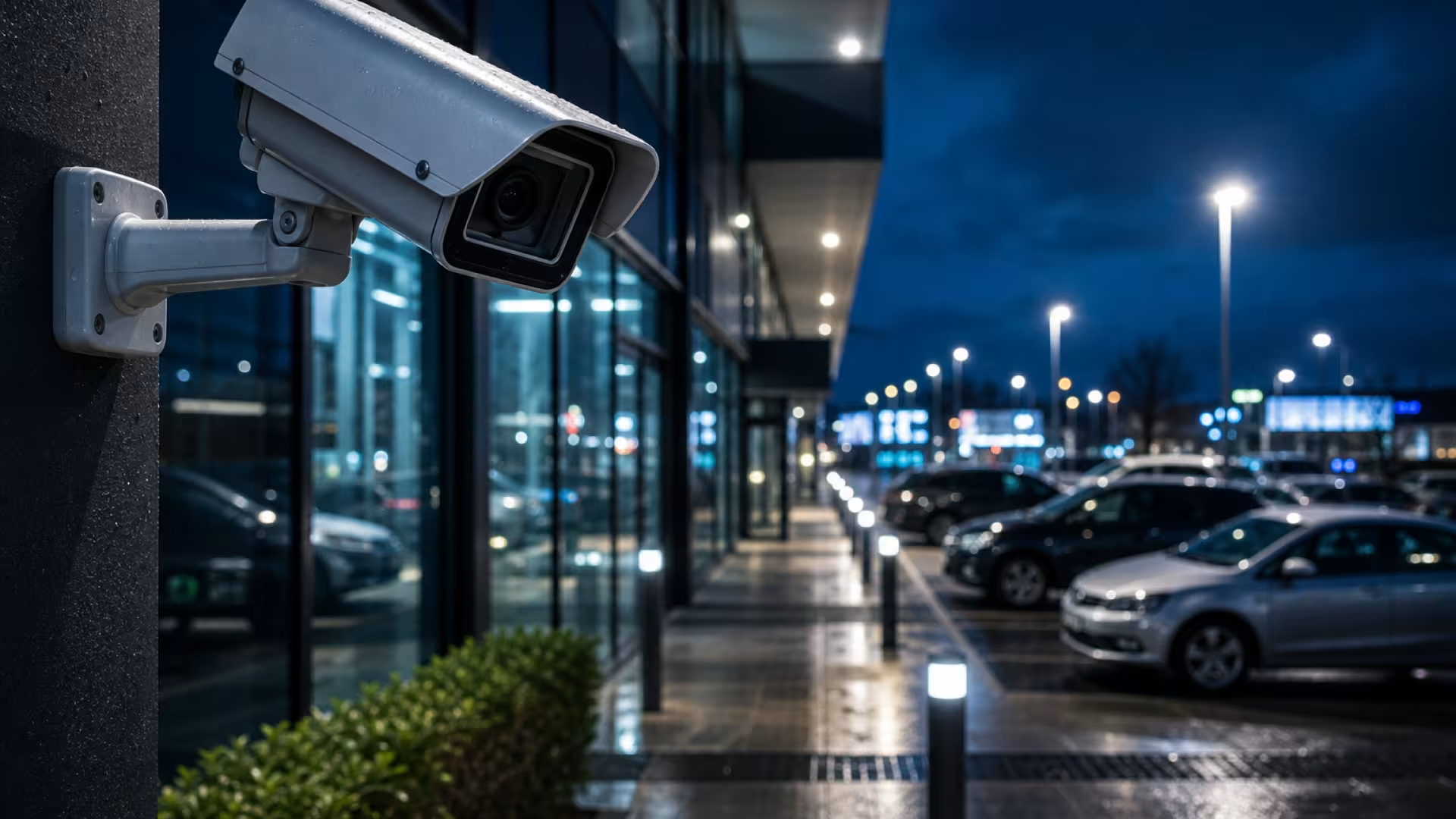
CCTV uses cameras to monitor activity across designated areas, with footage typically recorded for live viewing or later review.

Cameras capture images that can be viewed by authorised users, either on site or remotely, and stored securely where recording is enabled.

CCTV serves several purposes. Visible cameras may help deter criminal activity, while recorded footage can provide valuable evidence following incidents such as theft, unauthorised entry or property damage.

However, CCTV alone does not guarantee that an incident will be identified or acted upon as it happens. Although some systems incorporate video analytics and automated alerts, an effective response depends on how the system is monitored and the procedures in place.

The key distinction: CCTV provides visibility and recorded evidence, while remote monitoring adds professional oversight and supports a coordinated response to potential incidents.

Remote Monitoring: Professional Oversight and Incident Response

Remote monitoring goes beyond CCTV by providing professional oversight of connected security systems and supporting an appropriate response when potential incidents are detected.

When a connected system detects activity that meets its alert criteria, such as a possible intrusion or unauthorised access, a signal can be transmitted to an Alarm Receiving Centre (ARC).

Trained operators assess incoming alerts and, where appropriate, review available information or footage to help establish whether a genuine security incident has occurred.

This process, known as alarm verification, helps distinguish potential threats from false alarms and informs the next steps, which may include notifying designated contacts or initiating agreed response procedures.

Centre de télésurveillance Scutum

When a potential threat has been verified, operators follow agreed response procedures. Depending on the circumstances, this may involve contacting designated keyholders, arranging a security response or notifying the police where appropriate.

Remote monitoring can combine intruder alarm systems, cameras for alarm verification, secure communications and a professionally staffed Alarm Receiving Centre (ARC) operating 24 hours a day, seven days a week.

Unlike CCTV used solely for viewing and recording, remote monitoring provides an active security service, combining technology with trained operators to assess alerts and coordinate an appropriate response.

The 5 Key Differences

Responsiveness: Recording vs Active Monitoring

CCTV allows businesses to view live footage and review recordings following an incident. Some systems can also generate real-time alerts, although these may not be actively monitored.

Remote monitoring adds professional oversight, with trained operators assessing incoming alerts and initiating agreed response procedures where appropriate.

The key difference is therefore not simply how quickly an incident is detected, but how alerts are monitored, assessed and acted upon.

Intervention: Self-Managed vs Coordinated Response

With CCTV alone, businesses are generally responsible for monitoring footage, assessing incidents and arranging an appropriate response. Some systems can generate automated alerts, but these do not necessarily result in intervention.

With remote monitoring, trained operators assess incoming alerts and follow agreed procedures, helping coordinate an appropriate response when required.

Objective: Deterrence and Evidence vs Detection and Response


CCTV can help deter criminal activity and provide valuable evidence following an incident.

Remote monitoring builds on these capabilities by enabling trained operators to assess potential threats and initiate agreed response procedures, helping to reduce the impact of security incidents.

Cost: Equipment Investment vs Ongoing Monitoring Service

CCTV typically involves an initial investment in equipment and installation, alongside potential ongoing maintenance, software and support costs.

Remote monitoring generally involves a recurring service fee, covering professional monitoring and agreed response procedures, often operating 24 hours a day, seven days a week.

Icon personne

Expert insight from Vianney, Sales Director at Scutum Télésurveillance

Video surveillance can help reduce intervention costs.

At some sites, false alarms can occur, for example because of animals or adverse weather conditions. The only way to check that everything is in order may be to send a security officer to the site. This can quickly become expensive.

One way of reducing intervention costs is to equip the site with cameras connected to a remote monitoring service. This enables remote alarm verification, potentially avoiding the need to send a security officer to the site. The result: greater efficiency and lower costs.

For example, a national sporting goods retailer reduced its spending on on-site security personnel by 30% by implementing video patrols: three five-minute video checks, every 20 minutes, over a one-hour period, to ensure that everything was in order.

Compliance: Data Protection and Security Standards

CCTV systems must comply with applicable UK data protection legislation, including the UK GDPR and Data Protection Act 2018, where personal data is processed. Businesses must consider privacy, appropriate signage, secure storage and access to recorded footage.

Remote monitoring services may also be subject to relevant industry standards and additional requirements, depending on the systems and services provided.

Both approaches require appropriate procedures to ensure personal data is handled lawfully and security arrangements meet applicable regulatory requirements.

How to Choose the Right Security Solution for Your Business

The most appropriate solution depends on your business operations, the risks you face and the people, premises and assets you need to protect.

While CCTV may provide sufficient protection for some environments, others may benefit from professional remote monitoring and coordinated incident response.

A site-specific security assessment can help identify vulnerabilities and determine the most appropriate combination of measures for your business.

CCTV: Deterrence and Evidence Collection

CCTV can be an effective solution for businesses looking to monitor activity, deter criminal behaviour and retain footage for review following an incident.

It may be particularly suitable if:

  • You need to monitor specific areas of your premises.
  • Staff are regularly present to review alerts or respond to incidents.
  • Your priorities include deterrence, visibility and evidence collection.

CCTV provides a valuable layer of security and can operate independently or alongside professional remote monitoring, depending on your business requirements.

Remote Monitoring: Additional Protection for Higher-Risk Sites

Remote monitoring can provide an additional layer of security for businesses facing higher risks, enabling trained operators to assess alarms and coordinate an appropriate response.

It may be particularly beneficial if:

  • You store valuable goods, equipment or assets.
  • Your premises are regularly unoccupied overnight or at weekends.
  • You require professional assessment of security alerts.
  • You want to reduce the potential impact of theft, intrusion or property damage.

By combining security technology with professional monitoring and agreed response procedures, remote monitoring can help businesses strengthen protection and manage security risks more effectively.

The winning combination: see and act

Combining CCTV and Remote Monitoring

For many businesses, combining CCTV with professional remote monitoring provides a more comprehensive approach to security.

CCTV cameras capture footage that can support alarm verification, helping trained operators assess potential threats and determine an appropriate response.

Where systems are suitably integrated, access to live footage can help operators make informed decisions and initiate agreed response procedures.

Together, these technologies provide a coordinated approach to detection, verification and response, helping businesses strengthen their overall security arrangements.

Conclusion: Choosing the Right Security Solution


The key distinction is straightforward:

  • CCTV provides visibility, deterrence and recorded evidence.
  • Remote monitoring adds professional oversight, alarm verification and coordinated response procedures.

The most appropriate solution depends on your premises, security risks and operational requirements. For many businesses, combining CCTV with remote monitoring can provide a more comprehensive approach to protection.

A professional security assessment can help identify vulnerabilities and determine the most suitable solution for your business.

FAQs

Is Remote Monitoring More Expensive?

CCTV typically involves an initial investment in equipment and installation, alongside potential maintenance, software and support costs.

Remote monitoring generally includes an ongoing service fee covering professional alarm monitoring, assessment and agreed response procedures.

While remote monitoring involves additional costs, it can provide valuable protection by ensuring security alerts are professionally assessed and appropriate action is coordinated when required.

The overall cost and suitability of each solution depend on the business's security requirements and the services included.

Can I have a video surveillance system without a remote monitoring service?

Yes, absolutely. You can install cameras that record footage and access the images remotely whenever you need to.

This is a simple and more cost-effective solution, often used as a first security measure.

However, it is important to remember that:

→ no one will automatically intervene if a problem occurs.

The response depends entirely on you or the people responsible for security.

What regulations apply to these two systems?

Whether you use a video surveillance system or a remote monitoring system, you must comply with the applicable data protection and privacy requirements.

The exact rules vary depending on the country and jurisdiction. For example, businesses operating in the UK must take into account the UK GDPR, the Data Protection Act 2018 and applicable guidance on video surveillance. In the United States, requirements can vary at the federal, state and local levels.

In practice, this includes:

  • informing people that they are being recorded through clearly visible signage where required
  • limiting the areas being monitored and respecting the privacy of employees and other individuals
  • avoiding continuous monitoring of sensitive areas, such as workstations, unless there is an appropriate justification
  • securing access to recorded footage and restricting it to authorized individuals
  • keeping footage only for as long as necessary and in accordance with applicable requirements and your retention policy
  • respecting individuals' applicable rights regarding their personal data

Businesses should also maintain appropriate records and procedures to document how personal information collected through these systems is used.

→ The aim is to strike the right balance: ensuring the security of people and property while respecting individual rights and privacy.