Submitted by Justine.Pource… on
Contrôle daccès.webp
published on 22/09/2026

The different access control technologies: cards, biometrics, codes and smartphones

Written by Jonathan Trippier

Business security often starts with a door. Who can open it, when, and how can this be verified? These questions determine the protection of the assets, data and people who use your premises every day. A poorly chosen or inadequately sized access control system can weaken your entire security setup, however robust the rest of it may be.

There are now four main categories of access control solutions: cards, biometrics, codes and smartphones. Each meets different needs, budgets and risk levels. This guide will help you understand which technology is right for you by explaining how each solution works, as well as its advantages and limitations.

Card access control: the standard, proven solution

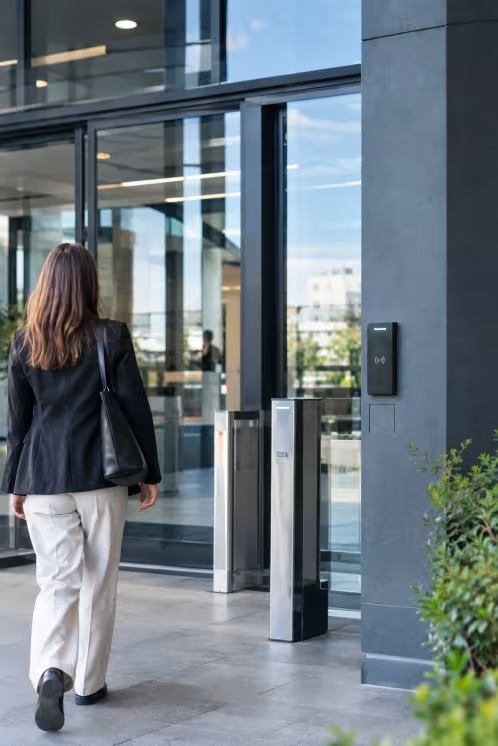
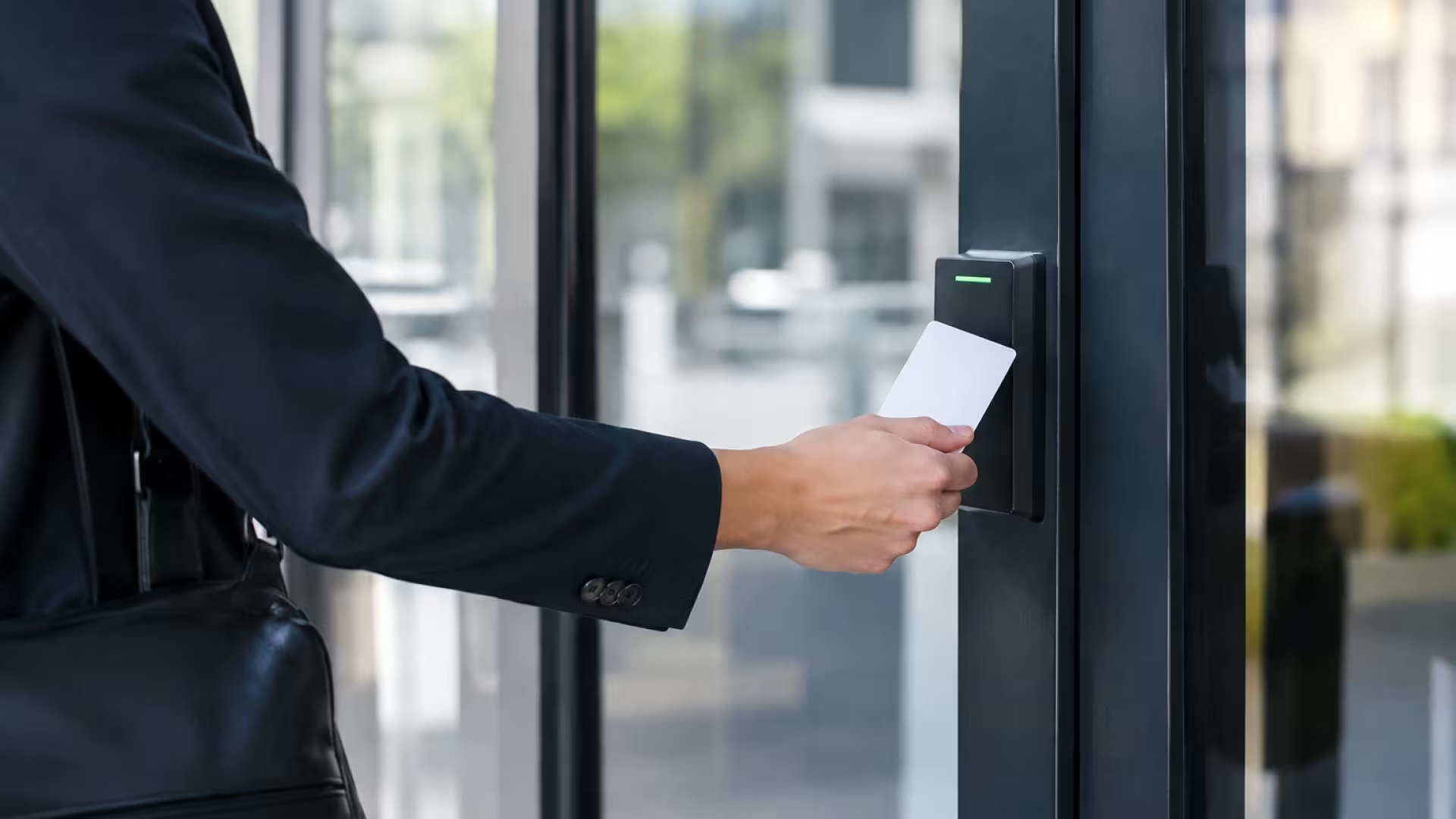
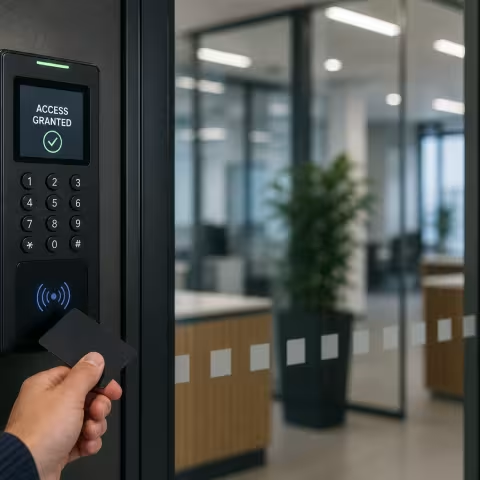
Access cards remain the most widely used technology in businesses. Their operation is based on two main technologies: RFID (Radio Frequency Identification) and NFC (Near Field Communication). The card contains a chip that emits a unique identifier, which is detected by a fixed reader installed near the door. Access is granted or denied within a fraction of a second.

Access Control

This solution offers several practical advantages. Costs remain manageable, even for a large number of users, making it a suitable option for businesses with many employees. Administrative management is also straightforward: creating a new card or deactivating one if it is lost takes just a few minutes. Finally, cards are robust and offer a satisfactory lifespan over time.

However, there are some limitations. Losing, stealing or simply lending a card to a colleague represents the main point of concern: technically, there is nothing to prevent an unauthorised person from using someone else's card. In addition, older-generation cards can be cloned relatively easily. Fortunately, secure, encrypted cards are available and significantly reduce this risk.

Pictogramme utilisateur

Jonathan Trippier, Pre-Sales Engineering Manager

« The challenge is no longer simply to manage access, but to use identifiers that are resistant to new threats such as cloning and impersonation. Choosing a secure access card is often the first building block of a long-term security strategy. »

Who is card access control suitable for?
Access cards are particularly suitable for medium-sized and large businesses, with a significant number of employees to manage across one or more sites. They offer a balance between cost, simplicity and security, which explains their widespread adoption in both offices and industrial environments.

Biometrics: personalised high-security

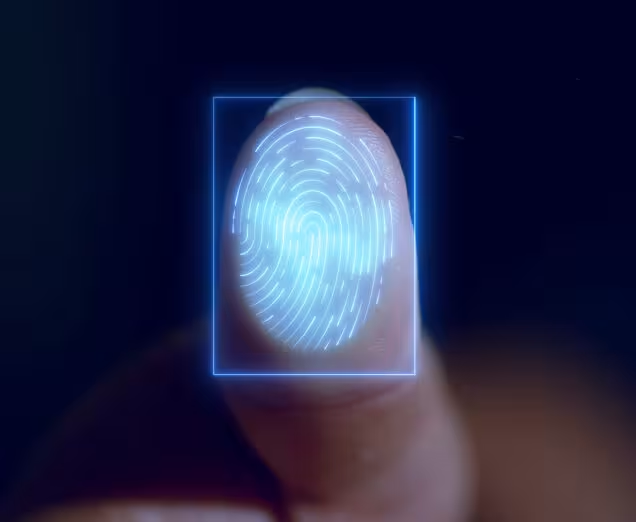
Biometrics identifies a person based on a physical characteristic that is unique to them. Several technologies are available on the market: fingerprint recognition, facial recognition, iris scanning and vein recognition, the latter analysing the vein pattern in the hand or finger.

Contrôle d’accès

The main advantage of biometrics is its level of security, which is the highest of the four categories examined here. The identifier is unique and non-transferable: it cannot be lent or physically stolen. It is also impossible to lose or forget your means of access, since the user themselves is the key. As a result, access traceability is even more reliable.

However, this level of performance comes at a cost. Installing a biometric system represents a higher investment than other technologies. It also raises genuine issues around the protection of personal data, governed by the UK GDPR, which imposes strict requirements on the processing of biometric data. Finally, employee acceptance can be more difficult, particularly because of privacy concerns.

Is biometric access control compliant with the UK GDPR?
Yes, provided that a strict framework is followed: carrying out a Data Protection Impact Assessment, obtaining the appropriate legal basis and safeguards for processing employees' biometric data, and storing the data securely, generally in the form of encrypted templates rather than raw images. At SCUTUM, we systematically recommend carrying out a risk assessment before any biometric project in order to balance security performance with regulatory compliance.
Pictogramme utilisateur

Jonathan Trippier, Pre-Sales Engineering Manager

« At SCUTUM, we see biometrics as a tool for building trust before considering it a security technology. Its effectiveness depends as much on technical performance as on its integration into a well-controlled regulatory and human framework. »

Keypad access: simple and accessible

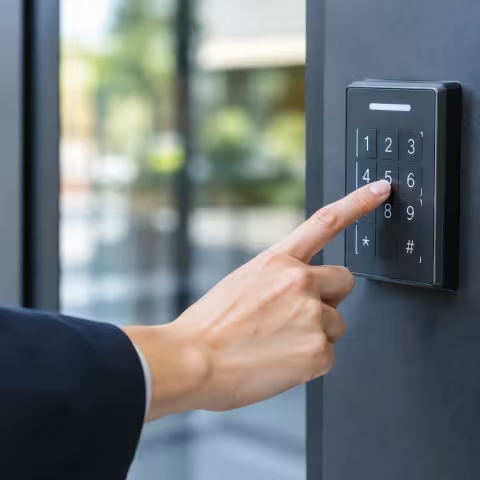
The principle behind a keypad access system is the simplest of the four: the user enters a numerical code on a keypad to unlock access. No physical credential is required.

It is the cheapest and quickest solution to install, making it a logical choice for occasional requirements or limited budgets. It does not require any physical credential management: there are no access cards to order and no biometric sensor to enrol users on.

Contrôle d'accès clavier à code

Its main drawback is its security level, which remains low. A code can be shared, observed over someone's shoulder or eventually forgotten. It therefore needs to be changed regularly to maintain a minimum level of effectiveness. Another important limitation is that when the code is shared between several users, individual access traceability is completely lost.

Keypad access is often used for low-criticality areas, such as a break room or technical room, or as a complement to another technology as part of stronger authentication.

Smartphone access control: the flexibility of mobile technology

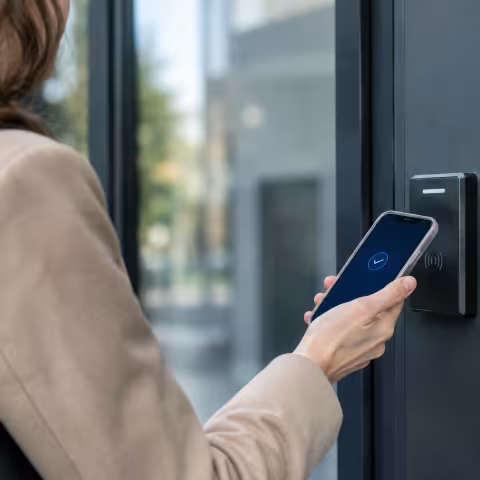
Smartphone access control uses BLE (Bluetooth Low Energy) or NFC technologies integrated into mobile phones. A dedicated application turns the smartphone into an identifier recognised by the reader installed at the entrance to the building.

This approach is appealing because of its modern user experience: there is no longer any need to take out an access card, as the phone that people already carry with them is enough. Access rights can be managed remotely and in real time, which considerably simplifies day-to-day administration. Another valuable advantage is the ability to send temporary access to a visitor in the form of a virtual key, valid for a limited period.

Contrôle daccès via smartphone

However, this flexibility comes with certain dependencies. The system's operation depends directly on the battery and condition of the smartphone: a flat phone means access is blocked. A compromised smartphone, for example one that has been hacked or stolen, can also represent a security risk. Finally, this solution assumes that all users have a compatible smartphone, which is not always guaranteed depending on the groups concerned (visitors, contractors, temporary workers).

Pictogramme utilisateur

Jonathan Trippier, Pre-Sales Engineering Manager

« Smartphones transform access management by providing greater flexibility, particularly for visitors and temporary workers. The aim is to secure access flows while simplifying the everyday user experience. »

Comparison table: which technology for which need?

To summarise these points, here is a comparison of the four technologies according to the criteria that matter most when making a decision about integrated security: security level, cost, ease of use, management cost and ideal use case.

Criterion Keypad Card (RFID / NFC) Smartphone Biometrics
Security level Low. Easy to share or forget, with no individual traceability. Medium to high depending on the card technology. Vulnerable to loss or theft. High. Encrypted communications, with the option of combining it with a code or the phone's biometric authentication. Very high. Unique and non-transferable identifier, with maximum traceability.
Investment cost Very low. Low to medium. Medium. No physical consumables. High. The most expensive sensors on the market.
Ease of use Medium. A code must be remembered and entered. High. A simple gesture in front of the reader. Very high. The device is already carried by the user. Very high. Nothing needs to be carried or remembered.
Management cost Medium. Regular code changes required. Medium. Stock management and replacement in the event of loss. Low. Access rights can be assigned and revoked instantly and remotely. Low. Only the initial enrolment requires time.
Ideal use case Low-sensitivity areas or as a complement to another technology. Most businesses, from offices to industrial sites. Dynamic environments, visitor management, modern image. High-security areas: server room, R&D, sensitive site.

How do you choose the right solution for your business?

Choosing an access control technology is never simply a question of budget. It is based on a risk assessment specific to each organisation. Several questions should be considered before making a decision.

What level of security is required for the different areas of the site? How many internal and external users need to be managed on a daily basis? What budget has been allocated to the project, both for the initial purchase and over the long term? Does the system need to integrate with other tools already in place, such as video surveillance, fire alarms or HR systems? How will visitors, contractors and temporary workers be managed, given that their access requirements often differ from those of permanent employees?

Contrôle d'accès entreprise

These questions do not always have a single answer. This is precisely why a security audit carried out by a professional remains the best way to make an informed decision. At SCUTUM, we bring this operational expertise to every project: a comprehensive view of risks, proven methodologies and support from the initial assessment through to the deployment of the solution.

Conclusion: towards intelligent and hybrid access control

There is no universally superior technology. Cards, biometrics, codes and smartphones each meet different needs, and the right choice always depends on the specific context of your business: industry, size, sensitivity of the areas to be protected and available budget.

The overall trend observed in the market is towards multi-factor authentication, particularly for the most sensitive areas. Combining a card and a code, or a smartphone and a fingerprint, makes it possible to combine the advantages of each technology while reducing their respective limitations. This approach to converged risk management provides long-term protection that can adapt to changing needs and threats.

Would you like to identify the solution best suited to your business? SCUTUM's experts can support you with a personalised security audit and the implementation of a tailored access control system, whatever the scale of your project. Contact our teams to build lasting success together.

Vracht beveiligen

FAQ: frequently asked questions about access control technologies

Which access control technology is the most secure?

Biometrics offers the highest level of security because the identifier used is unique to each individual. However, the overall security of a system depends on the entire solution, not just the reader installed. For critical areas, multi-factor authentication remains the most recommended approach.

Can an access card be copied?

Yes, cards based on older technologies, particularly 125 kHz, can be cloned relatively easily. More recent technologies, such as MIFARE DESFire EV2 or EV3, use encryption that makes them virtually impossible to copy. Choosing the right card technology is therefore crucial.

Is biometric access control legal in the workplace under the UK GDPR?

Yes, subject to strict conditions under the UK GDPR and applicable UK data protection requirements. A Data Protection Impact Assessment (DPIA), an appropriate legal basis for processing and secure storage of biometric data, generally in the form of encrypted templates, are required.

Can several access control technologies be combined?

Yes, this is even recommended for sensitive areas. This is known as multi-factor authentication. A common example is requiring a card and PIN code, or a card combined with a fingerprint, to significantly strengthen the level of security.

How can visitor access be managed?

Several solutions are available: temporary access cards, one-time codes or QR codes sent directly to the visitor's smartphone, with a limited validity period. The choice depends on the number of visitors to be managed and the desired level of security for the areas concerned.