Submitted by editor on
CCTV
published on 26/03/2026

Does CCTV Really Reduce Crime?

CCTV systems are widely used across the UK as a key tool in crime prevention, with millions of cameras installed in public spaces, businesses, and residential areas. But beyond their visibility, how effective are they at actually reducing crime?
This article examines the evidence, explains why CCTV works as a deterrent, and explores the modern systems available today.

How Effective Is CCTV ?

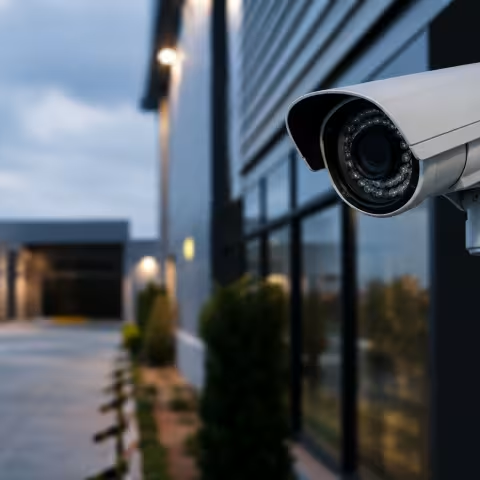
The evidence in favour of CCTV is compelling. In 2013, the College of Policing published a study suggesting that across a variety of settings, CCTV could be responsible for a statistically significant reduction in crime. Overall crime figures were 13% lower in areas with CCTV than without, with vehicle and property crime dropping by 14%. The biggest impact was recorded for drug-related crime, with a 20% reduction.
Vidéo surveillance.png

A more recent report published in the International Journal of Comparative and Applied Criminal Justice (2021) produced even stronger results, with figures for the UK showing 34% less property crime and 32% less vehicle crime as a direct result of CCTV use.

Real-world testimony reinforces these findings. In 2017, the Co-op interviewed 25 former domestic burglars about the security measures most likely to put them off committing a crime. While 26% cited motion-sensitive lighting as the biggest deterrent, 22% said CCTV would put them off — first-hand evidence of the psychological impact cameras can have.

Why is CCTV Such an Effective Deterrent?

CCTV reduces crime by directly influencing criminal behaviour. Several factors explain why :

Scan-Face

Increased risk of identification

modern CCTV cameras produce high-quality footage that can be stored for extended periods, making it easier to identify and prosecute offenders. As more criminals are caught, others are deterred from taking the risk.

Cctv

Heightened perceived risk

simply seeing cameras is often enough to deter potential offenders from following through on their intentions.

User

Greater public confidence

CCTV gives members of the public a greater sense of safety, encouraging greater use of spaces and making those areas less attractive to criminals.

When CCTV is supported by additional measures such as monitoring, lighting, and access control, its effectiveness increases further, creating a more robust and proactive security solution.

Modern CCTV Systems

CCTV technology has evolved considerably over the years. In 2015, Metropolitan Police Commissioner Bernard Hogan-Howe suggested that every home and business could benefit from CCTV. Today, advances in technology mean there is a wide range of systems to suit different needs and environments. 

These include :

1 General CCTV

offering higher resolution images than ever before

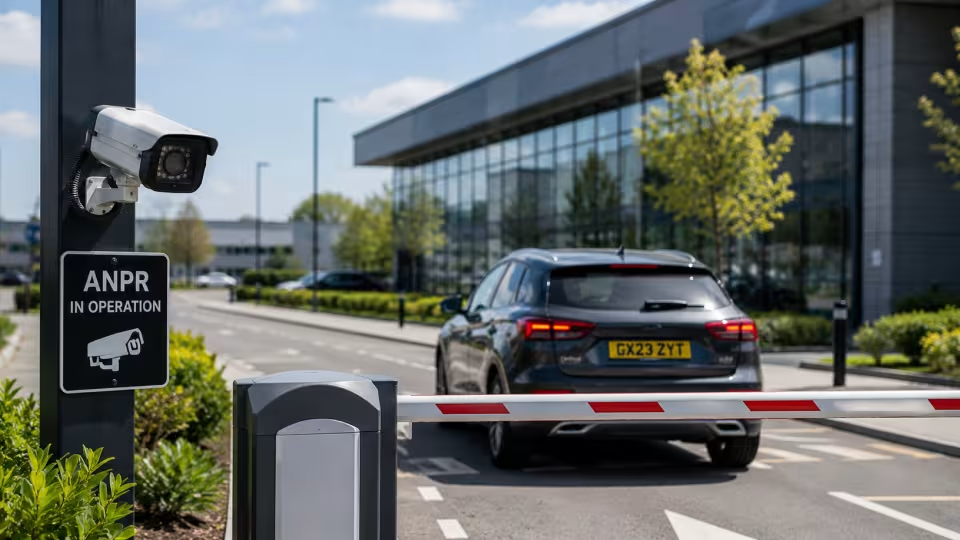
2 ANPR Cameras

that can read vehicle licence plates and cross-reference them against a database for security purposes

3 Thermal CCTV

that can detect the body heat of an intruder in the dark and convert it into a visible image

4 Facial Recognition CCTV

that can compare and identify faces from a database, even when partially covered

5 IP Cameras

that allow you to monitor and control your security from anywhere in the world

ANPR

Each of these technologies can be tailored to specific security challenges, and many can be integrated with other systems such as access control or intruder alarms for a comprehensive security solution.

Is CCTV Right for Your Business?

Not sure which CCTV system is right for your property ? Contact our team today and one of our security specialists will help you find the most effective solution for your needs.