Submitted by Justine.Pource… on
Boîtier rouge alarme.png
published on 28/08/2026

Fire Detection: Choosing Between an Automatic and Manual System for Your Business

Written by Guillaume Brizot

Fire risk is a major threat to business continuity. Loss of life, property damage and business interruption: the consequences of an uncontrolled fire can be irreversible. To protect against these risks, fire detection is the first step and the foundation on which all subsequent measures depend.

There are two main approaches to fire detection: manual detection, which relies on human vigilance, and automatic detection, which uses sensors. Which one should you choose for your business? This article takes you through both systems step by step, compares them objectively and helps you identify the solution best suited to the safety of your premises.

Manual Fire Detection: Human Action Is Essential

What exactly is it?

A manual fire detection system is based on a simple principle: an alarm is raised by a person who notices a fire starting. There are no sensors or automated detection mechanisms; the human eye acts as the detector.

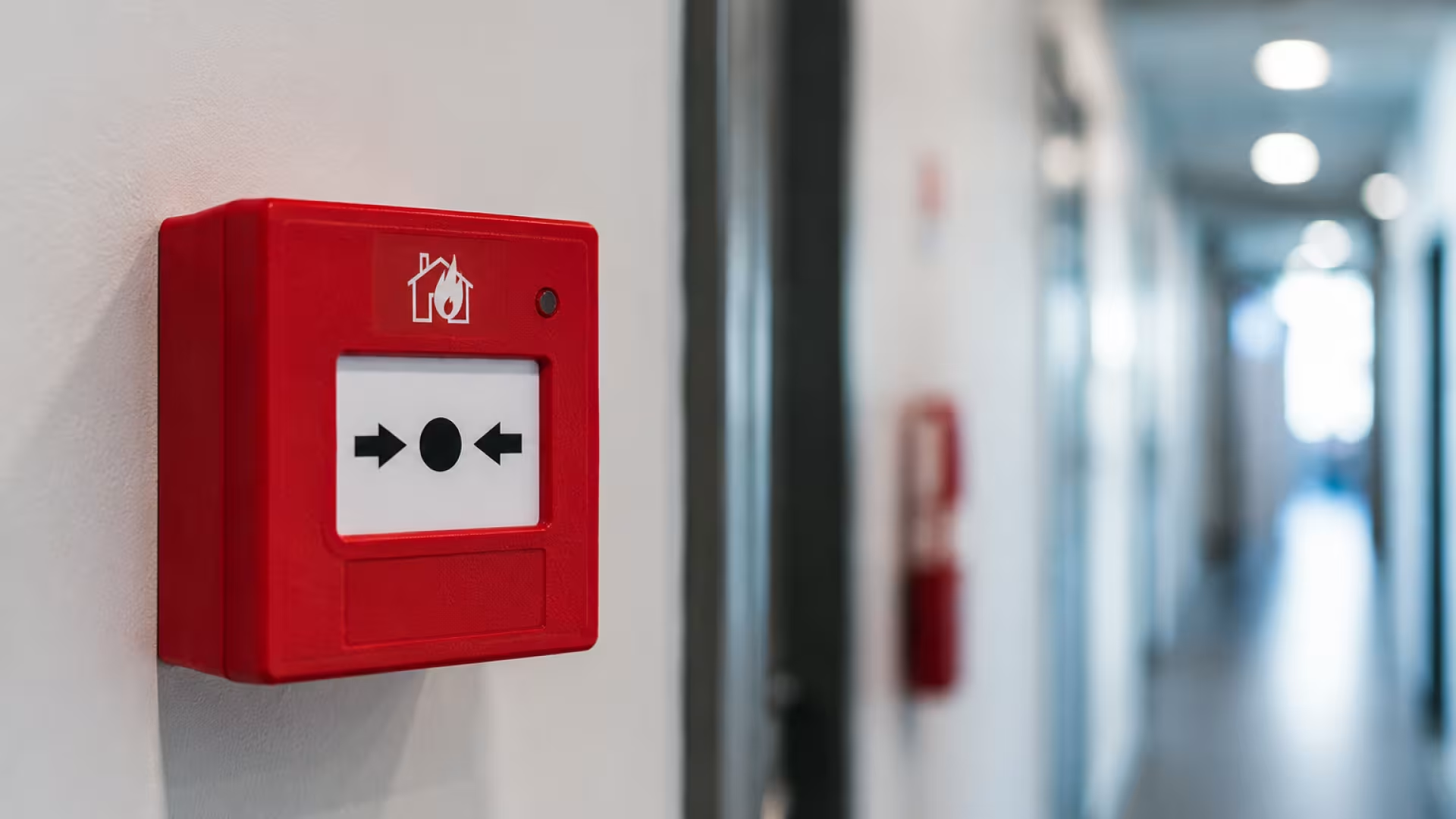
In practice, this type of installation relies on a few key components: manual call points (the familiar red boxes found in corridors and near exits), an audible alarm that is triggered when the call point is operated, and sometimes a simple indication panel that helps identify where the alarm has been activated.
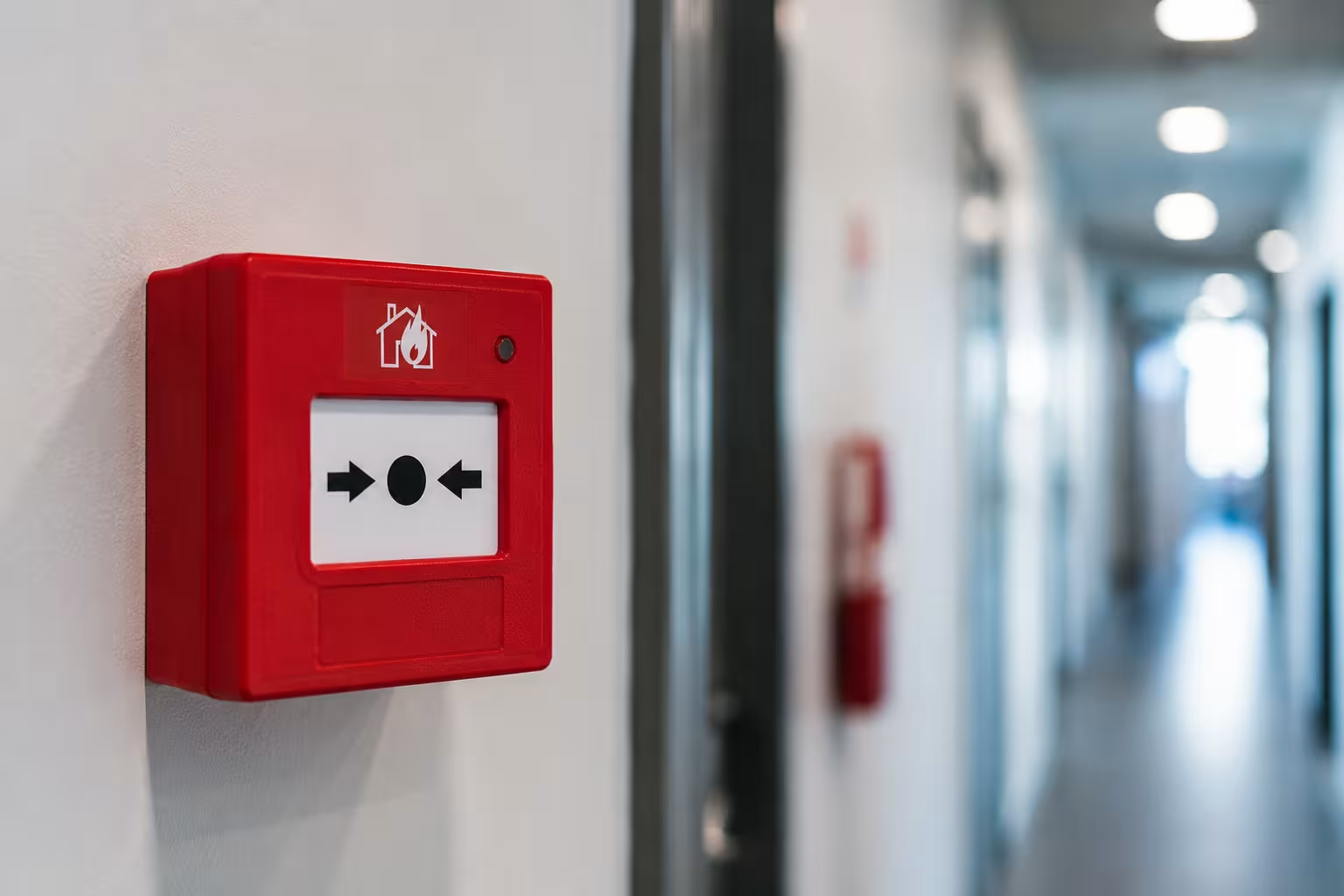

Boîtier rouge alarme.png

Advantages and disadvantages

This system has genuine advantages, particularly for smaller organisations:

Icône monnaie

Low installation costs

the equipment is simple and the cabling is relatively straightforward.

Wrench

Robust technology

fewer electronic components mean fewer potential points of failure.

Shield-Check

Fewer technology-related false alarms

activation depends on a deliberate human action rather than a sensor that may be sensitive to dust or steam.

However, these advantages come with an obvious limitation. The system is entirely dependent on human presence. Response times vary from person to person, and the system becomes completely ineffective in unoccupied premises, at night or at weekends. In addition, the location of the fire remains approximate: you know that a manual call point has been activated, but not precisely where the fire started.

Pictogramme d'ampoule noir

Good to know

A manual system can often provide the basic level of protection required in smaller premises or offices with no particular fire risk, depending on the applicable requirements. It is therefore not an outdated solution, but rather a system suited to certain specific situations.

Pictogramme utilisateur

Jean-Charles, Technical Manager, Scutum Fire

“What we see far too often in the field is a fire being spotted by a passer-by or reported late through a conventional alarm, when an automatic system would have detected it hours earlier. On a site that is empty at night or over the weekend, no one smells smoke or sees a warning light flashing: manual detection relies entirely on human presence, which is precisely its weakness outside opening hours.”

Manual detection therefore has its place, provided the circumstances are suitable. But as soon as human presence can no longer be guaranteed at all times, another approach becomes necessary: automatic detection.

Automatic Fire Detection: Technology Supporting Vigilance

How does it work?

An automatic fire detection system detects a fire without human intervention, using a network of sensors that continuously monitors the premises.

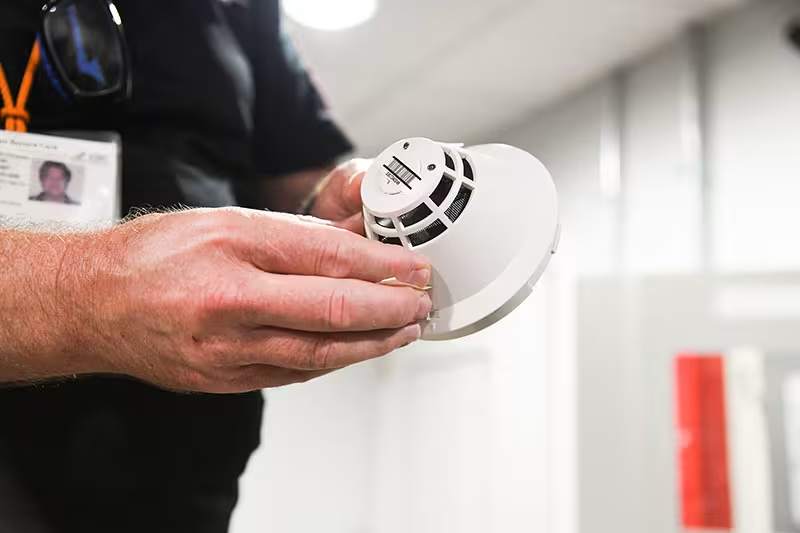
A typical installation includes detectors (smoke, heat or flame, depending on the area), a fire detection control panel, audible and/or visual alarm devices to alert occupants, and often a transmitter that automatically sends an alert to the emergency services or an alarm receiving centre.

Scutum fire alarm inspection 1

Advantages and disadvantages

The benefits of this type of installation are substantial, particularly for high-risk or lightly occupied sites:

1 Early and continuous detection

24 hours a day, 7 days a week, even when there is no staff on site.

2 Rapid response

thanks to an almost immediate alert as soon as a fire is detected.

3 Precise fire location

which significantly speeds up the response of the emergency services.

4 Autonomous operation

capable of triggering other actions, such as closing fire doors or activating an automatic fire suppression system.

The downside is higher installation and maintenance costs, a risk of false alarms if the system is incorrectly configured or poorly maintained (dust, steam, insects), and the need for technical expertise when designing and installing the system.

Pictogramme d'ampoule noir

Good to know

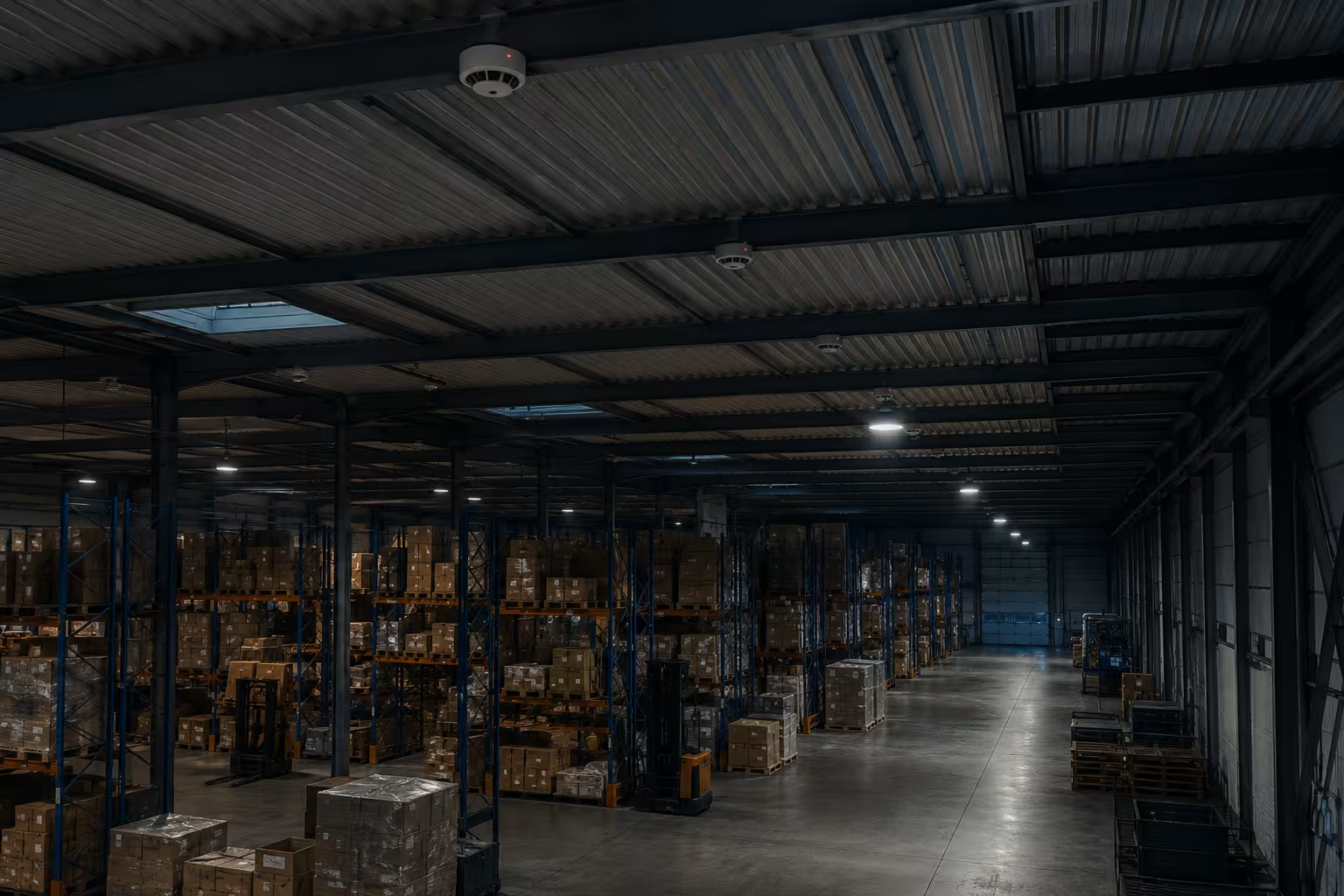
Automatic detection is essential for providing continuous protection, particularly in storage areas, server rooms or any premises that are unoccupied for part of the day. In these environments, relying solely on manual detection leaves a vulnerability that nothing else can address.

Pictogramme utilisateur

Guillaume, Sales Director, Scutum Fire

“For one of our industrial customers, switching to automatic detection enabled us to identify an electrical overheating incident at 3 a.m. on a Saturday, well before the site was due to reopen on Monday. Without this system, the fire would have had the entire weekend to spread. It is this kind of real-world feedback that convinces our customers: the investment pays for itself from the first incident prevented.”

Fire Detection Comparison Table: Manual vs Automatic at a Glance

Manual or automatic: each system has its own logic. To make the right decision, nothing beats an overall view. Here is how they compare, criterion by criterion.

Entrepôt sécurité incendie.png

How to Choose? Key Criteria for Your Business

Beyond the comparison table, the right choice always depends on your actual circumstances. Four criteria should guide your decision.

1 The nature of your business and associated risks

An office, a warehouse storing flammable products, a production site or a retail premises are not exposed to the same risks. The more an activity involves combustible materials or sources of heat, the more relevant automatic detection becomes.

2 The layout of your premises

Floor area, number of storeys, presence of isolated or rarely occupied areas: the larger or more compartmentalised your premises are, the more difficult it becomes for human vigilance alone to effectively cover the entire building.

3 Human presence within the business

Your working hours, night-time or weekend operations, and the presence (or absence) of trained staff are all key factors. A site that is empty for several hours a day cannot rely solely on manual call points.

4 Regulatory and insurance requirements

The Regulatory Reform (Fire Safety) Order 2005, the specific requirements applicable to your premises and the conditions of your insurance policy may require a particular level of protection and, in some cases, an automatic system.

Pictogramme d'ampoule noir

Good to know

In a woodworking workshop, the risk of fire is high because of sawdust. An automatic aspirating smoke detection system will be much more effective than a simple manual call point, which would only be activated once a fire was already well established.

Pictogramme utilisateur

Pierre, Risk Engineer, Scutum Fire

“My advice is always the same: never choose a detection technology before carrying out an assessment of the site's risk areas — occupancy hours, presence of flammable materials and the criticality of equipment. A thorough risk assessment carried out beforehand prevents some areas from being over-equipped while the most sensitive areas are under-protected. The risk assessment should determine the technical choice, never the other way around.”

Once these four criteria have been established, a natural question arises: do you really need to choose between the two systems, or can they be combined?

What If the Best Solution Were Hybrid?

In reality, manual and automatic detection are not mutually exclusive. In the vast majority of cases, the most effective solution is to combine them: an automatic system provides continuous monitoring, 24 hours a day, while manual call points remain available to allow immediate human intervention at any time.

This hybrid configuration is now one of the most common and safest approaches for fire alarm systems, particularly in premises with a high level of risk or occupancy. It combines the best of both approaches: the speed of technology and the reliability of human intervention as a complement.

Do Not Overlook Installation and Maintenance

Choosing the right type of system is not enough. The quality of the installation and the regularity of maintenance directly determine the system's actual effectiveness, whatever type of system is used.

The installation should be carried out by a qualified professional and in accordance with the applicable UK regulations and relevant standards, in order to ensure both regulatory compliance and operational effectiveness. High-performance equipment that is poorly installed loses much of its value.

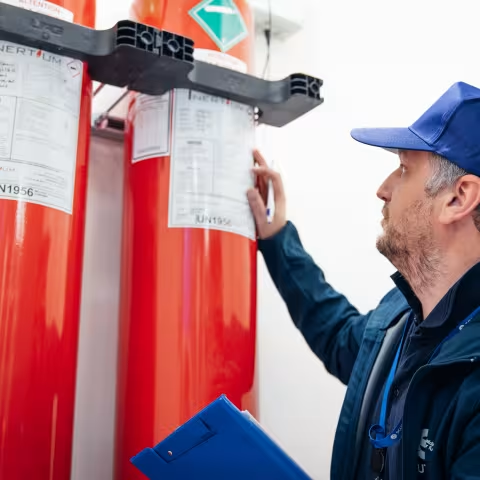
extincteurs scutum photo

A maintenance contract, meanwhile, is not something to overlook: regular maintenance is essential to ensure the long-term reliability of an automatic fire detection system and may be required depending on the type of premises, installation and applicable requirements. A poorly maintained detector can prove just as ineffective as having no system at all.

Pictogramme utilisateur

Anne, Auditor, Scutum Fire

“During an audit carried out before an insurance renewal, we identified an installation that appeared to be working correctly but was no longer compliant with the applicable requirements following an unreported extension to the premises. Without this audit, the client might only have discovered the issue at the time of a fire, with a risk of problems regarding insurance cover. This is the value of certification and regular auditing: they help ensure that the installation continues to reflect changes to the site.”

Conclusion

The choice between manual and automatic detection is not simply a matter of « manual = cheap » and « automatic = expensive ». It primarily depends on a precise risk assessment tailored to your business, premises and obligations.

The key point to remember is that manual detection can meet basic requirements in certain situations, while automatic detection addresses a genuine need for continuous protection of people and property. Between the two, a hybrid solution remains the safest choice in most cases.

For an informed decision and a solution genuinely suited to your business, the best approach is to carry out a security and fire risk assessment. Contact the Scutum experts for a personalised assessment of your premises.

équipe Scutum

FAQ: Frequently Asked Questions About Fire Detection

Is a manual system sufficient for my business?

This depends on your activity, the size of your premises and the regulatory requirements that apply to you. A risk assessment can determine the solution best suited to your situation.

What is the difference between a smoke detector and a heat detector?

A smoke detector reacts to the presence of particles in the air, often during the early stages of a fire. A heat detector activates when the temperature reaches a predefined threshold or rises rapidly. Heat detectors are particularly suitable for kitchens, workshops or dusty areas, where a smoke detector could generate false alarms. The two technologies can also be combined within the same system.

Can my insurer require me to install a particular type of system?

Yes. Some insurance policies impose specific fire detection requirements, which vary depending on the activity, risks covered and value of the insured property. The insurer may require a system that complies with certain standards or is certified, as well as additional measures such as alarm monitoring. It is advisable to check the terms of your insurance policy before installing any system.

Will an automatic system work in the event of a power cut?

Yes. Professional systems generally have a battery-backed standby power supply, which maintains detection and alarm functions for a specified period in the event of a power failure. Control panels continuously monitor their own power supply and report any faults.

How long does an automatic detector last?

This varies depending on the type of detector, its environment and the manufacturer's recommendations. In practice, most professional detectors have a service life of between 10 and 15 years, subject to regular inspection and testing.

What is fire alarm monitoring?

Fire alarm monitoring involves automatically transmitting alarms to an alarm receiving centre as soon as a fire is detected. Operators assess the alarm and follow the procedures in place: alarm verification, contacting responsible personnel and, where necessary, alerting the emergency services. This service enables a rapid response, including when premises are unoccupied, but it complements the detection system and does not replace regulatory requirements.