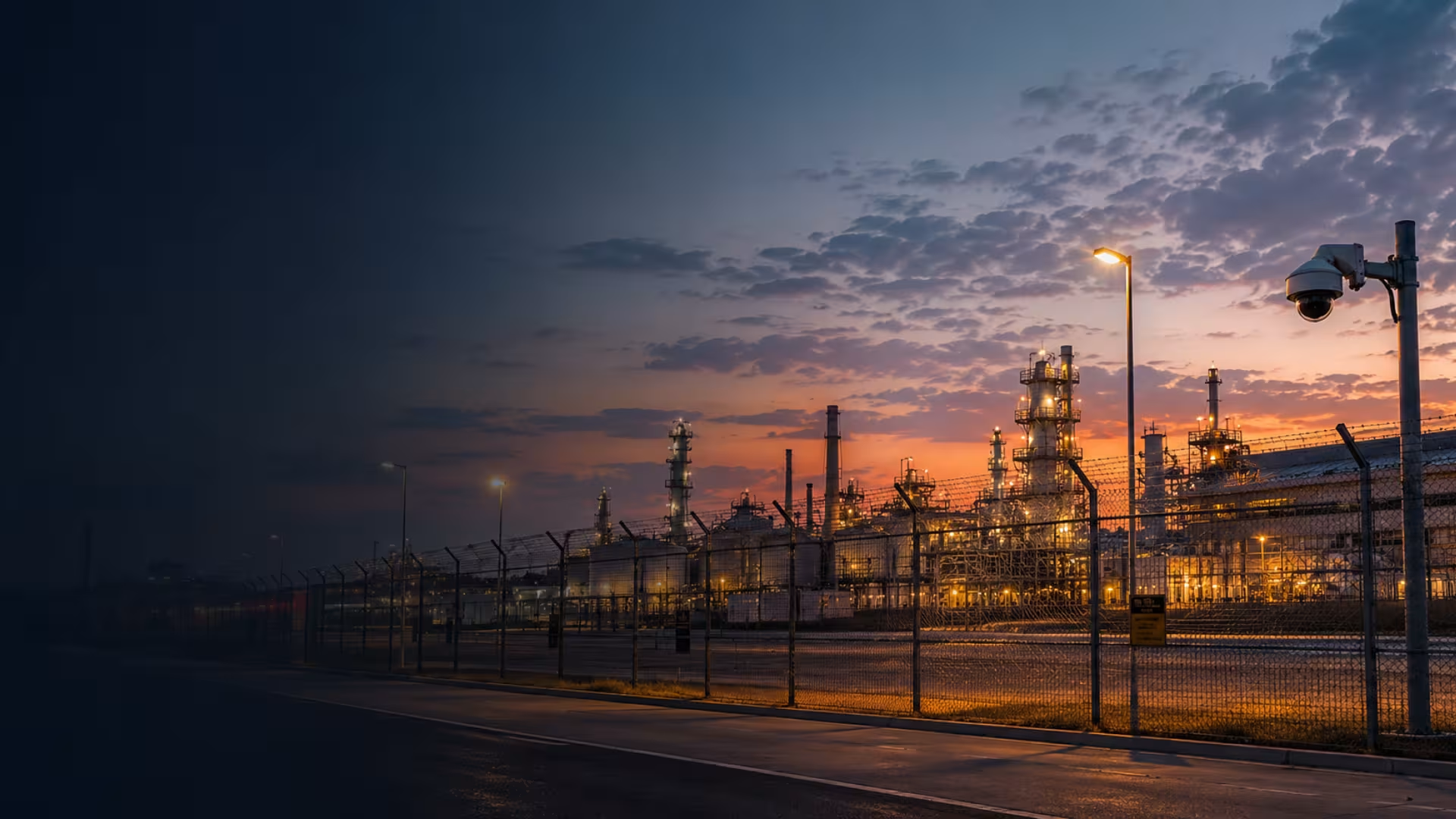
Submitted by Justine.Pource… on
Site industriel.png
published on 26/08/2026

Fire Protection in Industrial Environments: Ensuring Safety Without Stopping Production

Written by Guillaume Brizot

An unplanned production interruption can cost, depending on the industry and size of the facility, tens of thousands of dollars or euros per hour. This figure alone explains why fire safety is no longer simply a technical issue: it has become a strategic priority discussed at the highest levels of an organization.

For many years, protecting an industrial facility against fire meant accepting a difficult trade-off. Systems designed to extinguish fires at all costs could often cause damage almost as severe as the fire itself. Water, corrosion, extinguishing powder: the solution could become part of the problem.

Protecting industrial facilities against fire while minimising disruption to production is a key consideration for many businesses.

Advanced fire detection and suppression technologies can help identify potential fire risks at an early stage, limit damage and reduce operational downtime. This article explores how industrial businesses can implement effective fire protection measures while supporting business continuity.
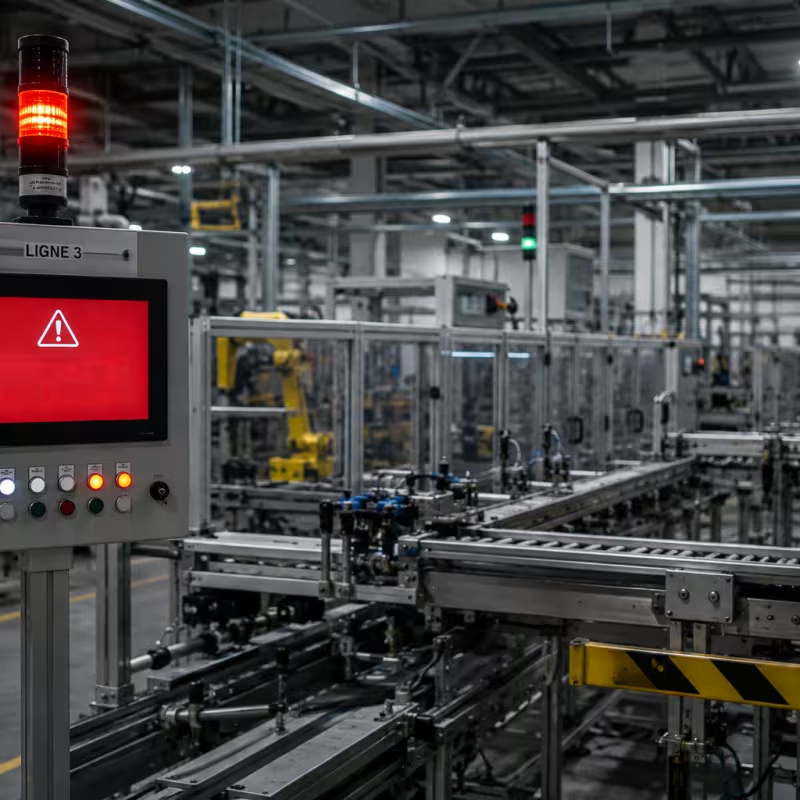

Fire Risks & Production Downtime in Industrial Environments

Industrial facilities face two closely connected challenges: protecting people and premises from fire, and minimising disruption to operations.

A fire can endanger employees, damage valuable machinery and infrastructure, and result in significant operational disruption. In more serious cases, extensive damage may prevent production from resuming for an extended period.

Another challenge is production downtime. Even a relatively short interruption can result in financial losses, delayed deliveries and potential contractual penalties. Extended disruption may also affect customer relationships and business reputation.

Site industriel protection incendie.png

Fire suppression systems can also affect production, depending on the technology used and the nature of the facility. Some methods may require equipment shutdowns, additional cleaning or repairs before operations can resume.

Modern fire detection and suppression technologies can help minimise these disruptions by providing earlier warnings and more targeted protection, where appropriate.

Pictogramme utilisateur

Guillaume, Fire Safety Sales Director at Scutum

“An unplanned production line shutdown is never just about the cost of restarting the line. We regularly see industrial customers dealing with orders that cannot be delivered within contractual deadlines, with penalties that can amount to tens of thousands of dollars or euros after just a few days of delay. It is this commercial impact, much more than the fire itself, that justifies investing in fire protection that does not disrupt production.”

Sprinkler Systems: Benefits & Considerations for Industrial Facilities

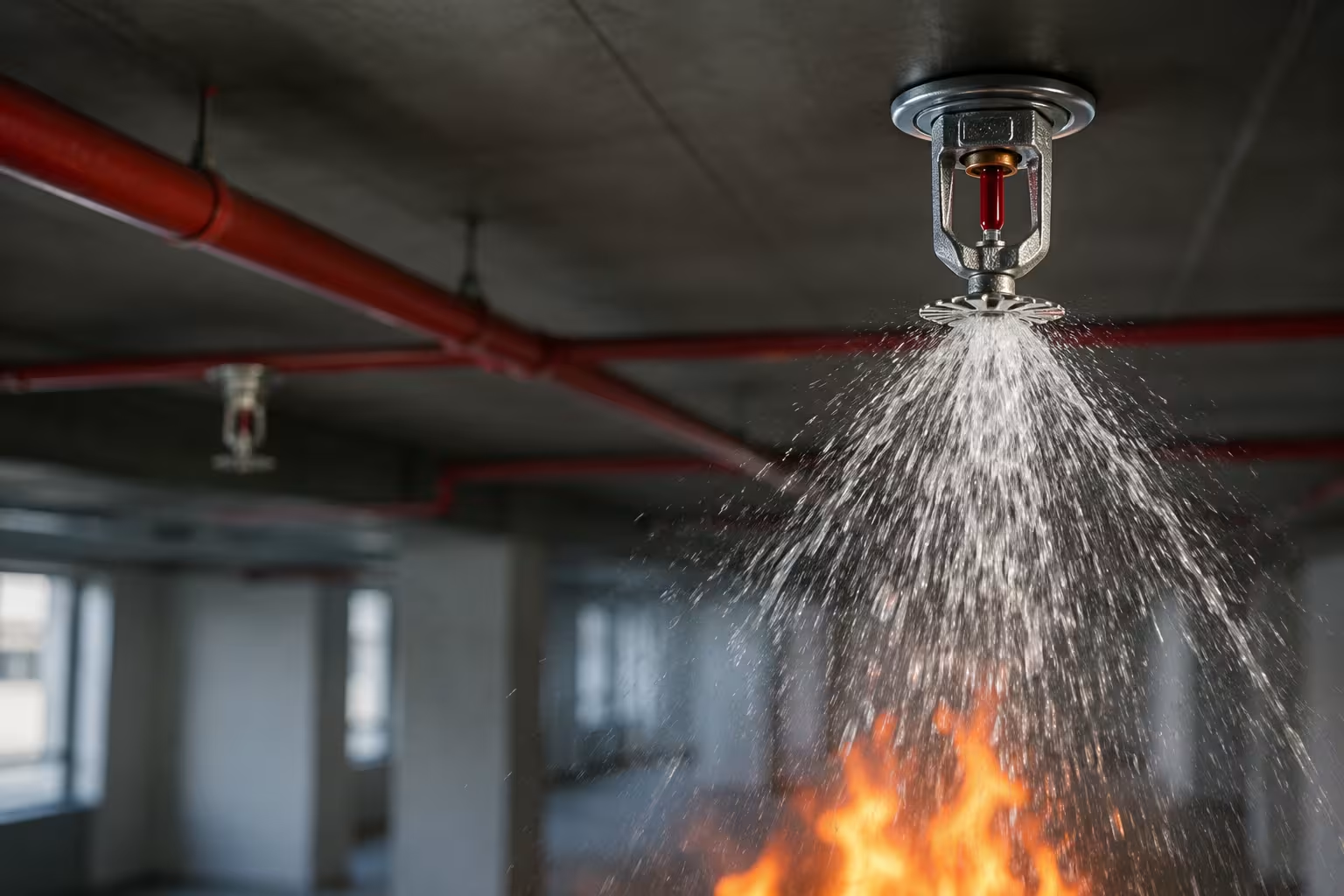
Automatic sprinkler systems are widely used in industrial buildings and provide an established method of controlling or suppressing fires.

Most conventional sprinkler systems operate when heat causes an individual sprinkler head to activate, releasing water in the affected area. Their effectiveness makes them an important part of many industrial fire protection strategies.

However, depending on the facility, its equipment and operational requirements, water-based suppression may present additional considerations, including potential water damage and disruption to production.

Système de Sprinklers.png

Potential considerations include:

  • Water damage: Sprinkler discharge may damage water-sensitive machinery, stock or electronic equipment.
  • Operational disruption: Affected areas may require inspection, cleaning or repairs before production can safely resume.
  • Unintended discharge: Although uncommon, accidental sprinkler activation or system damage can result in water damage and disruption.

These considerations do not diminish the effectiveness of sprinkler systems, which remain an important fire protection measure across many industrial environments.

However, facilities containing sensitive equipment, specialist machinery or valuable materials may benefit from assessing alternative or complementary fire suppression technologies, depending on their specific risks and operational requirements.

Modern Solutions for Protection Without Interruption

Combining safety and business continuity relies on two complementary pillars: detecting the danger as early as possible and extinguishing the fire without damaging what needs to be protected. Each of these pillars addresses a different stage of the fire risk.

Early Fire Detection Using Aspirating Smoke Detection


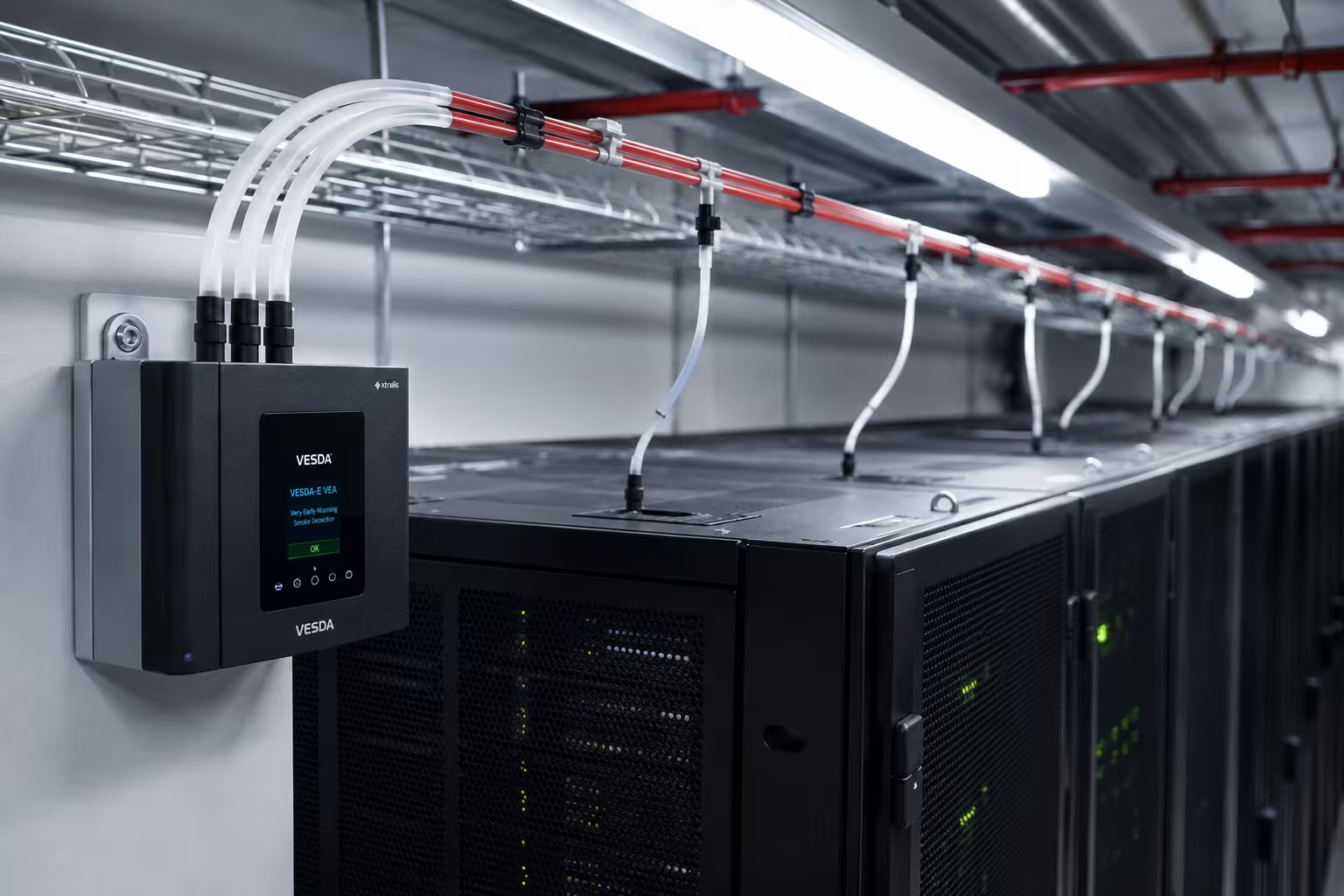
Aspirating smoke detection (ASD) systems continuously draw air samples through a network of sampling pipes to detect smoke particles.

High-sensitivity systems, such as VESDA, can identify very low concentrations of smoke, potentially providing an earlier warning of a developing fire than conventional point-type smoke detectors.

This early warning can allow staff to investigate and respond before a fire escalates, helping to protect equipment and minimise disruption to operations.

Détection de fumée par aspiration (HSSD  VESDA).png

The key advantage of aspirating smoke detection is early warning. By identifying low concentrations of smoke, these systems can provide valuable time for investigation and intervention.

Depending on the circumstances, this may allow staff to isolate affected equipment or address a developing incident before it escalates, potentially reducing the need for fire suppression and minimising disruption to operations.

Pictogramme utilisateur

Kamel, Technical Manager at Scutum Fire Safety

“On a production line equipped with linear heat detectors, we detected abnormal overheating in a motor before any smoke was produced. The maintenance team intervened within thirty minutes, without stopping the line for more than a few minutes, whereas an undetected fire could have shut down the production area for several days.”

Pillar 2: Automatic Fire Suppression: Minimising Damage and Disruption

Where automatic fire suppression is required, technologies such as inert gas systems and high-pressure water mist can provide effective protection while helping to minimise damage and operational disruption.

Each technology has different characteristics and applications. The most appropriate solution depends on the fire risks, equipment, building design and operational requirements of the area being protected.

Inert Gas Fire Suppression: Protecting Sensitive Equipment

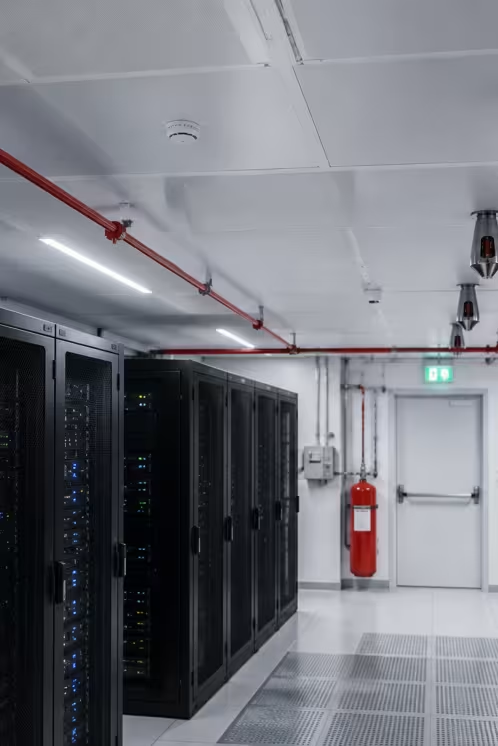
Inert gas fire suppression systems work by reducing the oxygen concentration within a protected enclosure to a level that suppresses combustion.

Systems using agents such as Inergen (IG-541) and Argonite (IG-55) discharge a mixture of naturally occurring gases to control or extinguish fires.

A key advantage is that inert gas agents leave no residue, making them suitable for certain environments containing sensitive electronic equipment, including server rooms and electrical installations.

However, system design must account for occupant safety, enclosure integrity and appropriate ventilation. The time required to resume operations depends on the incident, any resulting damage and the necessary safety checks.

Extinction par gaz inerte.png

High-Pressure Water Mist Fire Suppression

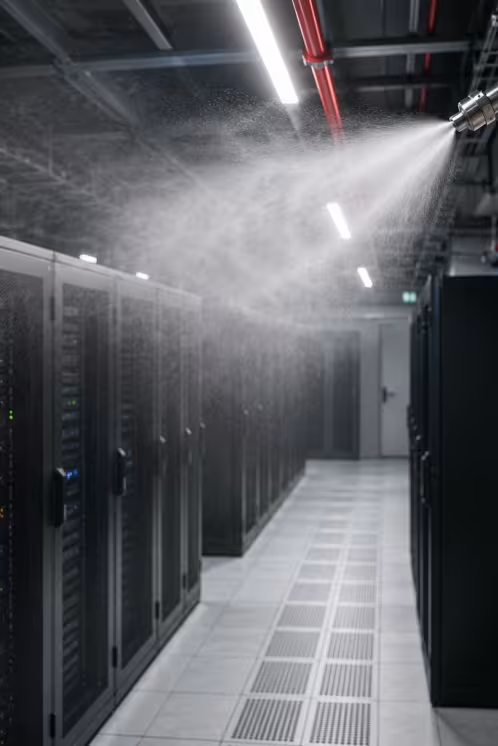
High-pressure water mist systems use fine water droplets to absorb heat and help control or extinguish fires. Depending on the system and application, water mist can also reduce oxygen availability locally through steam generation.

These systems typically use less water than conventional sprinkler systems, potentially reducing water damage and disruption to operations.

High-pressure water mist may be suitable for certain industrial applications, including machinery spaces and turbine enclosures. However, its effectiveness and suitability depend on the specific fire hazards, equipment and system design.

Extinction par brouillard d'eau haute pression.png

Implementing an Effective Strategy: From Assessment to Maintenance

Choosing the right technology is not enough. The success of an industrial fire protection system depends above all on a rigorous approach, planned in advance with the facility's teams.

Step 1: Safety Assessment & Risk Analysis

Before any installation, it is essential to accurately map the facility: which areas are critical, what types of risks are associated with them, and how production flows are organized. This analysis makes it possible to size the protection system as accurately as possible, without overinvestment or unprotected areas.

Audit de sécurité.png

Step 2: Seamless Installation & Integration

Installation should be carefully planned to minimise disruption to existing operations. This requires close coordination with the customer's facilities and maintenance teams, particularly where work involves critical equipment or infrastructure.

Three key considerations for minimising disruption during installation:

1 Work Outside Production Hours

Where practical, arrange installation work during evenings, weekends or planned shutdowns to minimise disruption.

2 Phase Installation Work

Complete the project in stages to limit the impact on operational areas and maintain production wherever possible.

3 Coordinate with On-site Technical Teams

Maintain regular communication with facilities and maintenance teams to identify potential issues and adjust schedules as required.

Pictogramme utilisateur

Bertrand, Project Manager at Scutum Fire Safety

“At a facility operating around the clock in three shifts, we phased the installation by area and systematically worked on production lines that were stopped during shift changes, never on lines that were in operation. The project took slightly longer than a conventional installation, but the customer did not lose a single hour of production, which was a non-negotiable requirement from the outset.”

Step 3: Preventive Maintenance and Staff Training

Regular maintenance is essential to maintaining the reliability of fire protection systems. A planned maintenance programme helps identify faults, assess component condition and ensure systems remain in effective working order.

Staff training is equally important. Employees should understand fire alarm signals, evacuation procedures and the actions to take in an emergency. Regular training and appropriate fire drills help reinforce these procedures and support an effective response.

Conclusion

Effective fire protection is essential for industrial businesses seeking to protect people, premises and critical operations while minimising disruption to production.

Combining early fire detection, appropriate suppression technologies, careful installation planning and regular maintenance can help reduce fire risks and support business continuity.

Scutum provides fire protection solutions tailored to the requirements of industrial environments, helping businesses identify risks and implement appropriate safety measures.

Contact our experts to discuss your fire protection requirements and explore suitable solutions for your facility.

Femme qui sourit avec ses collègues pendant la formation DATI Connect

FAQs

Are Advanced Fire Protection Systems More Expensive?

The cost of a fire protection system depends on the technology, facility size and specific risks involved. Some specialist detection and suppression systems may require a higher initial investment.

However, businesses should consider the overall cost of fire protection alongside the potential financial impact of equipment damage, production downtime and operational disruption. A risk-based assessment can help identify the most appropriate and cost-effective solution.

How Can Fire Protection Systems Be Installed with Minimal Disruption?

Installation can be planned in phases to minimise the impact on production. Where practical, activities such as cabling and pipework installation can be scheduled during quieter operational periods or planned maintenance shutdowns.

Close coordination with site teams helps ensure that any necessary interruptions are identified and managed in advance.

What Is Aspirating Smoke Detection (ASD)?

Aspirating smoke detection (ASD) systems continuously draw air samples through a network of pipes to detect very low concentrations of smoke.

High-sensitivity systems, such as VESDA, can provide early warning of a developing fire, allowing staff to investigate and take appropriate action before the situation escalates.

How Quickly Can Operations Resume After a Fire Suppression System Activates?

Recovery times depend on the type of suppression system, the extent of the incident and any resulting damage.

Inert gas systems leave no residue, which can simplify the recovery process. However, the affected area must be assessed, the system inspected and any necessary repairs or cylinder replacements completed before normal operations resume.

Water-based systems may require additional cleaning, drying and equipment inspections. The time needed to restore operations will depend on the circumstances.

How Important Is Preventive Maintenance?

Regular maintenance is essential for keeping fire protection systems in effective working order. It helps identify faults, detect component wear and reduce the likelihood of system failures or unwanted alarms.

A planned maintenance programme supports system reliability and helps ensure fire protection measures remain effective when needed.

Is Fire Safety Training Required for Staff?

Yes. UK fire safety legislation requires employers to provide appropriate fire safety training to employees.

Staff should understand fire alarm signals, evacuation procedures and the actions to take in an emergency. Training should reflect the specific risks and procedures within the workplace, with refresher training provided where necessary.

Effective training helps employees respond safely and supports the building's overall fire protection strategy.