Submitted by Justine.Pource… on
Salle de serveurs.png
published on 26/08/2026

Fire Safety in Data Centres: Protecting Your Critical Data

Written by Guillaume Brizot

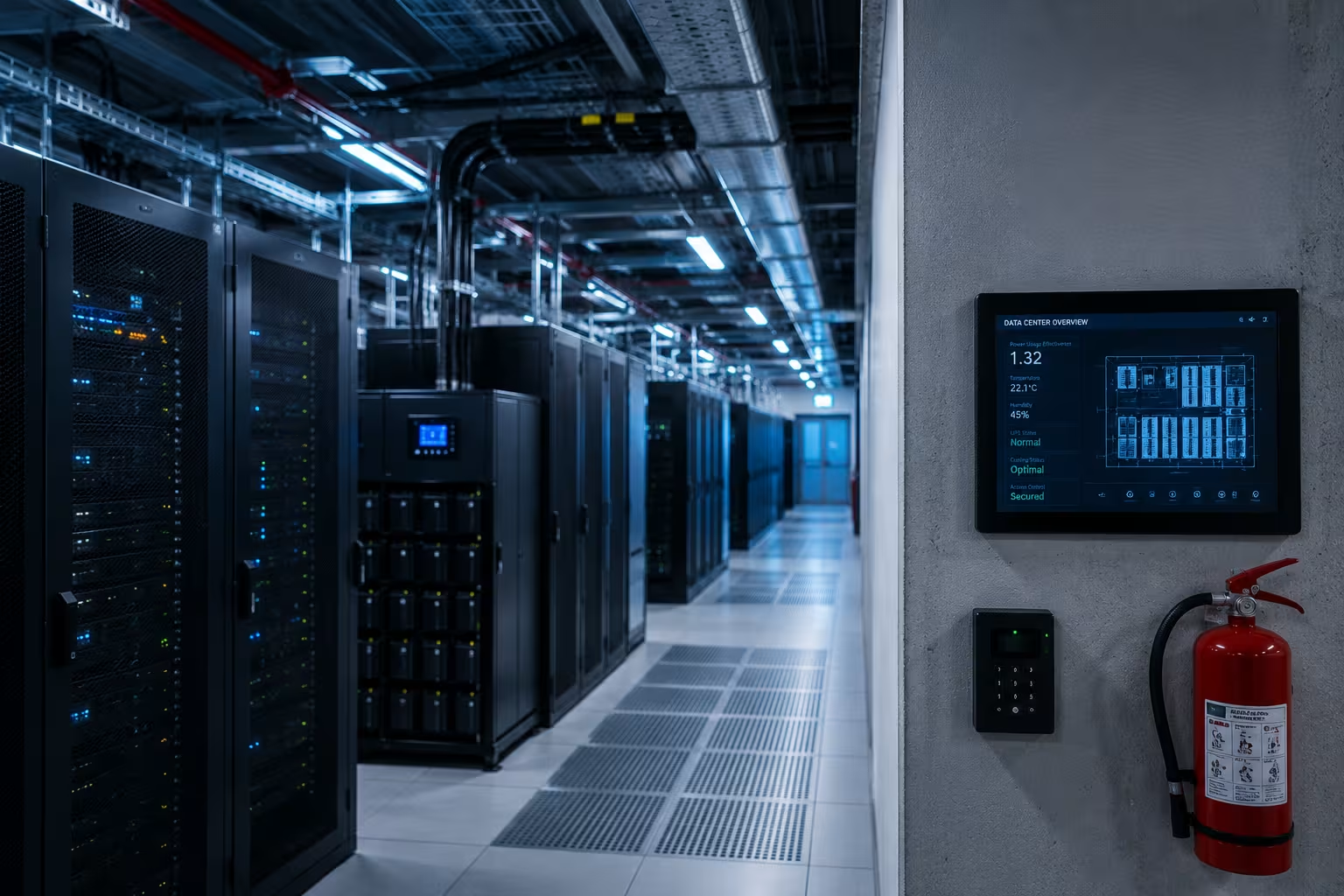
A data centre is not just another computer room. It is the digital heart of a business: this is where servers, storage arrays, backup systems and the entire network infrastructure that keeps operations running day after day are housed. Within just a few dozen square metres, an enormous amount of value is concentrated, both tangible and intangible.

Introduction: why is a data centre a very high-risk environment?

This concentration creates a paradox. On paper, a data centre is an ultra-controlled environment: air conditioning regulated to the precise degree, restricted access and redundant power supplies. Yet it is precisely this technical density that increases the number of potential sources of ignition: electrical supplies permanently under load, batteries undergoing continuous charging and components that generate heat during normal operation. The risk is not an anomaly; it is an integral part of how the room operates.

The consequences of a fire, however, are anything but ordinary. A fire in a computer room can result in irreversible data loss, an immediate halt to production, financial losses that can quickly reach hundreds of thousands of pounds, and lasting damage to the company's reputation among customers and partners. This is why fire safety in a data centre cannot be treated in the same way as fire safety in a warehouse: it requires a specific approach that reflects what is at stake.
 

Data center.png

Specific sources of fire risk in data centres

Before discussing solutions, it is important to understand what we are trying to prevent. In a data centre, fires most commonly originate from the same groups of causes.

Router

Electrical risks

Electrical risks come first: short circuits, PDU (Power Distribution Unit) overloads and UPS (Uninterruptible Power Supply) failures. Particular attention should be paid to lithium-ion batteries, which are increasingly used in backup power systems and present a risk of thermal runaway: a chain reaction that is difficult to stop once it has started.

fire-icon

Equipment overheating

Next comes equipment overheating. A failure of the HVAC system or poor management of airflow between hot and cold aisles can cause the local temperature to rise above the thresholds tolerated by the equipment, creating conditions that can lead to a fire.

Icône câble

Cabling

Cabling represents a third risk factor: ageing cables, very high cable density beneath raised floors and overloaded cable trays. A cable that becomes abnormally hot can remain unnoticed for a long time before deteriorating.

Users

Human factors

Finally, human factors remain present even in the most automated environments: maintenance errors and hot work (welding, grinding) carried out without sufficient precautions near sensitive equipment.

The regulatory and standards framework: what does UK law say?

Fire safety in a data centre falls within a specific regulatory and standards framework. Compliance is not simply a legal matter: it can also be a condition of insurance cover and a demonstration of professionalism towards customers and partners.

UK fire safety regulations and standards

In the UK, fire safety in data centres is governed by a combination of legislation, building regulations and technical standards. In England and Wales, the Regulatory Reform (Fire Safety) Order 2005 (RRO) provides the main legal framework for fire safety in non-domestic premises. It places responsibility on the person with overall responsibility for the premises to carry out and regularly review a suitable fire risk assessment and implement appropriate fire safety measures.

The Building Regulations and associated guidance, including Approved Document B, also provide requirements and guidance relating to fire safety, compartmentation, fire resistance and means of escape.

For fire detection and alarm systems, BS 5839-1 is a key reference standard. It provides recommendations for the planning, design, installation, commissioning and maintenance of fire detection and fire alarm systems in non-domestic premises.

Pictogramme utilisateur

Guillaume, Commercial Director at Scutum Fire

“Certification to a recognised standard has become a real argument in our discussions with our clients' insurers. A certified site can often negotiate better insurance terms, and the file is processed much more quickly than for a non-certified site. This is something we systematically highlight from the very beginning of a data centre project, because it has a direct impact on the client's overall budget.”

International standards (NFPA 75 & 76, ISO 27001)

At international level, NFPA 75 covers the protection of information technology equipment and its premises: it defines construction, compartmentation and fire protection requirements applicable to computer rooms. NFPA 76, which is more specific, applies to telecommunications facilities. These two US standards are now considered references for good practice well beyond the United States.

ISO 27001, meanwhile, is not strictly a fire safety standard: it is a standard for information security management. However, as part of the risk assessment it requires, serious consideration must be given to physical risks affecting data, of which fire is naturally one. An organisation certified to ISO 27001 must therefore be able to demonstrate that its data centre is protected in proportion to the risks identified.

The protection arsenal: fire detection solutions

When it comes to fire safety, one principle takes precedence over all others: detect as early as possible to act as quickly as possible. In a data centre, the aim is not to detect the flame, but to identify the warning signs of a fire long before it appears.

Aspirating smoke detection (HSSD / VESDA)

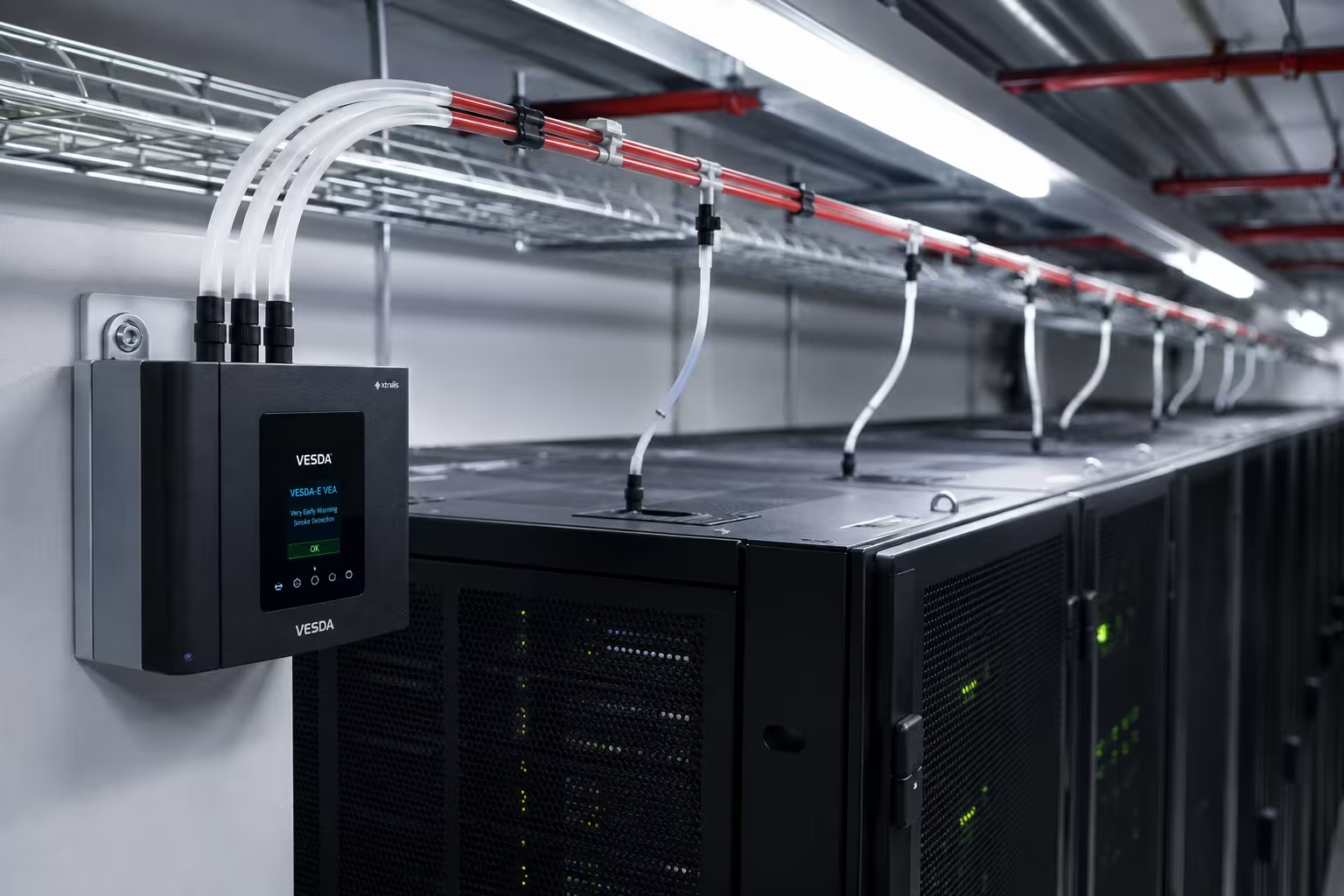
Aspirating smoke detection (HSSD) systems, of which VESDA is the best-known technology, operate according to a different principle from conventional detectors: a network of pipes continuously draws small quantities of air from the room and analyses them for particles that are invisible to the naked eye.

Their sensitivity can reach up to 1,000 times that of a standard smoke detector. In practical terms, this means detection at the pre-fire stage, even before visible smoke appears. An additional advantage is the ability to minimise false alarms caused by ambient dust, a significant consideration in IT environments. Today, it is one of the leading technologies for protecting critical server rooms.

Détection de fumée par aspiration (HSSD  VESDA).png
Pictogramme utilisateur

Maxime, Technical Manager at Scutum Fire

“What really strikes our clients is the time gained. At a high-availability site equipped with a VESDA system, our sensors detected an abnormal increase in particles caused by an overheating connector more than four hours before any visible smoke appeared. The team was able to isolate the equipment and schedule maintenance, without triggering the extinguishing system or interrupting production.”

Other detection systems

Other technologies usefully complement this system: optical smoke detectors, heat detectors and linear heat detection systems, the latter being particularly suitable for monitoring cable trays. These systems do not offer the same level of detection sensitivity as HSSD, but they provide valuable additional protection in peripheral or less critical areas of the site: plant rooms, storage areas and circulation spaces.

The crucial intervention: automatic fire suppression solutions

One principle is clear from the outset: traditional water sprinklers should be avoided above server racks. Water is conductive, it can irreversibly damage electronic equipment, and the damage caused by an accidental discharge can exceed that caused by the fire itself. Data centre protection therefore relies on suppression technologies specifically designed to operate alongside electronic equipment.

Inert gas fire suppression (IG-55, IG-541, etc.)

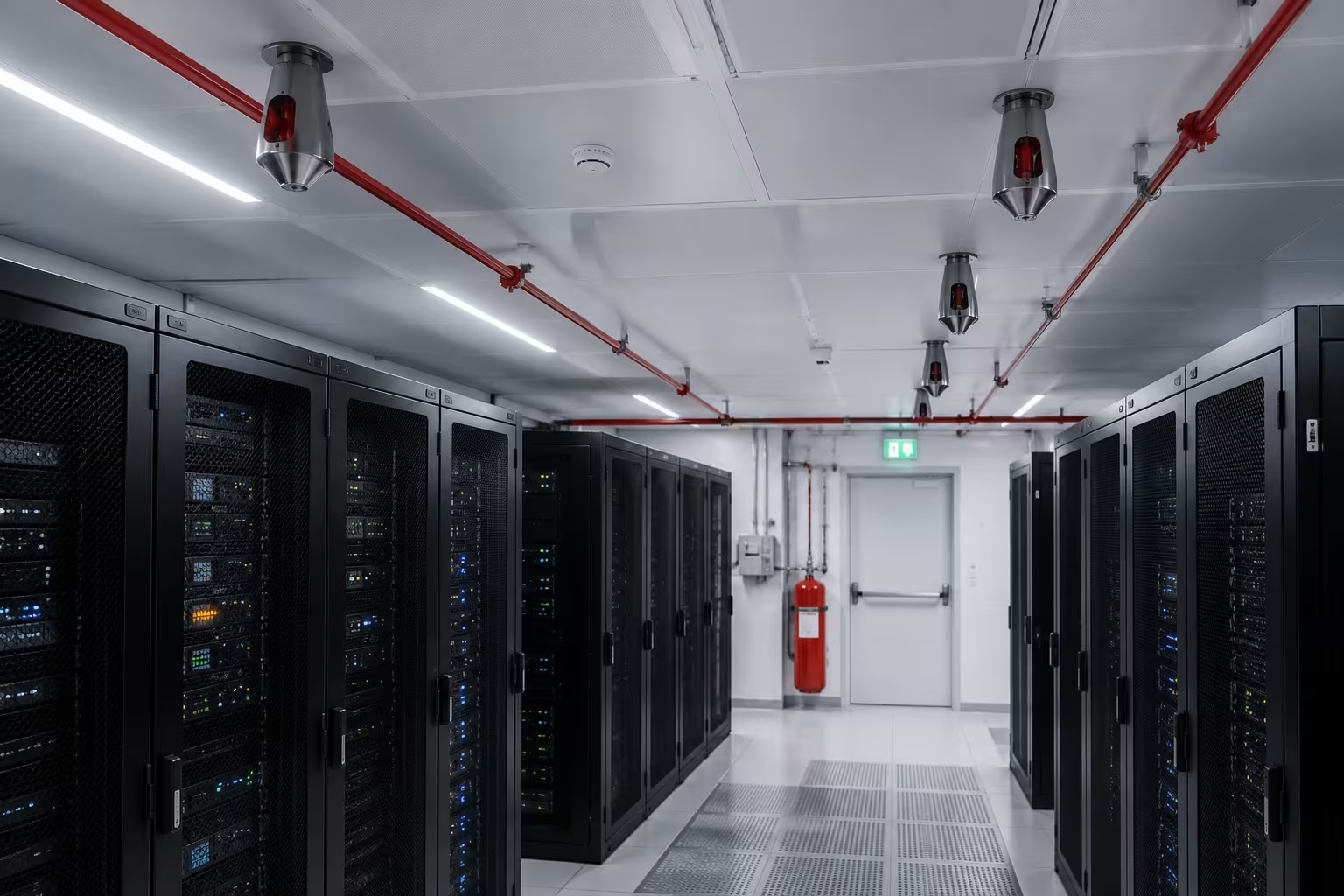
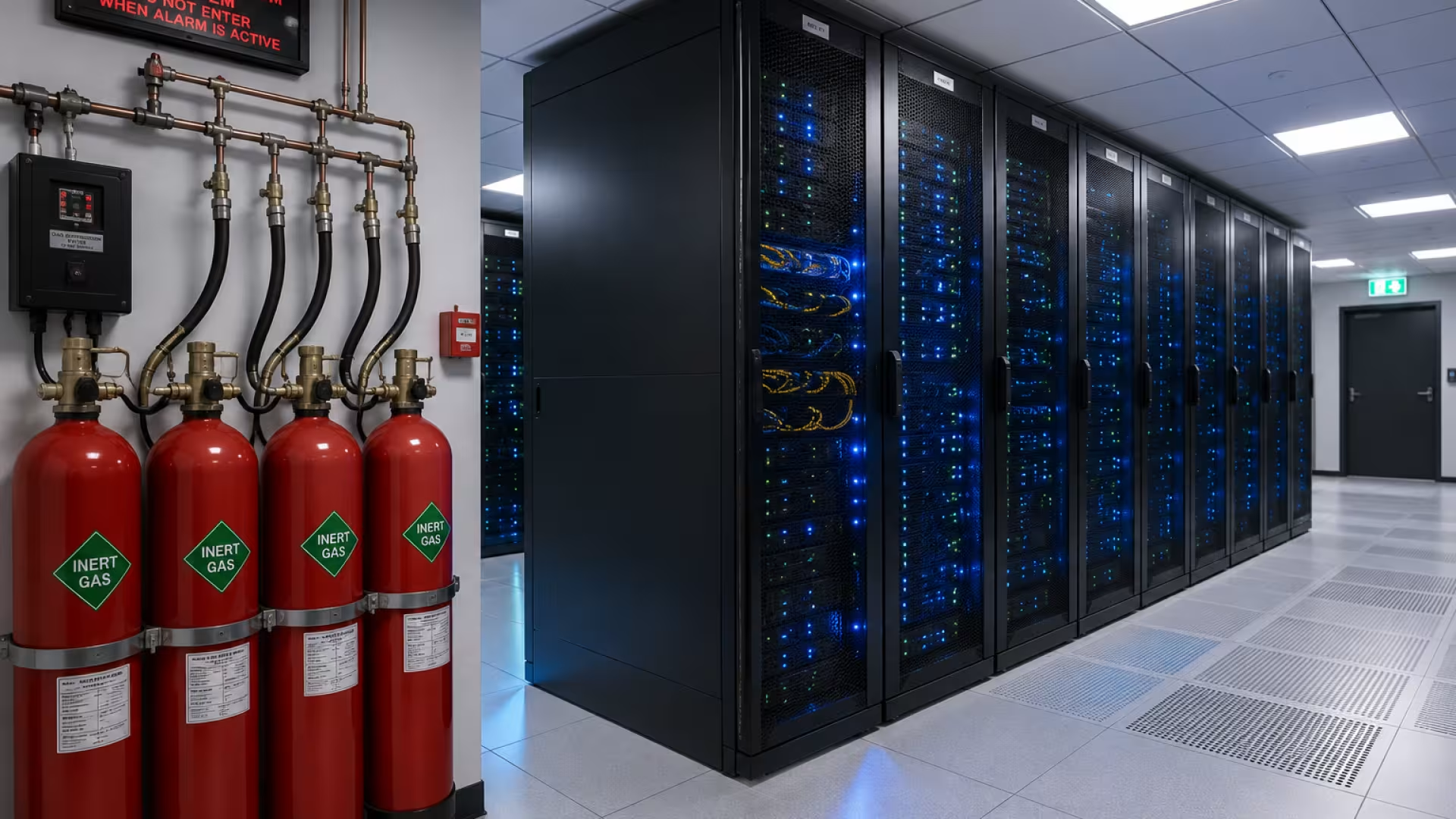
The principle behind inert gases is to reduce the ambient oxygen concentration to a level at which combustion can no longer continue, while remaining compatible with short-term human occupancy. This approach has the advantage of being clean, leaving no residue to remove after discharge, and being safe for electronic equipment. However, it requires a room to be perfectly sealed in order to maintain the effective gas concentration, as well as a rigorous evacuation procedure for personnel.

Extinction par gaz inerte.png

Inhibitory gas fire suppression (Novec 1230, FM-200)

Inhibitory gases work differently: they chemically interrupt the combustion reaction without affecting the oxygen concentration. Their main advantage is the small storage volume required compared with inert gases, combined with very rapid dispersion and equally safe operation for electronic equipment. Novec 1230 is particularly distinguished by a more favourable environmental profile than previous generations of inhibitory gases, a criterion that is increasingly considered by sustainability and ESG departments.

High-pressure water mist fire suppression

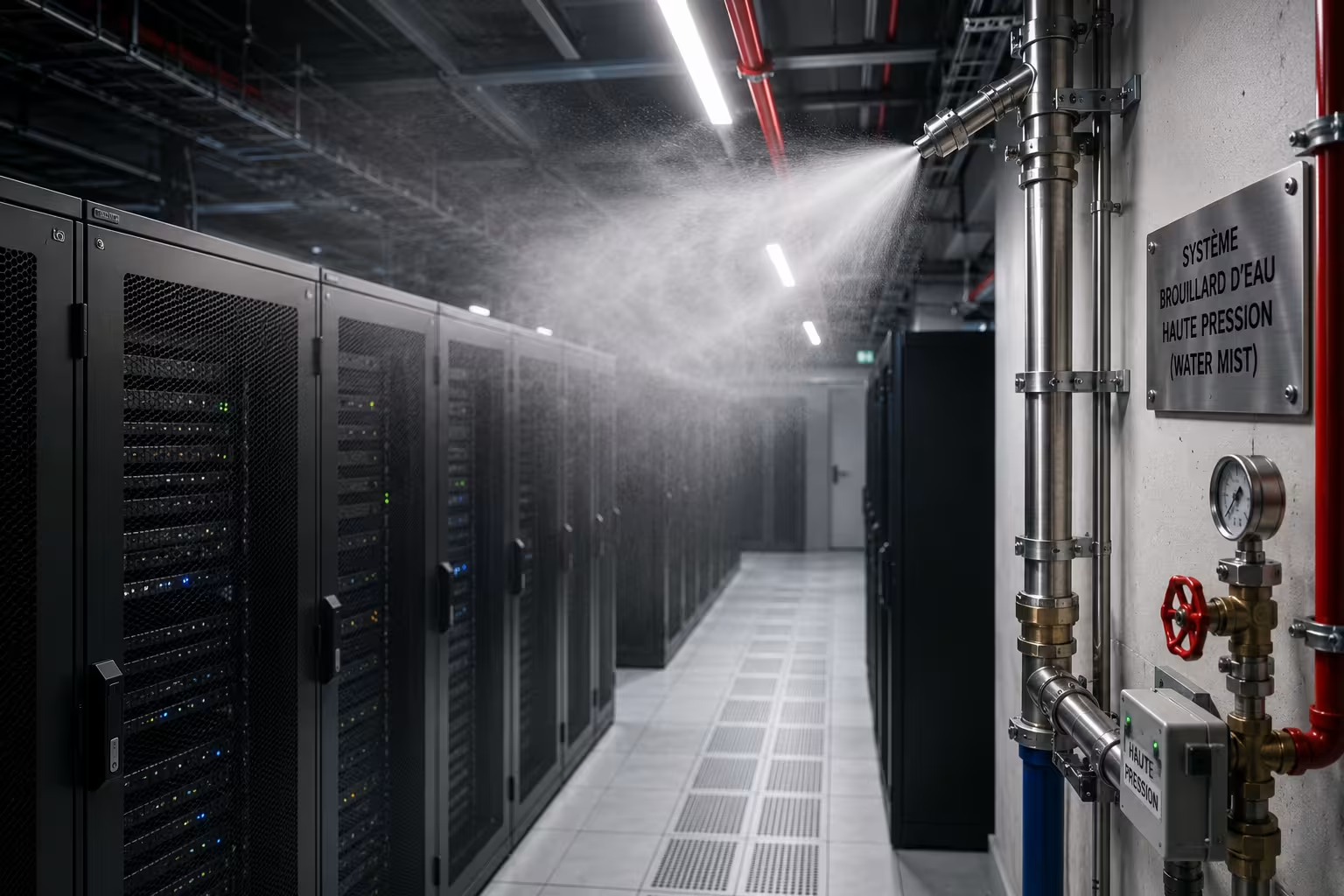
Counter-intuitive at first in an environment where water is considered a threat, high-pressure water mist operates according to a different principle from conventional sprinklers: micro-droplets projected at very high pressure absorb heat and suppress the fire while using a minimal amount of water. The result is a non-toxic, environmentally friendly system that actively cools the affected area. It is a particularly relevant option for large volumes or areas with specific risks, such as battery rooms.

Extinction par brouillard d'eau haute pression.png
Pictogramme utilisateur

Xavier, Project Manager at Scutum Fire

“We equipped a Tier III data centre of approximately 800 m², including a lithium-ion battery room, with a high-pressure water mist system. The result: less than ten litres of water used per discharge in the tested area, compared with several hundred litres for a conventional sprinkler system, with cooling that was at least as effective.”

These three technologies meet different needs. The table below summarises the main considerations.

Table

Beyond technology: prevention and good practice

The best detection and suppression technology is not sufficient on its own. Fire safety in a data centre relies on a holistic approach, in which technology is just one link in the chain.

1 Compartmentation and fire resistance

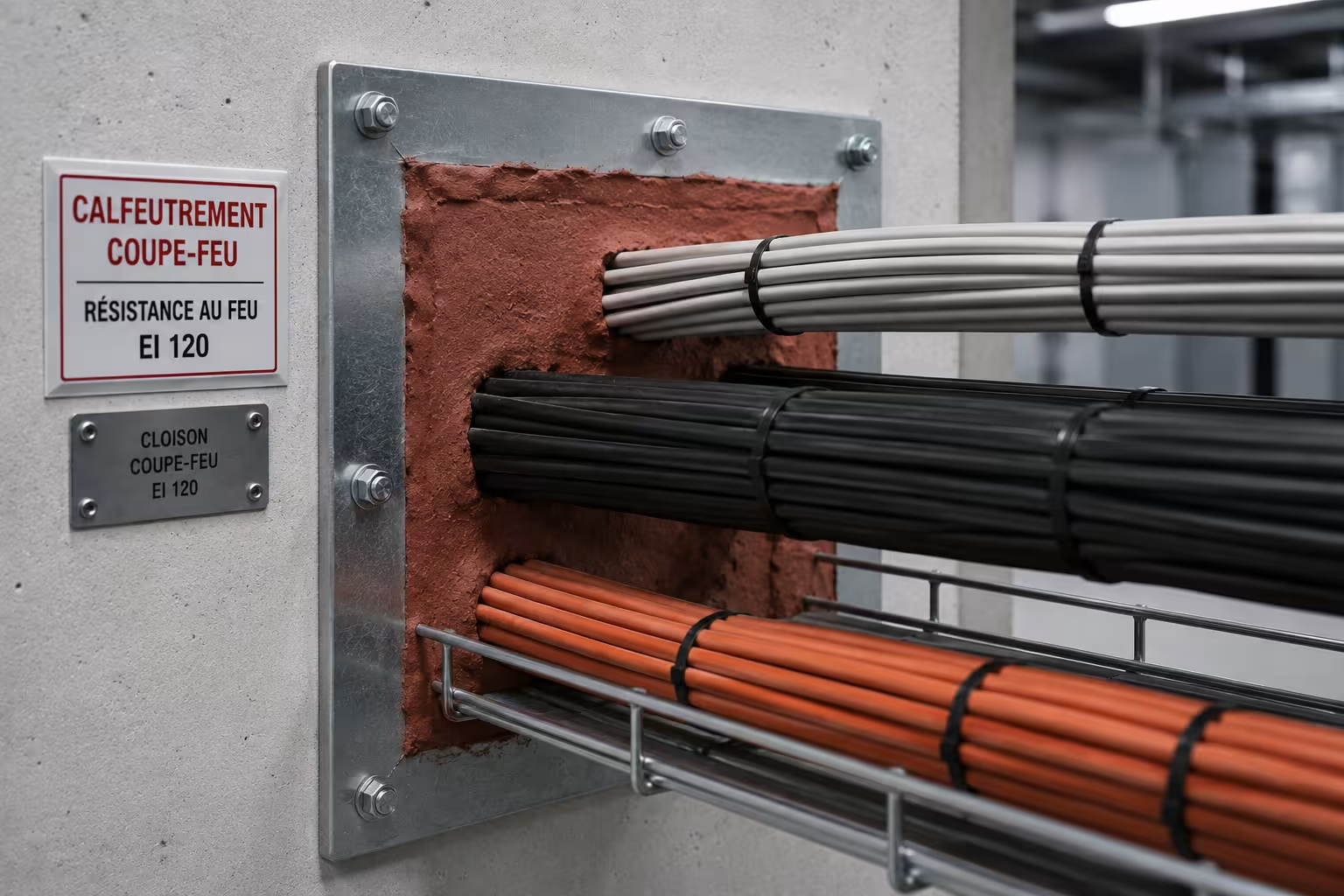
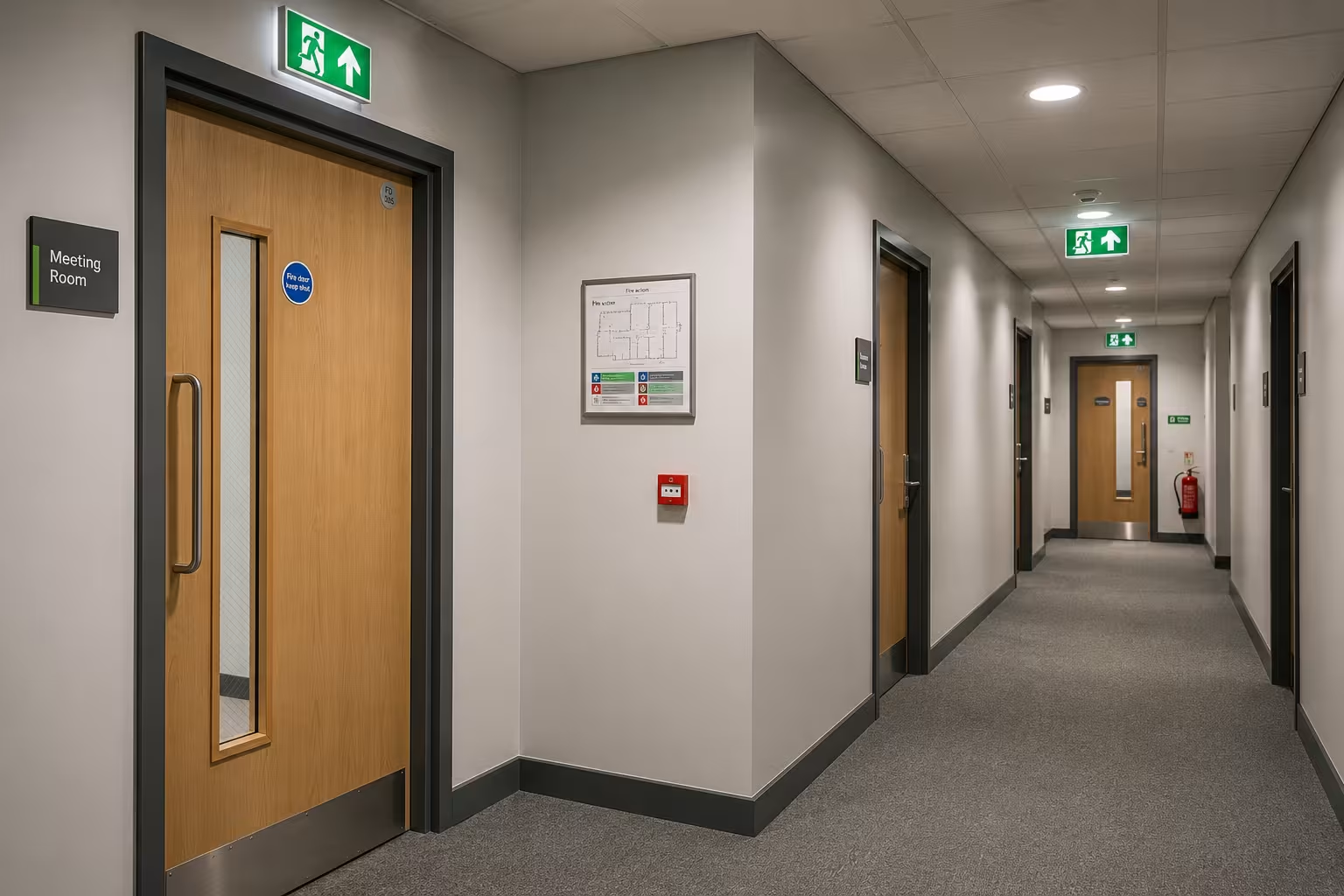
fire-resistant walls and doors, together with careful sealing of cable penetrations, to prevent a localised fire from spreading to the rest of the site.

2 Preventive maintenance

the best system is worthless without regular maintenance. Maintenance contracts and mandatory periodic testing ensure that equipment remains operational when it is needed.

3 Emergency response plan and staff training

knowing how to react during the first few minutes can often make the difference between a controlled incident and a disaster.

Calfeutrement coupe-feu.png
Porte coupe feu.png

These three points form a genuine checklist that should not be overlooked: they determine the actual effectiveness of the entire fire safety system, well beyond the performance of the equipment installed.

Conclusion: make fire safety a pillar of your digital resilience

Fire safety in a data centre is never about a single system. It is a chain: prevention, early detection, appropriate suppression and rigorous maintenance. Every link matters, and it is the strength of the whole chain that truly protects your data and your business.

Given the scale of the potential consequences of a fire, this type of protection should be considered an investment, rather than simply another expense.

Is your data centre protected in proportion to its value? Our experts are available to carry out a complete audit and recommend the solution best suited to your requirements. Contact SCUTUM today.

Opératrice et opérateur dans un centre de télésurveillance APSAD P5

FAQ: frequently asked questions about fire safety in data centres

What is the best fire suppression solution for a data centre?

There is no single answer: the choice depends on the size of the room, the budget and the criticality of the equipment being protected. Inert gas and Novec 1230 remain standard solutions for protecting server racks, while water mist is particularly relevant for large volumes or areas with specific risks, such as batteries. The right solution is always the one that results from a tailored risk assessment.

Is water completely prohibited in a data centre?

Traditional sprinklers should be avoided above servers because of the damage they can cause. High-pressure water mist is, however, an exception: it uses around 90% less water than a conventional sprinkler, such a small quantity that it evaporates quickly, causing little or no damage.

Is BS 5839-1 mandatory?

BS 5839-1 is a British Standard, not legislation in itself. Its application should be considered alongside the legal requirements that apply to the premises, including the Regulatory Reform (Fire Safety) Order 2005 in England and Wales. It is nevertheless a key technical reference for the design, installation, commissioning and maintenance of fire detection and alarm systems.

How long does it take to install a fire protection system?

This varies considerably: from a few days for a small room to several weeks for a large data centre. The determining factors are the technology selected (pipework for a gas suppression system), the need to carry out work outside production hours and the overall complexity of the site.

Is a gas suppression system dangerous for staff?

These systems are designed to remain safe: an alarm followed by a time delay allows evacuation before discharge. Inert gases reduce the oxygen concentration, but to a level that remains breathable for a short period. Inhibitory gases are also safe at the concentrations used.

Why is early detection (HSSD/VESDA) so important?

It identifies the early signs of a fire and particles associated with overheating long before visible smoke or flames appear. This provides valuable time for human intervention, such as disconnecting a faulty power supply, before automatic suppression becomes necessary. This is often what prevents a service interruption.

What is the lifespan of a fire protection system?

Equipment, including detectors and nozzles, has an average lifespan of 10 to 15 years. Gas cylinders and containers, meanwhile, must undergo periodic inspection and testing, generally every 10 years. Rigorous maintenance remains the key to the longevity and reliability of the entire system.

What budget should be allowed for fire protection in a data centre?

The cost can range from a few thousand pounds for a small room to several hundred thousand pounds for a large site. It should always be considered in relation to the value of the protected assets, both equipment and data, as well as the actual cost of business downtime. Viewed from this perspective, it is an investment in business resilience rather than simply an expense.