Submitted by Joe Semaan on
Contrôle du système

Sécurité incendie

published on 01/10/2026

Fire Safety Systems: Choosing the Right Solution for Your Business

Written by Guillaume Brizot

Protecting Your Business Through Effective Fire Safety

Fire can have serious consequences for any business, putting lives at risk, damaging property and disrupting operations. Beyond the immediate impact, businesses may face significant financial losses, damaged equipment, interrupted services and lengthy recovery periods.

Effective fire safety is therefore essential, not only for meeting legal responsibilities but also for protecting employees, visitors, premises and business continuity.

From fire detection and alarm systems to emergency lighting and fire suppression, selecting appropriate fire safety measures requires careful consideration of the building, its occupants and the risks associated with its use.

This guide explores the key components of commercial fire safety systems, relevant UK regulations and the factors businesses should consider when selecting suitable solutions. Whether managing a small office, a retail premises or a large industrial facility, understanding your fire safety requirements is an important first step towards creating a safer working environment.

Pictogramme utilisateur

Fabien, Sales Representative, Scutum Incendie

“A fire gives no warning. Every week, we meet business leaders who thought they were protected because they were ‘compliant’. The real question is not whether a regulatory box has been ticked, but whether your business will still be able to operate the day after a fire. That is the question we ask every one of our clients.”

Understanding UK Fire Safety Regulations

Businesses have legal responsibilities to protect people from fire, although the specific requirements vary according to the location, nature and use of their premises.

Fire safety legislation differs across the UK:

  • England and Wales: The Regulatory Reform (Fire Safety) Order 2005 establishes the principal fire safety duties for most non-domestic premises.
  • Scotland: The Fire (Scotland) Act 2005 and Fire Safety (Scotland) Regulations 2006 set out fire safety responsibilities for most non-domestic premises.
  • Northern Ireland: The Fire and Rescue Services (Northern Ireland) Order 2006 and Fire Safety Regulations (Northern Ireland) 2010 establish the relevant fire safety framework.

Under the applicable legislation, those responsible for fire safety must assess fire risks, implement appropriate precautions and ensure suitable arrangements are in place to protect people in the event of a fire.

The measures required depend on several factors, including the building's layout, occupancy, activities, potential fire hazards and evacuation arrangements. Premises accommodating members of the public, vulnerable individuals or people unfamiliar with the building may require additional consideration.

A suitable fire risk assessment is central to determining the appropriate precautions. These may include fire detection and alarm systems, emergency lighting, escape routes, firefighting equipment, staff training and emergency procedures.

Beyond meeting legal responsibilities, effective fire safety planning can help businesses protect property, minimise disruption and support long-term operational resilience.

Three Essential Fire Safety Responsibilities

1 Ensure employees receive appropriate fire safety training and appoint competent individuals to assist with fire safety arrangements, including evacuation procedures and the use of firefighting equipment where appropriate.
2 Ensure suitable fire detection and alarm systems and appropriate firefighting equipment are provided, regularly inspected and maintained in accordance with applicable requirements.
3 Provide and maintain appropriate firefighting equipment and fire alarms.

The components of a fire safety system

Understanding the Key Components of a Fire Safety System

A fire safety system brings together technologies designed to detect potential fires, alert building occupants and support measures to reduce the risk of fire and smoke spreading.

These systems typically involve three key elements:

  • Fire detection: Smoke detectors, heat detectors and manual call points help identify potential fires and enable occupants to raise the alarm. The type and positioning of detection devices depend on the building's layout, use and fire risk assessment.
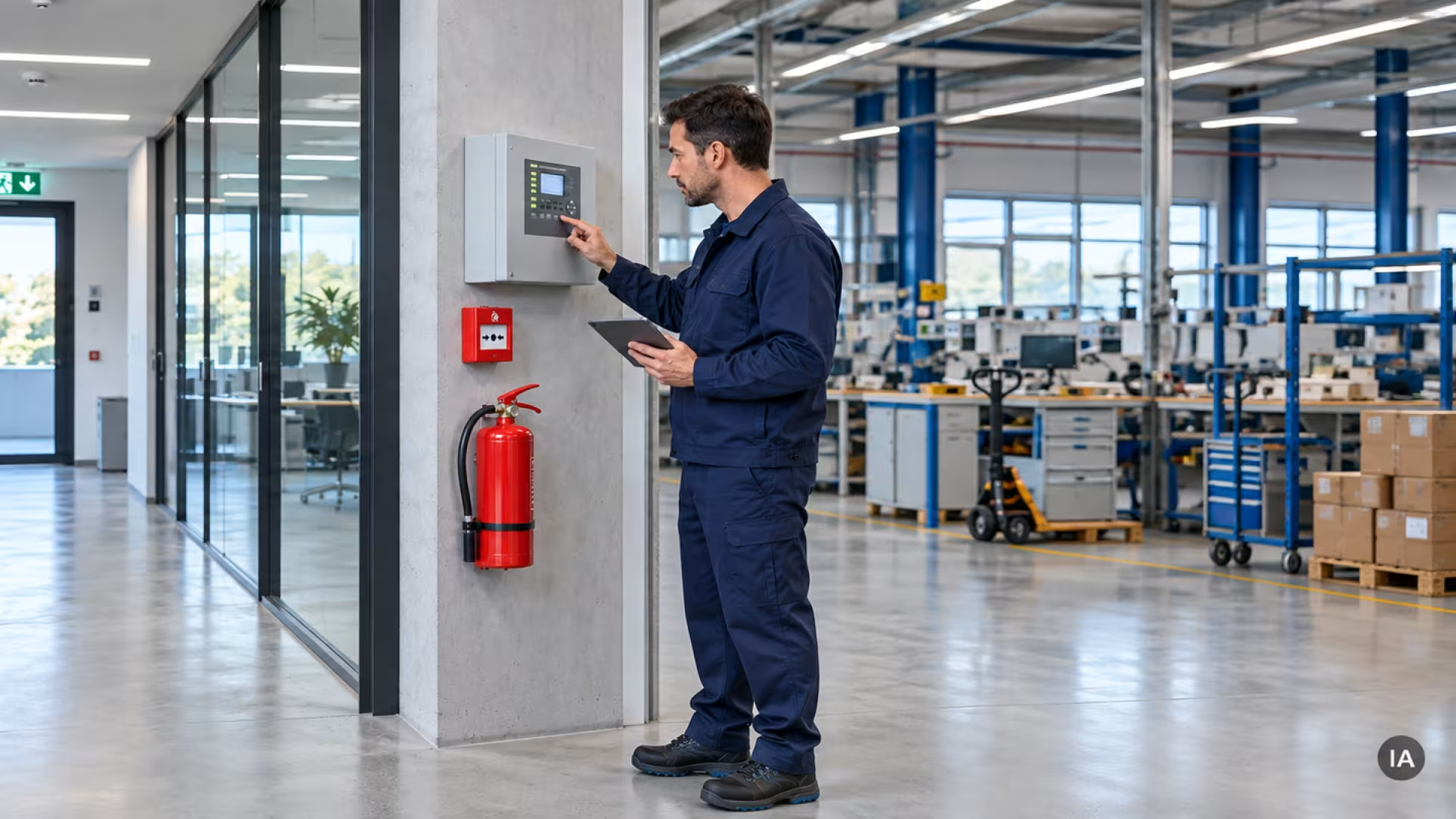
  • Fire alarm control equipment: The fire alarm control panel receives and processes signals from detection devices and manual call points. Depending on the system's design, it can activate audible and visual alarms and initiate other connected fire safety functions.
  • Alarm and fire protection measures: Sounders and visual alarm devices warn occupants of a potential fire, while other systems may help limit its spread. These can include fire doors, smoke control systems and, where appropriate, automatic fire suppression equipment.

Together, these elements support early fire detection, effective evacuation and a coordinated response to fire-related emergencies.

Pictogramme utilisateur

Pierre, Fire Safety Systems Technician, Scutum Incendie

“A fire safety system is a chain: detect, analyse, act. If a single link fails (a dirty detector, a badly programmed panel, a fire door blocked by a cardboard box), the whole system loses its effectiveness. Our role is to design that chain from end to end and to check that every component responds as intended on the day it is needed.”

Choosing the Right Fire Safety System for Your Premises


The fire safety requirements of a business depend on several factors, including the size and layout of its premises, the number and needs of occupants, the activities undertaken and the presence of any particular fire hazards.

A small workshop or storage facility may require different fire protection measures from a large office building, while complex industrial environments may need more specialised detection and suppression solutions.

The following examples illustrate how fire safety requirements can vary across different business environments. However, the appropriate measures should always be determined through a suitable and sufficient fire risk assessment, taking account of applicable regulations and relevant British Standards.

Fire Safety for Small Businesses and Offices

Smaller businesses operating from relatively simple premises may have straightforward fire safety requirements, but appropriate protection remains essential.

A suitable fire risk assessment should identify the measures needed to protect employees, visitors and the premises. Depending on the building's layout, occupancy and activities, these may include:

  • Fire detection and alarm systems: Appropriate arrangements for detecting a fire and warning occupants, ranging from simple alarm systems to more comprehensive automatic detection where required.
  • Firefighting equipment: Suitable fire extinguishers, selected and positioned according to the risks identified.
  • Emergency lighting and escape routes: Clearly identified escape routes, appropriate signage and emergency lighting where necessary to support safe evacuation.
  • Staff training and emergency procedures: Clear instructions and appropriate training to ensure employees understand how to respond in the event of a fire.

Regular inspections and maintenance are also important, particularly where electrical equipment, combustible materials or storage arrangements present potential fire hazards.

For smaller organisations, the priority is to implement practical, proportionate fire safety measures that reflect the specific risks of the premises and can be maintained effectively over time.

Fire Safety for Medium-Sized Businesses and Mixed-Use Premises

Businesses operating across multiple floors or combining offices, workshops, plant rooms and storage areas may require more comprehensive fire safety arrangements to address the different risks within their premises.

Depending on the findings of the fire risk assessment, appropriate measures may include:

  • Fire detection and alarm systems: Conventional or addressable fire alarm systems can provide appropriate detection and warning arrangements, with addressable systems offering more precise identification of activated devices.
  • Automatic fire detection: Smoke, heat or specialist detectors may be required in particular areas, depending on the activities undertaken, potential fire hazards and evacuation strategy.
  • Additional fire protection measures: Depending on the building's design and fire safety strategy, measures such as fire compartmentation, emergency lighting and smoke control systems may be necessary to support safe evacuation and limit the spread of fire and smoke.
  • Inspection and maintenance: Regular testing, servicing and maintenance by competent personnel help ensure fire safety systems remain operational and continue to meet the needs of the premises.

As buildings become more complex, integrating appropriate fire detection, alarm and protection measures can help businesses manage fire risks effectively while supporting safe and efficient operations.

Fire Safety for Large Industrial and Multi-Site Operations

Large industrial facilities, complex commercial buildings and organisations operating across multiple locations often require a tailored approach to fire safety. Different buildings, activities and operational environments can present distinct fire risks, making a comprehensive fire risk assessment essential when determining appropriate protection measures.

Depending on the site's requirements, fire safety solutions may include:

  • Advanced fire detection and alarm systems: Addressable fire alarm systems and specialist detection technologies can provide comprehensive protection across complex premises, helping identify potential incidents and support effective evacuation procedures.
  • Integrated fire protection systems: Fire alarm systems may be connected to other building safety equipment, including fire doors, ventilation controls and smoke control systems, enabling coordinated operation in accordance with the building's fire safety strategy.
  • Automatic fire suppression: Sprinkler systems, water mist and specialist suppression technologies may be appropriate for certain environments, including industrial facilities, data centres and areas containing critical equipment. The most suitable solution depends on the specific fire risks and operational requirements.
  • Remote fire alarm monitoring: Where appropriate, connecting fire alarm systems to a professional monitoring service can enable alarm activations to be assessed and escalated in accordance with agreed procedures, including outside normal working hours.
  • Ongoing maintenance and emergency planning: Regular testing, inspection and maintenance, supported by clearly defined emergency procedures and staff training, help ensure fire safety arrangements remain effective as operational requirements evolve.

For organisations managing complex or multiple premises, a coordinated fire safety strategy can help maintain consistent standards, support regulatory compliance and strengthen protection for people, property and business operations.

Sécurité incendie selon la taille de entreprise
Pictogramme utilisateur

Fabien, Sales Representative, Scutum Incendie

“On an industrial site, we don’t just protect a building: we protect a production line, stock and commitments to customers. Our health and safety contacts expect a comprehensive view: an audit by risk zone, systems that communicate with each other and monitoring that can trigger a response at any hour. This approach is what turns a regulatory constraint into a genuine risk management tool.”

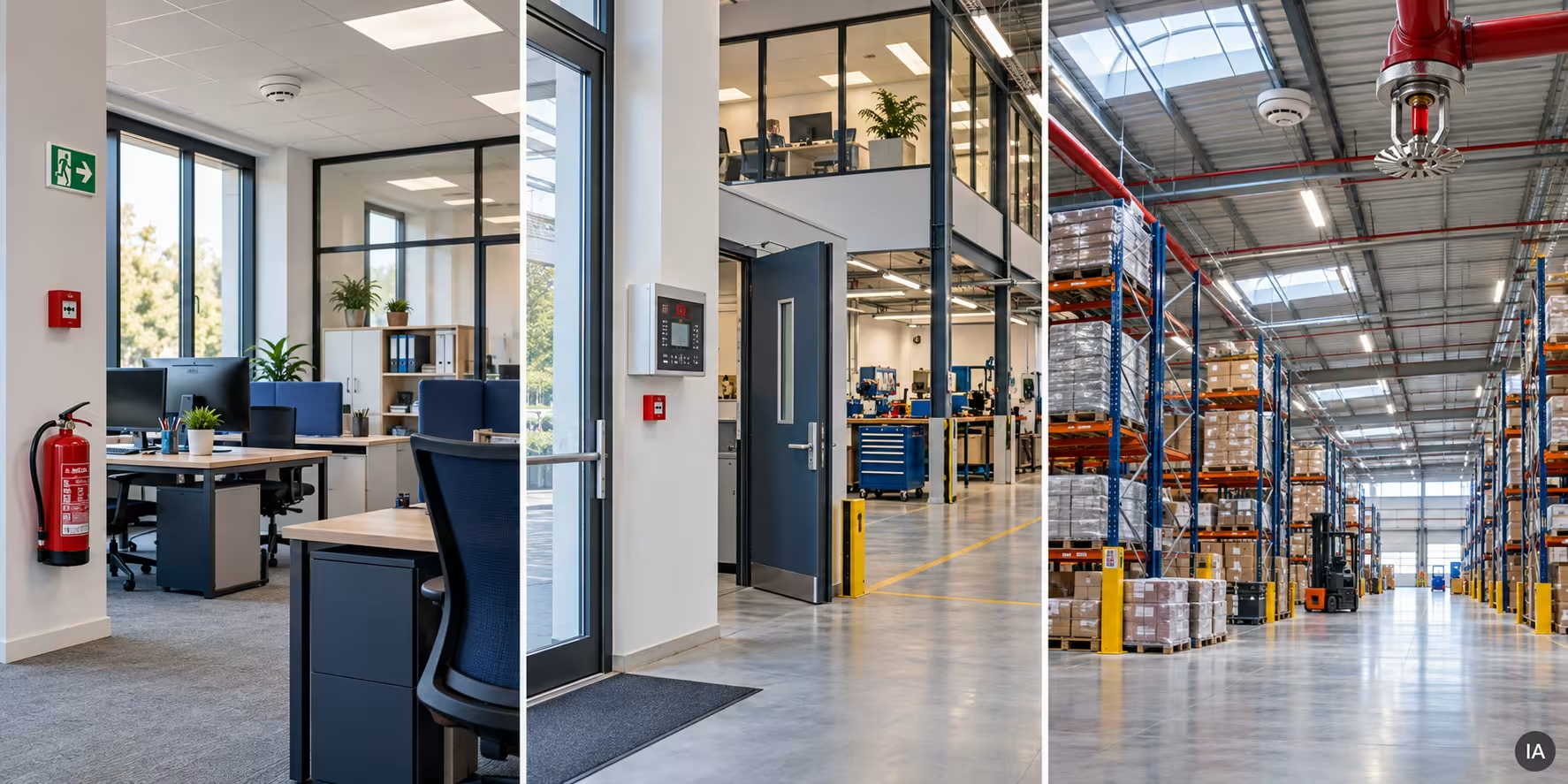
Overview: what level of protection for your size?

  Micro-businesses / small organisations (< 20 employees) SMEs (20 to 250 employees) Mid-sized and large companies (> 250 employees)
Main obligation Compliance with fire safety legislation to protect people. More complex risk management (storage, plant rooms) and greater compliance requirements. Overall risk management, business continuity and specific regulations (premises open to the public, COMAH major hazard sites).
Recommended system type Often a simple alarm (manual call point and sounder), or no centralised system if not required. System with a panel managing manual call points and sometimes a few detectors. The most comprehensive system, covering all areas through automatic detection and controlling the other systems.
Key equipment Fire extinguishers, self-contained emergency lighting units, displayed safety instructions. Fire alarm panel, automatic detectors in high-risk areas, smoke control system. Full automatic detection, automatic suppression, control of compartmentation, 24/7 monitoring.
Maintenance Annual servicing of extinguishers by a competent person (government guidance) and simple maintenance of emergency lighting. Contract recommended. Legal duty to keep equipment maintained; government guidance recommends six-monthly servicing of fire alarm systems. Maintenance contract with a third-party certificated provider (e.g. BAFE). Comprehensive maintenance contract with on-call service and regular audits.

Other Considerations When Choosing a Fire Safety System

Beyond the size and layout of a building, several factors influence the type and level of fire protection required.

  • Business activities and fire risks: Different industries present different hazards. A chemical processing facility, for example, will have significantly different fire safety requirements from a typical office environment.
  • Building design and construction: The building's height, layout, construction materials and fire compartmentation can influence the selection and design of appropriate fire detection and protection systems.
  • Critical equipment and business continuity: Premises housing essential equipment, sensitive data or valuable stock may benefit from additional fire protection measures to help minimise damage and operational disruption.
  • Occupancy and evacuation requirements: The number of occupants, their familiarity with the premises and any additional assistance they may need during evacuation should be considered when determining suitable fire safety arrangements.

A suitable and sufficient fire risk assessment should bring these factors together, helping businesses identify appropriate fire safety measures that reflect their operational requirements and legal responsibilities.

Maintenance & Training

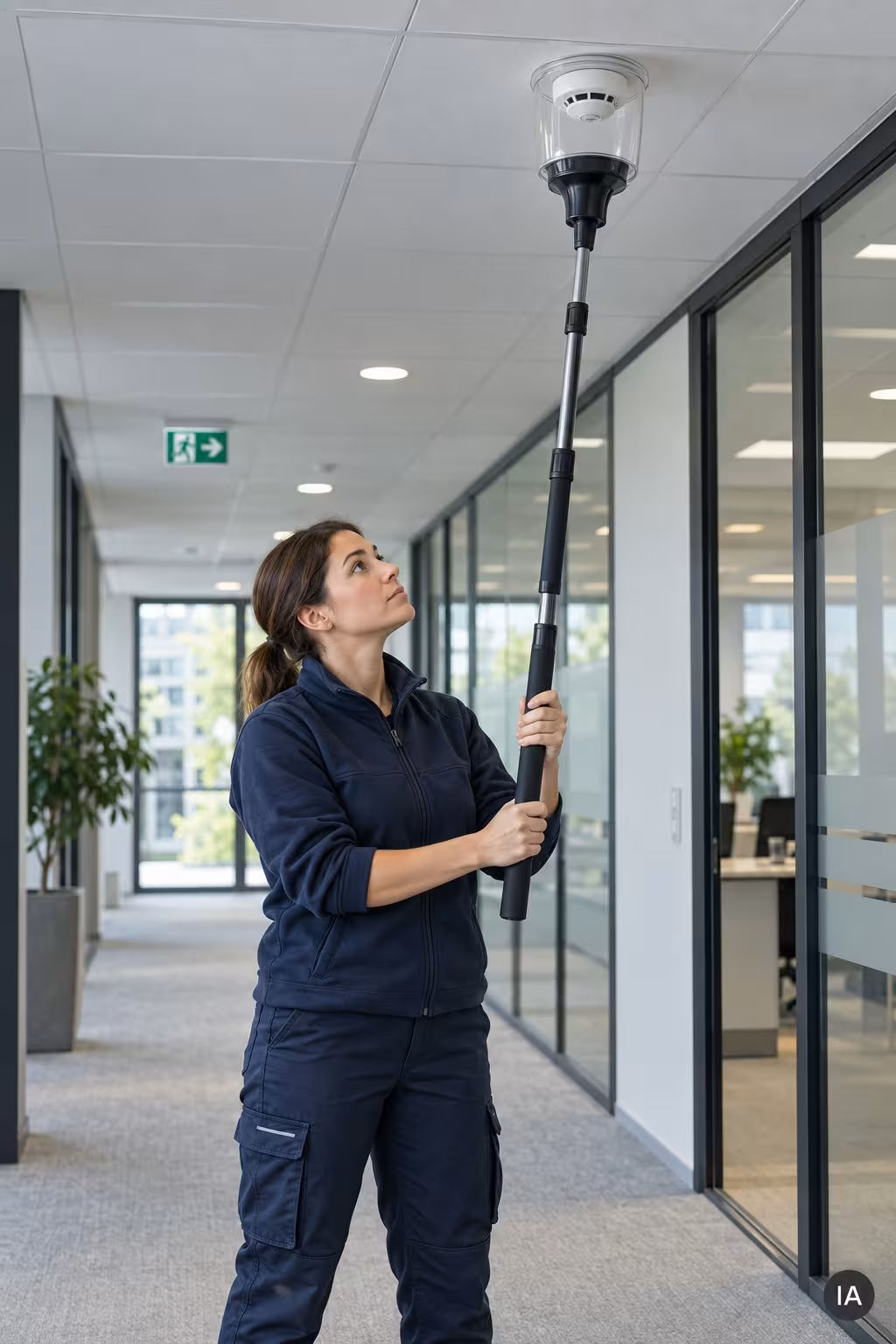
Even the most advanced fire safety systems require regular inspection, testing and maintenance to remain effective. UK fire safety legislation requires appropriate arrangements to ensure fire safety equipment and systems are maintained in an efficient state, in working order and in good repair.

Working with a competent fire safety maintenance provider, including one holding relevant third-party certification where appropriate, can help businesses meet their responsibilities, identify potential faults and maintain the reliability of their equipment.

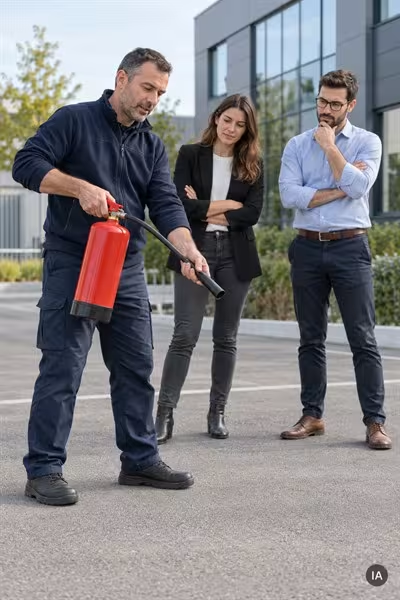
Equally important is ensuring that employees understand their roles in the event of a fire. Regular fire drills, appropriate staff training and clearly defined evacuation procedures help people respond safely and effectively. Designated fire marshals or wardens, where appropriate, can support these arrangements, while employees expected to use firefighting equipment should receive suitable training.

By combining ongoing system maintenance with effective staff preparation, businesses can strengthen fire safety arrangements and support a safer working environment.

Formation extincteur
Maintenance détecteur incendie
Pictogramme utilisateur

Sébastien, Branch Manager, Scutum Incendie

“During a maintenance visit to a logistics client, we found that several detectors in a warehouse had been obstructed by new racking. On paper, the site was protected; in reality, an entire area was no longer being monitored. We repositioned the detection and trained the team on site in a single day. That is the whole point of an ongoing maintenance contract: installations evolve with the business, and protection has to keep pace.”

Conclusion: Investing in Effective Fire Safety

Choosing the right fire safety system is about more than meeting regulatory requirements. It's about protecting people, safeguarding premises and supporting business continuity.

From small commercial premises to complex industrial facilities, effective fire protection requires a tailored approach that considers the building, its occupants, operational activities and specific fire risks.

At Scutum, we understand that every business has different fire safety requirements. Our experienced teams work with organisations to identify appropriate fire detection, alarm and protection solutions, helping them make informed decisions about their fire safety arrangements.

Looking to improve fire safety at your premises? Contact Scutum to discuss your requirements and explore the solutions available for your business.

FAQ: common questions about choosing a fire safety system

Can I install a fire safety system myself?

For basic equipment, such as fire extinguishers or standalone smoke alarms, yes, in most cases. However, as soon as you are dealing with a complete system with a fire alarm panel, installation by a competent, certificated professional is essential. It is the only way to guarantee that your installation complies and that it works properly on the day it actually has to go off.

What is a business owner’s liability for failing to meet fire safety obligations?

A business owner can be held liable in both civil and criminal law. In the event of an accident, if a failure is established (lack of maintenance, lack of training), criminal liability may follow: failing to comply with fire safety duties is an offence where it puts people at risk of death or serious injury (for example under the Fire Safety Order in England and Wales or the Fire (Scotland) Act 2005), and a death may lead to prosecution for a homicide offence, such as gross negligence manslaughter in England and Wales. On the insurance side, failing to meet contractual obligations, which are often aligned with regulations, can also lead the insurer to refuse to pay out for the damage.