
Submitted by editor on
Centre de télésurveillance certifié APSAD P5 de Scutum Premium Services
published on 09/01/2026

Isolated Worker Definition

Written by editor

A worker is considered to be a lone worker when they are working alone, out of sight or earshot of colleagues or assistance, without immediate access to assistance in the event of an accident, illness, emergency or other unforeseen incident.

According to the Health and Safety Executive (HSE), a lone worker is someone who works by themselves without close or direct supervision.

Lone workers can be found across a wide range of industries and roles, including engineers, healthcare professionals, security personnel, retail staff, property managers and employees who regularly travel or work away from colleagues.

Working alone does not necessarily mean working in a hazardous environment. However, employers have a duty to assess the risks associated with lone working and implement appropriate measures to ensure employees can obtain assistance quickly in the event of an accident, illness or emergency.
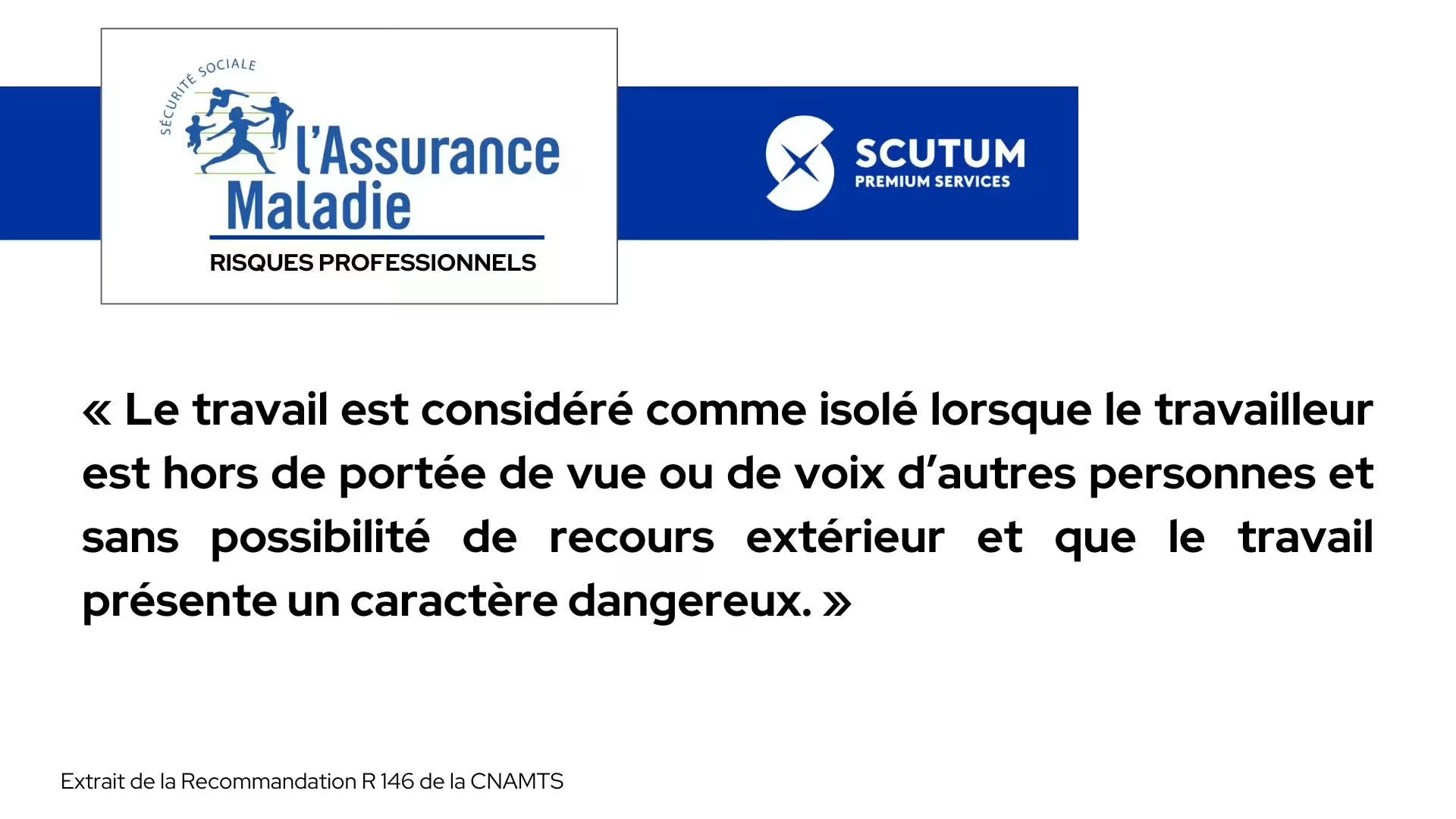
Définition travailleur isolé de Scutum Premium Services

Isolated workers: what are the issues?

Lone working: The Risks

Lone working is not a risk in itself. However, employees who work alone may be more vulnerable if an accident, illness or emergency occurs, particularly where assistance is not immediately available.

Working without close or direct supervision can make it more difficult to identify an incident quickly and ensure that appropriate help is provided. For this reason, employers should ensure that lone workers understand the procedures to follow in the event of an emergency and know how to raise the alarm if assistance is required.

Employers also have a duty to assess the risks associated with lone working and implement appropriate measures to protect employees and support their safety and well-being.

Lone Working Laws

Employers are responsible for ensuring the safety and wellbeing of their employees at work. While UK legislation does not provide a specific definition of a lone worker, The Health & Safety Executive does and it is clear on the need to assess and manage the risks associated with lone working.

Employers must identify the risks faced by lone workers and implement appropriate measures to ensure that assistance can be provided quickly in the event of an emergency.

What Are the Risks?

Lone working can increase the risks faced by employees who carry out their duties without immediate access to assistance. In the event of an accident, illness or other incident, it may be more difficult to raise the alarm or obtain help quickly.

For this reason, it is important to identify the specific risks associated with lone working and carry out an appropriate risk assessment.

Illness or medical emergency: An employee may become unwell while working alone, with no one immediately available to provide assistance.

Accidents: Engineers, technicians and maintenance personnel may face increased risks when working at height, using equipment or operating in isolated locations.

Aggression: Employees working alone, travelling between sites or operating in low-traffic areas may be exposed to threatening behaviour or physical assault.

Verbal abuse and challenging behaviour:  Customer-facing staff and public-facing employees may encounter aggressive or confrontational individuals while working alone.

Who Qualifies as a Lone Worker?

A lone worker is not necessarily someone working in a high-risk or hazardous environment. Any employee who works alone, without close or direct supervision, may be considered a lone worker.

Employers should identify employees who regularly work in isolation, out of sight or earshot of colleagues, or in situations where immediate assistance may not be available.

While lone working can occur in almost any sector, certain industries are more commonly associated with lone working risks, including engineering and maintenance, manufacturing and logistics, healthcare and social care, local authorities, and retail environments.

How to Protect a Lone Worker?

A lone worker is not necessarily someone working in a high-risk or hazardous environment. Any employee who works alone, without close or direct supervision, may be considered a lone worker.

Employers should identify employees who regularly work alone, out of sight or earshot of colleagues, or in situations where immediate assistance may not be available.

While lone working can occur in almost any sector, it is particularly common in engineering and maintenance, manufacturing and logistics, healthcare and social care, local authorities, and retail environments.

Choosing the Right Lone Worker System

There are various types of lone worker alarm systems available, and the most appropriate solution will depend on the risks identified and the working environment.

When selecting a device, it is important to ensure that it supports the employee's role without disrupting their day-to-day activities or comfort. For example, where there is a risk of aggression or assault, a device that allows an alarm to be triggered discreetly may be the most suitable option.