

Submitted by editor on
Géolocalisation Travailleur Isolé
published on 05/01/2026

Geolocation for lone workers: Which solution to choose?

The geolocation mode is very important when you choose a lone worker alert system. Why is this? An ITAD that locates via GPS, for example, will show its limitations in certain indoor areas. However, emergency services need a precise location in order to intervene quickly. So what type of geolocation system should you choose? We tell you all about it.

geolocalisation-travailleur-isole-interieur-exterieur

Geolocation of lone workers: where to start?

Before choosing any solution to protect a lone worker, you need to identify their working environment and the risks they face. Does he work indoors, outdoors, at height, underground? Do they have to travel off-site? Is their workstation easy to find? It's important to ask yourself all these questions in order to choose the right solution.

On a fairly large site, a logistics warehouse for example, it will be difficult to have a precise location in the event of an accident. GPS geolocation often stops at the doors of the premises. Your PTI solution must therefore be able to compensate for the absence of GPS signals.
Geolocation of lone workers outdoors: what solutions?

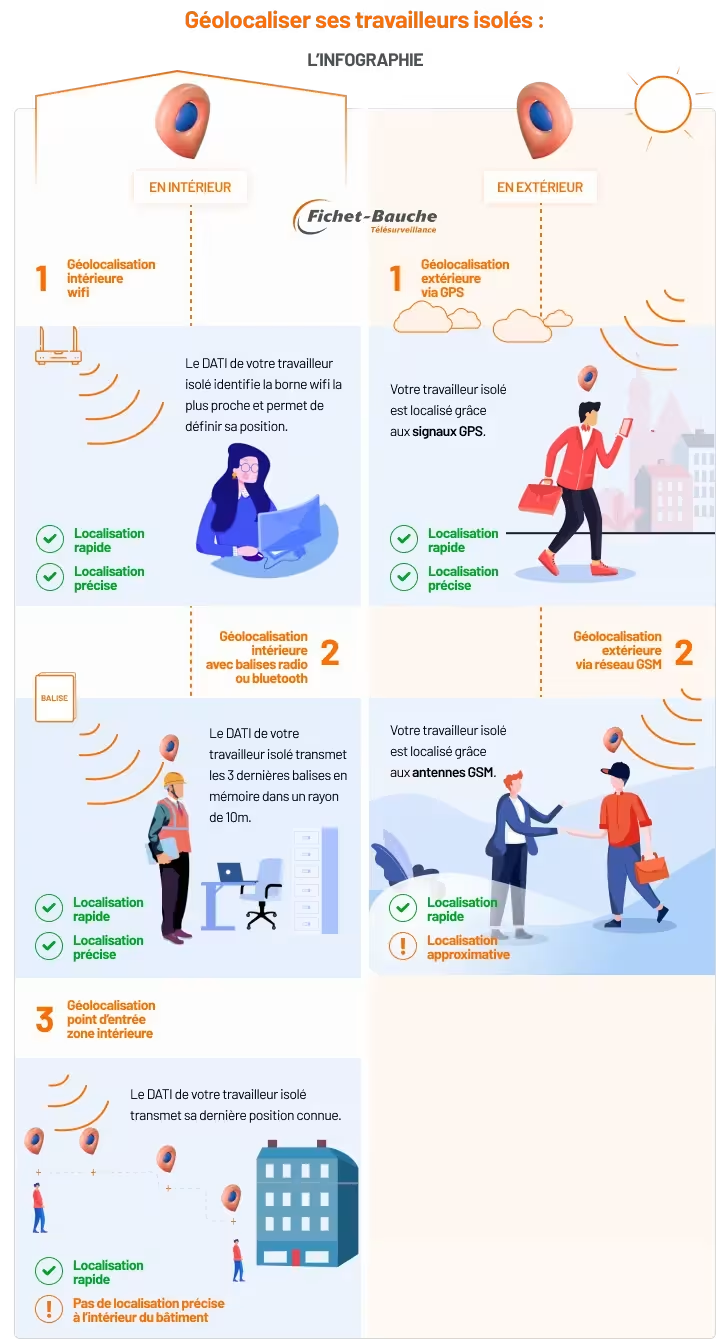
Outdoor geolocation via GPS

External geolocation via the GSM network

Most PTI-DATI devices work like mobile phones. They therefore exchange in the same way thanks to a SIM card with relay antennas. The GSM network effectively makes it possible to locate someone using the antennas in less than 5 seconds. However, this technology is not very suitable for geolocating lone workers, as it is not precise enough to provide an effective response in the event of an alarm. Your DATI therefore also needs GPS geolocation to offer an accurate position.

Geolocation for lone workers indoors: what solutions?

Indoor wifi geolocation

Using your wifi terminals is an effective solution for locating indoors. In the event of an incident, you can use a compatible DATI to identify the nearest wifi terminal in order to locate the alert. This solution eliminates the need to install specific beacons dedicated to the geolocation of DATIs.

Indoor geolocation with radio beacons or Bluetooth beacons

If wifi is not the right solution, you can opt to install geolocation beacons. Combined with your DATIs, they make up for the lack of GPS reception or wifi signal. The alert system automatically registers nearby beacons (within a 10m radius). In the event of an alert, it then transmits the last 3 beacons in memory. This gives emergency services a precise position inside the building in the event of an alarm.

Geolocation to the point of entry to the building: how does it work?

An ITP equipped only with GPS geolocation can be effective in identifying the location where the alert was triggered. Some ITDs allow their GPS position to be updated regularly and transmit the last known position with their alert. In the event of an alarm occurring inside a building with no GPS reception, it is then possible to indicate a position close to the site's entry point so that emergency services can be sent there. This solution is ideal for itinerant lone workers working on many different sites, for maintenance work for example.

geolocalisation-travailleur-isole-infographie