Submitted by editor on
Téléphones pour la protection des travailleurs isolés de la marque Scutum Premium Services
published on 09/01/2026

PTI (DATI) Phone: How It Works and a Guide to Choosing the Right Device

Written by Nawres Chelbi

A PTI phone, also known as a GSM DATI device or PTI smartphone, is a mobile phone designed to protect lone workers. Thanks to a built-in application, like other PTI-DATI devices, it can detect and report falls (loss of verticality or lack of movement), illness or medical emergencies, and assaults.

What is a PTI phone?

A PTI phone (Protection du Travailleur Isolé – lone worker protection) is a device designed to detect dangerous situations involving a lone worker and automatically trigger an alert to the appropriate emergency contacts or responders. It uses sensors such as an accelerometer, gyroscope and GPS to continuously monitor the user's condition and movements.

When an incident occurs – a fall, illness or medical emergency, loss of verticality, assault or prolonged lack of movement – the device triggers an alert, allowing emergency services, a supervisor or an alarm receiving centre to be notified quickly.

What are the two types of PTI phones?

In everyday use, there are two main categories:

GSM DATI (Dispositif d'Alarme pour Travailleur Isolé – lone worker alarm device) refers to a dedicated physical device designed exclusively to protect lone workers. Robust and self-contained, it has built-in alarm functions. It is a reference solution in industrial environments.

PTI smartphone

This solution relies on an application installed on an Android phone or iPhone. Depending on whether the application is native (pre-integrated by the manufacturer) or simply downloadable, the levels of reliability and legal responsibility can differ considerably.

Under UK health and safety legislation, employers have a duty to protect the health, safety and welfare of their employees and to assess and manage workplace risks. This includes situations where employees work alone. PTI/DATI solutions can provide an appropriate technical response where lone working presents specific risks.

PTI smartphone with a native application

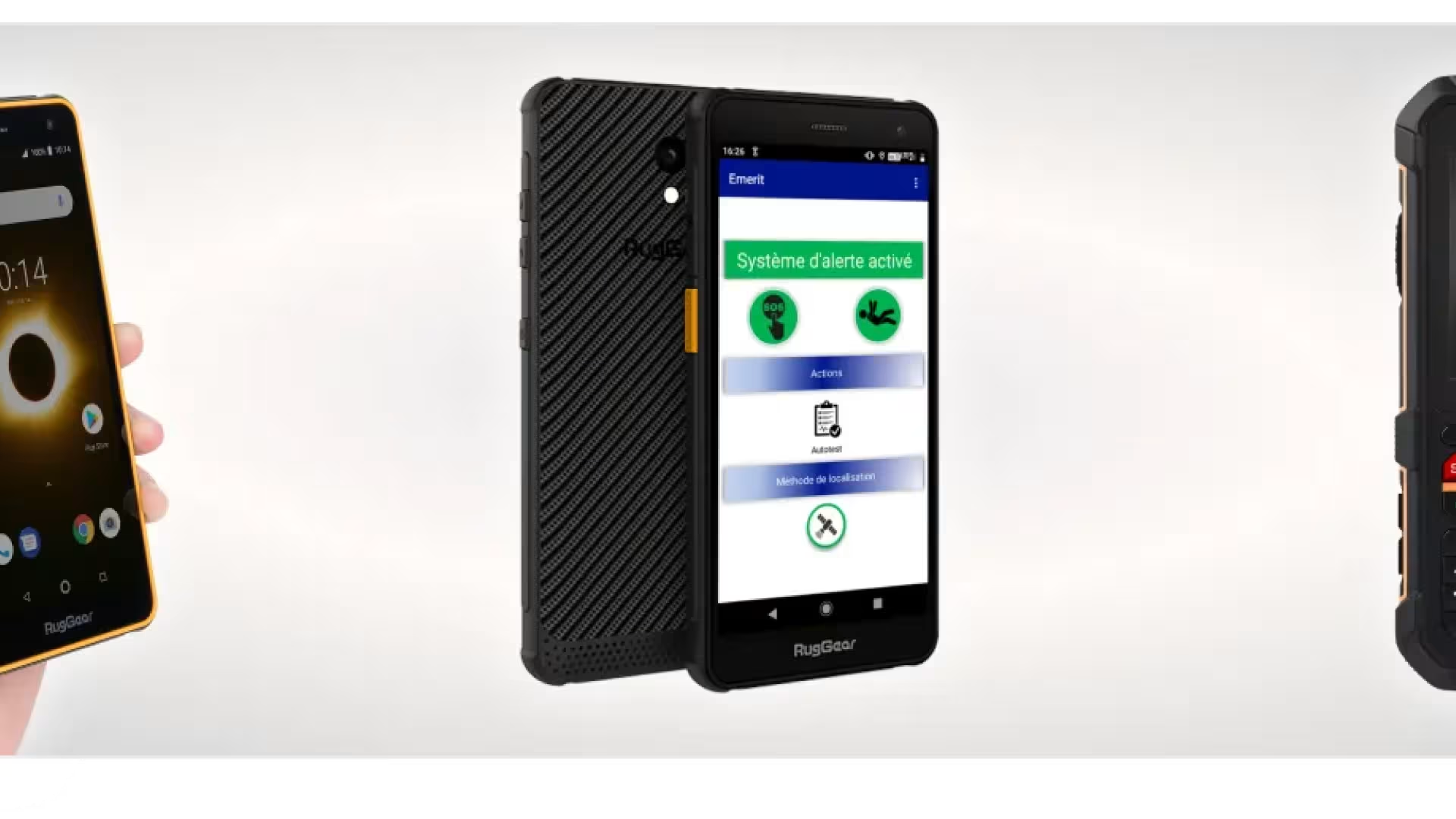
Some manufacturers offer smartphones in which the PTI application is directly integrated into the device's firmware. It cannot be uninstalled, disabled or bypassed by the user: it is an integral part of the device, just like the camera or GPS module.

For employers, this is an essential safeguard: protection remains continuously active and does not depend on the employee's behaviour. This type of device meets the strictest reliability requirements, particularly in high-risk sectors such as industry, construction, maintenance, security and night work.

Key benefits:

  • Continuous active protection
  • No risk of accidental or deliberate deactivation
  • Reduced risk of human error
  • Centralised equipment management
  • Evidence that an appropriate protective measure was provided by the employer in the event of an accident

This is now the preferred choice in many high-risk environments, including industry, energy, security, technical maintenance and night work.

Another often overlooked advantage is user acceptance. Employees use a conventional smartphone with a familiar interface while benefiting from PTI functions running in the background.

PTI application downloaded onto a personal smartphone

Some companies choose to install a PTI application via the App Store or Google Play on an employee's personal phone. Rapid deployment, limited investment in hardware and no need to purchase additional devices make the benefits immediately apparent.

However, this solution has genuine limitations that are often underestimated. An application can be uninstalled or disabled, deprived of the permissions it needs, disrupted by a system update or simply closed in the background to save battery life.

If the system were no longer operational when an accident occurred, the employer could face significant consequences. The short-term saving could prove very costly in the event of an incident.

This is why health and safety managers generally favour professional, controlled solutions, particularly where occupational risks are high.

How does a PTI phone work in an emergency?

Alarm activation methods

A PTI phone can trigger an alert in several ways, depending on the level of risk and the scenarios identified during the risk assessment.

Manual activation

The employee deliberately presses a dedicated SOS button.

Example: a security officer facing an assault can trigger a silent alert without attracting the attacker's attention.

Man-down / inactivity detection

The system detects a prolonged lack of movement for a configurable period of time.

This mode is particularly useful for:

  • night patrols;
  • isolated workstations;
  • technicians working alone.

Example: a maintenance technician becomes unconscious following a medical emergency without experiencing a violent fall. The absence of movement for 45 seconds automatically triggers an alert.

Loss of verticality detection (man-down)

The phone detects an abnormal or tilted position that could indicate a fall or medical emergency.

This function is widely used in:

  • industry;
  • construction;
  • technical maintenance.

Example: an electrician collapses following a cardiac event in a technical room. The device detects the abnormal horizontal position and triggers an alert within a few seconds.

Impact or severe fall detection

Some models have sensors capable of identifying a significant impact.

This function makes it possible to detect more quickly:

  • a fall from a ladder;
  • a construction site accident;
  • a sudden medical emergency.

Example: a roofer slips from a roof and falls several metres. The accelerometer detects the sudden deceleration on impact and immediately sends an alert together with the GPS location.

Loss of network or connection

Some devices automatically raise an alert in the event of prolonged loss of network or GPS connectivity.

This is particularly important in remote or technical areas.

Example: an operative working in a basement loses network coverage for more than five minutes. The system automatically alerts the supervisor, who can send someone to check the situation.

"I'm OK" check-in

The employee must periodically confirm that they are safe via a check-in.

If confirmation is not received within the allotted time, an alert is triggered.

Example: a delivery driver carrying out night-time rounds must confirm their presence every 30 minutes. At 2 a.m., they fail to respond to two consecutive reminders, so an alert is sent to the alarm receiving centre.

Pictogramme utilisateur

Sylvain Parienti, Sales Engineer at Scutum Premium Services

The best PTI device is the one that employees are willing to wear and use correctly. Equipment imposed without explanation or training can lead to resistance. Involving field teams in the choice of equipment increases the likelihood that protection will actually be active when it matters most.

The alert process

Once triggered, the alert follows a structured process involving several stages:

1. Who receives the alert?
Internal contacts (manager, security manager or colleague on duty) or an APSAD P5-certified alarm receiving centre operating 24/7.

2. How is the alert transmitted?
The alert is transmitted via IP, which requires a Wi-Fi or 4G connection. Depending on the configuration selected, the phone can then automatically call a predefined list of contacts and send them an SMS, or transmit the alert directly to the alarm receiving centre, which manages the response.

3. What information is transmitted?
The worker's identity, the type of alarm triggered and their GPS location, together with the date and time.

4. How is the alert managed?
An attempt is made to establish voice contact with the worker, the situation is assessed and emergency services are contacted if necessary.

In practice, the speed of response can make all the difference when dealing with a serious accident.

What features should a good PTI phone have?

  • Detection reliability: accurate sensors for inactivity and loss of verticality.
  • Geolocation: accurate (GPS, A-GPS), fast and effective, even in difficult environments, including indoors via Wi-Fi/Bluetooth where available. For companies requiring real-time tracking of lone workers, continuous lone worker geolocation is a particularly useful complement to PTI/DATI devices, helping emergency responders intervene more quickly in the event of an incident.
  • Connectivity: multi-network support, 4G, good network coverage and resilience to signal loss.
  • Audio and communication: powerful microphone and speaker for clear two-way communication in an emergency.
  • Battery life: long-lasting battery and low-battery alert.
  • Robustness and durability: IP rating for protection against water and dust, as well as impact resistance.
  • Ergonomics and simplicity: easy for workers to use, with accessible buttons.
  • Integration: ability to connect to a monitoring platform or alarm receiving centre.
  • Silent and discreet alerts: particularly useful in the event of an assault.
  • Regular testing function: to ensure that the device is working correctly.
  • Specific certifications: particularly ATEX certification where the working environment requires it.

Regulations: what are the employer's obligations?

The general duty to protect workers

Contrary to a common misconception, UK law does not explicitly require employers to provide a specific PTI phone.

However, UK health and safety legislation places a general duty on employers to protect the health, safety and welfare of their employees. The Health and Safety at Work etc. Act 1974 and the Management of Health and Safety at Work Regulations 1999 require employers to assess workplace risks and take appropriate measures to control them.

These obligations apply to all types of workplaces, not only sectors traditionally considered "high risk". An office worker travelling alone, an engineer on call or a social worker carrying out home visits may all find themselves working alone.

Where lone working creates specific risks, the employer must take appropriate organisational, technical and preventive measures. A PTI/DATI solution can be an appropriate technical measure where the risk assessment identifies the need for one.

Risk assessment: the essential starting point

Every approach should begin with a workplace risk assessment. Employers must identify situations in which workers may be working alone and assess the associated risks: falls, assault, medical emergencies, accidents involving dangerous equipment, etc.

This assessment is the basis for determining the appropriate protective measures, including a PTI/DATI solution where necessary.

Information, training and maintenance

Providing the equipment alone is not enough. Employers must:

  • Inform workers about the risks associated with lone working;
  • Train users on how to operate the device and follow emergency procedures;
  • Maintain equipment in working order through regular checks, updates and replacement of defective batteries.

Consequences of non-compliance

UK health and safety legislation places significant responsibilities on employers. If an accident occurs and appropriate risk-control measures have not been implemented, an employer may face enforcement action, civil claims and, in serious cases, criminal prosecution.

This makes it essential to properly assess lone-working risks and implement appropriate protective measures.

Pictogramme d'ampoule noir

Good to know

Simply providing a device that is not working correctly at the time of an accident does not constitute effective protection. Regular maintenance, testing and user training are essential components of an effective lone worker protection system.

In which sectors is a PTI phone particularly important?

Construction: working at height, isolated construction sites and exposure to vehicles, machinery and dangerous equipment. The risk of serious falls is particularly high.

Industry / Manufacturing: night shifts, maintenance work in isolated areas and noisy environments where a call for help may not be heard.

Maintenance: field technicians and network operatives often working alone around equipment that may be live, pressurised or otherwise hazardous.

Care services / Healthcare: home carers, community nurses and other professionals carrying out visits alone, with a potential risk of assault in certain situations.

Logistics / Transport: long-distance drivers, warehouse workers and employees working alone on night shifts.

Security / Guarding: night patrols and monitoring of large sites. Silent alerting is particularly valuable in these situations.

Retail / Hospitality: opening or closing a shop alone, or night reception staff working without colleagues nearby.

In all these situations, PTI does not replace existing safety procedures. It complements them and ensures that, in the event of human error or a sudden incident, the emergency response chain can be triggered automatically.

How do you choose a PTI phone? Key criteria

1. Assess your needs and risks

Before choosing a device, it is important to clarify the intended use. A few practical questions can provide the basis for the assessment:

  • Is lone working occasional, regular or permanent?
  • Does the work take place indoors, outdoors or both? Are there areas with no network coverage?
  • Which risks are the priority: falls, assault, medical emergencies or machinery-related accidents?
  • Is the area classified as ATEX?
  • Is the mobile network stable across the entire site?
  • Is 24/7 alarm monitoring required, or is an alert to internal contacts sufficient?

The right device will always depend on the actual level of risk identified through these criteria.

2. Choose the right type of device

Three main categories of solutions are available, each suited to different risk levels and operational requirements.

The dedicated GSM DATI device is the preferred choice for high-risk sectors subject to strict safety and compliance requirements, such as industry, construction, ATEX zones and demanding environments involving impacts, dust or moisture. Its robust hardware, independent battery and safety-focused design make it the reference solution where failure is not an option.

The smartphone with a native PTI application offers a good compromise for workers with moderate mobility requirements who nevertheless need a high level of reliability: mobile technicians, maintenance staff, on-call teams and professional services. Because the application is integrated into the firmware and cannot be uninstalled, it provides a high level of operational reliability while retaining the functionality of a conventional smartphone.

The PTI application downloaded onto a personal smartphone should only be considered for lower-risk situations and where the employer implements a rigorous monitoring procedure, including regular checks that the system is working correctly, training and control procedures. This remains the solution most exposed to technical or human failure.

When in doubt, it is better to overestimate the level of risk than underestimate it: the cost of an inadequate solution following an accident can be vastly greater than the price difference between the available options.

3. Check the actual conditions of use

Many PTI projects fail because testing is carried out in good conditions rather than in the actual working environment.

It is essential to test, in real-life conditions:

  • network coverage;
  • geolocation;
  • battery life;
  • alarm activation and transmission;
  • ergonomics when used alongside personal protective equipment (PPE).

4. Choose the right alert solution

A 24/7 alarm receiving centre is recommended for workers who regularly work alone, high-risk situations or companies without an internal team available to respond to alerts.

Alerts to internal contacts can be suitable for occasional situations or as a supplementary solution, provided that genuine availability and a rapid response can be guaranteed.

5. Calculate the total cost of ownership

The purchase price only represents part of the actual investment. To compare two solutions fairly, all costs over their lifetime should be considered:

  • SIM and connectivity costs;
  • alarm monitoring contract;
  • maintenance;
  • technical support;
  • employee training;
  • equipment replacement at the end of its service life.

These costs can vary significantly depending on the type of device, number of users and level of service selected. This is why it is generally more relevant to request a tailored quotation based on an analysis of your needs rather than relying on a generic price that does not take your specific circumstances into account.

In all cases, a device that is cheaper to purchase but lacks reliable after-sales support can quickly become more expensive than a fully integrated solution – particularly if a fault or failure occurs at a critical moment.

6. Check the supplier's reputation

Choosing the right partner is just as important as choosing the equipment itself. Questions to ask during a consultation include:

  • How long has the supplier been working in lone worker protection?
  • Does it have customer references in your sector?
  • What level of technical support does it provide?
  • Can it help your organisation implement appropriate safety measures?

Ideally, the support provided should include:

  • risk assessment;
  • device configuration;
  • employee training;
  • maintenance;
  • technical support;
  • regulatory monitoring.

A site assessment can often identify risks that are not visible during a purely theoretical assessment.

Scutum Premium Services supports organisations of all sizes in deploying PTI/DATI solutions adapted to their operational requirements and working environments.

Request a quotation from our experts
FAQ: Frequently asked questions about PTI phones

Can a standard smartphone be used as a PTI phone?

Yes, a standard smartphone can be used as a PTI phone through a dedicated application installed on Android or iOS.

Advantages:

  • Lower cost, as no additional device is required
  • Familiarity: employees use a device they already know, making adoption easier
  • Rapid deployment across a team or organisation

Limitations compared with a dedicated DATI device:

  • Lower robustness: a consumer smartphone is not designed to withstand impacts, dust or moisture in demanding professional environments
  • Limited battery life due to the combined personal and professional use of the device, unlike a DATI device whose battery is dedicated to the alert function
  • Variable application reliability: a downloadable application can be uninstalled, disabled, deprived of the necessary permissions or disrupted by a system update, unlike a native application integrated into the firmware or a dedicated DATI device

This solution therefore requires specific, reliable software and should generally be reserved for moderate-risk situations.

Is a PTI phone legally required?

No, UK law does not explicitly require employers to use a specific phone or device designated as a PTI system.

However, employers have a legal duty to protect the health and safety of their workers and to assess and control workplace risks, including risks associated with lone working.

In practical terms, if the risk assessment identifies a lone-working situation requiring additional protection, the employer must implement appropriate measures to enable an alert to be raised and assistance to be provided quickly in the event of an incident.

PTI (Protection du Travailleur Isolé – lone worker protection) is one of the most recognised and reliable technical solutions for meeting this need. Depending on the actual level of risk, other organisational measures, such as regular check-ins, the presence of another worker or call procedures, may also be appropriate.

In practice, PTI remains strongly recommended where a significant risk has been identified, as it provides alerting and geolocation capabilities that manual procedures cannot match.

What is the average price of a PTI phone?

Prices vary considerably depending on several factors, including robustness, built-in features, any ATEX certification and the monitoring method used (24/7 alarm monitoring or internal alerting).

Given this variability, there is no meaningful average price to quote. The cost depends entirely on your working environment, requirements and desired level of service.

The best approach is to request a tailored quotation based on an assessment of your actual needs.

Is a remote worker considered a lone worker?

Potentially, yes. An employee working remotely, alone at home and without anyone nearby who could provide assistance quickly, may be considered to be in a lone-working situation depending on the circumstances and the outcome of the risk assessment.

The employer should therefore take this situation into account when assessing workplace risks. If the assessment confirms a significant level of isolation, several measures may be considered:

  • a regular check-in system;
  • a call procedure or contact protocol at defined intervals;
  • a PTI device, such as an application installed on a company smartphone.

There is no universal answer: the specific risk assessment for each situation determines the most appropriate solution.

Can a PTI phone be used in an ATEX zone?

Not just any PTI phone. An ATEX zone (potentially explosive atmosphere) requires equipment specifically certified for use in such an environment.

Using a standard device in an ATEX zone could potentially create an ignition source and therefore pose a serious safety risk.

ATEX-certified PTI/DATI devices are available and have been specifically designed to meet these requirements.

For more information about solutions suitable for explosive environments, see our dedicated article on ATEX smartphones and DATI/PTI devices for explosive environments.