Submitted by editor on
Extinguishers
published on 25/03/2026

Types of Fire Extinguisher and Their Chemicals

Types of Fire Extinguisher and Their Chemicals

Different types of fire extinguishers are designed to tackle different types of fire, from everyday materials like paper and wood to electrical equipment, flammable liquids, cooking oils, and combustible metals. There are six classes of fire, each categorised by their contrasting sources of ignition and fuel. Because the sources of ignition and fuel differ, the chemicals and substances needed to successfully tackle each blaze differ too. Using the wrong extinguisher on a particular class of fire will not only be ineffective, it can actively aggravate the blaze and put lives at risk.

The six classes of fire are :
1 Class A

caused by combustible solid materials such as paper, fabric, wood and other flammable solids

2 Class B

caused by flammable liquids such as paint, turpentine or petrol

3 Class C

caused by flammable gases, including methane and hydrogen

4 Class D

caused by combustible metals, including potassium, aluminium and magnesium

5 Class F

caused by cooking oils, such as in deep fat fryer fires

6 Electrical fires

caused by electrical equipment

Portable fire extinguishers should be located throughout your premises, strictly in accordance with BS5306 Part 8, the current British Standard for the selection and positioning of portable fire extinguishers. Scutum can supply every type of fire extinguisher to commercial premises, identifying the most suitable areas to install each one, ensuring all hazards are mitigated and all legal regulations are complied with.

The Six Types of Fire Extinguisher

Water Extinguishers

Water extinguishers tackle fires with powerful streams of cool water. The cold liquid douses the flames, removing the heat and reducing the rate at which the fire burns. As the heat continues to reduce, the fire decelerates until the flames are completely extinguished. The chemical at work is simple: H₂O, water, cools the fire by absorbing heat energy from the burning material.

Fire Extinguishers

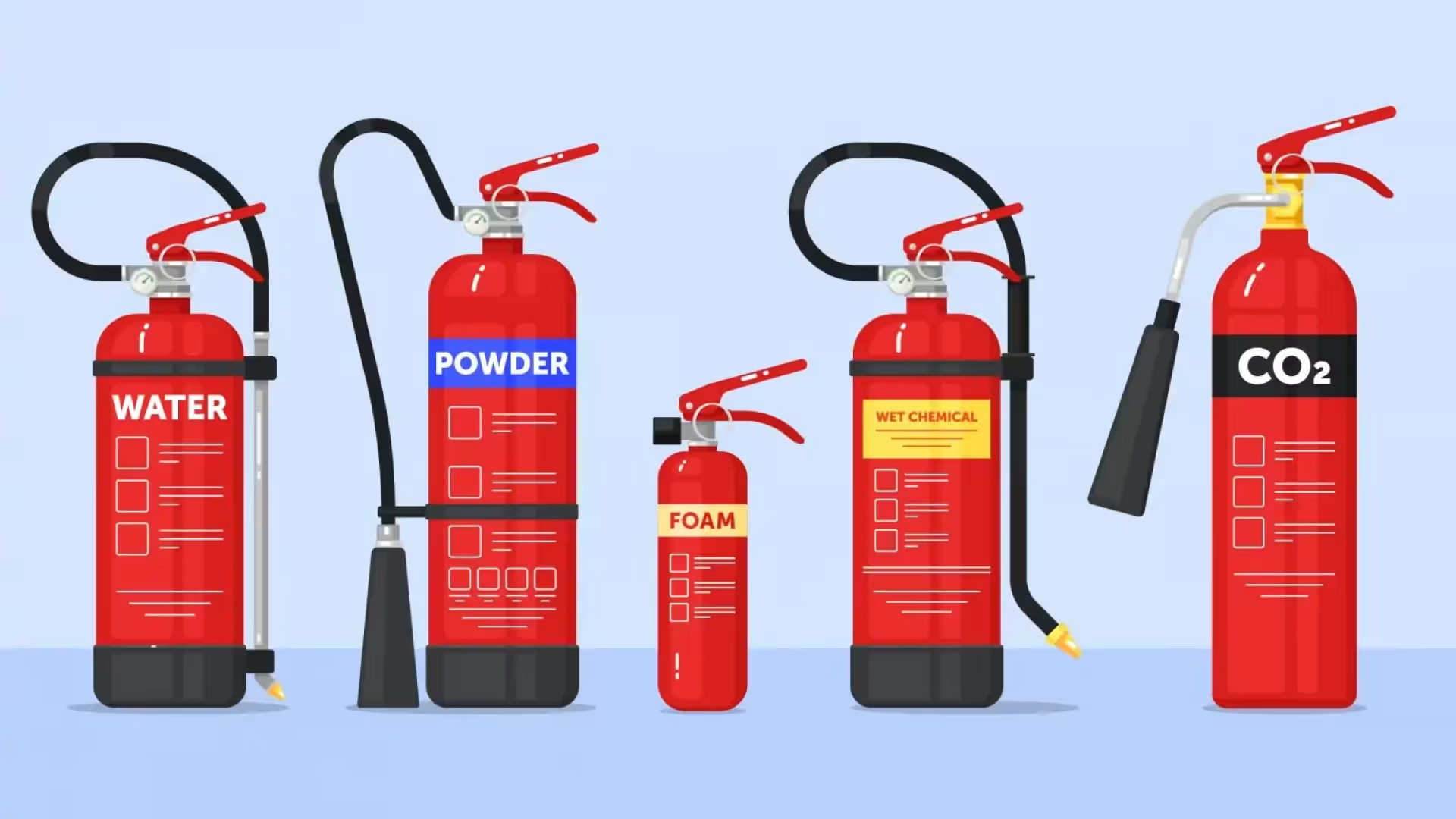
Water extinguishers are suitable for use on Class A fires, those caused by combustible materials including paper, fabric and wood. Offices are particularly prone to Class A fires due to the high volume of paper typically in the vicinity. They are distinguishable by their block-red body, being the only type of extinguisher that does not incorporate a panel of contrasting colour. To operate: remove the pin, aim the hose at the base of the fire and squeeze the lever.

Icon attention.png

Important

While water is highly effective on Class A fires, it can be positively dangerous when used on electrical or kitchen fires. It is also likely to prove ineffective against flammable liquid and metal fires, it will not put the fire out and may instead spread it, causing further damage.

Foam Extinguishers

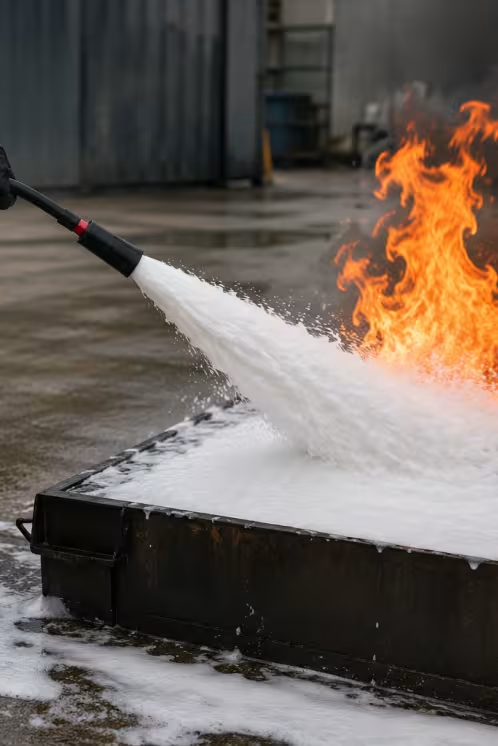
Foam extinguishers, also known as Aqueous Film Forming Foam (AFFF) extinguishers, separate fuel from flame by shooting a thick foam barrier into the fire. The flame is unable to continue burning without access to fuel, and the fire quickly decelerates until fully extinguished. They contain a substance called perfluorohexanoic acid, or PFHxA (chemical formula: C6HF11O2), which forms a film over the surface of a fire, cutting off the oxygen supply and preventing re-ignition. PFHxA is a safer variety of a group of compounds called PFAS (per- and polyfluoroalkyl substances), which have been shown to accumulate in humans with negative health effects. Although not 100% safe, PFHxA is deemed fit for use.

Foam extinguishers.png

Foam extinguishers are effective on Class A and Class B fires, fires caused by combustible materials and flammable liquids such as alcohol, paint or petrol. They are the most recognisable type of extinguisher and can be found in petrol stations, factories and food preparation facilities. They are distinguishable by their cream label situated above the instructions. Aim the hose at the base of the fire for solid combustibles, or at a vertical surface near the fire for flammable liquids.

Dry Powder Extinguishers

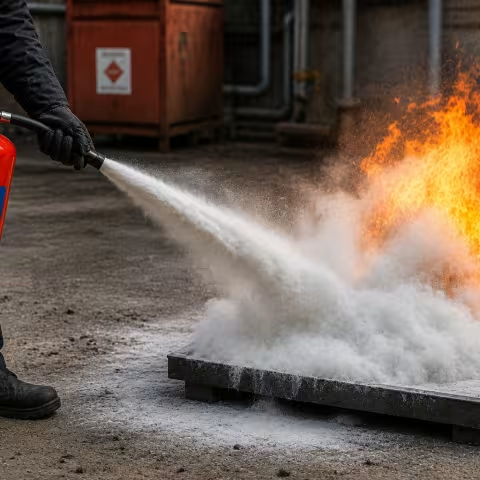
Dry powder extinguishers tackle a fire by isolating the flame from the fuel. Older powder extinguishers used to contain sodium bicarbonate or potassium bicarbonate, which made them suitable for Class B and C fires but not Class A. Modern versions contain mono-ammonium phosphate, which creates a reaction in the flames, chemically inhibiting combustion and expelling the oxygen, and can now be used on Class A fires as well. This interrupts the chemical chain reaction that sustains the fire, effectively stopping it from continuing to burn.

Dry powder extinguishers.png

Dry powder extinguishers have been described as a double-edged sword. Although effective across a broad range of fires, Classes A, B, C, D and electrical, they pose a slight safety hazard: monoammonium phosphate can be harmful if inhaled in large quantities, making them too risky for use in enclosed spaces. They are however extremely useful in areas where multiple types of fire hazard are present. Distinguishable by their blue label. When used against electrical fires, ensure the power is switched off where possible.

CO₂ Extinguishers

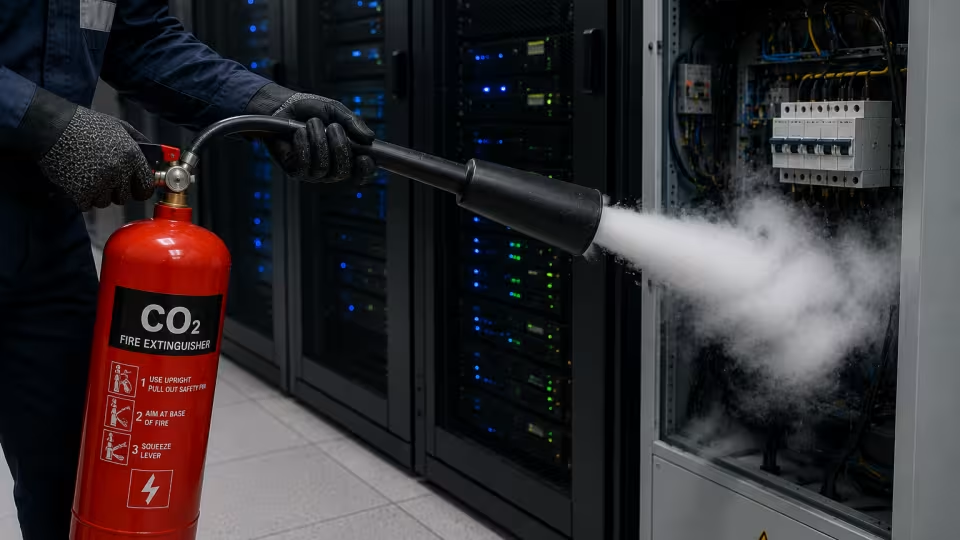
CO₂ extinguishers work by displacing the oxygen the fire needs to sustain itself. The heavier carbon dioxide gas forces oxygen away from the fire. CO₂ is also extremely cold when emitted, meaning these extinguishers simultaneously remove both the oxygen and the heat from the fire, targeting two elements of the fire triangle at once.

CO2 extinguisher.png

CO₂ extinguishers are one of the few types effective at tackling electrical fires, making them ideal for use in areas incorporating large amounts of wiring or electrical equipment. Misuse of extension cords, plug sockets, faulty wiring and overheated light fixtures are common causes of electrical fires. They also leave no residue, meaning valuable equipment will not be damaged by their use. Distinguishable by their black label. Before use on an electrical fire, ensure the power is turned off where possible. Squeeze the lever slowly and aim directly at the fire.

Icon attention.png

Important

CO₂ extinguishers should not be used in enclosed spaces. Because they displace oxygen, there is a risk of the user suffocating. Always ensure adequate ventilation before deploying a CO₂ extinguisher.

Wet Chemical Extinguishers

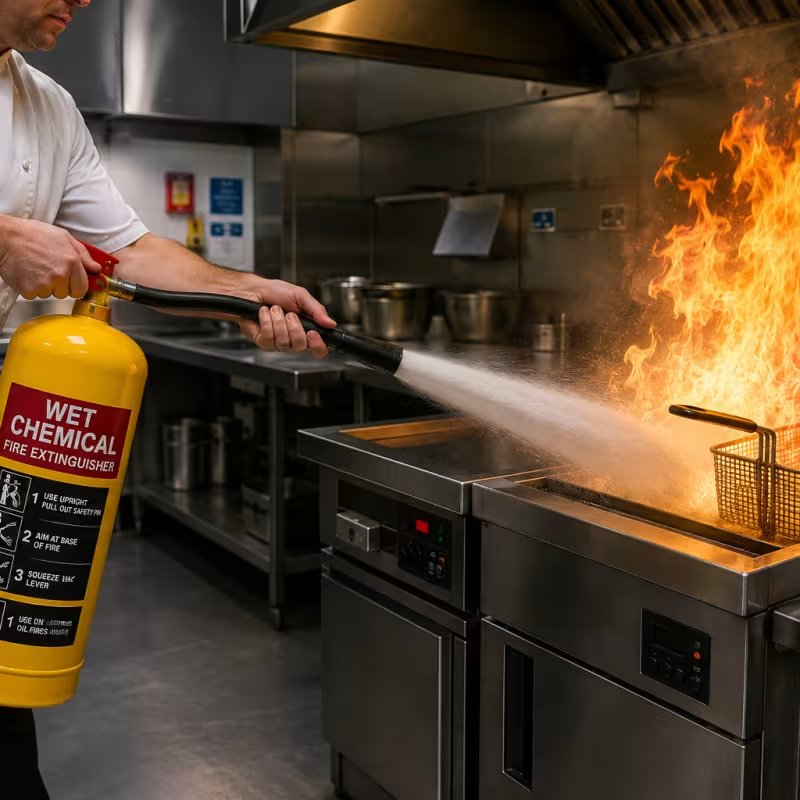
Wet chemical extinguishers spray a solution of potassium acetate (CH₃CO₂K), which is also used as a food acidity regulator, onto the fire. Potassium citrate or potassium bicarbonate may also be added. This attacks the blaze in two ways: first by cooling the flame and lowering its temperature, decreasing the rate at which it burns; and second by coating the surface in a soapy foam that creates a barrier between the flame and fuel, preventing re-ignition. The extinguishant is gently sprayed out as a fine mist so that it cools the burning oil or fat without causing it to splash.

Wet Chemical extinguisher.png

Wet chemical extinguishers are extremely effective at tackling Class F fires, known as 'cooking fires', typically caused by cooking oils and fats. Chip pan fires are a common example. Many people instinctively reach for water in such situations, but this will exacerbate the flames and could cause serious harm. Wet chemical extinguishers coat the burning oils and fats to separate them from the flame and halt combustion. Distinguishable by their yellow label. Spray in circular motions and squeeze the lever slowly.

Automatic Extinguishers

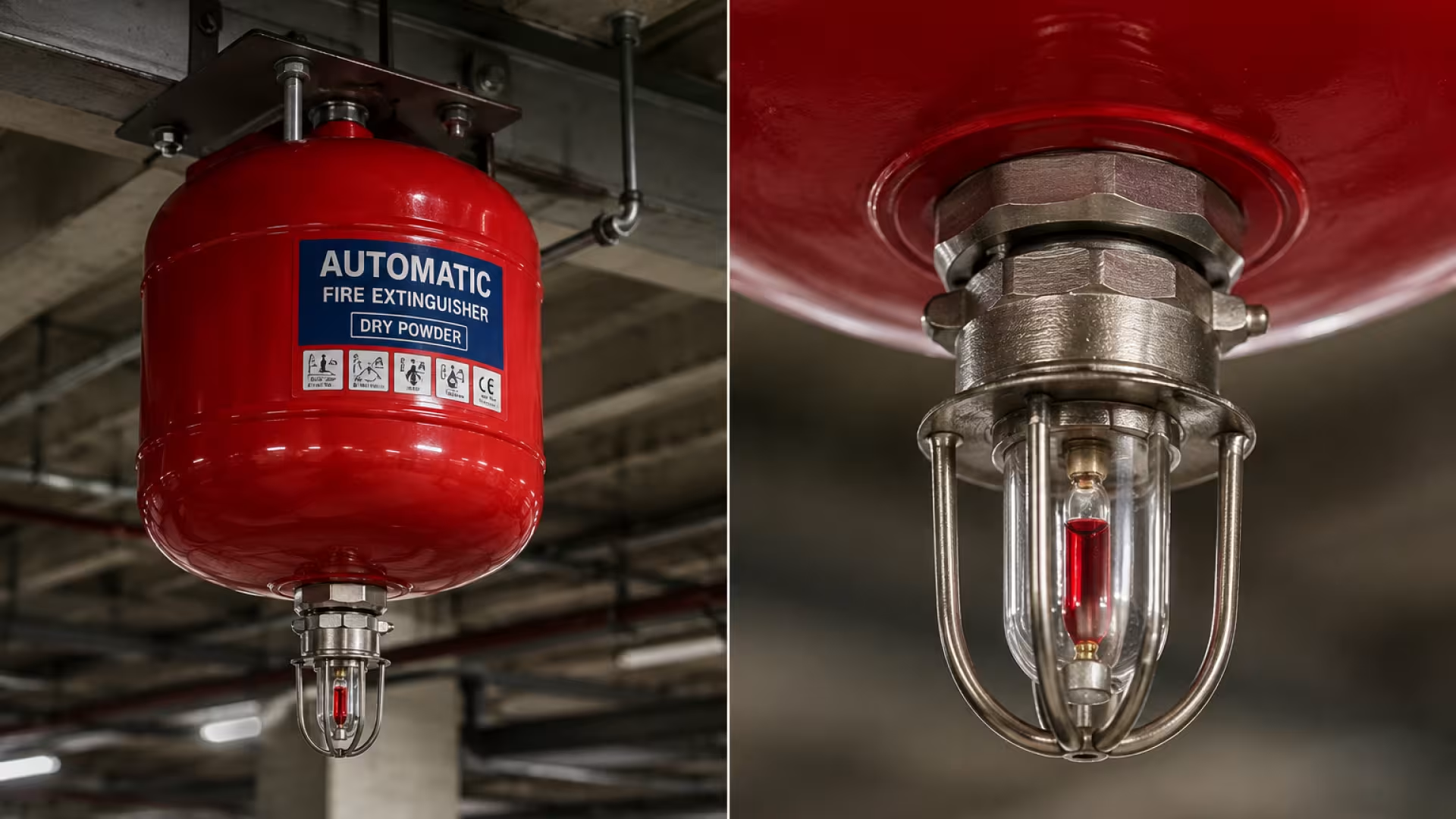
Automatic fire extinguishers differ from other types not by the substance they contain, but by the way they operate. Unlike manual extinguishers which require human input, automatic extinguishers detect when a fire has occurred and respond by automatically deploying their contents. They feature a glass bulb instead of the squeezing lever found on manual models. When a fire occurs, the bulb gets hot, causing the sensitive liquid inside to expand until it shatters the bulb, releasing the contents of the extinguisher into the fire.

Automatic fire extinguisher.png

Dry powder is the primary substance used in automatic extinguishers, as it is capable of combating Classes A, B, C, D and electrical fires. Most importantly, automatic extinguishers increase protection in unmanned areas and can be used in enclosed spaces when others are not around, making them ideal for large commercial establishments where areas such as storage spaces are rarely occupied. Distinguishable by their lack of squeezing lever and coloured labelling denoting their contents.

Specialist Extinguishers : Lithium-Ion Battery Fires

A growing fire risk in commercial and residential premises is lithium-ion battery fires, found in items such as mobile phones, laptops, scooters and power tools. Specialist extinguishers for these fires work by spraying a fine mist containing microscopic platelets of chemically exfoliated vermiculite. The water content cools the fire, while the vermiculite particles create a film barrier which dries to form a non-flammable oxygen barrier, preventing re-ignition.


These extinguishers contain a mineral-based agent called Aqueous Vermiculite Dispersion (AVD). Vermiculite is a naturally occurring mineral also used in gardening to help plants absorb nutrients. Its chemical formula is (Mg,Fe2+,Fe3+)3{(Al,Si)4O10}(OH)2·4H2O. Standard extinguishers are not effective against lithium-ion battery fires, which can re-ignite even after appearing extinguished, making specialist equipment essential in environments where these batteries are in use.

How the Chemicals in Fire Extinguishers Work

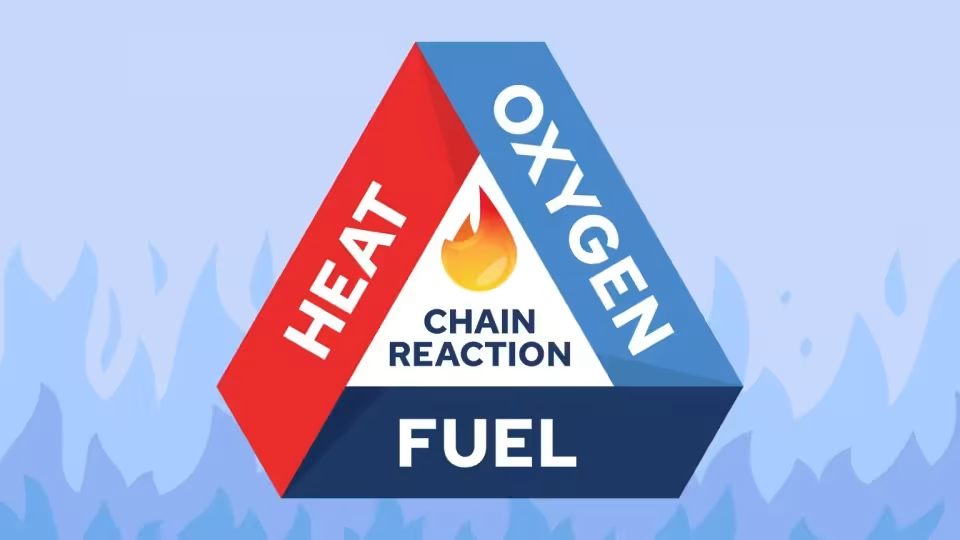
Each type of extinguisher works by targeting one or more elements of the fire triangle: heat, fuel and oxygen. Understanding the chemistry behind each type helps explain why using the correct extinguisher is so critical, and why the wrong choice can be dangerous.

Fire Triangle
tick icon

Water (H₂O)

removes heat by cooling the fire. Suitable for Class A fires only.

tick icon

CO₂ (carbon dioxide)

removes oxygen and cools the fire. Ideal for electrical and flammable liquid fires.

tick icon

Foam (PFHxA compounds)

forms a film over the fire's surface, cutting off the oxygen supply. Suitable for Class A and B fires.

tick icon

Dry powder (monoammonium phosphate)

interrupts the chemical chain reaction of the fire and smothers it. Suitable for Classes A, B, C, D and electrical fires.

tick icon

Wet chemical (potassium acetate)

cools the fire and seals burning oils with a protective layer. Suitable for Class F cooking fires.

tick icon

Lithium-ion specialist (water + vermiculite)

cools the fire and creates a barrier to prevent re-ignition.

Choosing the Right Fire Extinguisher

Selecting the correct fire extinguisher is essential for both safety and compliance. Different fire risks require different extinguishing methods, and using the wrong type can increase danger or cause the fire to spread further. In commercial and industrial environments, fire risk assessments help determine the appropriate extinguishers for each area of the premises.

Proper training, regular maintenance and clear signage also ensure that extinguishers can be quickly identified and used correctly in an emergency. By understanding the chemicals used in fire extinguishers and how they work, businesses can improve fire safety, protect their premises and ensure they are prepared to respond quickly and safely in the event of a fire.

extincteurs scutum photo

Ensure Your Premises Are Properly Protected

Don't wait for an incident to act. Contact Scutum today to arrange a fire extinguisher installation, maintenance visit or fire risk assessment, and ensure your premises have the right extinguisher for every type of fire risk.