Whether you are trying to understand the different types of fire extinguishers and their appropriate uses, learning about the benefits of a fire blanket, or simply trying to make sense of fire safety regulations, the fire triangle is the foundation that underpins all of it.
Publications
Fire Triangle Explained
published on 26/03/2026
The Fire Triangle Explained
The fire triangle is one of the most important concepts in fire safety. It explains how fires start, how they are sustained, and, crucially, how they can be extinguished. Understanding this simple model helps businesses prevent fires, select the right firefighting equipment, and build stronger, more effective fire safety policies across their premises.
What Is the Fire Triangle?
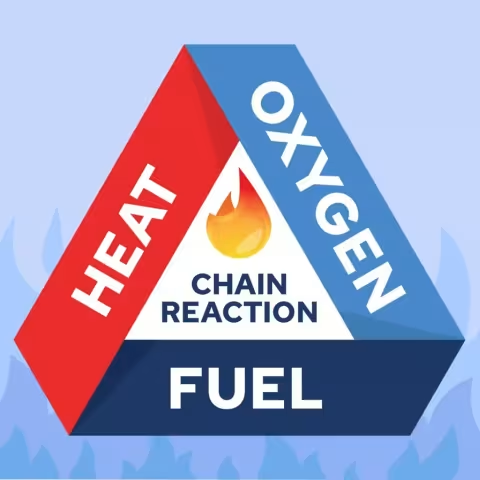
The fire triangle, also sometimes referred to as the combustion triangle, is a simple model for understanding the chemical reaction that must take place to start and sustain a fire. It is composed of three elements: fuel, heat and oxygen. All of which must be present simultaneously for a fire to thrive.
The model demonstrates how these three elements work together to create and sustain a fire, and shows how removing any one of them will prevent a fire from starting or extinguish one that is already burning. This principle underpins all fire prevention and firefighting strategies, from portable fire extinguishers to fixed suppression systems.
The fire triangle is widely used as a foundational element of fire safety training, as understanding it in depth makes it much easier to grasp the need for, and the details of, fire safety regulations.

Fuel
In order for a fire to start, there must be a material to burn, this is referred to as the fuel. Fuel is any kind of combustible material, which can include paper, oils, wood, gases, fabrics, liquids, plastics and rubber. The fuel for a fire is usually characterised by its moisture content, size, shape and quantity, all of which will determine how easily the fuel will burn and at what temperature.
Heat
In addition to a fuel source, heat must be present in order for ignition to take place. All flammable materials give off flammable vapours which, when heat is present, combust. Heat is also responsible for the spread and maintenance of fire, as it removes moisture from nearby fuel, warming the surrounding area and pre-heating any fuel in its path, enabling the fire to travel and develop with greater ease.
Oxygen
As well as fuel and heat, fires also need oxygen to stay alight. Ambient air is made up of approximately 21% oxygen and, as most fires only require at least 16% oxygen to burn, it acts as the oxidising agent in the chemical reaction. This means that when the fuel burns, it reacts with the oxygen to release heat and generate combustion.
How to Extinguish the Three Elements of Fire
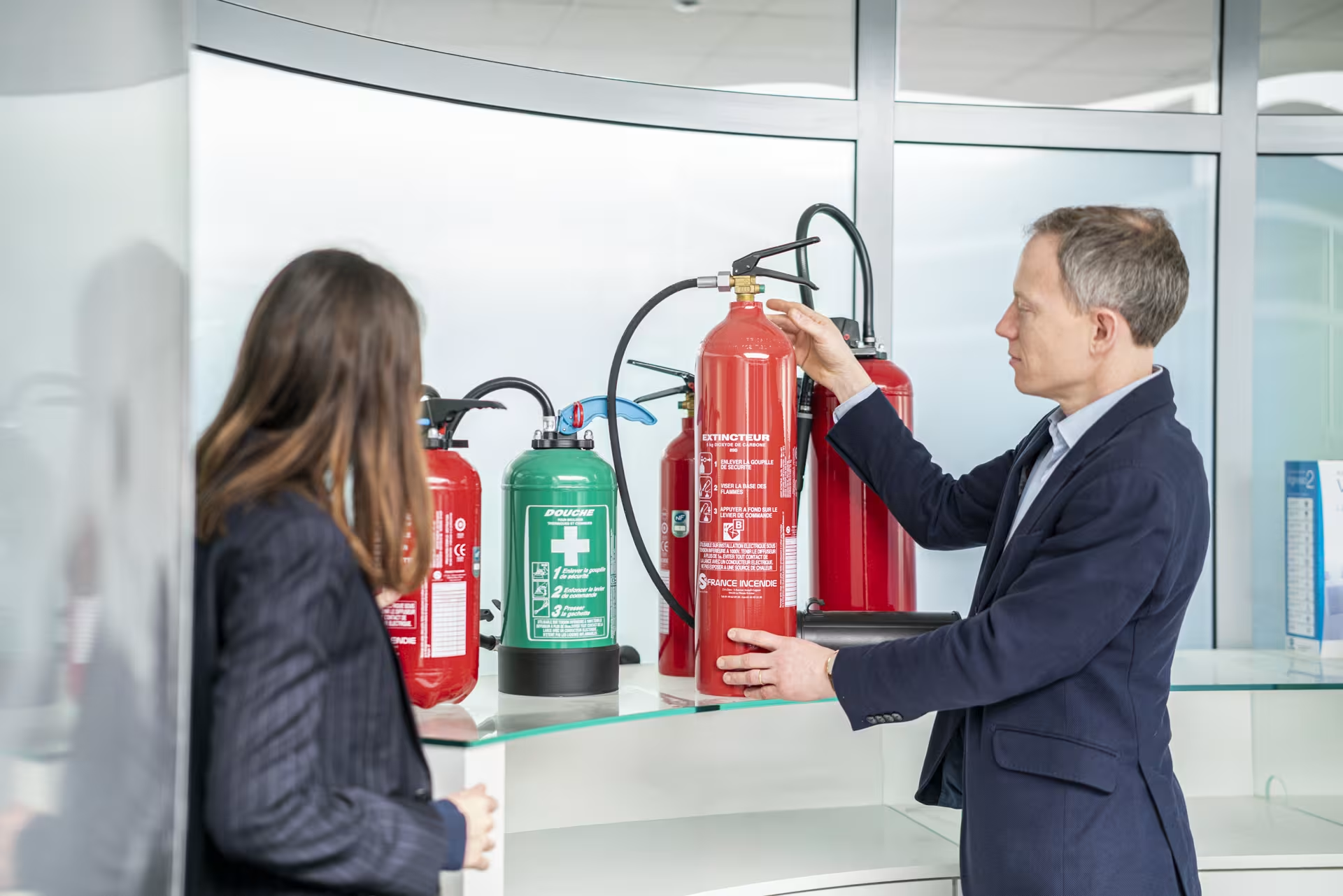
To stop a fire, one of the three elements of the fire triangle must be removed. If a fire runs out of fuel, it will smoulder out. If you cool a fire down, it will lose heat and go out. And if the oxygen is removed, it will suffocate. Attempts at both fighting and preventing fires are based upon these principles.
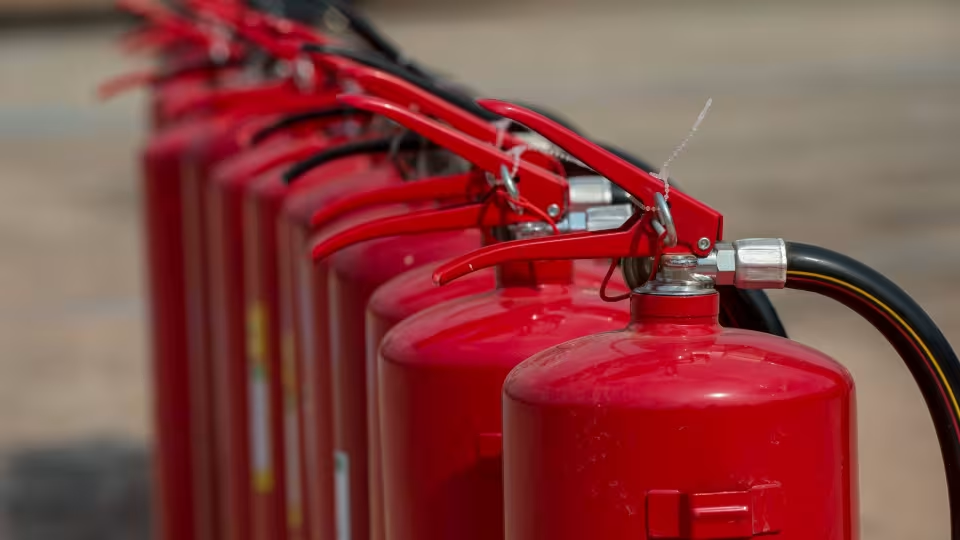
The common fire extinguishers used to remove each element of the fire triangle are :
1
Water extinguishers
remove the heat by using water to cool down the fire.
2
Foam extinguishers
remove the heat and the oxygen by using foam to both cool down and smother the fire.
3
CO₂ extinguishers
displace the oxygen the fire needs, as the heavier CO₂ gas forces it elsewhere. CO₂ is also extremely cold when emitted, so these extinguishers also remove the heat from the fire.
4
Dry powder extinguishers
remove the oxygen by smothering the fire with the powder.
5
Wet chemical extinguishers
remove the oxygen by smothering the fire with a fine spray, which also cools the fire to remove the heat.
What Is the Fire Tetrahedron ?
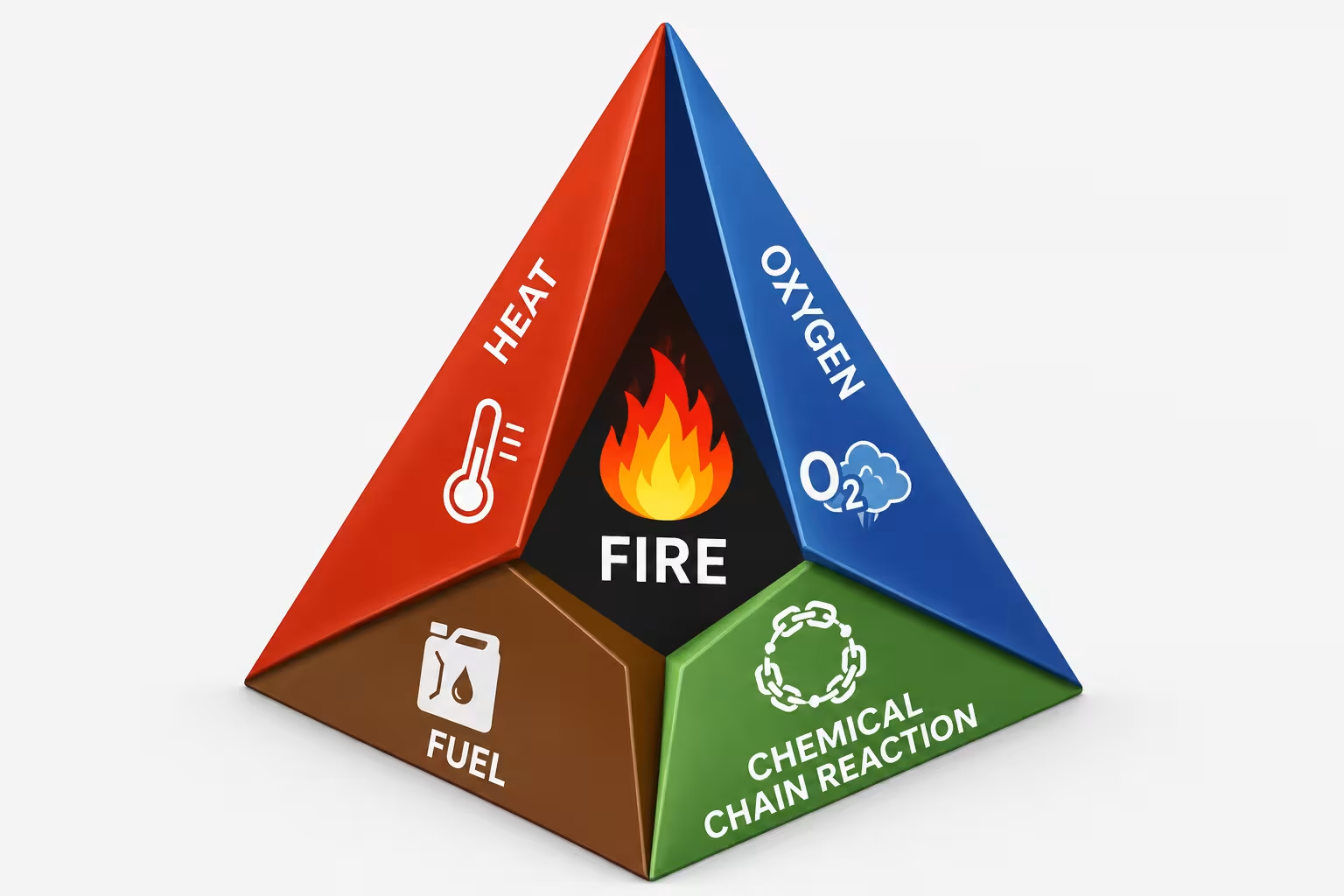
Unlike a triangle, a tetrahedron, otherwise known as a 'triangular pyramid', is made up of four triangular bases which all connect to each other. In the context of fire, this means there are now four elements that need to be present for a fire to start and continue.
So what is the extra element that has been added to the fire triangle to make it the fire tetrahedron ?
What Are the Different Elements in the Fire Tetrahedron ?
The concept of the fire tetrahedron recognises that something beyond the mere presence of fuel, heat and oxygen needs to happen for a fire to start and be sustained. That extra element is the chemical chain reaction that occurs between the other three elements, causing a fire to continue to burn once it has started.
Without that chemical reaction, no fire would be possible. Removing any of the three elements will still put out a fire, but recognising the role of the reaction between the three is key to our deeper understanding of how a fire works and sustains itself.
As things stand, there are no commonly available extinguishers that can put out a fire solely by interrupting the chemical chain reaction. Halon fire extinguishers used to be able to do this and were recognised as an effective universal extinguishing agent on aircraft. However, their use has been identified as causing significant damage to the ozone layer and they have been banned for a number of years.
Key Takeaways
The key takeaways are :
1
Understanding the fire triangle is key to a successful fire safety policy
2
All fires need fuel, heat and oxygen in order to keep burning
3
Remove any one of these three elements and a fire will go out
4
Heat can be removed by cooling a fire, while oxygen can be removed by smothering it
5
The fire tetrahedron adds a fourth element, the chemical chain reaction, to explain how fires sustain themselves once ignited
Improve Fire Safety at Your Premises
Don't wait for an incident to act. Contact Scutum today to arrange a fire risk assessment, fire safety training or fire extinguisher installation, and ensure your premises are protected with the right equipment for every type of fire.