Alarm verification is not optional. It is a key stage of a modern security system. By combining professional remote monitoring, appropriate technologies and proven procedures, it makes it possible to verify remotely or on site what is happening before any external intervention. In this article, we explain what alarm verification is, the available methods, the legal framework and the practical benefits for your organisation — as well as how to choose a reliable provider, particularly SCUTUM's services, an international security leader.
Publications
Video Alarm Verification How It Works Why It Matters Businesses
Télésurveillance
published on 07/09/2026
Alarm Verification: Definition, Challenges and How It Works
published on 07/09/2026
Written by Magali Belot – Director of Digital Operations, France
Written by Magali Belot – Director of Digital Operations, France
When an alarm is triggered, everything can change within seconds. And according to the figures, most alarm activations do not indicate a real intrusion. These are false alarms that generate costs, mobilize teams and disrupt operations. At SCUTUM, we see alarm verification as essential: filtering alerts, improving reliability and protecting your assets, loved ones and employees.
What is Alarm Verification?
Definition and Purpose
Alarm verification is the process of assessing an alarm activation to determine whether it indicates a genuine security incident or a false alarm.
Verification may involve reviewing CCTV footage, assessing multiple alarm signals or carrying out a physical inspection of the premises, depending on the security system and procedures in place.
The aim is to establish the nature of the activation, reduce unnecessary responses and support appropriate action when a potential security threat is identified.

Main Objective
Distinguish a false alarm from a real intrusion and avoid unnecessary interventions.

Essential Step
Before any intervention by law enforcement, alarm verification enables proactive and documented verification of the situation.

How It Is Implemented
It can be carried out using standardized protocols, remote monitoring tools and dedicated teams, 24/7.
Types of Alarm Verification: Choosing the Right Approach
Audio Alarm Verification
- How it works: Audio verification uses microphones or compatible audio detection equipment installed at protected premises to enable monitoring operators to assess sounds associated with an alarm activation. Depending on the system, operators may also be able to communicate with individuals on site through a two-way audio facility.
- Advantages: Provides additional information to help operators assess potential security incidents without immediately requiring a physical inspection. Two-way audio may also allow operators to issue a verbal warning where appropriate.
- Limitations: Background noise, environmental conditions and unclear sounds can make it difficult to establish the cause of an alarm. Audio verification may therefore need to be supported by other detection or verification methods.
Audio monitoring must also be configured and operated in accordance with applicable UK data protection requirements, particularly where conversations or other identifiable personal information may be captured.
Video Alarm Verification
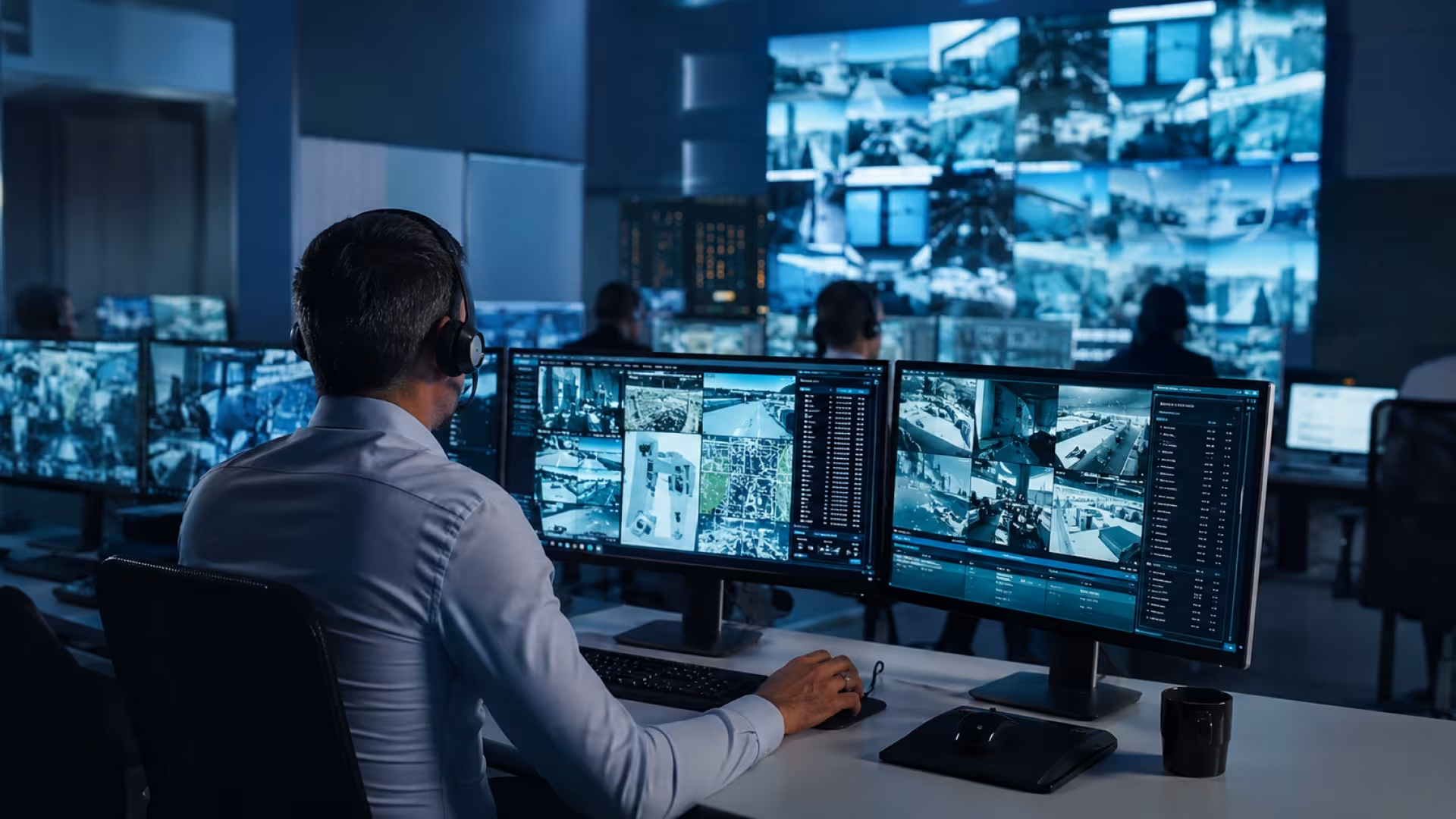
- How it works: Video alarm verification enables monitoring operators to assess images or CCTV footage associated with an alarm activation. Depending on the system, operators may review recorded footage or access live camera feeds to help establish whether an incident requires further action.
- Advantages: Provides visual information to support alarm assessment, helping operators distinguish between genuine security threats and false activations. Footage may also provide valuable evidence for subsequent investigations. Where appropriate, monitoring operators can initiate an agreed response, which may include contacting keyholders, security personnel or the police, subject to applicable procedures.
- Key considerations: Effective verification depends on suitable camera positioning, image quality, lighting conditions and reliable transmission of footage. Recordings should be stored securely, with appropriate access controls and procedures for preserving evidence where required.
- Practical considerations: Cameras should be positioned to provide clear coverage of priority areas, with detection zones and associated camera views configured appropriately. Linking alarm activations to the relevant camera footage can help operators assess incidents more efficiently. Technologies such as motion detection, video analytics and PTZ cameras may provide additional functionality where suitable.
Video alarm verification can strengthen a business's security arrangements by providing operators with additional information to support informed decisions and an appropriate response.
Physical Alarm Verification
- How it works: Physical alarm verification involves an authorised keyholder or security officer attending the premises following an alarm activation to investigate the cause and assess whether further action is required.
- Advantages: Provides an on-site assessment of the situation, helping establish the cause of an alarm and identify potential security concerns. Depending on the circumstances and agreed procedures, the attending person may also take appropriate steps to secure the premises or arrange further assistance.
- Limitations: Response times depend on factors such as location, personnel availability and travel conditions. Physical attendance may also involve additional costs and require coordination with keyholders or contracted security providers.
- Suitable applications: On-site verification may be particularly appropriate for high-risk premises, construction sites, vacant properties or locations where remote verification is limited by connectivity or other operational constraints.
Physical verification can complement audio and video alarm verification, providing an additional means of assessing incidents where an on-site inspection is necessary.
Thermal Alarm Verification
- Principle: use of thermal cameras to detect heat signatures (human presence, moving vehicles) regardless of lighting conditions.
• Advantages: highly effective in complete darkness or difficult environments (fog, smoke, rain), and reduces false alarms caused by non-human movement (animals, branches).
• Limitations: does not allow formal identification of individuals (face, clothing) and generally requires pairing with a visible PTZ camera for targeted verification.
• Use: ideal for monitoring large outdoor perimeters (industrial sites, car parks, construction sites).
The Legal Framework: An Obligation for Professionals
In the UK, alarm verification plays an important role in reducing false alarms and supporting appropriate responses to security incidents.
For monitored intruder alarm systems requiring police response, specific technical standards and police procedures apply. These include the National Police Chiefs' Council (NPCC) requirements in England, Wales and Northern Ireland, alongside relevant British Standards such as BS 8243 and PD 6662.
Eligible systems must meet the applicable requirements for installation, maintenance, monitoring and alarm confirmation. A police Unique Reference Number (URN) is generally required for a registered police response service.
Alarm verification helps monitoring operators assess activations before escalating incidents in accordance with agreed procedures. However, confirmation of an alarm does not guarantee police attendance, which remains subject to police priorities and available resources.
Different arrangements apply in Scotland under Police Scotland's security systems policy.

Key Points
In the UK, alarm verification is governed by relevant industry standards and, where police response is required, specific police procedures.
The National Police Chiefs' Council (NPCC) sets out requirements for eligible monitored security systems in England, Wales and Northern Ireland, while BS 8243 provides guidance on the design and configuration of systems incorporating alarm confirmation technology.
These requirements aim to reduce false alarm activations, minimise unnecessary police call-outs and support an appropriate response to genuine security incidents.

Why It Matters
Alarm verification supports recognised security industry practices by helping reduce false alarms and ensuring that potential incidents are appropriately assessed before a response is initiated.
Some insurers may also specify requirements for alarm confirmation, professional monitoring or maintenance as conditions of cover. Businesses should check their individual insurance policies to ensure their security arrangements meet any applicable requirements.

Industry Best Practice
Ensure monitoring operators are trained in established procedures, maintain accurate records of alarm activations and responses, and retain relevant evidence, including incident reports, recordings and response times, in accordance with applicable data protection requirements and retention policies.
The Practical Benefits of Alarm Verification for Your Business :
1
Reduced Operational Costs
Effective alarm verification can help reduce unnecessary call-outs, associated travel costs and disruption by enabling potential security incidents to be assessed before a response is initiated.
2
Improved Operational Efficiency
By helping distinguish genuine security threats from false alarms, alarm verification enables monitoring operators and security personnel to prioritise incidents that require attention, supporting more efficient use of resources and an appropriate response.
3
Greater Peace of Mind
Professional alarm monitoring provides reassurance that security alerts can be assessed by trained operators, with 24/7 coverage where included in the service. Documented alarm activations and responses also provide a clear record of how incidents have been managed.
4
Supporting Compliance & Risk Management
Effective alarm verification can help businesses meet relevant security standards and support compliance with specific insurance requirements, where applicable. It can also help reduce unnecessary call-outs and limit the potential operational and financial impact of security incidents.

The Expert's View — Norbert, Sales Director, Scutum Premium Services
Video alarm verification improves the efficiency of alarm handling.
Some clients regret that law enforcement does not systematically respond to every alert. In this situation, the only solution is to move to video surveillance. This enables our remote monitoring operators to verify in real time whether an intrusion is taking place. Thanks to video alarm verification, they can contact law enforcement directly, via a dedicated number, to request an on-site intervention.
How Does Alarm Verification Work?
1. Alarm Activation and Transmission
When a security system detects a potential incident, an alert is transmitted to the Alarm Receiving Centre (ARC), where professional monitoring is in place.
Depending on the system, the alert may include information such as the time of activation, location, affected detection zone and type of alarm.
2. Alarm Verification
A trained monitoring operator assesses the activation using the verification methods available for the site. These may include reviewing CCTV footage, assessing audio information or examining signals from multiple detectors.
Where appropriate, the operator may also contact a designated keyholder or authorised representative in accordance with agreed procedures.
3. Assessment and Decision
The operator reviews the available information to determine whether the activation indicates a genuine security incident, a false alarm or an event requiring further investigation.
Relevant information, including alarm signals, operator actions and supporting footage, may be recorded in accordance with the monitoring service's procedures and applicable data protection requirements.
4. Response and Incident Reporting
The response depends on the outcome of the verification process and the procedures agreed with the customer.
- Confirmed alarm: The operator initiates the appropriate response, which may include notifying designated keyholders, contacting a contracted security response provider or requesting police assistance where applicable. Police response is subject to relevant requirements and operational priorities.
- False alarm: The incident may be closed once the activation has been appropriately assessed, with any recurring issues identified for further investigation.
- Inconclusive alarm: Where the available information is insufficient to confirm or dismiss an activation, the operator follows the agreed escalation procedures.
Where included in the service, incident records and reports can provide businesses with details of alarm activations, actions taken and any recommended follow-up measures.
Scutum's Approach to Alarm Verification
Effective alarm verification begins with understanding the specific security risks and operational requirements of each site.
SCUTUM works with businesses to identify suitable security solutions, combining appropriate detection technologies with professional monitoring and agreed response procedures.
Depending on the site's requirements and the services available, this approach can help businesses:
- Select appropriate verification methods, including video, audio or other supported detection technologies.
- Reduce unnecessary call-outs by helping distinguish genuine security incidents from false alarms.
- Improve operational efficiency through clearly defined monitoring and escalation procedures.
- Support compliance and reporting requirements by maintaining appropriate records of alarm activations and responses.
- Establish suitable response arrangements, including keyholder notification and third-party security response services where required.
By assessing each site's risks, existing infrastructure and operational needs, SCUTUM can help businesses develop a security solution that provides effective protection and supports informed decision-making.
Choosing the Right Alarm Verification Provider
1
Define Your Security Requirements
Consider the type of premises, areas requiring protection, available budget and the circumstances in which a security response would be necessary.
2
Available Alarm Verification Methods
Consider the verification methods offered, including audio, video and thermal detection where appropriate. Look for solutions that can combine information from multiple sources to support more accurate alarm assessment.
3
Assess Operational Capabilities
Check whether the provider offers 24/7 monitoring, operates through an appropriately accredited Alarm Receiving Centre (ARC), and has clearly defined response procedures. Consider response arrangements, geographic coverage and any relevant UK industry accreditations, such as NSI or SSAIB certification.
4
Legal & Insurance Requirements
Ensure the proposed solution meets applicable legal and regulatory requirements, and check whether your insurer specifies particular security standards, monitoring arrangements or maintenance obligations. Review the provider's service agreement to understand its responsibilities and any limitations.
5
Request Supporting Evidence
Ask for relevant case studies, technical specifications and product demonstrations. Where appropriate, consider a trial or pilot installation to assess whether the proposed solution meets your site's security requirements.or your requirements.
6
Evaluate Service Quality & Support
Consider the provider's response procedures, incident reporting, ability to tailor monitoring protocols to your site's requirements and the quality of its ongoing customer support.
Strengthening Security Through Effective Alarm Verification
Conclusion:
Alarm verification plays an important role in helping businesses distinguish genuine security threats from false alarms, enabling more informed decisions and an appropriate response.
By combining suitable detection technologies, professional monitoring and clearly defined response procedures, businesses can reduce unnecessary call-outs, improve operational efficiency and strengthen their overall approach to site security.
Choosing the right solution starts with understanding your premises, identifying potential risks and establishing the monitoring and response arrangements best suited to your organisation.
Contact a SCUTUM expert for a personalised security assessment and discover how our alarm verification solutions can be adapted to your site and objectives.
FAQs
Is Alarm Verification Mandatory in the UK?
Alarm verification is not a universal legal requirement for businesses in the UK. However, specific alarm confirmation procedures may be necessary for systems seeking police response under applicable police security systems policies and industry standards.
Insurers may also specify particular alarm monitoring, confirmation or maintenance requirements as conditions of cover. Businesses should check their individual insurance policies and seek guidance from a qualified security provider to ensure their arrangements meet the relevant requirements.
Video vs Physical Alarm Verification
Video alarm verification allows monitoring operators to assess an alarm remotely using CCTV footage or images from cameras associated with the alarm system. It can provide visual evidence without requiring an initial site visit, helping operators assess potential incidents promptly.
Physical alarm verification involves an authorised keyholder or security officer attending the premises to investigate an activation. This allows for a direct assessment of the situation, although response times depend on factors such as location, availability and site access.
Both methods can play an important role in an effective security strategy, and the most appropriate approach will depend on the site's risks, infrastructure and response arrangements.
What Happens After a Positive Alarm Verification ?
When an alarm activation indicates a genuine security incident, the monitoring operator follows the agreed response procedures for the site.
Depending on the circumstances and the monitoring agreement, this may involve:
- Escalating the incident: Notifying designated keyholders, contacting an appointed security response provider or requesting police assistance where applicable and in accordance with relevant police response requirements.
- Recording the incident: Documenting the alarm activation, available evidence and actions taken, in accordance with applicable data protection requirements.
- Providing customer updates: Informing the relevant contacts and providing an incident report where included in the service.
- Reviewing security arrangements: Identifying any vulnerabilities or opportunities to improve detection, monitoring and response procedures following the incident.
The appropriate response will depend on the nature of the activation, the available evidence and the security arrangements established for the premises.
Contact us for a personalised assessment and discover how we can adapt our protocols and technologies to your specific requirements.