Submitted by Justine.Pource… on
Télésurveillance site sensible ou infrastructure critique
published on 01/10/2026

Remote Monitoring for Sensitive Sites and Critical Infrastructure

Written by Magali Belot

Our societies rely on a foundation of vital infrastructure: energy production, water distribution, communications networks and strategically important industrial sites. Their proper operation is essential to the daily lives of millions of people. Protecting these sites is never a secondary consideration. It is a matter of national resilience.


The threats facing this infrastructure have changed in nature. Terrorism, sabotage, industrial espionage and cyberattacks: scenarios are multiplying and increasingly combining. In the face of this reality, physical security alone, whether guarding or fencing, is no longer sufficient.


This is where modern remote monitoring comes in. Far more than a camera connected to a screen, it now forms a genuine technological shield capable of detecting, verifying, responding and deterring. This article examines the key components of this approach to help you understand how to build protection that matches the specific challenges of your site.

The unique security challenges of sensitive sites

A sensitive site or critical national infrastructure (CNI) refers to a facility whose disruption, whether accidental or malicious, could have serious consequences for the population, the economy or national security. In the UK, this includes sites and assets within the country's Critical National Infrastructure (CNI) sectors, such as energy, communications, transport, water, health and finance. Certain industrial sites handling dangerous substances may also fall under the Control of Major Accident Hazards (COMAH) Regulations 2015.
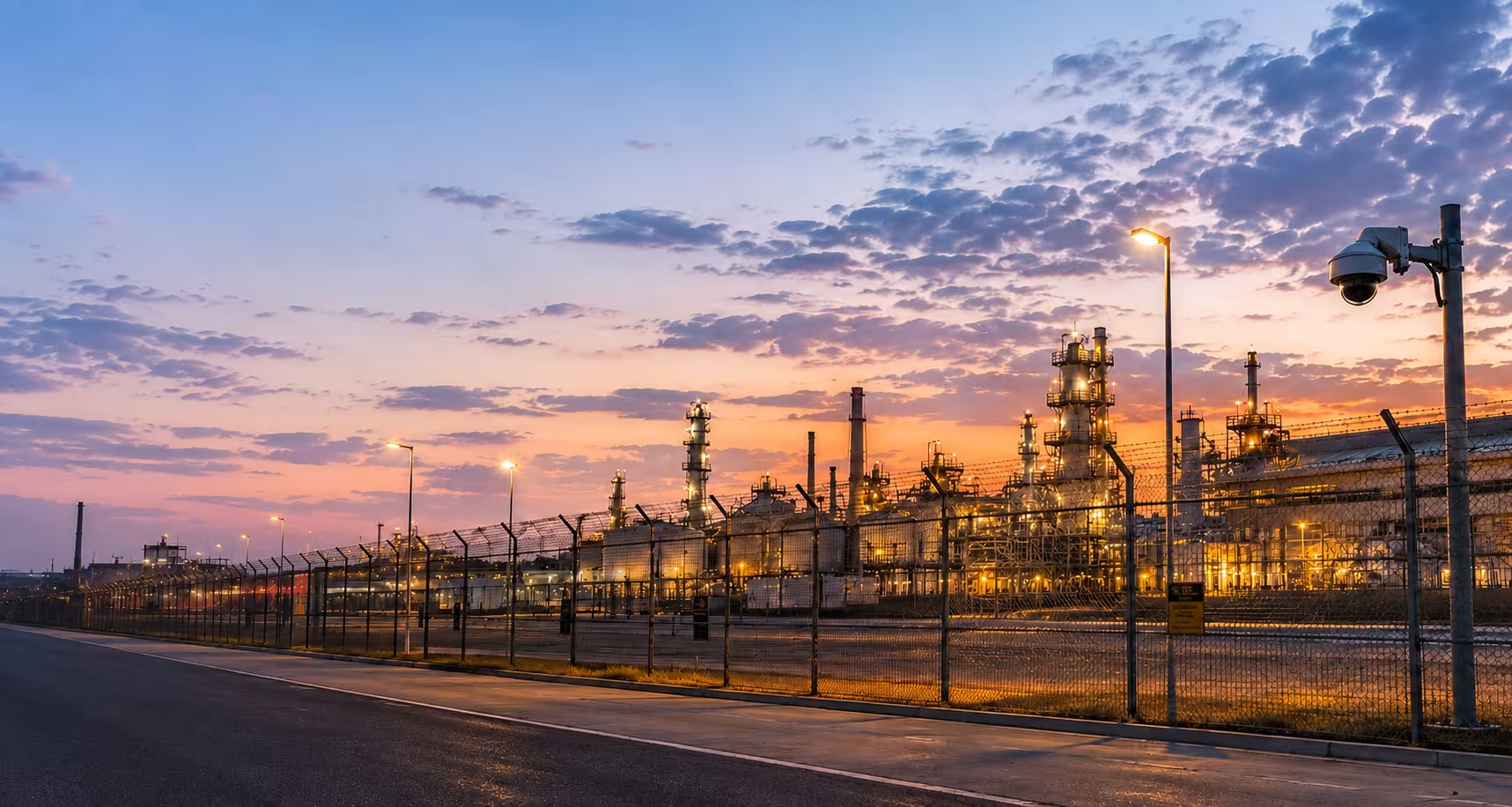

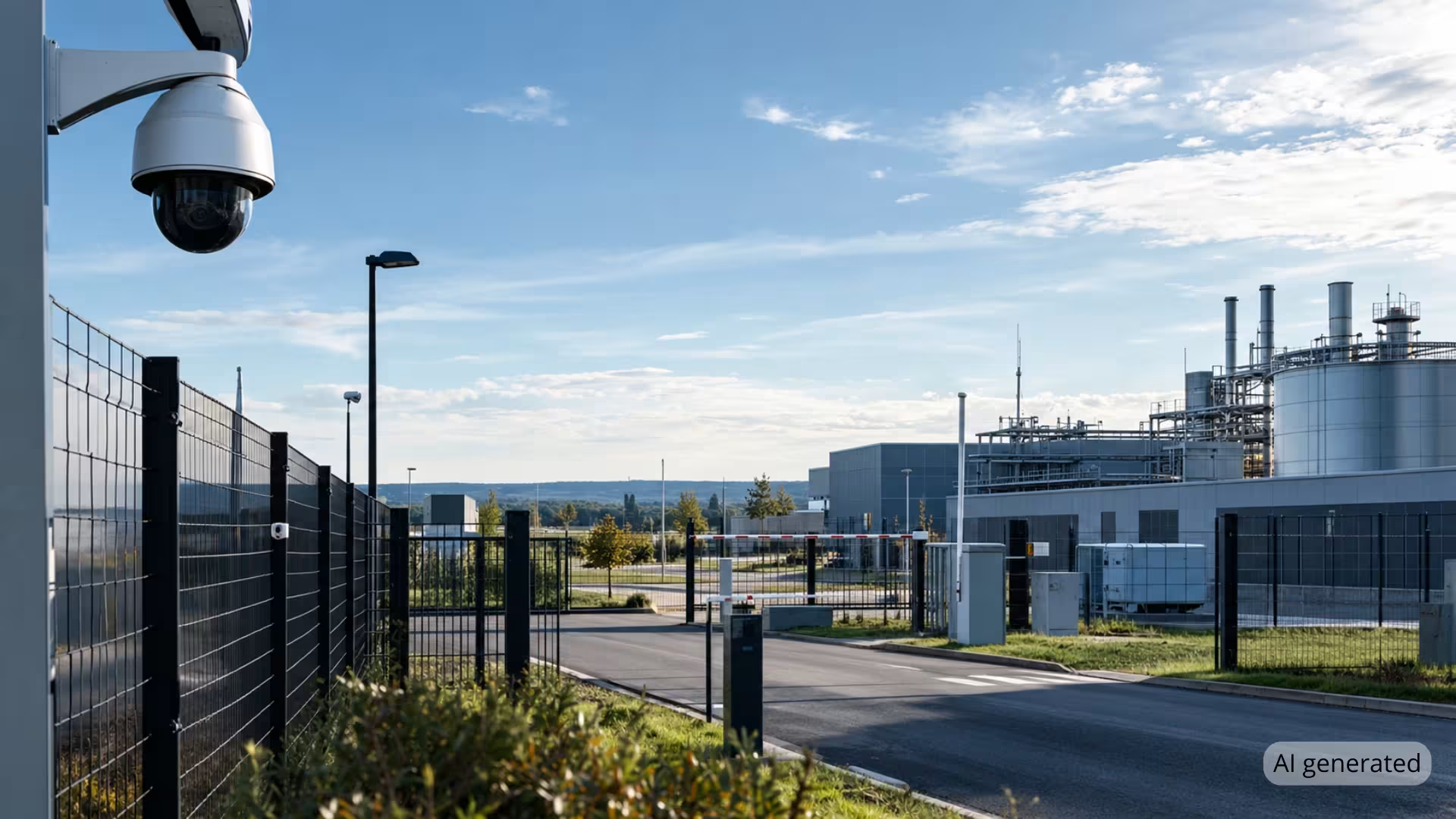
Site industriel 2.png

These facilities face specific risks. A malicious intrusion, whether aimed at stealing equipment, strategic data or sabotaging infrastructure, can have consequences far beyond the site itself. There are also industrial risks specific to the activity: hazardous substance leaks, fires and technical failures. Industrial espionage must not be overlooked either: it is a discreet but very real threat for companies holding strategically important expertise.

Faced with this diversity of threats, human surveillance alone quickly shows its limitations. An officer can only cover a limited field of vision, vigilance decreases with fatigue, and the cost of providing 24/7 coverage can quickly become disproportionate across a large perimeter. Regulations also leave little room for approximation: the most sensitive sites may be subject to strict security, safety and resilience requirements that must be followed carefully.

Pictogramme utilisateur

Magali BELOT, Operations Director – Remote Monitoring, Scutum France.

“In just a few years, we have moved from isolated threats to combined attacks, where a physical intrusion can prepare the ground for a cyberattack, or vice versa. Protecting a critical site now means thinking about both together.”

The 4 pillars of an effective modern remote monitoring system

An effective system never relies on a single technology. It combines four complementary functions that transform a simple alert into a controlled response: detect, verify, respond and deter.

1. Detection: intelligent sensors to leave nothing unnoticed

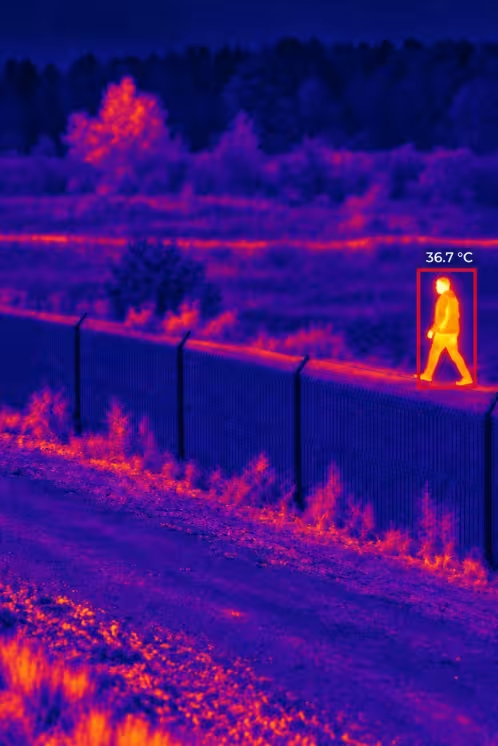
The first line of defence relies on sensors capable of detecting an anomaly wherever it occurs. Thermal and radiometric cameras can detect human presence and abnormal hot spots, even in complete darkness or across a long, unlit perimeter. 4K cameras combined with artificial intelligence go further: they can identify suspicious behaviour, line crossings or prolonged loitering around a sensitive area, triggering an alert without waiting for human intervention.

These technologies can be supplemented by perimeter protection systems: surveillance radar, infrared barriers and shock-detection cables. Each technology addresses a specific site constraint, whether protecting a large external perimeter or securing a fence.

Caméras thermiques

2. Verification: the remote monitoring centre, the brain of the operation

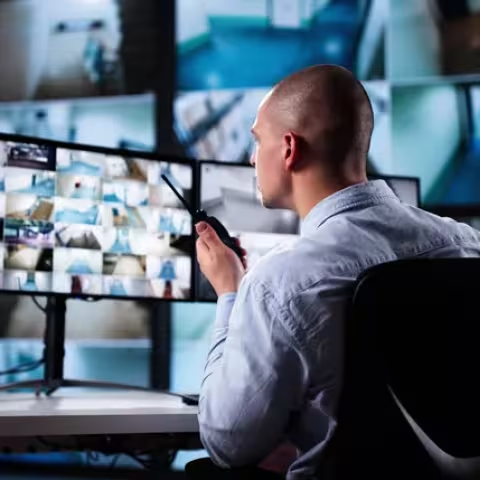
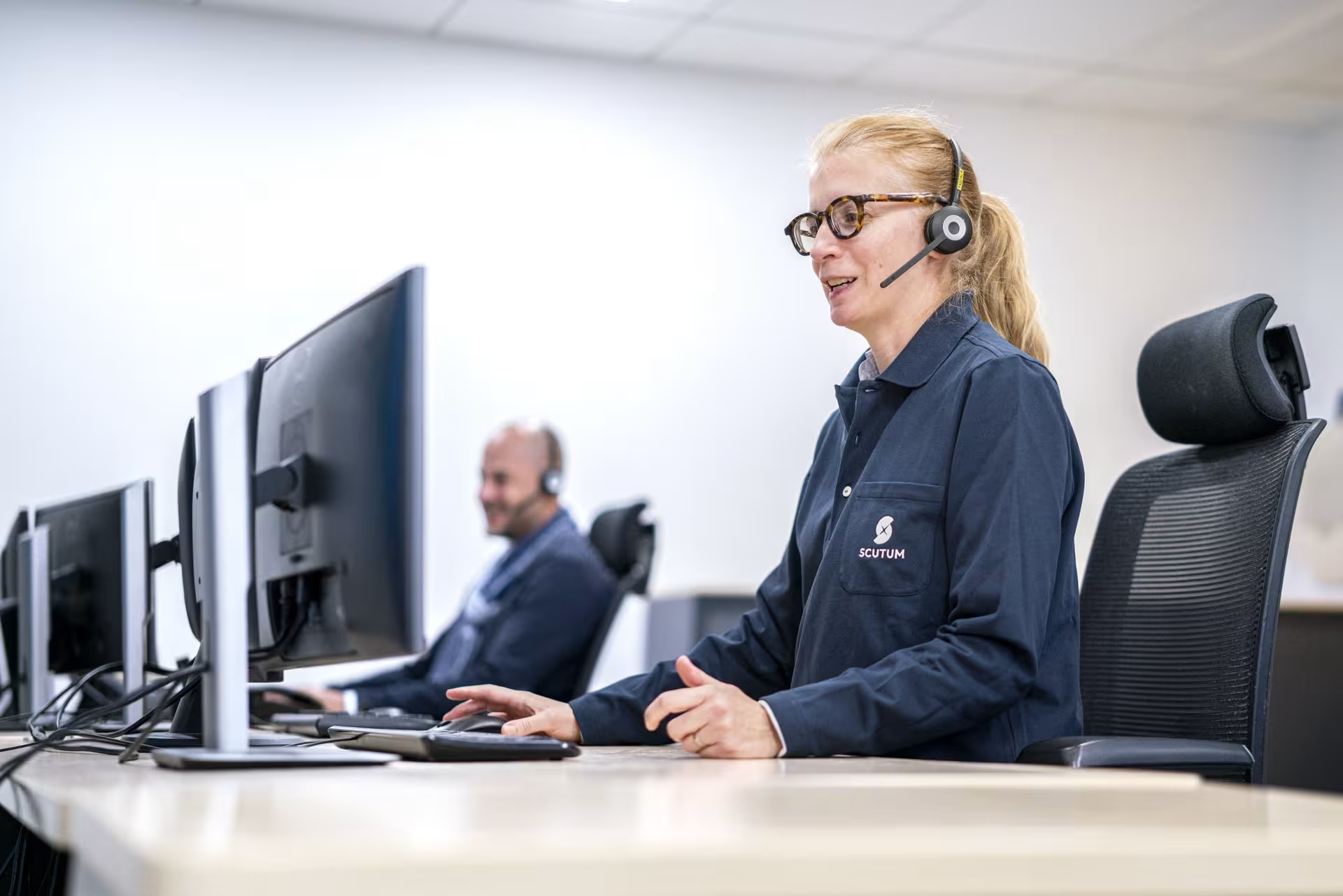
An alarm alone does not tell you whether a threat is genuine. The role of the remote monitoring centre is to distinguish between a genuine incident and a false alarm within seconds. This video alarm verification is carried out by trained operators who view live footage and accurately assess the situation before triggering an appropriate response.

Centre de télésurveillance

The quality of this link can be assessed against relevant UK standards. BS EN 50518, for example, sets requirements for monitoring and alarm receiving centres, while BS 8418 covers the design, installation, commissioning, maintenance, operation and remote monitoring of detector-activated CCTV systems.

Each alarm follows a precise handling protocol, with procedures defined in advance and direct coordination with the police, emergency services or security personnel present on site, where appropriate.

The remote monitoring centre can be seen as the control tower of the system: it transforms a raw alert into a qualified, rapid and proportionate response.

Pictogramme utilisateur

Magali BELOT, Operations Director – Remote Monitoring, Scutum France.

“When an alarm comes in, our operators have the images in front of them within seconds. That is where the real challenge lies: assessing the situation quickly and accurately, so that the right response is triggered, neither too early nor too late.”

3. Response: a rapid and graduated approach

Once a threat has been confirmed, the response must be immediate and appropriate. The remote monitoring centre can remotely activate several systems: sirens, loudspeakers for a deterrent verbal intervention, or fog generators that can make an area unusable within seconds.

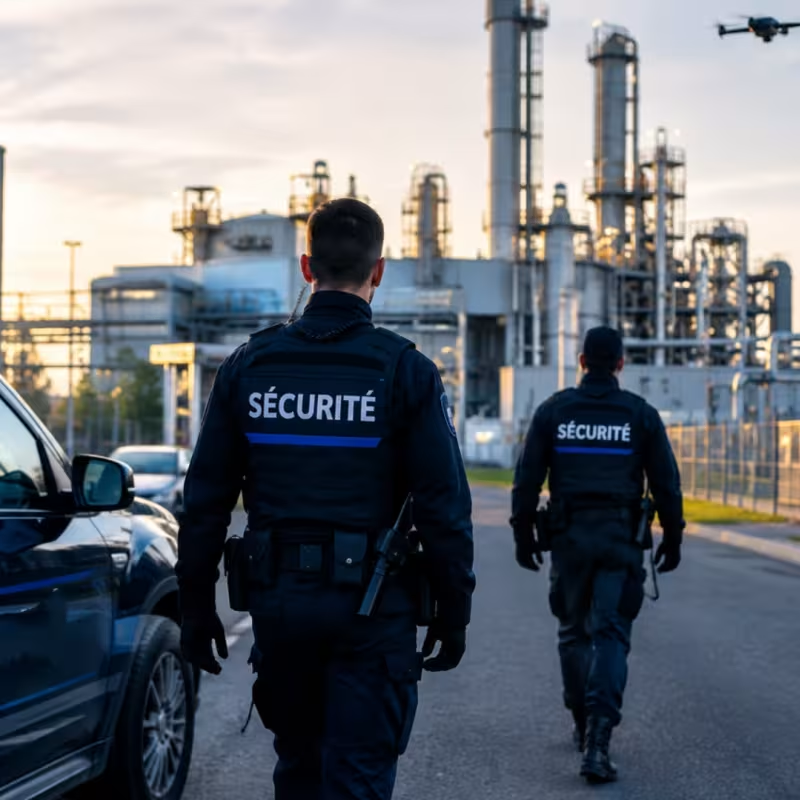
This remote response is coordinated with teams on the ground, whether mobile or static security officers, who intervene according to procedures agreed with the client. Surveillance drones provide an additional capability: they enable rapid and secure reconnaissance of a large area without unnecessarily exposing an officer to risk.

Télésurveillance intervention

4. Deterrence: preventing an incident before it happens

The most effective security system is often the one that never needs to intervene. A visible remote monitoring system known for its responsiveness creates a strong deterrent effect, discouraging an incident before an attempt is even made.

Predictive analysis takes this approach further. By identifying abnormal patterns of behaviour, artificial intelligence can flag a potentially risky situation before a conventional alarm is even triggered. Continuous innovation now makes it possible to anticipate threats rather than simply react to them.

Integration and cybersecurity: keys to system resilience

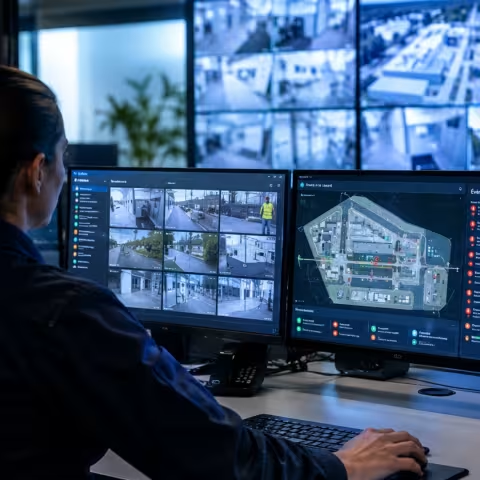
An effective remote monitoring system never operates in isolation. An integrated security system brings access control, intrusion detection, video surveillance and fire detection together on a single hypervision platform. This integrated security provides a comprehensive and consistent view of the site, ensuring that every alert, whatever its source, is handled with the same level of rigour.

Télésurveillance

But a connected system is also a target. The cybersecurity of security equipment has become a critical consideration in its own right. Encryption of video streams, network security and protection against ransomware are no longer optional: they are essential conditions for ensuring that a security system does not itself become a vulnerability.

Service continuity also depends on redundant communication links. Fibre, 4G/5G and satellite: using multiple transmission channels helps ensure that the system remains operational even if one connection is interrupted or fails.

It is this trusted orchestration between technologies, procedures and relevant UK standards that makes the difference between a system that performs well on paper and one that remains genuinely reliable over time.

Pictogramme utilisateur

Magali BELOT, Operations Director – Remote Monitoring, Scutum France.

“An unsecured camera is an open door into our network. A security system must be protected with the same level of rigour as the assets it monitors.”

Implementing a remote monitoring project: methodology

Every site is different. Designing a remote monitoring system therefore follows a rigorous four-step methodology.

1 Audit and risk assessment

Everything starts with a security audit and risk assessment. This stage focuses on the site's actual vulnerabilities rather than applying a standard solution by default.

2 Bespoke design

The next step is the bespoke design of the system: selecting the technologies suited to each location according to the risks identified and the site's specific constraints.

3 Deployment and training

The third stage involves deployment and training. The client's teams are involved from this stage onwards, which is essential to ensure that the system is used effectively on a daily basis.

4 Maintenance and evolution

Finally, maintenance and system evolution ensure that the solution remains relevant over time. A security system must evolve, adapt to new threats and change alongside the site's operations.

This methodology enables our clients to benefit from a single point of contact, from initial assessment through to long-term monitoring and support, rather than having to manage multiple providers.

Conclusion

Modern remote monitoring is no longer simply an option for sensitive sites and critical national infrastructure: it is a technological and human ecosystem that has become essential. Detection, verification, response and deterrence combine to provide protection that matches the challenges involved, while operating within a strict regulatory and security framework.

The future of the sector is already taking shape: predictive artificial intelligence, increasing automation and ever-greater integration between systems. Anticipating these developments today means remaining prepared for tomorrow's threats.

Opératrice et opérateur dans un centre de télésurveillance APSAD P5

Your infrastructure is unique, and its security should be too. Contact our SCUTUM experts to carry out a comprehensive security audit and design the remote monitoring solution suited to your requirements.

FAQ: Frequently asked questions about remote monitoring for critical sites

What is the difference between remote monitoring for sensitive sites and conventional CCTV?

Video surveillance is primarily used to record and view footage. Remote monitoring goes further: it provides active surveillance through a monitoring centre that processes alerts in real time using trained operators.

Video alarm verification makes it possible to quickly confirm an intrusion or incident before triggering an appropriate response. On a sensitive site, these systems will typically incorporate advanced technologies such as perimeter detection, intelligent video analytics, access control and additional sensors. Response procedures are adapted to the specific requirements of each critical site.

→ Video Surveillance vs. Remote Monitoring: What Is the Difference for Your Business? | Scutum

What regulations apply?

The use of video surveillance systems in the UK must comply with applicable data protection requirements, including the UK General Data Protection Regulation (UK GDPR) and the Data Protection Act 2018. Organisations using surveillance systems must identify an appropriate lawful basis, provide transparent information to individuals where required, use surveillance proportionately and ensure that recorded information is securely stored and accessed only by authorised people.

The Information Commissioner's Office (ICO) also recommends clear and visible signage informing people that surveillance is in operation and explaining who operates the system and why it is being used. There is no universal statutory retention period for CCTV footage under the UK GDPR and Data Protection Act 2018: retention should be limited to the shortest period necessary for the purpose for which the footage was collected.

Certain sensitive sites and regulated activities may also be subject to additional security and resilience requirements. For example, sites covered by the COMAH Regulations 2015 are subject to specific requirements relating to the prevention and mitigation of major accidents involving dangerous substances.

How is the confidentiality of footage ensured?

Video footage should be encrypted where necessary during transmission and storage. Access should be restricted to authorised individuals, with appropriate authentication and audit measures in place to ensure traceability.

Footage should only be accessed for legitimate purposes defined by the organisation's procedures, such as an alarm, security incident or investigation. Additional cybersecurity measures can further reduce the risk of unauthorised access.

Under UK data protection guidance, recorded information should be stored securely in a way that preserves its confidentiality, integrity and availability, with access restricted to authorised individuals.