Submitted by editor on
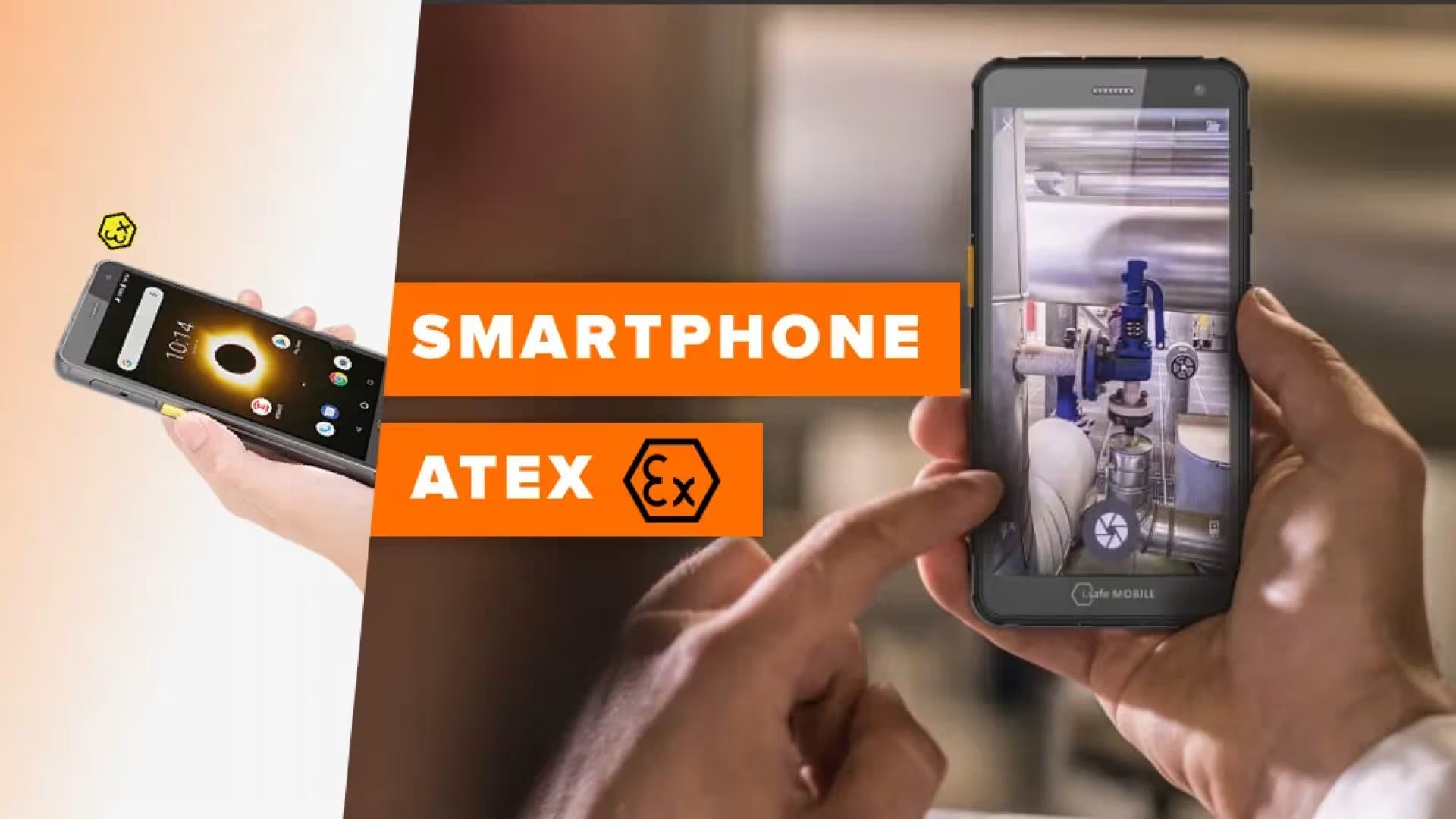
Smartphone atex de Scutum Premium Services
published on 08/01/2026

ATEX Smartphone: The DATI PTI for Explosive Environments

Written by editor

The ATEX smartphone is a PTI DATI solution designed to protect isolated workers operating in explosive environments. ATEX-certified, it combines a business phone with an early warning system to guarantee safety and regulatory compliance.

What is an ATEX Smartphone?

The ATEX smartphone is a PTI DATI designed for use in explosive environments. Thanks to its native EMERIT PTI application, it can be used to alert in the event of discomfort (accident) or unease (aggression, incivility).

With this smartphone, your lone worker is equipped with both a work phone and a lone worker alert device in a single piece of equipment. He can then exchange text messages or emails, surf the internet and use his business applications while being protected.

The ATEX smartphone runs on the Android operating system. It is water and dust resistant (IP 68) and is equipped with a powerful loudspeaker to ensure effective exchanges in the event of an alert in a very noisy environment.

Smartphone PTI ATEX from Scutum Premium Services

Who should be equipped with the ATEX Smartphone?

This ATEX PTI gsm is designed for all lone workers who have to use their DATI intensively (business application); resistant to explosive environments, it therefore offers lone worker protection adapted to the risks specific to their activity.

What does ATEX mean?

ATEX is the acronym used for Explosive Atmosphere. As part of isolated work, employees operating in this type of environment must be equipped with protection that meets the ATEX standard. The ATEX smartphone is therefore an ATEX-certified PTI DATI solution, compliant and suitable for ATEX zones.

What environments are considered ATEX?

Any environment with a risk of explosion is considered to be ATEX. L'INRS refers to premises where there are gases, vapours, combustible dusts or electrical or non-electrical equipment liable to explode. Premises in which chemicals are used or stored are also included.

Some examples of ATEX business sectors or environments:

  • Food processing plants
  • Pharmaceutical industry
  • Cement works
  • Wood industry
  • Service stations
  • Metal industry
  • Waste processing plants
  • Cosmetics industry.

ATEX regulations: what is the legal framework?

Specific regulations govern the protection of workers isolated in explosive atmospheres.
In Europe these ATEX regulations refer to two directives:

  • Directive No. 1999/92/EC of 16/12/99 on minimum requirements for improving the safety and health protection of workers potentially at risk from explosive atmospheres,
  • Directive 2014/34/UE of the European Parliament and of the Council of 26 February 2014 on the harmonisation of the laws of the Member States concerning equipment and protective systems intended for use in potentially explosive atmospheres.

These ATEX regulations thus lay down definitions and compliance standards for explosive atmospheres and the protective devices specific to them.

The Labour Code also incorporates all ATEX-related issues. It therefore requires employers to identify and assess risks and classify workplaces, known as zoning. A DRCPE (document relating to protection against explosions) must also be drawn up. These articles and decrees do not replace but complement the main risk prevention provisions:

  • article R. 4216-31 du Code du travail relatif à la prévention des explosions (obligations du maître d'ouvrage)
  • articles R. 4227-42 to R. 4227-54 of the French Labour Code relating to explosion prevention (employer's obligation),
  • arrêté du 8 juillet 2003 relatif à la signalisation de sécurité et de santé au travail,
  • arrêté du 8 juillet 2003 relatif à la protection des travailleurs susceptibles d'être exposés à une atmosphère explosive,
  • arrêté du 28 juillet 2003 relatif aux conditions d'installation des matériels électriques dans les emplacements où des atmosphères explosives peuvent se présenter.