Submitted by editor on
Guide vérification extincteurs
published on 06/01/2026

Complete Guide to Fire Extinguisher Testing for Fire Safety

Welcome to our comprehensive guide to checking fire extinguishers. This guide aims to provide businesses, safety managers and private individuals with all the information they need to ensure that their extinguishers are in optimum working order, in accordance with current legislation. Regular checking is crucial not only for regulatory compliance but also to ensure safety in the event of a fire.

Regulations and standards for checking fire extinguishers

NORMATIVE AND REGULATORY REFERENCES
- APSAD Regulation N°I4 - NF 285: EXTINGUISHERS: Installation and maintenance service
- APSAD Installation Rule R4: MOBILE EXTINGUISHERS
- Standard NF S 61-919: Maintenance of mobile extinguishers
- Standard NF S 61-922: Service activities relating to the maintenance of portable, mobile and fixed extinguishers
- Guide for the maintenance of portable, mobile and fixed extinguishers

Recommended frequency of fire extinguisher inspections and checks

The checking of fire extinguisher installations is regulated. It must be carried out once a year by competent personnel.
This skill has been acquired over many years in the field and it is the rules of the trade that have long taken their place as the reference.

In August 2001, an approved French standard, NF S 61-919 came into application: it has become the reference standard for the maintenance of mobile extinguishers. It has also become the reference for I4-NF285 certification audits carried out by CNPP, a certification that Scutum Incendie holds.

Maintenance carried out by a competent person

The user must ensure that portable fire extinguishers are checked and maintained.
The Competent Person must carry out maintenance annually, with a tolerance of plus or minus two months.
Any portable extinguisher (body or equipment) shall be deemed unserviceable by the competent person where he considers:
- That its condition is unsafe
- That it would be unsafe to use
- That its condition may prevent it from operating satisfactorily, for example loss of contents or pressure in excess of tolerances;
- That the information necessary for its use has become illegible
The competent person must draw up a report, no later than the end of the site visit, to notify the user of any portable extinguisher requiring remedial action.

The competent person must check that the portable extinguisher complies with the regulations in force and that it is not of a type defined in article 6 of standard NF S61-919.

The competent person must affix the marking "VERIFIED" to any portable extinguisher which, after checking and, if necessary, repairing and replacing illegible labels, is fit for continued operation.
In addition, the information must be recorded in a register.

Make sure your extinguishers are regularly inspected and maintained in accordance with international and national standards. For complete peace of mind, call on Scutum Incendie technicians to carry out these important extinguisher checks.

Maintenance intervals and lifespan of extinguishers

. PREVENTIVE 1 YEAR
. ADDITIONAL IN-DEPTH MAINTENANCE AND LOAD RENEWAL: AT 5 YEARS AND 15 YEARS
. WORKSHOP REVISION AND LOAD RENEWAL: 10 YEARS
. EXPECTED LIFETIME OF A PORTABLE FIRE EXTINGUISHER: 20 YEARS

Intervals start from the date of installation of the fire extinguisher but must not exceed one year after the date of manufacture marked on the body. Maintenance is only carried out in years 1-2-3-4-6-7-8-9-11 and so on, in years 5 and 15 additional maintenance and in year 10 the overhaul includes maintenance and extensive additional maintenance.

Types of extinguisher: specific uses and checking

1. Water extinguishers

Use: water extinguishers are effective against Class A fires, which include fires involving organic materials such as wood, paper and fabric.

Verification: checking water extinguishers includes checking the water level and ensuring that the tank is not corroded or damaged. It is also important to check that the valve is operating correctly.

2. Dry powder extinguishers

Use: powder extinguishers are versatile, effective against Class A, B, and C fires. They are ideal for fires involving flammable liquids, gases, and electrical equipment.

Checking: when checking powder extinguishers, it is important to ensure that the powder is not agglomerated, which can prevent effective dispersion. It is also crucial to check the pressure and tightness of the container.

3. CO2 fire extinguishers

Use: these extinguishers are used for Class B and electrical fires, as they leave no residue. They are particularly useful in IT environments and kitchens.

Checking:checking CO2 extinguishers involves checking the weight to ensure that the gas has not leaked. The seals and trigger mechanism should also be thoroughly examined.

4. Foam extinguishers

Use: effective against Class A and B fires, foam extinguishers are excellent for fires involving flammable liquids.

Checking: for these extinguishers, check that the foam solution is at the correct concentration and that the appliance has no blockages that could prevent the foam from dispersing.

5. Halogenated agent fire extinguishers

Use: used for Class B, C and sometimes A fires, these extinguishers are chosen for spaces where electronic equipment is present as they do not damage electronic equipment.

Verification: as with CO2, verification involves ensuring that the contents have not diminished and that the extinguisher components are in good working order.

Warning regarding halogenated hydrocarbon extinguishers known as HALON: No verification is permitted. Portable Halon extinguishers must be withdrawn from the market since 31/12/2003.

Checking fire extinguishers: essential steps to ensure your safety

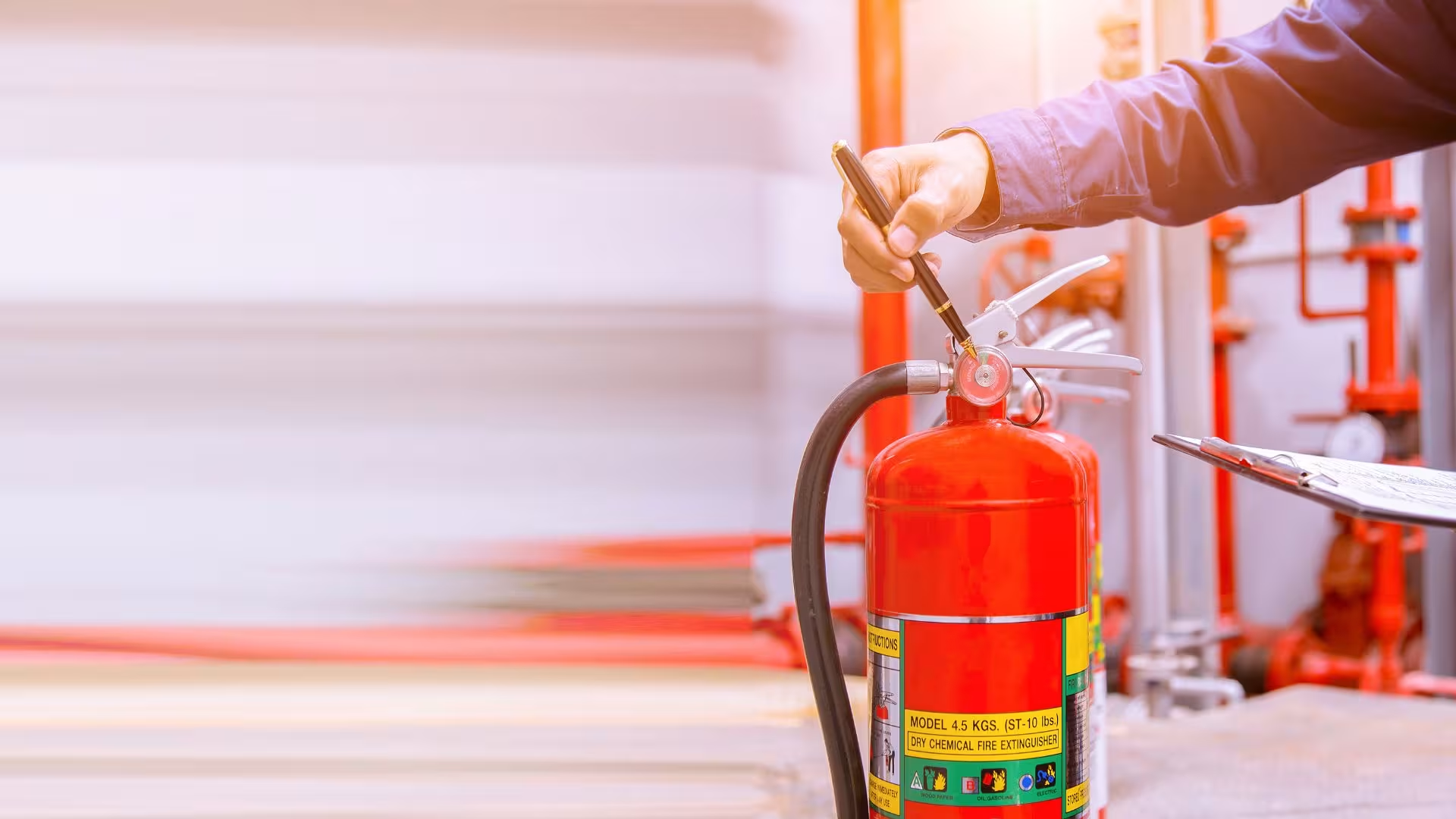
Checking fire extinguishers is a crucial procedure for ensuring their functionality and effectiveness in an emergency. This section details the verification process in three key stages: visual inspection, weight and pressure verification, and recharge date verification. Each step is vital to ensure that extinguishers meet the required safety standards.

1. Visual inspection

Importance: the visual inspection is the first line of defence in the fire extinguisher verification process. It identifies obvious problems that could compromise the extinguisher's effectiveness in an emergency.

Steps:

Accessibility: check that the extinguisher is easily accessible, clearly visible, and unobstructed by objects that could delay its rapid use in the event of a fire.

Physical integrity: examine the extinguisher for signs of physical damage such as dents, cracks, or punctures. Ensure that the handle, trigger and other mechanisms are intact and functional.
Signs of corrosion or damage: Look for any corrosion on the body of the extinguisher, particularly in metal areas, as this can affect the internal pressure and structure of the extinguisher.

2. Checking weight and pressure

Importance: this step ensures that the extinguisher contains the correct amount of extinguishing agent at the required pressure for optimum performance.

Steps:

Weight: weigh the extinguisher to check that it contains the specified amount of extinguishing agent. A lower weight may indicate a leak or previous use.

Pressure: examine the pressure gauge to ensure the needle is in the green zone, indicating adequate operating pressure. If the pressure is too low or too high, the extinguisher needs to be recharged or repaired.

3. Check refill date

Importance: this check ensures that the extinguisher has not exceeded the expiry date of the extinguishing agent, which is crucial to its ability to fight a fire.

Steps:

Last refill:check the date of the last refill on the extinguisher label. The standard recommends a refill after each use or as directed by the manufacturer.

Expiry date:also check the expiry date of the extinguishing agent. Extinguishers whose agent has expired must be recharged immediately to remain functional.

Training and awareness: the keys to using and checking fire extinguishers

Training and raising awareness among staff on the correct use of fire extinguishers and recognising the signs that require checking are essential to ensuring safety within organisations. Scutum Incendie takes you through the importance of this training, focusing on the practical and theoretical skills you need to impart to your staff for effective fire emergency management.

Importance of training in the use of fire extinguishers

Context: Every year, fires in the workplace cause significant damage, both human and material. Proper training in the use of fire extinguishers can significantly reduce the risks and damage.

Objectives:

Preparedness: Equip staff with the knowledge and skills they need to react quickly and effectively in the event of a fire.

Confidence:Increase staff confidence in their ability to use fire extinguishers, thereby reducing panic and mistakes in crisis situations.

Fire extinguisher training content

Types of extinguishers: teach the differences between water, powder, CO2, and other extinguishers, as well as the classes of fires they are designed to fight.

Techniques of use: train staff on basic techniques, such as the P.A.S.S. (Pull, Aim, Squeeze, Sweep).

Practice: organise fire simulations for staff to practise using extinguishers in a controlled environment.

The importance of raising awareness of fire extinguisher checks

Failure prevention:Instruct staff on the importance of regularly checking fire extinguishers to ensure they are working properly at the crucial time.

Recognition of signs of defects:

Instruct to identify signs of corrosion, physical damage, or pressure gauge indicating inadequate pressure.

Understand the need to immediately report any problems observed for corrective action.

Implementing training and raising awareness

Regular planning: establish a continuous training schedule to ensure that all members of staff are trained and that new employees receive the necessary training as soon as they join.

Knowledge updates: include the latest developments in fire safety and extinguisher technology in the training programme.

Collaboration with professionals: calling on Scutum Incendie to conduct training ensures that the information is both accurate and compliant with current standards.