Submitted by editor on
published on 24/03/2026

ANPR Vehicle Registration

Emergency lighting is a vital part of fire safety in commercial and industrial environments, ensuring that occupants can safely evacuate a building in the event of a power failure or emergency. By illuminating escape routes, exits, and key safety equipment, emergency lighting helps prevent panic and supports safe, efficient evacuation.

What is Emergency Lighting?

Emergency lighting is a backup lighting system that activates automatically when normal lighting fails. Its primary purpose is to provide sufficient illumination to guide occupants to safety in an emergency situation.

Beyond its life-saving function, emergency lighting is also a legal requirement in the UK for most commercial premises. It plays a critical role in fire risk management by ensuring escape routes remain visible and accessible, even in low-visibility conditions.

What are the UK Regulations?

Emergency lighting in the UK is subject to the legal requirements set out in the Regulatory Reform (Fire Safety) Order 2005 and Building Regulations, with additional guidance provided by British Standard BS 5266.These regulations apply to a wide range of premises, including offices, retail spaces, warehouses, schools, hospitals, and certain residential buildings such as HMOs.

These standards set out requirements for the design, installation, testing, and maintenance of emergency lighting systems. They also specify where lighting must be installed, such as along escape routes, near exits, at changes in direction, and in high-risk areas.

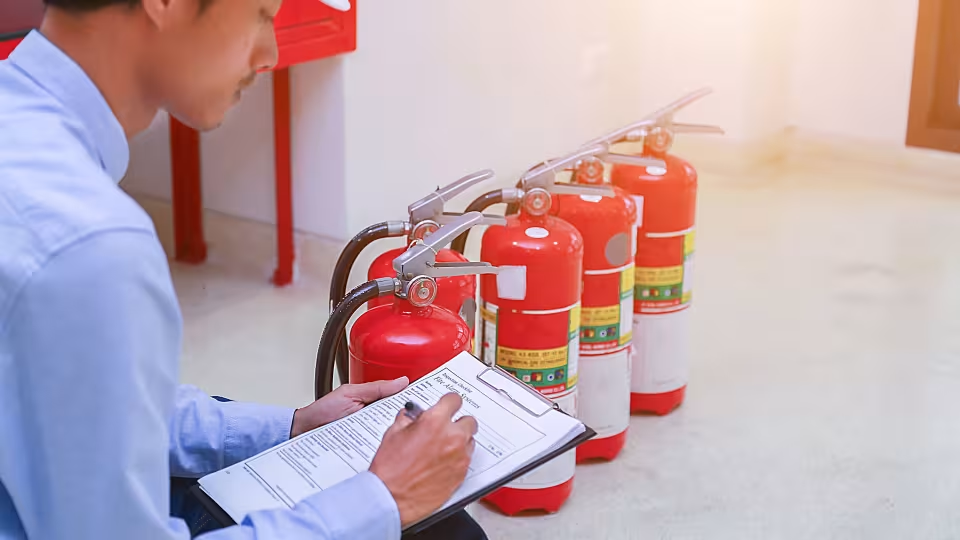
Regular testing and certification are essential to ensure compliance. Systems must be checked frequently and formally tested at least annually, with certification carried out by a qualified professional.

Where and How is Emergency Lighting Used?

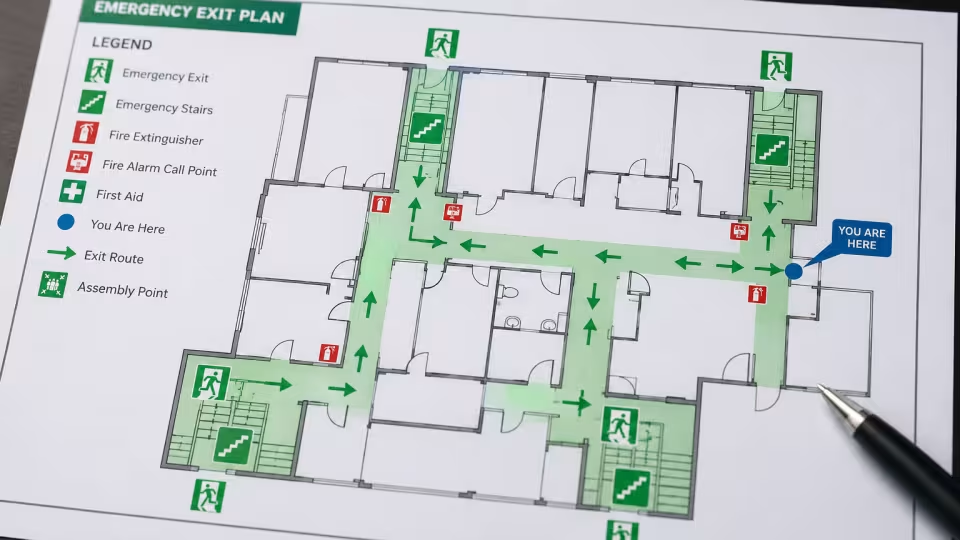
Emergency lighting systems are designed to support safe evacuation and reduce risk in a variety of scenarios. They are typically installed along escape routes, in open areas to prevent panic, and in high-risk zones where safe shutdown of equipment is required.

Different types of emergency lighting may be used depending on the building and its purpose, including escape route lighting, open area lighting, and high-risk task lighting. These systems work together to ensure that occupants can navigate safely, even in complex or large environments.

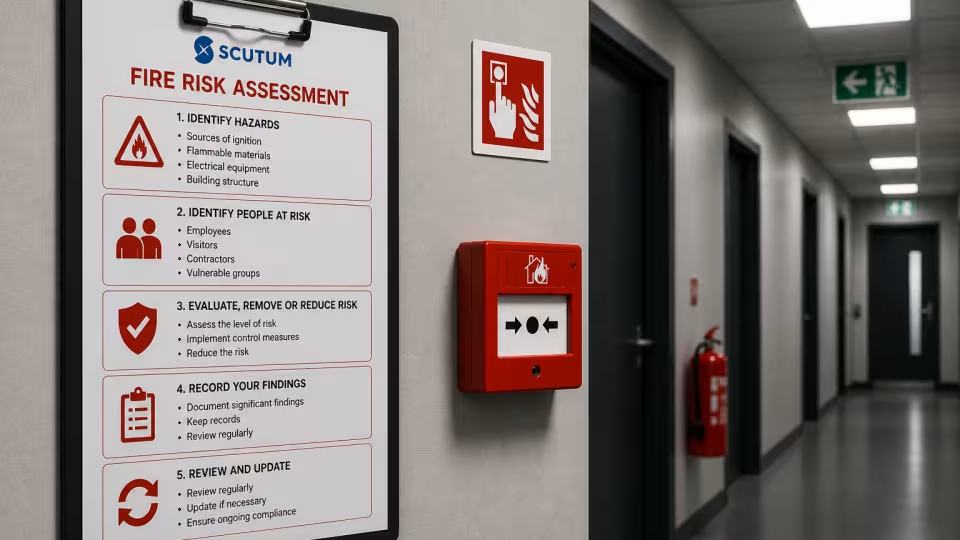
The exact placement and specification of emergency lighting should always be determined through a comprehensive fire risk assessment, ensuring the system is tailored to the specific needs of the building.