
Submitted by editor on
Géolocalisation indoor pour travailleuse isolée dans une zone industrielle sans signal GPS.
published on 06/01/2026

Indoor geolocation: protect your isolated workers where GPS stops.

Written by editor

In an emergency situation involving a lone worker, precise location is decisive. In large buildings, underground car parks or logistics warehouses, for example, you need to opt for an appropriate solution.

Indoor geolocation for lone workers: what is it?

The indoor geolocation or indoor localisation ensures the continuity of your lone worker's protection device on your premises. This system is necessary when GPS tracking stops at your door and it is difficult to locate your lone worker once on site to rescue him.

Let's take Eric's example to understand better.
Eric is a technician and lone worker on a large production site. The walls strongly attenuate GPS signals. So, if he needs to, he can't be located inside the building in which he works.

Current protection for lone workers enables employees like Eric to be accurately geolocated outdoors. However, they are still approximate indoors. That's where indoor geolocation devices come in.
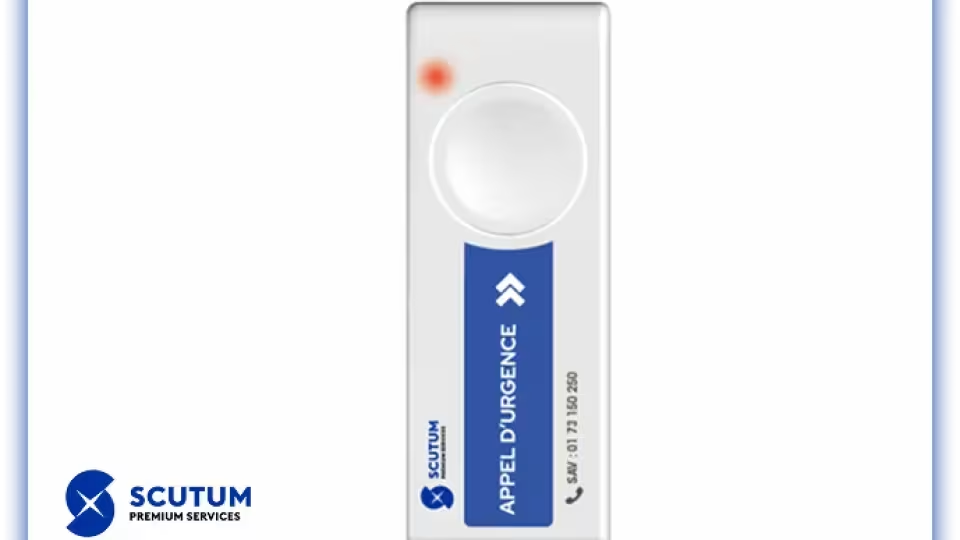
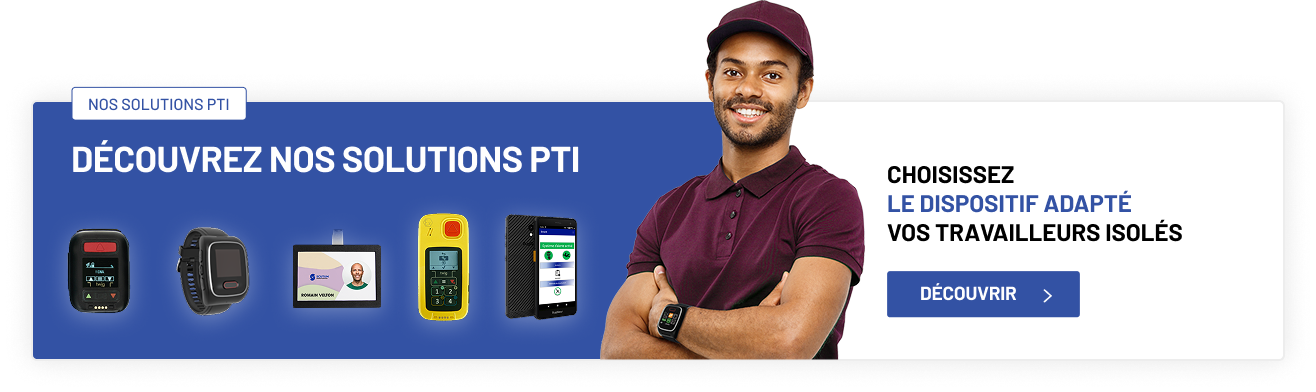
Indoor localisation: the Scutum Premium Services solution.

Scutum Premium Services offers a complete PTI solution in response to this need. Our devices, coupled with indoor radio beacons, locate the lone worker in an area not covered by the GPS network.

The DATI used by the lone worker automatically recognises and records nearby beacons within a 10m radius. So, in the event of an alert, it communicates to the remote monitoring centre the names of the last 3 beacons on its path. Emergency services can then pinpoint Eric's exact location and take swift action. They can then intervene quickly.

Do you want to ensure the protection of your lone workers? Need more information? Discover our pti-dati solutions.

Bouton d’appel d’urgence IOT Scutum Premium Services

What is the SIGFOX network?

SIGFOX is a network dedicated to connected objects. It enables them to exchange information at low speeds while consuming little energy. The network covers the whole of France and 44 other countries around the world. It connects more than 7 million devices that send and receive data on a daily basis. Also known as the 0G network, it is an alternative to 4G or 5G.

What is IoT?

The Internet of Things (IoT) refers to connected objects used in all kinds of fields. Used in all kinds of fields, they communicate and exchange data via the internet.
If the evolution of the internet with social networks is called web 2.0, after connected objects we speak of web 3.0.

Discover the best solution for your business sector

Isolated Worker Alarm Systems