Submitted by editor on
Extinguisher
published on 24/03/2026

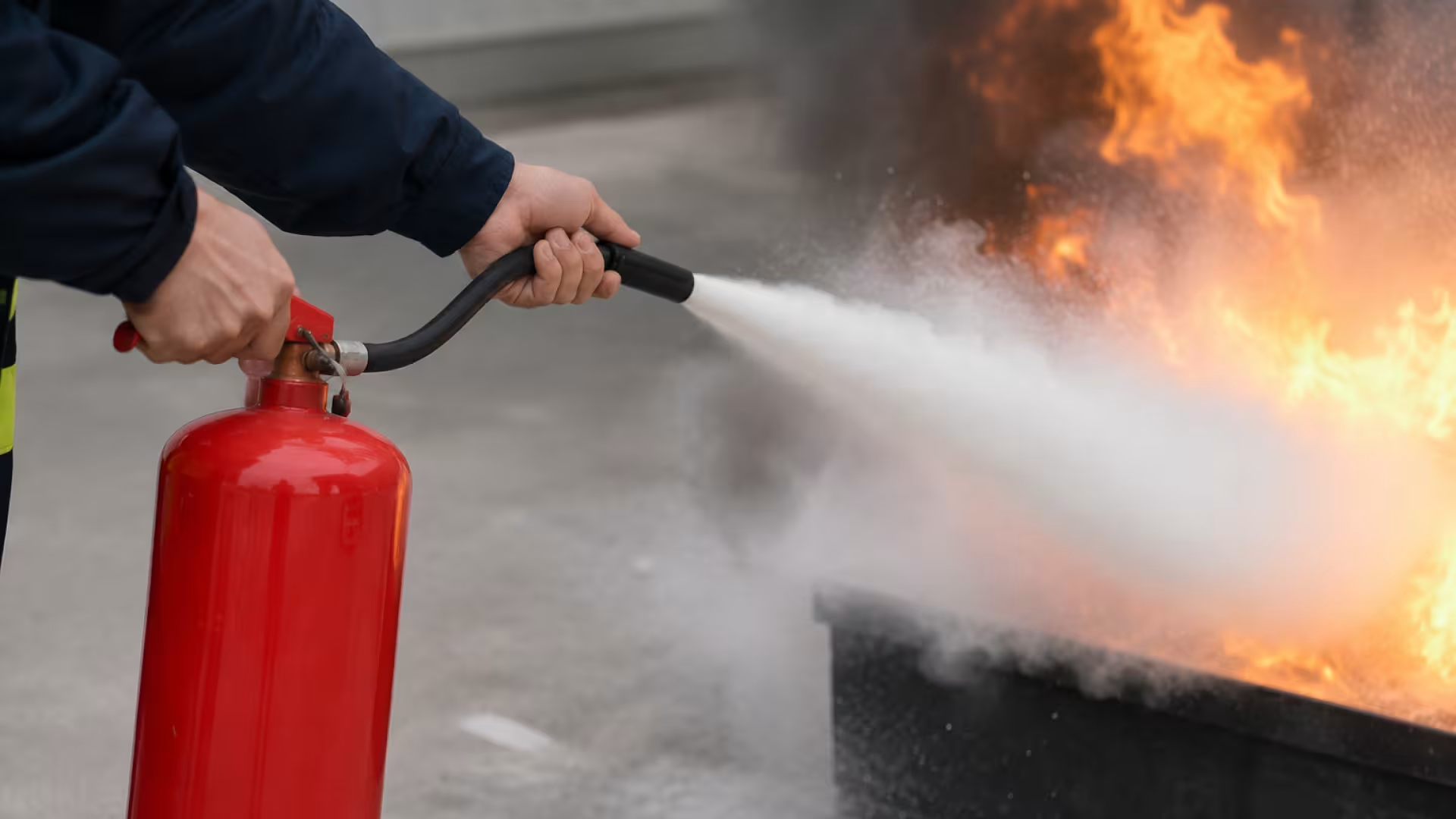
The PASS System of Fire Extinguishers

Fire extinguishers are an essential part of any fire safety strategy, helping to control small fires before they escalate. However, using them correctly is just as important as selecting the right type. Understanding the correct technique can make the difference between stopping a fire early and allowing it to spread.

When a Fire Extinguisher Should be Used

A fire extinguisher should only be used when it is safe to do so and the fire is small and contained. Attempting to tackle a fire without proper judgement can put you at risk, particularly if the fire is spreading quickly or producing significant smoke.

Before using an extinguisher, it is important to ensure you have a clear escape route and that you are confident in your ability to control the situation. If there is any doubt, the priority should always be to evacuate and contact emergency services.


The PASS System for Extinguishing Fires

Although lithium-ion battery fires are uncommon, they can occur when the internal structure of the battery is compromised.

Because batteries are compact, their components are extremely small and often separated by thin layers. If these layers are damaged, through impact, manufacturing defects, or overheating, a short circuit can occur. This may generate heat and sparks, triggering a chain reaction known as thermal runaway.

Thermal runaway happens when heat builds up faster than it can dissipate, causing the battery to rapidly increase in temperature. In extreme cases, this can lead to fire or explosion.

What to Do After Extinguishing a Fire

Even after a fire appears to be out, there is still a risk of re-ignition. It is important to monitor the area for a short period to ensure the fire does not restart.

If the fire begins to grow again or cannot be controlled, you should leave the area immediately and allow trained emergency services to handle the situation. Fire extinguishers are designed for small, manageable fires, and should never be used where there is a risk to personal safety.